DbcultAccessing Vault...
Cult Review
Senior Film Conservator
Ah, the cinema of yesteryear! There's a particular charm, isn't there, in revisiting narratives woven during a different epoch, especially when they grapple with themes that, in their essence, remain tragically perennial. Today, we're casting our discerning gaze upon The New South, a film that plunges headfirst into the tumultuous currents of post-Reconstruction America, a period fraught with unresolved conflict, simmering racial animosities, and the arduous task of national reunification. It's a landscape ripe for dramatic exploration, and this picture, with its intricate web of misunderstandings, betrayals, and burgeoning romance, certainly doesn't shy away from the complexities of its chosen setting.
At its core, The New South is a deeply human story, one that dissects the fragile tapestry of trust and suspicion in a society still reeling from the scars of civil war. We are introduced to Captain Ford, a Northern officer dispatched to the South on a covert mission. His objective is ostensibly to quell the illicit trade of moonshine, a relatively straightforward assignment on paper. Yet, the true genius—or perhaps, the tragic irony—of the narrative lies in how this simple directive becomes utterly transmuted through the lens of Southern prejudice and a profound inability to perceive 'the other' without the filter of historical grievance. Ford, a man of duty and discretion, finds himself immediately misconstrued. His necessary secrecy regarding his actual purpose paints him as an enigma, and in the charged atmosphere of the era, an enigma from the North is often equated with an agitator. It's a potent commentary on how easily perception can become reality, especially when fueled by deep-seated societal anxieties.
The character of Jefferson Gwynne epitomizes this volatile Southern sentiment. He is, by all accounts, a charismatic figure, but one whose passion is easily inflamed by what he perceives as a direct assault on his way of life and his community's racial hierarchy. His immediate, almost visceral, antipathy towards Ford is not merely personal; it's a microcosm of the larger societal friction. Jefferson views Ford not as a law enforcement officer, but as a harbinger of change he neither understands nor desires, an unwelcome interference in the delicate, albeit unjust, racial power dynamics of the region. This ideological clash sets the stage for the film's central tragedy, a testament to how deeply ingrained biases can warp individual interactions and lead to catastrophic outcomes.
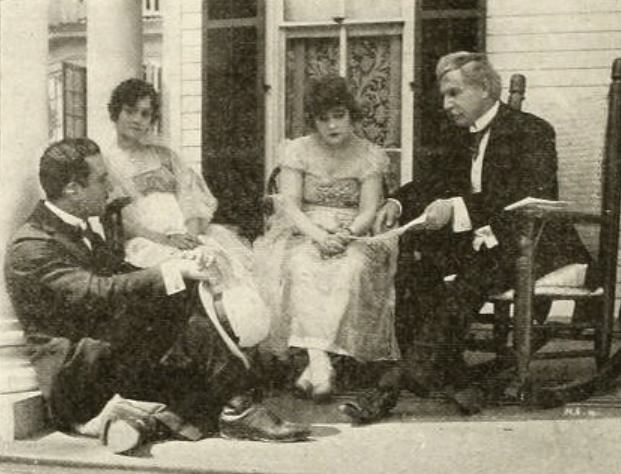
In stark contrast to Jefferson's fiery disdain, his sister, Georgia Gwynne, offers a refreshing perspective. She represents a flicker of hope, a nascent understanding that transcends the rigid boundaries of sectional loyalty and racial prejudice. Her attraction to Ford isn't merely a romantic subplot; it's a symbolic bridge across the chasm of division. The pivotal moment when Ford rescues her from a runaway accident serves as more than just a dramatic set-piece; it's a catalyst that strips away the preconceived notions, allowing a genuine connection to blossom. This burgeoning friendship, however, becomes another source of conflict, specifically for Paul Fitzhugh, Georgia's cousin. Paul's unrequited love for Georgia morphs into a corrosive jealousy, transforming him into a resentful rival. His inability to accept Georgia's affections, coupled with his deep-seated animosity towards Ford, foreshadows his later, morally reprehensible actions. His character arc is a stark illustration of how personal envy can override one's sense of justice and decency, a theme explored with similar intensity in films like Locura de amor, where romantic obsession leads to tragic consequences.
The narrative's turning point, the tragic confrontation between Jefferson and Ford, is a masterclass in dramatic irony and the unforeseen consequences of unchecked emotion. Jefferson, convinced of Ford's nefarious intentions, challenges him, drawing Ford's own sword in a fit of rage. Ford, attempting to de-escalate, defends himself with a mere piece of wood, a poignant symbol of his non-aggressive stance. The ensuing scuffle leaves Jefferson wounded, a regrettable but accidental outcome. It is at this precise moment of vulnerability that the true villain emerges. Sampson, a Black political leader consumed by a personal vendetta against the Gwynnes, seizes the opportunity. His act of plunging Ford's sword into the already injured Jefferson is a chilling act of opportunistic malice, a stark reminder of the dark undercurrents of individual hatred that can fester beneath broader societal tensions. The immediate aftermath is a scene of utter devastation: Ford, returning with assistance, finds Jefferson dead, and the circumstantial evidence overwhelmingly points to him as the murderer. This false accusation and the subsequent imprisonment of an innocent man resonate with the profound injustice depicted in films such as Alone with the Devil, where the protagonist grapples with the crushing weight of a wrongful conviction.
Ford's subsequent ordeal in prison is a testament to his character. Despite the grim realities of his incarceration, he maintains his dignity and moral compass. His defense of an elderly Black inmate against a brutal guard is a powerful moment, highlighting his innate sense of justice that transcends racial lines, even as he himself is a victim of racial misunderstanding. This act of defiance, however, earns him the guard's enmity, leading to a degrading whipping, cruelly administered by Sampson himself, who has been imprisoned for a separate offense. This sequence is particularly poignant, emphasizing the layers of injustice and the insidious ways power can be abused. It's a stark portrayal of the dehumanizing aspects of the penal system, but also a moment that strengthens Ford's resolve. The prison fire, a dramatic escape mechanism, provides a thrilling interlude, leading to a desperate flight and a tense pursuit by guards and dogs, culminating in his return to Georgia's home. The transformation of Ford, from the upright captain to a haggard fugitive, is powerfully depicted, making Georgia's unwavering recognition and reception of him all the more impactful.

Georgia, a character of remarkable strength and ingenuity, emerges as the true heroine of the piece. Her initial belief in Ford blossoms into an active, resourceful determination to secure his freedom. Her quick thinking, leveraging an obscure legal provision to 'lease' a convict, is not only a clever plot device but also a powerful statement about agency and the pursuit of justice against overwhelming odds. This act of legal maneuvering, executed with precision and daring, transforms Ford's captivity into a unique form of freedom, one bound by affection rather than chains. The rapid growth of intimacy between 'captor' and 'captive' is handled with a delicate touch, emphasizing the deep emotional connection forged through adversity. It's a beautiful subversion of traditional power dynamics, where love becomes the ultimate liberator.
The unraveling of the truth is orchestrated through a rather ingenious, if somewhat melodramatic, series of events. The old Black man, whom Ford had protected in prison, emerges as the unlikely catalyst for justice. His relaying of Sampson's sleep-talking confession, revealing the gruesome details of Jefferson's murder, is the crucial piece of the puzzle. The subsequent re-enactment of the crime, a dramatic staging designed to trap Sampson, is a classic narrative trope, but one that effectively heightens the tension and delivers a satisfying resolution. Sampson's confession, forced by the weight of his own guilt and the clever manipulation of the truth, finally clears Ford's name. This pursuit of justice, often delayed but ultimately realized, mirrors the thematic journey in films like The Toll of Mammon, where moral rectitude eventually triumphs over corruption and deceit.
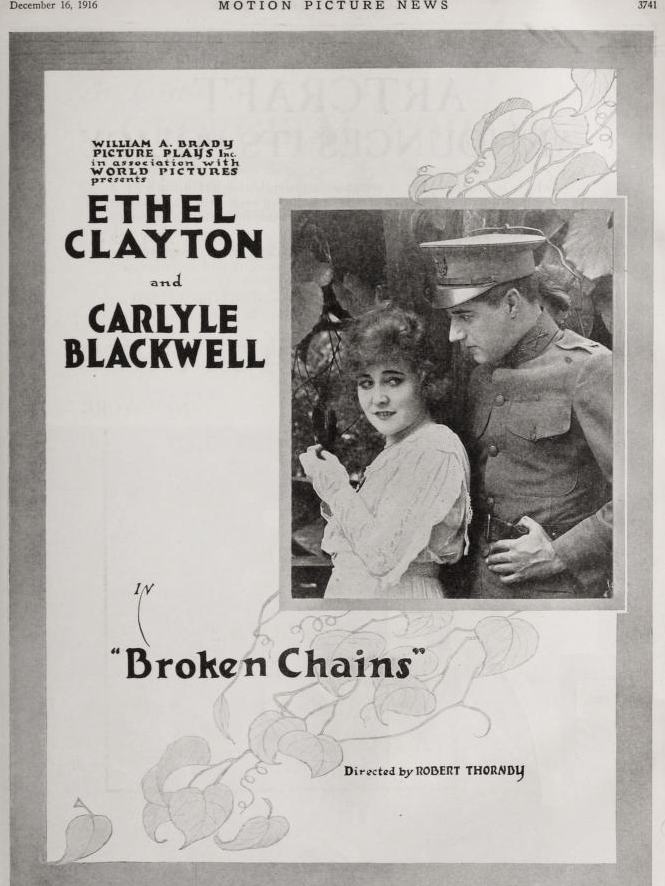
The performances in The New South, particularly from Ethel Clayton as Georgia and Carlyle Blackwell as Captain Ford, imbue their characters with a compelling blend of vulnerability and resilience. Clayton's Georgia is not merely a damsel in distress; she is a woman of intellect, courage, and unwavering loyalty, a true partner in Ford's struggle. Blackwell's Ford navigates the complexities of his role with a quiet strength, conveying the burden of his secret mission and the injustice of his predicament with subtle intensity. The supporting cast, including Louis R. Grisel as the hot-headed Jefferson and Herbert Barrington as the conniving Paul Fitzhugh, effectively contribute to the dramatic tension, each embodying facets of the societal and personal conflicts at play. The writers, Clay M. Greene, Joseph R. Grismer, and E. Magnus Ingleton, craft a narrative that, while rooted in the melodramatic conventions of its time, still manages to explore profound themes of justice, prejudice, and the enduring power of love.
From a thematic standpoint, The New South serves as a potent reminder of the fragility of truth in a divided society. It delves into the destructive nature of prejudice, showing how easily individuals can be demonized based on their origin or perceived allegiances. The film also highlights the corrosive impact of jealousy and unrequited love, transforming Paul Fitzhugh into a morally compromised figure who prioritizes personal gain over universal justice. Yet, amidst this darkness, there is a powerful message of hope and redemption. Georgia's unwavering faith in Ford, her proactive pursuit of justice, and the ultimate triumph of truth underscore the idea that even in the most turbulent times, integrity and love can prevail. The film’s exploration of racial dynamics, though viewed through the lens of its era, offers a glimpse into the complexities of the post-bellum period, where the struggle for political equality for Black Americans was often met with fierce resistance and violence. While the resolution might seem a little too neat, characteristic of the period's storytelling, the journey to that resolution is filled with gripping drama and moral quandaries.
In conclusion, The New South stands as more than just a historical artifact; it's a compelling drama that resonates with timeless themes. It invites us to reflect on the enduring challenges of reconciliation, the insidious nature of prejudice, and the unwavering strength of human connection in the face of adversity. While its narrative structure and characterizations might feel somewhat conventional by modern standards, its emotional impact and its exploration of a pivotal period in American history remain remarkably potent. It reminds us that the quest for justice, and the fight against ingrained biases, is a continuous journey, one that requires courage, empathy, and an unwavering belief in the truth. It's a film that, despite its age, still has something vital to communicate about the human condition and the long, winding road to a truly 'new' South, both geographically and spiritually.
IMDb 6.1
1930
Community
Log in to comment.