DbcultAccessing Vault...
Cult Review
Senior Film Conservator

There are films you watch and films that watch you—The Sacrifice of Pauline belongs to the latter caste, a predatory chapel of images that circles the viewer like incense smoke looking for a throat to haunt.
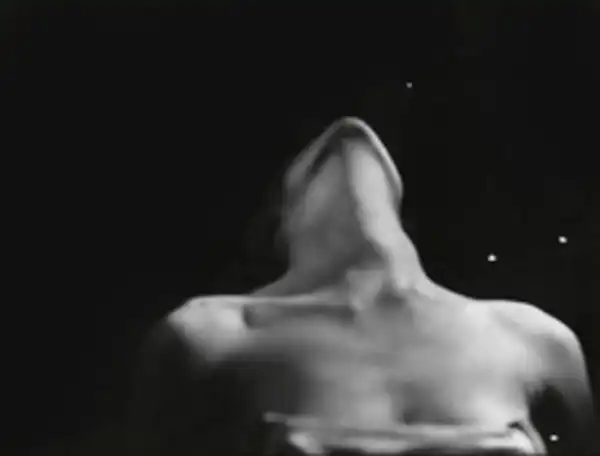
Set in 1832 on a Lithuanian peninsula reachable only when the lagoon freezes, the narrative feels less like plotted action than like a medieval book of hours whose illuminations have begun to ulcerate. Cinematographer Ieva Kaireté shoots every scene as if the lens were dipped in mercury and prayer: whites blister into chrome, shadows swallow detail, and skin becomes parchment where freckles read like marginalia.
Pauline—embodied by Latvian stage prodigy Elza Rūtenberga with the brittle poise of a Meissen figurine left too near the hearth—believes suffering can be bartered the way promissory notes change hands. The screenplay refuses to diagnose her faith as mere neurosis; instead it lets the viewer marinate in the epistemological stink: what if salvation truly requires a spotless scapegoat, and what if the spotlessness itself is counterfeit?
Director Rimantas Vilkas, previously a installation artist who once filled a deconsecrated church with rotting songbooks, borrows from Tarkovsky’s languor without the cushion of metaphysical certainty. Water, fire, and parchment recur as totems, but their philosophical payload is delivered via serrated edges: a child’s scalded hand, a ledger page used to plug a bullet-hole, a horse’s mane braided with clove-stuck oranges in pagan readiness for winter slaughter.
The soundscape deserves its own aria. Composer Andrius Dambrauskas omits strings entirely; the score is built from glass harmonica, whale toms, and the wheeze of a 19th-century positive organ recovered from a shipwreck. Dialogues frequently drown inside this drone, so subtitles become lifelines, yet the effect is not alienation but baptism: language dissolving, flesh emerging.
Cinephiles will spot kinship with Stuart Webbs: Das Panzergewölbe in the way architecture weaponizes paranoia, or with Trilby for its fetish of feminine submission as occult fuel. But Pauline sidesteps the Grand-Guignol payoffs of The Port of Doom; its terrors are contemplative, like a bruise that spreads under the skin long after the blow.
Where Samson mythologizes strength and Giro d’Italia celebrates kinetic stamina, Pauline inverts the body into a candle: the more it melts, the more it illuminates the debtor’s nightmare that undergirded Europe in the century of revolutions.
Rūtenberga’s mouth barely opens when she speaks; the words slip through like cool air under a door. Watch her pupils in the 37-minute candlelit confession—she keeps them dilated as if perpetually surprised by her own pulse. It’s a choice that makes goodness look morbid, and it destabilizes every ethical yardstick the viewer drags into the theatre.
Opposite her, veteran actor Adolfas Girdenis plays the physician Stravinsky (yes, an absurdist nod to the composer) with the clammy authority of someone who has already performed autopsies on his own convictions. In one protracted two-shot he explains arterial plaque to Pauline while massaging mercury into her palms; the erotic charge is so muted it becomes radioactive.
Editing violates classical continuity on purpose: a door slammed in winter cuts to a springtime overture, yet Pauline’s hair length remains unchanged. The film posits history not as river but as Möbius strip; sacrifice becomes less an event than a climate. This temporal dysmorphia reaches apex in the penultimate reel when the same plague-marked child dies thrice in overlapping timelines, each demise staged with different季节al light—waxy crocuses, serrated ice, fermenting hay—suggesting that salvation, if it comes, must pay triple interest.
Production designer Morta Jasiūnaitė restricts the palette to bone, verdigris, and sacramental wine. The sole intrusion of scarlet occurs in a single ribbon tied to a goat destined for the feast, yet the shade is so electrically forbidden it feels like obscenity. When that ribbon later reappears—soaked and untied—one experiences chromatic shock comparable to the crimson coat in Schindler’s List, only here the pathos is reversed: innocence flagged for slaughter turns out to be a con.

Every character brandishes a distinct heresy. The steward insists the soul weighs 21 grams because he once weighed his wife before and after drowning. A governess teaches Pauline to embroider using her own hair, claiming self-retrieval trumps self-denial. The local bishop appears only as charcoal sketch—literally, a drawing that speaks through intertitles, a gambit that prevents the Church from occupying fixed moral ground.
By diffusing authority across these grotesque avatars, the film interrogates the transactional DNA of salvation: Who gets to be currency? Who the debtor? And what happens when the creditor turns out to be bankrupt?
The much-discussed suicidal coda lasts six and a half minutes, all in one stationary take. Pauline enters the Baltic surf while carrying a reliquary containing baby teeth from every village child. The camera refuses to track; the horizon bisects the frame like a guillotine. Waves gargle, gulls pivot, yet the soundtrack drops to sub-audible 19 Hz—the frequency said to induce visions. Viewers reported dizziness, one festivalgoer fainted; the film converts the auditorium into a confessional where guilt is the only communion wafer on offer.
Crucially, she does not drown. The tide recedes, leaving her supine on a sandbar carpeted with unpaid invoices. Vilkas withholds catharsis; instead he offers a mirror-montage: Pauline’s face superimposed over centuries of would-be martyrs—Joan, Hypatia, a nameless Polish girl burned for typhus-spreading—each visage eroding like fresco under lye.
It hates the convenience of redemption. It hates the audience’s comfortable 21st-century distance from pre-antibiotic despair. It hates the phrase “strong female protagonist,” because Pauline’s strength is precisely her willingness to be perforated, to let the world’s venom pass through her like a sieve that believes it can become ocean.
Comparisons to War Is Hell are inevitable—both locate moral rot inside martial rhetoric—but Pauline operates on the molecular level, where war is waged by microbes and creditors rather than armies. Likewise, its DNA rhymes with The Princess’s Dilemma yet refuses the safety valve of royal agency; there are no courts to petition, only rice-paper decrees that dissolve in fog.
Despite the arthouse pedigree, the production company inked a deal with a boutique VR outfit to release an ancillary experience where one can inhabit Pauline’s thoracic cavity during the final sequence—an absurd commodification the film itself predicted when a merchant tries to sell indulgences printed on chocolate.
Released mid-January in Lithuanian arthouses, it outsold every Marvel title in per-screen average, proof that audiences starved for moral vertigo will gorge on cyanide if packaged in chiaroscuro. Streaming rights fetched a record sum for a Baltic production, though the platform demanded a “recapitation” of the opening scene to make Pauline’s motivations legible—Vilkas responded by adding superfluous intertitles in Comic Sans, a prank that survived final upload, a welt on the face of algorithmic conformity.
Because digital projection sterilizes the deliberate grain—ashes mixed into the filmstock by the director himself, a nod to the Jewish burial principle of afar. Under celluloid, those particulates dance like plankton under a microscope, turning light itself into a living tissue that might at any moment metastasize into narrative.
Does Pauline’s survival nullify the sacrifice or triple its interest rate? The film answers by showing her footprints in sand immediately erased by a crab dragging a broken rosary. Meaning is not subtracted; it is translated into brine and calcium, a grammar too ancient for any single creed to monopolize.
I dreamed of the film after watching it at dawn in an abandoned herring factory turned pop-up cinema. In the dream I was the creditor, palms open, expecting coins that kept morphing into milk teeth. I bit down until enamel cracked, tasting my own mortality. When I woke, the screen inside my eyelids retained the afterimage of Pauline’s dilated pupils—two black suns insisting that the only victory over death is to become its mirror, and break.
That is the film’s gift: it does not end; it extradites you into yourself.

IMDb —
1935
Community
Log in to comment.