DbcultAccessing Vault...
5.9/10
Senior Film Conservator
A definitive 5.9/10 rating for a film that redefined the boundaries of cult cinema. His Royal Highness remains a cornerstone of transgressive art.
The silver screen has always been a fertile ground for improbable transformations, but few narratives pivot with such audacious charm as "His Royal Highness." This cinematic gem, a vibrant tapestry woven from threads of collegiate camaraderie, international romance, and high-stakes political intrigue, invites its audience into a world where a gridiron hero's European vacation morphs into an unforeseen royal ascension. From the very outset, the director's vision, brought to life by the pen of Raymond L. Schrock, establishes a tone that is both earnest in its dramatic beats and delightfully whimsical in its premise. It’s a quintessential escapist fantasy, a grand adventure that, despite its period trappings, resonates with timeless themes of duty, identity, and the serendipitous nature of destiny. The film doesn't merely ask us to suspend our disbelief; it gently, yet firmly, invites us to revel in the sheer audacity of its narrative conceit, proving that sometimes, the most extraordinary journeys begin with the most unassuming of detours.
At the heart of this captivating tale is Jack Christie, portrayed with an endearing blend of athletic prowess and nascent charm by Bert Honey. Honey’s portrayal imbues Jack with an approachable earnestness, making his eventual leap into royalty feel less like a caricature and more like the natural, albeit extraordinary, evolution of a good-hearted man. His initial journey to France isn't driven by grand ambitions but by the simpler, more relatable bond of friendship with his college roommate, Victor Borden (George Morgan). Morgan's Victor is initially presented as a figure of romantic entanglement, his dalliance with Lisette, the daughter of a formidable gangster, setting the entire complex chain of events into motion. This initial premise, grounded in personal relationships, quickly escalates into something far grander, pulling Jack from the familiar confines of American sports fields into the shadowy, dangerous undercurrents of European aristocracy and crime. The dramatic injury sustained by Victor while attempting to rescue Lisette from a forced marriage serves as the pivotal turning point, an unexpected catalyst that shatters the idyllic veneer of their European adventure. It's a moment that deftly transitions the film from a light romantic escapade into a high-stakes drama, demanding a profound shift in Jack's trajectory.
The revelation of Victor's true identity—the Prince of Wallarya—from his hospital bed is delivered with a poignant urgency by George Morgan. This scene is critical, as it not only recontextualizes Victor’s character but also thrusts Jack into an impossible dilemma. Wallarya, a fictional Balkan principality, becomes more than just a name; it represents a nation on the brink, threatened by the Machiavellian machinations of Prince Ferdinand (A. Black) and the aggressive expansionism of the King of Terresta. Black's Ferdinand is a suitably menacing antagonist, embodying the classic villainous archetype with a palpable air of ambition and treachery. The plea from Victor, an appeal to friendship and patriotism, is the film's masterstroke, compelling Jack to assume a burden far beyond his wildest imagination. This act of substitution, of a commoner stepping into the shoes of royalty, is a narrative device that, while familiar, is executed here with a convincing blend of desperation and noble intent. It’s a powerful exploration of how circumstance can forge an unlikely hero, pushing an individual beyond their perceived limits into a realm of profound responsibility.
Jack's transformation into the temporary Prince of Wallarya is where the film truly begins to soar, blending elements of comedic misunderstanding with genuine political tension. Bert Honey navigates this dual role with admirable finesse, portraying Jack's initial discomfort and eventual growing confidence in his royal facade. The narrative expertly weaves through Ferdinand's persistent attempts at assassination, each thwarted by Jack's quick thinking and, at times, sheer luck, adding a thrilling layer of suspense. These sequences, while perhaps less gritty than modern thrillers, possess a charm and ingenuity that keeps the audience thoroughly engaged. The stakes are clear: the fate of Wallarya hangs in the balance, and Jack's ability to maintain his deception is paramount. The diplomatic crisis, spurred by the King of Terresta, is not merely background noise; it's a living, breathing threat that underscores the gravity of Jack’s charade. The film effectively portrays the intricate dance of international relations, albeit through a romanticized lens, making the political machinations feel both significant and surprisingly accessible.
The resolution of the looming war, orchestrated by Jack's agreement to marry Princess Diana, introduces another compelling layer to the narrative. Evelyn Greeley, as Princess Diana, brings a dignified grace to her role, making her a credible and appealing royal consort. The dynamic between Jack and Diana is handled with a delicate touch, evolving from a marriage of political convenience into something potentially more profound. This strategic alliance is a classic trope, but its execution here feels earned, a logical culmination of Jack's journey from accidental stand-in to a figure capable of decisive action on the international stage. Kitty Johnson's Lisette, though central to Victor's initial predicament, recedes gracefully into the background as the focus shifts to Jack's burgeoning royal responsibilities, allowing the narrative to explore the complexities of duty versus personal desire. The final twist, with Victor choosing a life of personal happiness with Lisette in America, is a surprising, yet satisfying, conclusion. It solidifies Jack's destiny, cementing his place as the rightful ruler and allowing the audience to ponder the weight of an unexpected crown.
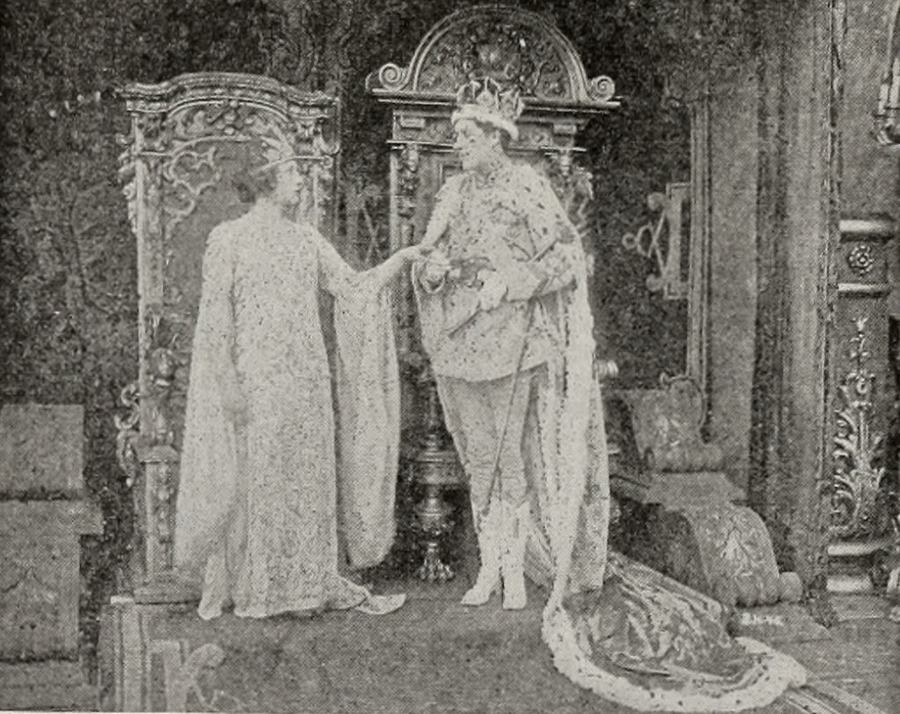
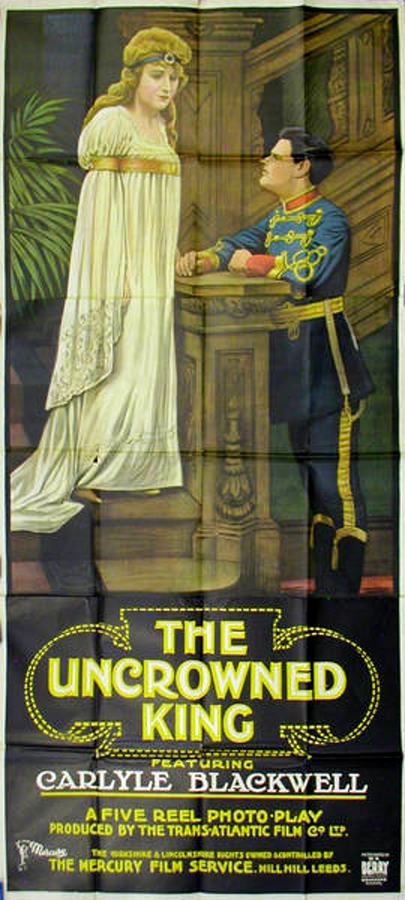
The ensemble cast truly elevates "His Royal Highness" beyond a mere plot device. Bert Honey's performance as Jack Christie is the linchpin, carrying the film with a blend of earnestness and understated heroism. He embodies the "everyman" thrust into extraordinary circumstances, making his struggle and eventual triumph genuinely affecting. George Morgan, as Victor Borden, provides the emotional impetus for the entire saga, his vulnerability and eventual decision to abdicate adding layers of human complexity. Evelyn Greeley's Princess Diana is more than just a plot device; she projects an aura of regal intelligence and warmth, making her a suitable partner for Jack's new life. The supporting cast, including A. Black's menacing Prince Ferdinand, Carlyle Blackwell, Lionel Belmore, Kate Lester, and Herbert Barrington, each contribute to the rich tapestry of this cinematic world, creating a believable, if heightened, reality. Raymond L. Schrock's screenplay is a marvel of storytelling, balancing dramatic tension with moments of genuine human connection and a touch of lighthearted adventure. The pacing is deliberate, allowing the audience to fully immerse themselves in the unfolding drama, a characteristic often found in the more thoughtful productions of its time, much like the intricate character studies seen in The Corner or the nuanced emotional arcs of The Crab, though "His Royal Highness" leans more into grand adventure.
One of the film's most compelling aspects is its exploration of identity. Jack Christie begins as a football star, a symbol of American athleticism and straightforward ambition. His transformation into Prince of Wallarya forces him to shed this identity, or rather, to integrate it with a completely new persona. This isn't just a physical masquerade; it's a profound psychological journey. He must learn to speak, act, and think like a royal, to understand the intricacies of diplomacy and the burdens of leadership. The film subtly suggests that true royalty isn't necessarily about birthright, but about character, courage, and a willingness to put one's people first. Victor's choice to abandon his birthright for love further reinforces this theme, contrasting the weight of inherited duty with the pursuit of personal happiness. It's a nuanced take on destiny, suggesting that while some are born into greatness, others have greatness thrust upon them, and still others choose a path less traveled. This thematic depth elevates "His Royal Highness" beyond a simple adventure story, inviting contemplation on what truly defines a leader and a man.
While a product of its specific cinematic era, "His Royal Highness" showcases a sophisticated understanding of visual storytelling. The settings, whether the romantic French countryside or the opulent, yet tense, royal courts of Wallarya and Terresta, are rendered with an evocative attention to detail. The use of mise-en-scène effectively conveys both the glamour and the danger inherent in the narrative. The cinematography, while perhaps lacking the dynamic flair of later decades, is purposeful, framing key moments with clarity and dramatic impact. It's fascinating to consider how such narratives captivated audiences in a time before sound, relying heavily on visual cues, compelling performances, and the power of the written intertitle to convey emotion and plot. The film stands as a testament to the enduring appeal of silent cinema's ability to transport viewers to fantastical realms, much like the imaginative world-building in The Goose Girl, which similarly leverages visual grandeur and character archetypes to tell a compelling story. Its ability to create a sense of urgency and romance without spoken dialogue is a remarkable feat, showcasing the artistic ingenuity of the period.
When considering "His Royal Highness" within the broader landscape of cinema, it occupies a unique space. While it shares the romantic adventure spirit of films like Up Romance Road, its political undercurrents and themes of mistaken identity give it a more substantial weight. The premise of an ordinary person stepping into a royal role has been revisited countless times throughout cinematic history, but "His Royal Highness" executes it with a distinct charm and sincerity. It predates many of the more famous "commoner becomes royalty" narratives, offering a foundational example of the trope. The film avoids descending into pure melodrama, opting instead for a blend of earnest drama and heroic escapism. Its strength lies in its ability to balance the personal stakes of Jack's dilemma with the grander geopolitical implications, making for a narrative that feels both intimate and expansive. The journey of Jack Christie, from a celebrated athlete to an accidental monarch, is a powerful reminder of the unforeseen paths life can take, and the inherent capacity for greatness that lies within us all, regardless of birthright or prior profession.
The motivations driving each character are surprisingly well-developed for a film of its era. Victor Borden's initial recklessness, driven by passion for Lisette, sets the initial dominoes falling. His subsequent injury and the revelation of his royal lineage are not just plot devices, but moments that expose the vulnerability beneath the princely facade. His ultimate decision to relinquish his throne for love speaks volumes about the value he places on personal happiness over inherited duty, a surprisingly modern sentiment for the time. This choice, while seemingly selfish, is also an act of profound self-awareness, recognizing that he is perhaps not suited for the crown. Conversely, Jack Christie, initially a man of action on the football field, finds himself in a position where diplomacy and calculated risk-taking are his new playing field. His acceptance of the role, initially out of loyalty to Victor, quickly transforms into a genuine commitment to the people of Wallarya. This evolution from friend to protector, and then to a reluctant, yet capable, leader, is the emotional core of the film. The consequences of these choices reverberate throughout the narrative, culminating in a resolution that is both satisfying and thought-provoking, leaving the audience to ponder the true cost and reward of leadership and love.
In conclusion, "His Royal Highness" is more than just a historical curiosity; it's a compelling adventure that holds up remarkably well, offering a glimpse into the storytelling prowess of early cinema. It’s a film that asks profound questions about identity, responsibility, and the nature of power, all wrapped in an engaging narrative of mistaken identity and political intrigue. Raymond L. Schrock’s masterful script and the dedicated performances of Bert Honey, George Morgan, Evelyn Greeley, and the entire cast create a cinematic experience that is both entertaining and thought-provoking. For those who appreciate the foundational works of cinema, or simply enjoy a good story well told, this film offers a delightful journey into a bygone era, where a football star could, against all odds, become the unlikely savior of a nation. It's a testament to the timeless appeal of a hero's journey, proving that even without sound, the most powerful stories can resonate across generations.

IMDb 7.1
1933
Community
Log in to comment.