DbcultAccessing Vault...
3.9/10
Senior Film Conservator
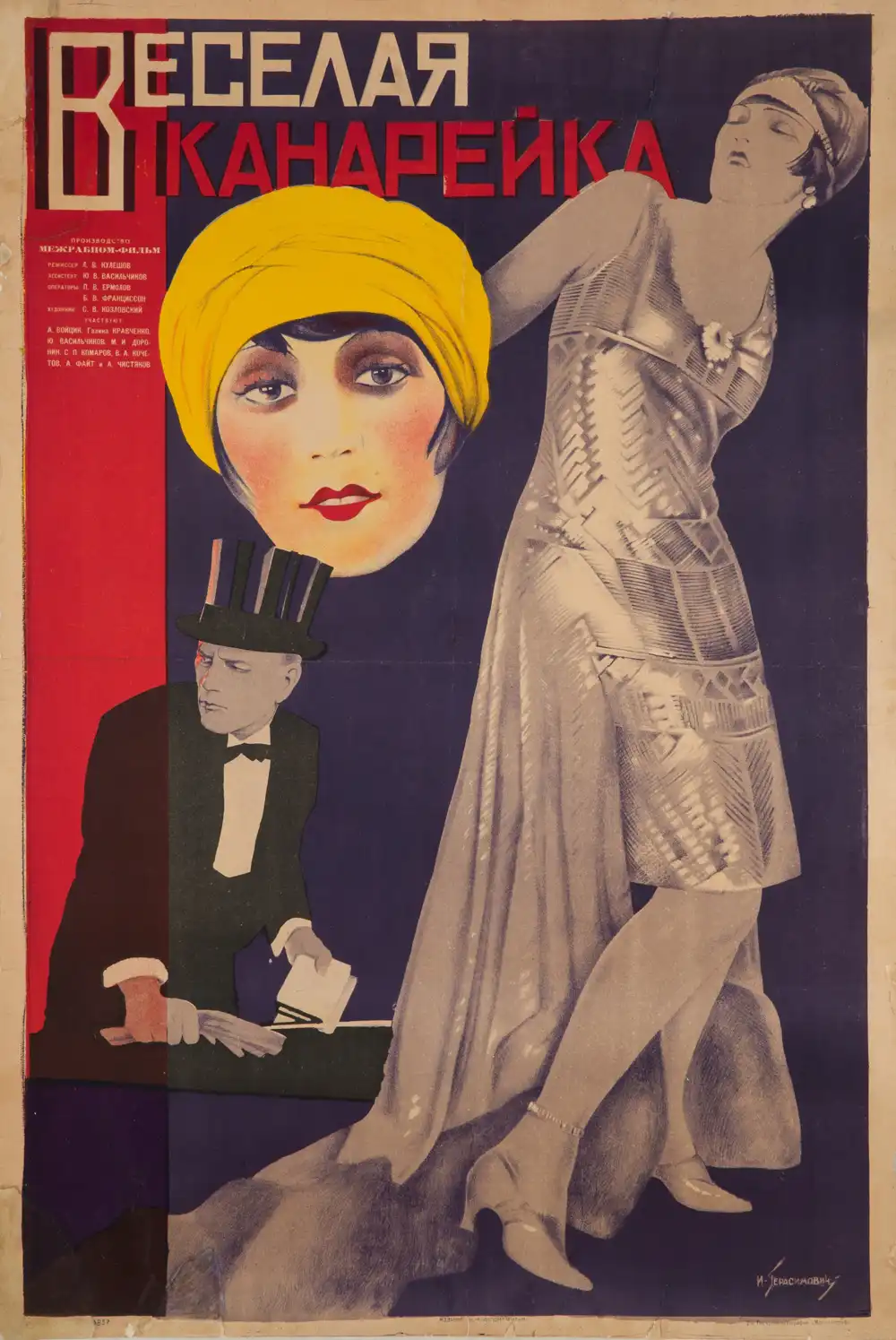
A definitive 3.9/10 rating for a film that redefined the boundaries of cult cinema. Vesyolaya kanareyka remains a cornerstone of transgressive art.
Alright, let's talk about Vesyolaya kanareyka, or 'The Happy Canary,' from way back in 1929. Is it worth digging up today? Well, if you have a soft spot for silent cinema and an interest in early Soviet-era thrillers, absolutely. It's a neat little time capsule. But if you're expecting modern pacing or high-octane spy stuff, you'll probably find it a bit slow. This one’s for the patient, maybe those curious about political dramas from a different age. For anyone else, it might feel like homework. 🧐
The story itself, it's pretty straightforward. Actress Brio (Galina Kravchenko) works in a cafe. The cafe’s name, also 'The Happy Canary,' gives the whole thing a sort of bittersweet vibe. She kinda stumbles into this whole underground world when she meets Brianski and Lugovec. They're Communists, undercover, fighting counter-intelligence. Brio, she’s just trying to live her life, mostly unaware. It’s a classic setup, in a way.
Galina Kravchenko, as Brio, has this really expressive face. Sometimes, her wide eyes tell a whole story just in a quick glance. There's a scene where she's performing, maybe a little too cheerfully, and you can almost see the sadness simmering right under the surface. It makes you wonder what she's really thinking, you know? Like, really thinking, beyond the script. The cafe itself, 'The Happy Canary,' feels like a character. All these little details, the way the tables are set, the kind of people hanging around. It feels lived-in, not just a set.
The spy stuff, with Brianski and Lugovec, it's pretty low-key compared to what we're used to. No exploding pens here. It’s more about whispered conversations and knowing glances. There's one moment, a quick exchange of something small, maybe a note, under a table. It's so subtle, you could miss it if you blink. But it lands with this thud of importance. It’s effective. The tension kinda builds slowly, not with big bangs. It's all about the mood. That's kinda neat.
Vsevolod Pudovkin, who you might know more for his directing, has a part here. Even if it's not a massive role, he brings a certain weight to the screen. You get the sense he’s a serious guy, even without a single spoken word. His presence alone kinda shifts the whole feel of the scene. It’s a good example of how much silent actors had to do with just their body and face. The way he just *looks* at someone can tell you so much.
The editing sometimes feels a bit… abrupt. Like, a scene just cuts. No real fade or anything. But then, other times, it uses these almost jarring jump cuts to push the pace in a way that feels surprisingly modern. A bit ahead of its time for that, perhaps. There’s a chase sequence, or what passes for one in 1929, through some narrow streets, and the way they cut it actually creates a real sense of urgency. It’s not smooth, but it works. The streets themselves look so different, almost like a stage play in some parts.
One thing that really stuck with me was the way they show the 'enemy' counter-intelligence. Not as big, bad villains with twirly mustaches, but just... other people doing their job. It makes the conflict feel more real, less cartoonish. It's a small touch, but it really shifts the vibe. It paints everyone in shades of grey, which for the time, was kinda forward-thinking. It’s not always about good versus evil, sometimes it’s just different sides fighting.
The plot, well, it's a bit on the nose sometimes, but it gets the job done. You can see some of the twists coming, but that doesn't really take away from the overall feel. It's more about experiencing the atmosphere, the tension of the era. The pacing does drag a little in the middle, I won't lie. There are some scenes that linger a bit too long on a character's internal struggle, where a quick cut might’ve helped. But then, that’s silent film for ya. You have to settle into its rhythm.
The ending, without giving anything away, it leaves you hanging a bit. Not in a frustrating way, but in a way that makes you think. It's not a neat bow. You're left with questions about Brio, about the future of her and these agents. That’s a good sign, I think. It doesn't over-explain itself. You have to fill in some of the blanks yourself. Makes it more personal, somehow. 🤔
So, yeah, Vesyolaya kanareyka. It’s a quiet little film that has its moments. It won't blow your mind with effects or a super twisty plot, but it offers a genuine glimpse into a specific time and place. If you're into that sort of thing, give it a watch. It’s a testament to how much could be conveyed without a single word spoken. A decent find for the curious.
IMDb —
1927
Community
Log in to comment.