DbcultAccessing Vault...
5.4/10
Senior Film Conservator
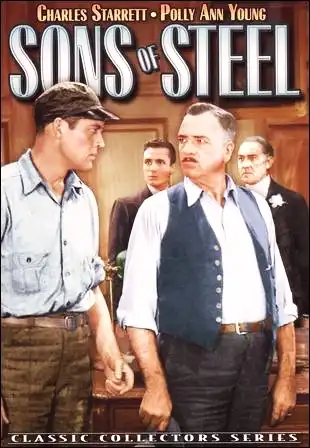
A definitive 5.4/10 rating for a film that redefined the boundaries of cult cinema. Sons of Steel remains a cornerstone of transgressive art.
If you have an hour to spare and you like melodrama with a side of industrial grit, yes. You should watch this if you enjoy seeing how people in the 1930s imagined the 'working man' should act.
You will probably hate this if you want fast-paced action or a plot that doesn't feel like a morality lesson. It is definitely a product of its time, for better or worse.
I found myself actually liking it more than I expected, mostly because the factory scenes look so cool. The sparks are real, the smoke is thick, and you can almost smell the grease through the screen.
Sons of Steel is basically a nature vs. nurture experiment. We have two brothers, Curtis and John, who own this massive steel mill together. Curtis is the socialite who thinks he is better than everyone. John is the one who actually stays at the mill and makes sure the metal gets poured.
Curtis has a son named Philip who is a total fop. That is the only word for him. He wears fancy suits and acts like work is a disease he might catch if he gets too close to a shovel.
Then there is Chad, played by Charles Starrett. Chad is John’s son, and he is the 'good' one. His dad makes him start at the very bottom as a mechanic's helper. He has to pretend he isn't the owner's son so the other workers don't treat him like a prince.
Starrett is really good here. He has this physical presence that makes you believe he could actually lift a heavy wrench. He looks much more at home in a dirty undershirt than in a tuxedo.
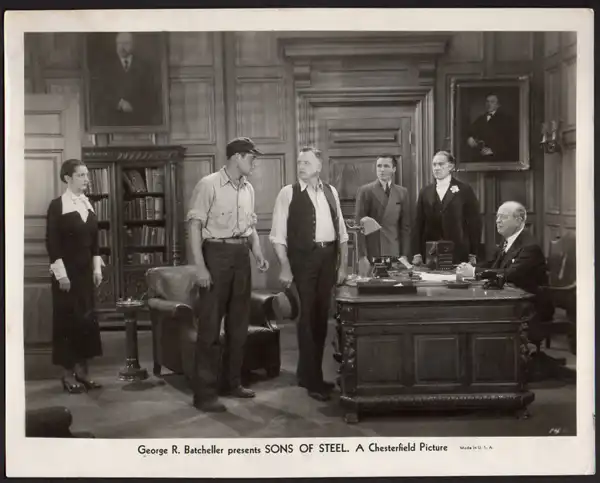
There is a scene early on where Philip is complaining about his allowance while his dad is draped in silk. It feels so excessive. It reminded me a bit of the high-society vibes in The Delicious Little Devil, but without the comedy.
The movie really gets going once Chad is in the mill. The cinematography in the factory is the best part of the whole thing. The way the light hits the molten steel is genuinely beautiful in a dark, scary way.
I noticed one specific shot where a giant bucket of metal is moving over the workers' heads. Nobody is wearing safety gear. It made me nervous just watching it from my couch eighty years later.
The workers in this movie all have these very expressive faces. They look like they have actually lived through a depression. Jack Shutta plays one of the tough guys, and he has this stare that could melt iron.
There is a romance subplot too, because of course there is. Chad falls for Enid, played by Polly Ann Young. Their scenes are fine, but they feel a bit like they belong in a different movie. It is all very polite and whispered.
It reminded me of the romantic tensions in Single Wives, where everyone is trying to be so proper while everything else is falling apart.
One thing that bothered me was how clean Chad’s face stayed. He is supposed to be working in a soot-filled mill for ten hours, but his forehead is always perfectly smudged in a way that looks like makeup. It is a small thing, but once you see it, you can't un-see it.
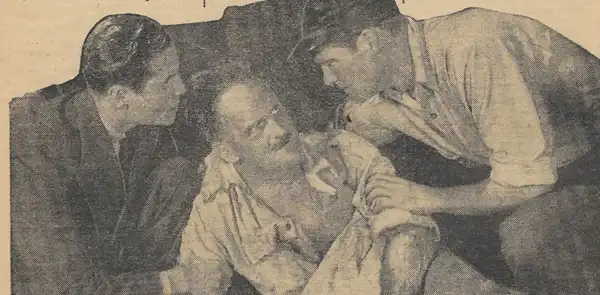
The dialogue is very staccato. People don't talk; they make declarations. "A man is built by his labor!" and things like that. It is a bit cheesy, but it fits the mood.
"You can't make a sword out of tin, and you can't make a man out of silk."
That is basically the entire theme of the movie summed up in one line. It is not subtle. At all. But sometimes you don't want subtle; you want a movie that tells you exactly who to cheer for.
Philip, the rich son, gets into some trouble involving a girl and some bad decisions. It is the typical 'rich kid gone wrong' trope. William Bakewell plays him with just enough annoyance that you really want to see him get punched.
The contrast between the two houses is wild. One is all marble and silent servants. The other is loud and full of life and steam. I think the movie is trying to say that the rich house is empty, even if it’s full of stuff.
There is this one moment where a worker gets injured, and the way the camera lingers on the reaction of the crowd is heavy. It stops being a movie about rich kids and becomes a movie about how dangerous life was back then. It felt very grounded for a second.
The pacing is a bit weird. It starts slow, then speeds up like a runaway train in the last fifteen minutes. I wish they had spent more time on the actual strike and less time on the tea parties.
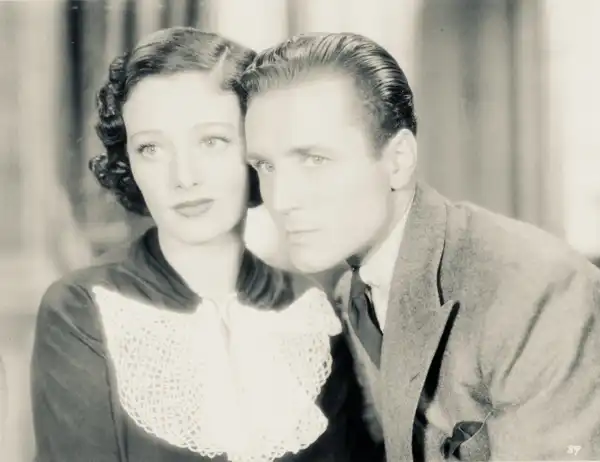
It is definitely better than The Sky Pilot in terms of how it handles its moral message. It feels less like a sermon and more like a story, even if the ending is a bit too tidy for my taste.
Things I wrote down while watching:
I also kept thinking about Mysteries of London for some reason. Maybe it’s the way the city feels like a character itself. The mill is definitely the main character here.
The ending is... well, it's an ending. It solves everything a little too fast. One conversation happens and suddenly everyone understands each other? I don't buy it, but that's how these movies go.
I think the writer, Charles Belden, really wanted to make a point about class. He doesn't quite get there with any real depth, but the effort is visible. You can see the gears turning in the script just like the gears in the factory.
It is a solid B-movie. It doesn't try to be a masterpiece. It just tries to tell a story about two guys and some hot metal. And on that level, it works pretty well.
If you are looking for a deep dive into 1930s labor relations, this isn't it. But if you want to see some cool old footage and a classic story of a guy proving his worth, give it a shot. It is short enough that you won't feel like you wasted your afternoon.
Just don't expect any surprises. The movie is as straight as a steel beam. Sometimes, that is exactly what you need.
IMDb 7.1
1927
Community
Log in to comment.