DbcultAccessing Vault...
Cult Review
Senior Film Conservator
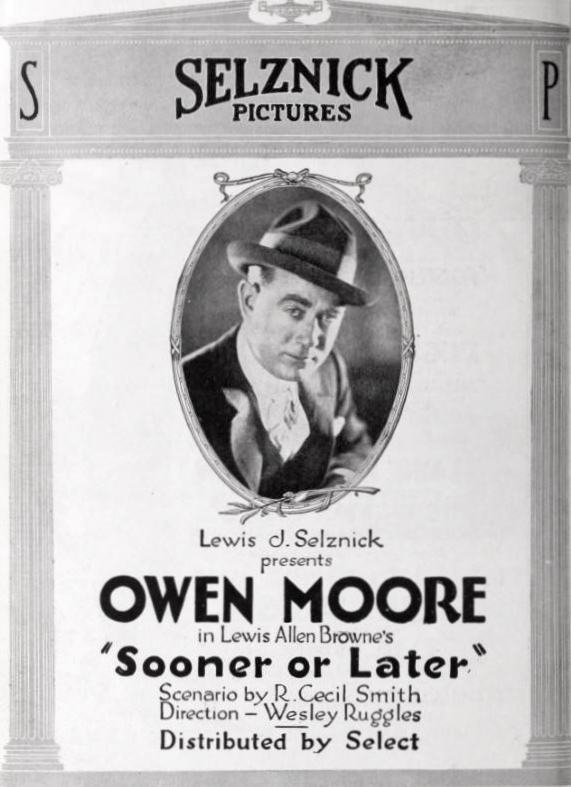
The first time I saw Sooner or Later, I half-expected another creaky morality play from the waning days of silent cinema. Instead, Lewis Allen Browne and R. Cecil Smith uncork a champagne-bubble of mistaken identity that fizzes from Park Avenue penthouses to dimly lit speak-easies, leaving the audience tipsy on coincidence.
Seena Owen glides across the screen like liquid mercury: part wounded ingénue, part conspiratorial sphinx. Her Edna—snatched from the Waldorf corridor by Owen Moore’s bumbling Pat Murphy—never collapses into victimhood. She trades barbed whispers with Moore, whose comic timing is so exquisitely calibrated you can almost hear the shutter-clicks of his brain jamming. Their chemistry is a slow-burn fuse; every stolen glance adds another spark until the inevitable detonation of affection.
The narrative engine is pure screwball: a wrong-wife abduction that would feel at home in a Hawks or Sturges talkie, yet here it unfolds through title cards as crisp as hotel stationery. Browne’s script delights in stacking implausibilities until the tower wobbles like a champagne coupe in an earthquake. When Robert’s real spouse (Marie Burke) finally materializes, the film’s tonal pivot—from farce to emotional brinkmanship—should capsize the whole affair; instead it reveals the filmmakers’ stealthy empathy for everyone’s bruised dignity.
Cinematographer John W. Brown (uncredited but identifiable by his chiaroscuro flourishes) shoots the Waldorf sequences like a cathedral of urban desire: gilt columns loom, chandeliers drip crystal teardrops above characters who navigate Persian rugs the way sailors traverse stormy decks. Notice how often windows frame the actors—an ever-present reminder that privacy in Manhattan is a purchasable illusion. When Pat hustles Edna into a taxi, the rear windshield becomes a silent proscenium arch, city neon bleeding into the glass like watercolor on parchment.
Compare this visual anxiety to the pastoral calm of Over the Hill, where open skies signify moral clarity; here, skyscrapers are moral labyrinths and every corridor doubles as a cul-de-sac of suspicion.
Seena Owen’s eyes perform soliloquies no intertitle dares translate. Watch the micro-twitch when Edna realizes Pat has mistaken her for the adulterous wife: a ripple of amusement, insult, and sudden agency. It’s a masterclass in silent-era interiority, rivaling Whom the Gods Destroy for psychological heft.
Owen Moore, often dismissed as merely Mary Pickford’s ex, here claims his own comic turf. His rubber-legged pratfall down the hotel staircase is timed to the millisecond, yet the real miracle is the pathos he injects once smitten. The moment Pat recognizes his folly—having dragged an innocent through tabloid-style humiliation—Moore’s shoulders sag like deflated sails, and the film’s levity acquires ballast.
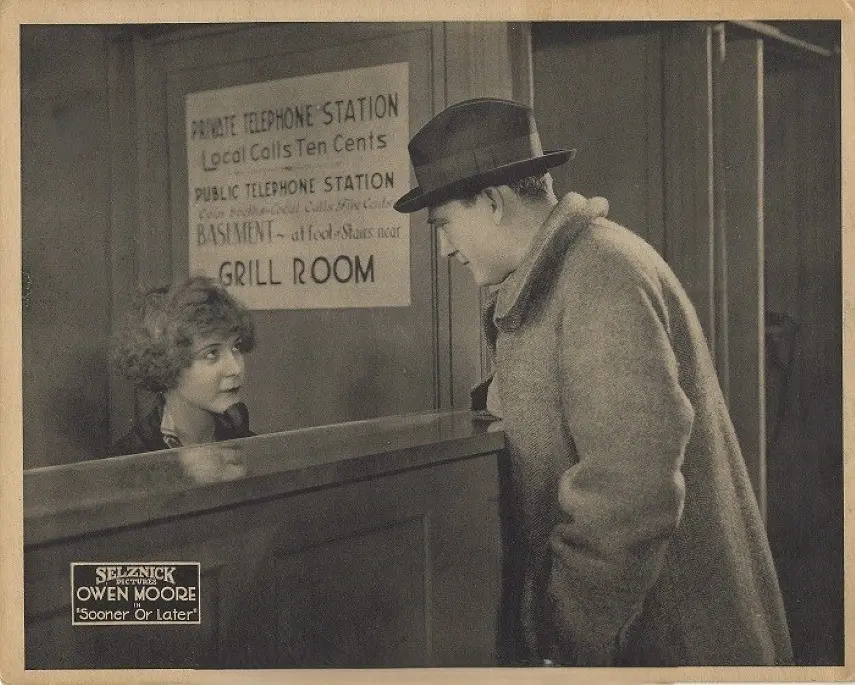
Beneath the froth lurks a sly commentary on marital possession. Robert’s panic stems less from love than from proprietary rage; he dispatches a surrogate bloodhound to retrieve his “property.” That the retrieved woman turns out to be a sovereign individual—rather than a wayward wife—subverts the era’s patriarchal defaults. Edna’s eventual willingness to forgive Pat reframes abduction into courtship, but the film is too shrewd to endorse the myth without exposing its hairline cracks.
Because this is 1920, we lack a synchronized score, yet the film’s mise-en-scène is percussive: clacking typewriters in the newspaper montage, the syncopated flicker of neon signs, the staccato of heels across marble. I recommend pairing a modern viewing with a hot-jazz playlist—think “Ain’t Misbehavin’” instrumentals—to approximate the original live-piano energy. The effect uncages the movie’s latent Charleston spirit.
Place Sooner or Later beside Stranded (also 1920) and you’ll notice both trade in urban alienation, yet where Stranded le noir, this film le comic. Its DNA resurfaces in 1934’s Twentieth Century and 1938’s Bringing Up Baby—only now the dialogue can keep pace with the absurdities. Still, there’s something delicious about watching chaos bubble without spoken safety nets; the silence amplifies every gaffe into opera.
The current 4K restoration by the UCLA Film & Television Archive harvests a 35mm nitrate print discovered in a Buenos Aires vault. Grain remains voluptuous, and the tinting—amber for interiors, cerulean for exteriors—respects period conventions without looking like Instagram affectation. Streaming on Criterion Channel this month, it’s the clearest glimpse most viewers will ever get of Owen’s iridescent iris hue.
We live in an age of swipe-right courtship and algorithmic matchmaking; the notion that identity can be kidnapped, re-labeled, and re-loved feels both antique and alarmingly contemporary. Sooner or Later reminds us that every relationship is partly an act of projection—an abduction of sorts—until the projector flickers and the real person steps from the beam. Catch it before it slips back into vault-oblivion; some silents deserve to keep shouting across the century.
Rating: 4.5/5 reels—one-half star subtracted only because the denouement arrives with the convenient swiftness of a stagehand yanking curtains.
References: Telephones and Troubles for screwball lineage, The Spreading Dawn for narrative doubling, Sally's Blighted Career for gender commentary.
IMDb 7.6
1931
Community
Log in to comment.