DbcultAccessing Vault...
Cult Review
Senior Film Conservator
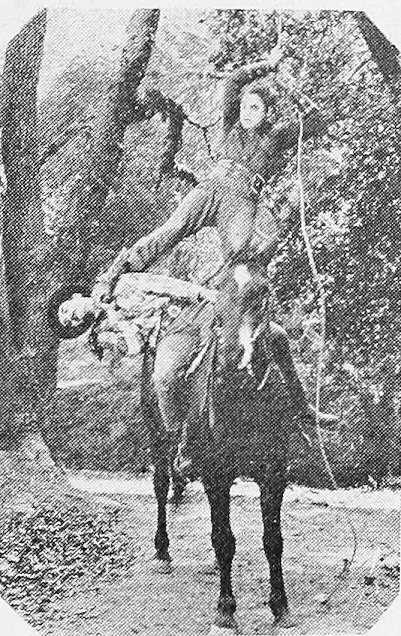
Does Ridin' Easy offer anything to the modern viewer beyond historical curiosity? Short answer: yes, but primarily as a masterclass in how to make a budget Western feel like a life-or-death struggle through sheer kinetic energy.
This isn’t the polished, romanticized version of the West seen in high-budget epics of the era. This is a film that smells of dust, sweat, and the desperate anxiety of the working class. It is for the viewer who prefers the raw edges of independent cinema over the sanitized studio products of the mid-1920s. It is definitely not for those who require complex psychological profiling or slow-burn character development.
1) This film works because it treats its violence with a blunt, unglamorous hand that feels more honest than its big-budget contemporaries.
2) This film fails because the secondary characters, particularly the Lyons family, exist purely as plot devices to be moved across a board with little internal life.
3) You should watch it if you want to see the DNA of the modern action-thriller in its most primitive, effective form.
Dick Hatton was never the leading man that history remembered with the same reverence as a Douglas Fairbanks, but in Ridin' Easy, he proves why he was a staple of the B-Western circuit. There is a physical presence here that is remarkably grounded. When he is beaten by Red Hawks’ gang early in the film, the camera doesn't shy away from the aftermath. He looks genuinely shattered.
Unlike the more theatrical performances found in The Prodigal Son, Hatton’s acting is remarkably internal for a silent film. He moves with a purpose that suggests a man who has spent more time in a saddle than in front of a mirror. This lack of vanity is the film's greatest asset. It grounds the high-stakes plot in a reality that feels lived-in.
One specific moment that stands out is Hatton’s arrival at the Lyons ranch. He isn't a hero sweeping in to save the day; he is a broken man accepting charity. The way he interacts with Marilyn Mills (Mary Lyons) is devoid of the typical melodramatic posturing of the 1920s. It’s quiet. It’s functional. It works.
What makes Ridin' Easy surprisingly modern is its focus on the villainy of the moneylender. While Red Hawks provides the physical threat, the true antagonist is the man holding the mortgage. This reflects a very real anxiety of the 1920s American West—the shift from lawlessness of the gun to the lawlessness of the contract.
The plot involving the rustled cattle to force a foreclosure is a mechanic we’ve seen a thousand times, but Garry O’Dell’s writing gives it a sharp, cynical edge. Compare this to the more abstract moral failings in A Certain Rich Man. Here, the evil is transactional. It’s about paper, not just power.
The moneylender’s manipulation of the outlaws suggests a tiered system of corruption. The outlaws are just the muscle; the suit is the brain. It’s a dynamic that feels more like a 1940s noir than a 1925 Western. The film suggests that the frontier isn't being tamed by civilization, but by predatory capitalism.
If you are a student of film history or a fan of the Western genre, Ridin' Easy is a mandatory watch for its pacing alone. While many silent films of the period, such as Lady Windermere's Fan, focused on social grace and dialogue-heavy intertitles, this film focuses on movement. It is a lean, mean machine of a movie that doesn't waste a single frame on unnecessary exposition.
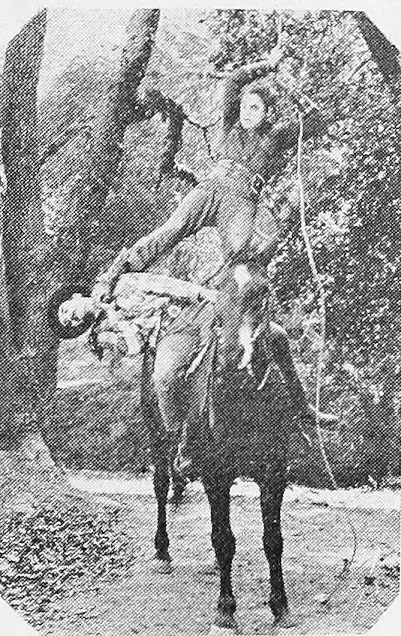
The action sequences, particularly the escape on the trail, are choreographed with a clarity that many modern directors would envy. You always know where the characters are in relation to the threat. It’s simple. It’s effective. It’s cinema in its purest form.
The visual language of Ridin' Easy is defined by its exterior shots. There is a tangible sense of heat and distance. When the stranger is waylaid by Hawks and his men on the trail, the use of the landscape isn't just for background; it’s a tactical element of the scene.
The camera work is functional rather than experimental. You won't find the expressionistic shadows of Dikaya sila here. Instead, you get a bright, harsh light that exposes the wear and tear on the costumes and the exhaustion on the actors' faces. This lack of artifice is refreshing. It makes the stakes feel higher because the world looks like it could actually hurt you.
The final scene at the justice of the peace is a masterpiece of small-scale tension. The cramped interior of the office contrasts sharply with the wide-open spaces of the rest of the film, creating a sense of claustrophobia that mirrors Mary’s predicament. When Hatton finally bursts through the door, the release of tension is palpable.
Pros:
Cons:
I have a debatable opinion about the ending of this film. While it is framed as a traditional happy ending, there is a biting irony in the stranger using the same justice of the peace—and the same legal framework—that the villain was just using for coercion. It suggests that the law in Big Horn is merely a tool, and its morality depends entirely on who is holding the gun.
This cynicism is what elevates Ridin' Easy above its contemporaries like Puppy Love or the whimsical Novoye platye korolya. It’s a film that understands that on the frontier, survival and legality are often at odds. The stranger doesn't just save Mary; he claims her using the same bureaucratic machinery that almost destroyed her father.
It’s a punchy conclusion. It doesn't apologize. It just ends.
When you compare Ridin' Easy to a film like The Ghost of Rosy Taylor, you see the difference between a film made for the drawing room and a film made for the dirt. Garry O'Dell’s script is a masterclass in efficiency. Every scene serves a dual purpose: it either moves the cattle closer to the market or the stranger closer to the villain.
There is no room for the "silent sacrifice" tropes found in Her Silent Sacrifice. In this world, sacrifice is just another way to lose your ranch. This pragmatism is what makes the film feel so distinct. It’s a blue-collar Western.
Ridin' Easy is a lean, muscular piece of filmmaking that deserves more than its current status as a footnote in silent history. It lacks the poetic beauty of Sången om den eldröda blomman, but it makes up for it with a gritty, unpretentious energy. It’s fast. It’s dirty. It works. While it may not change your life, it will certainly change how you view the "simple" Westerns of the 1920s. It’s a reminder that even a century ago, the best stories were the ones that got their hands dirty.
"A fascinating relic of the silent era that prioritizes kinetic action over melodramatic fluff, proving that Dick Hatton was the grit in the gears of the early Hollywood machine."
IMDb 5.6
1915
Community
Log in to comment.