DbcultAccessing Vault...
5.5/10
Senior Film Conservator
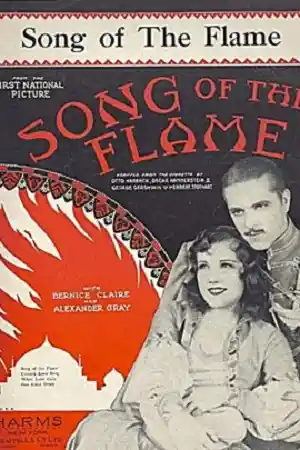
A definitive 5.5/10 rating for a film that redefined the boundaries of cult cinema. The Song of the Flame remains a cornerstone of transgressive art.
If you are looking for a masterpiece of cinema, you should probably keep walking. This is a movie for the history nerds or people who like seeing how weird early sound films could get.
It is a musical about the Russian Revolution. Yes, you read that right.
I think most modern audiences would find this painfully slow. But if you have a soft spot for early Technicolor, there is something here for you.
The story follows a girl named Aniuta, played by Bernice Claire. They call her "The Flame" because she sings songs that make people want to start a riot.
She has this very operatic voice that was popular back then. To me, it sounds like she is trying to break every window in the room.
The whole thing feels like a stage play that someone accidentally filmed. The camera barely moves, and people stand in lines like they are waiting for a bus.
Then there is Alexander Gray, who plays the Prince. He looks like a cardboard cutout of a handsome man.
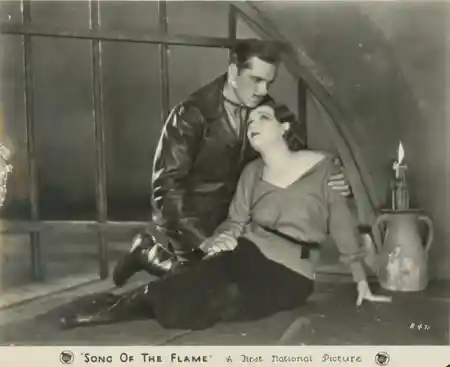
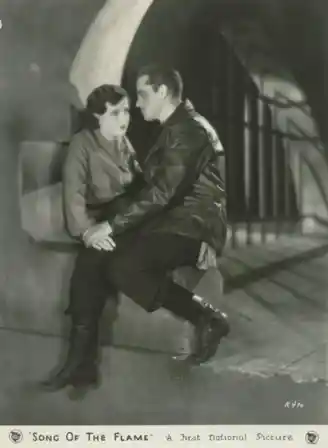
They fall in love, which is awkward because she is supposed to be leading the poor people against the rich people. It is the classic "I hate your class but I like your face" trope.
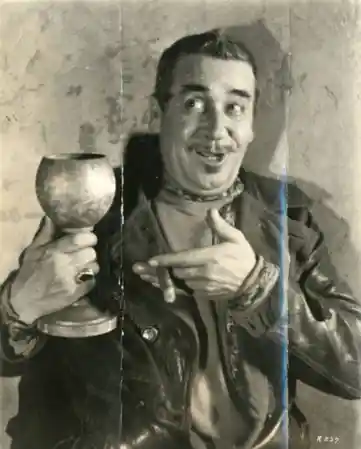
Noah Beery shows up as the villain, Konstantin. He is the best part of the movie because he actually looks like he is having fun being a jerk.
There is a plot point about the Flame having to sacrifice her virginity to save the Prince. It is handled with that blunt, pre-code era logic that always feels a bit jarring.
One minute they are singing about harvest, and the next, it is all about dark sacrifices and betrayal. The tonal shifts are like hitting a wall at sixty miles an hour.
I noticed the costumes are incredibly detailed. Since this was an all-Technicolor movie, they really went wild with the reds and greens.
The color looks a bit like an old postcard that got wet. It is beautiful in a haunting, decaying sort of way.
They used something called Vitascope for some scenes. It was an early widescreen process that Warner Brothers was trying to push.
You can tell which scenes were meant for the big screen. The crowds look massive, even if half the extras look like they are just standing there wondering when lunch is.
I kept waiting for the Gershwin music to kick in. You see his name and you expect something like Girl Crazy, but it is much more of a dusty operetta.
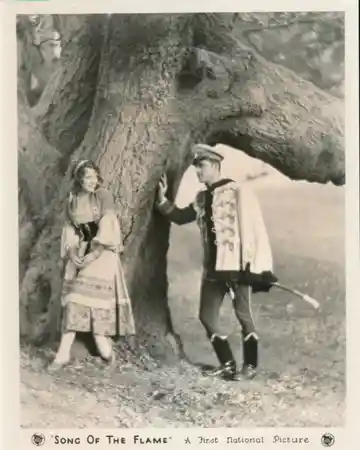
The songs are okay, but none of them really stuck in my head after the credits rolled. They all sort of blend into one long, loud note.
There is a scene where a mob is marching and it is supposed to be scary. But the way they move is so synchronized it looks like a ballet.
It lacks the grit of something like La terre. Everything is too clean for a revolution.
I did like the weird little moments in the background. Like a guy in a fur hat who keeps looking at the camera like he’s lost.
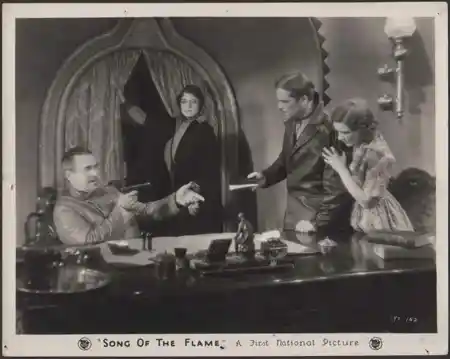
Or the way the makeup makes everyone's eyes look pitch black. It gives the whole movie a slightly ghostly vibe.
The dialogue is very stiff. People don't talk; they proclaim things at each other.
"I shall lead them to the fire!" is the kind of thing they say while standing perfectly still. It’s hard to take the drama seriously when it feels so rehearsed.
Is it worth watching? Only if you want to see a rare artifact. It is a glimpse into a time when Hollywood had no idea what it was doing with sound or color.
It is clunky and the acting is from another planet. But there is a charm to how hard it tries to be epic.
I probably won't watch it again. But I’m glad I saw it once, just to see Noah Beery be a creep in two-color Technicolor.
It’s a movie that feels like it belongs in a museum, not a cinema. Watch it with a grain of salt and a lot of patience.
IMDb —
1926
Community
Log in to comment.