DbcultAccessing Vault...
Cult Review
Senior Film Conservator
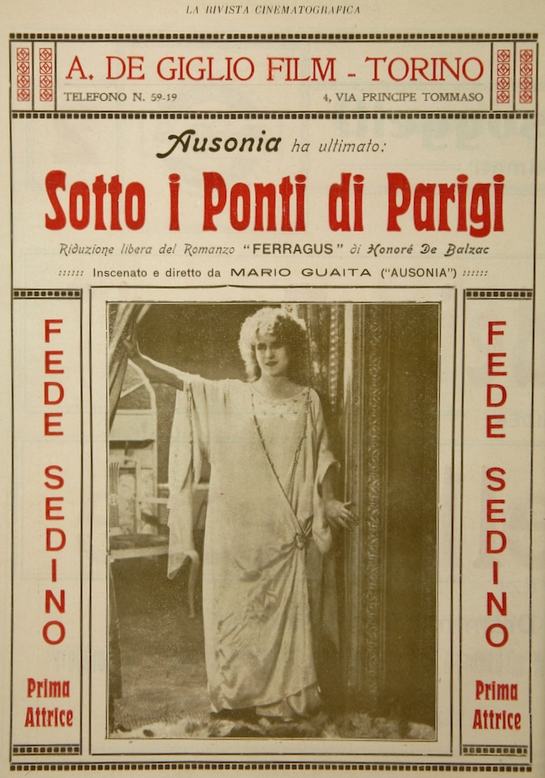
A charcoal moon hangs over the opening shot, so close you could bite it, and already you sense that Sotto i ponti di Parigi will not traffic in tidy sympathies. The camera—operated by some anonymous virtuoso who deserved a plaque—glides beneath the stone harps of the bridges, past iron gargoyles glistening with river-spray, until it lands on Beresini’s solitary figure. He is drawing a map of places that no longer exist, or perhaps have yet to be born; the double-exposure overlays his charcoal lines with the ghostly silhouette of a cathedral that evaporates like breath on glass. In that instant the film announces its credo: memory and desire are Siamese twins, conjoined by the knife-edge of the present.
Silent cinema is often eulogised as a kingdom of gestures, yet here the absence of spoken dialogue becomes a cavernous acoustic: you hear boots scuffing against slimy stone, the soft pop of a wine-cork, the collective inhale before a shared cigarette is lit. Credit goes to the Venetian cinematographer who flooded the set with handheld mirrors, ricocheting lamplight until it resembles liquid jazz. Note how the color tinting mutates scene by scene: tobacco-amber for the card games under Pont Royal, cadaverous cyan for the predawn exodus, and a bruised magenta when the flotilla finally drifts toward the estuary. The palette alone could teach a graduate seminar on synaesthesia.
If you crave comparison, the closest echo is Our Heavenly Bodies with its cosmic superimpositions, but whereas that film reaches for the firmament, Sotto i ponti di Parigi burrows downward, cultivating a soil-smelling intimacy. The Seine itself becomes a character, half-feral godmother to these misfits; its surface reflects not sky but secrets, and when the flood rises you feel the river’s pulse as a slow-motion heartbeat under ribs of stone.
Felice Carena, primarily a painter in real life, moves with the feral grace of a tomcat who has read Baudelaire. His pickpocket courts danger not for coin but for contact: each stolen watch is a palmed heartbeat, a relic of someone else’s chronology. When he finally meets Fede Sedino’s seamstress—who counters his bravado with a gaze so still it could freeze mercury—their wordless pas de deux feels like watching two negatives develop into a single, haunting photograph.
Angelo Rabuffi’s gendarme deserves special mention. Rather than a stock villain, he embodies institutional fatigue: shoulders permanently bent as if carrying the entire prefecture upon them. In one remarkable close-up, the tear that slips down his cheek is indistinguishable from the rain; authority itself is weeping, admitting bankruptcy. The moment is so quietly cataclysmic it makes the courtroom fireworks of The Impostor feel like pageantry.
The film’s cartographic obsession extends to its very structure: episodes overlap, double back, erase themselves. You will spot the same accordion player in 1890s footage, then again in what appears to be contemporary 1928, his face un-aged, as if Paris secretes doppelgängers the way other cities breed pigeons. This circularity weaponises nostalgia, exposing it as both narcotic and necessity. When the flotilla of detritus finally sails, it is less an escape than a re-enactment; the outcasts are paddling toward a memory they borrowed from someone else’s postcard.
Compare this recursive urban labyrinth to the moral straight line of Hell’s Hinges where every dusty street points toward redemption or doom; here, salvation is a spiral staircase missing its middle steps.
Released in 1928, the film anticipates both the coming economic crash and the slow sediment of fascism. Yet the script refuses pamphleteering; instead, it evokes precarity through texture—empty stomachs described via the hollow clang of a tin spoon against an iron pot, the menace of eviction heard in the off-key whistle of a landlord who never appears onscreen. The flood that finally lashes the arches feels like the return of repressed history: waters rising to wash away promises already broken.
In one bravura sequence, the camera tilts up from the swirling Seine to a poster-plastered wall where a smiling bourgeois family advertises a seaside tonic. The juxtaposition is silent but deafening: the ad promises vertical escape (to higher ground, to healthier lungs) while the river delivers horizontal democracy—everyone, rich or ragpicker, will be drenched.
Watch how the film treats fabric: lace collars fray like nervous identities; a once-scarlet petticoat fades to rust, mirroring its owner’s dwindling hopes. Costume here is archaeology. When the seamstress finally unravels her own wedding gown to weave it into the flotilla’s sails, the gesture plays like a handwritten resignation letter to traditional femininity—an act that resonates louder than the proto-feminist monologues in Liliana.
The men, too, are unmade by cloth: the strongman’s leopard-print leotard stretches to tearing, his muscles no longer marketplace marvels but ballast. The film whispers a thesis: we are what we wear, but when garments dissolve we do not become naked souls—rather, we evaporate into collective vapor, a fog of shared vulnerability.
Cinephiles will detect pre-echoes of Vigo’s L’Atalante and even early Resnais, yet the film’s refusal of a central love plot sets it apart. Romance flickers but never anchors; instead, camaraderie functions like improvised jazz—ephemeral, combustible, prone to blue notes. This decentralised heart makes the movie feel startlingly contemporary in our era of fragmented narratives. It is the anti-Susan’s Gentleman: no tidy coupling, no moral ledger balanced in the final reel.
Streaming-era viewers, fatigued by three-act blueprints, may find liberation in this drifting structure. The film trusts you to assemble meaning the way its characters assemble their raft—from flotsam that looks worthless until perspective tilts.
Little is known about the writers; history swallowed them like the Seine swallowing cigarette butts. Perhaps they were anarchist pamphleteers, perhaps bored journalists slumming with the avant-garde. Their anonymity suits the film’s ethos: authorship dissolves into the collective hum, the same way the bridges belong simultaneously to bankers and beggars. The intertitles—sparse, haiku-brief—read as if whispered by a passer-by who has already vanished round the corner.
This open secret feels refreshing in an age of auteur worship. You cannot reduce the movie to a singular vision; it is a stew stirred by many hands, tasting of smoke, riverwater, and the faint iron of menstrual blood on burlap.
Some festival catalogues pigeonhole the film as Italian neorealism avant-la-lettre. Wrong: neorealism fetishises the everyday; this picture liquefies it into dream. Others label it pastoral noir, but noir needs crime as spine; here, criminality is as incidental as weather. Better to think of it as hydraulic magic-realism, a genre that exists solely under these arches.
Scholars hunting progenitors might also cite Riders of the Dawn, yet that Western mythologises open horizons, whereas Sotto i ponti di Parigi tells us that horizons shrink to the width of a damp overcoat when rain refuses to cease.
When the flotilla reaches the estuary, the director hurls us into a freeze-frame that lasts a full thirty seconds—an eternity in silent cinema. The image is neither triumph nor defeat; it suspends breath mid-throat. You realise the journey was never about finding land, only about elongating the moment before the inevitable splash. The screen fades not to black but to a pewter grey, the color of river and sky when dawn hesitates to commit.
That unresolved suspension worms into your day. Long after the lights rise, you walk city streets hyper-aware of underpasses, half expecting to hear an accordion exhale a minor chord. The film has colonised your peripheral vision; every puddle now threatens to reflect a cathedral that was never built.
Is it flawless? Of course not. The second reel survives only in 16-mm fragments, leaving a narrative crater the size of a manhole. Some intertitles feel dashed off by a café existentialist after one too many absinthes. Yet these scars enhance the film’s bruised beauty, reminding us that history itself is a half-lost reel forever splicing itself in the dark.
Seek it out in the rare cinematheque screening, or pester your favourite streaming service until they add a 4K restoration. If they reply that audience demand is too niche, quote the film’s silent mantra: “Under bridges, everyone is majority.”
In a media landscape addicted to redemption arcs, Sotto i ponti di Parigi drowns redemption itself, then surfaces gasping with a joke so bleak you cannot decide whether to laugh or build a monument. Bring friends; bring enemies; bring anyone who still believes cinema can be a verb rather than a product. And when the freeze-frame hits, hold your breath along with the characters—because for thirty seconds you will share a single, communal lung, inhaling the soot-flavoured air of a city that forgot its own name but remembers yours.
IMDb 7.2
1927
Community
Log in to comment.