DbcultAccessing Vault...
Cult Review
Senior Film Conservator
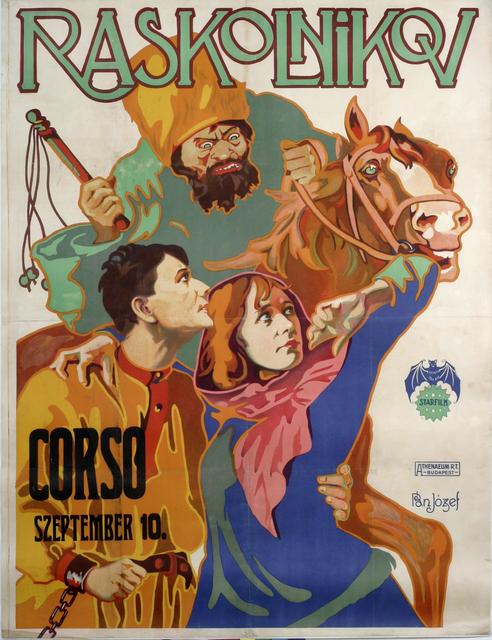
Stepping into the spectral world of 1923's Raskolnikov is akin to entering a waking dream, a somber, silent ballet of the soul. This profound cinematic endeavor, drawing its essence from Fyodor Dostoevsky's monumental novel, 'Crime and Punishment,' endeavors to translate the intricate labyrinth of human psychology onto the silver screen with a boldness rarely seen in its era. Long before the advent of sound, or even the full embrace of complex camera work that would define later decades, this film dares to dissect the very fabric of guilt, moral relativism, and the tortured path to redemption. It is a testament to the enduring power of Dostoevsky's narrative and the nascent artistry of early cinema that such a weighty philosophical and psychological drama could be conveyed with such impactful clarity, relying almost entirely on visual storytelling, the evocative power of intertitles, and the raw, unvarnished performances of its dedicated cast.
The film, with its roots firmly planted in the literary genius of Dostoevsky, and adapted for the screen by Peter Paul Felner and Károly Lajthay, plunges directly into the suffocating atmosphere of St. Petersburg, a city that feels less like a backdrop and more like a character unto itself – a grim, oppressive entity mirroring the protagonist's internal turmoil. The narrative, as fans of the novel will immediately recognize, centers on Rodion Raskolnikov, a brilliant but impoverished student whose mind is a crucible of radical ideas. He believes in the existence of 'extraordinary men' who, by virtue of their superior intellect and vision, are exempt from conventional moral laws, permitted to commit heinous acts if those acts serve a higher purpose. His target: an elderly, miserly pawnbroker, Alyona Ivanovna, whom he rationalizes as a parasitic blight on society. The film masterfully portrays the meticulous planning and the chilling execution of this crime, allowing the audience to witness not just the act, but the agonizing mental gymnastics that precede it. The initial moments establish a palpable tension, a sense of impending doom that permeates every frame, drawing viewers inexorably into Raskolnikov's tormented psyche.
What truly elevates Raskolnikov beyond a mere plot recounting is its profound exploration of the aftermath. Once the deed is done, the film pivots from a crime drama into a searing psychological study. Raskolnikov, brought to life with an almost unbearable intensity by Károly Lajthay, is not the triumphant Übermensch he envisioned. Instead, he is immediately ensnared by a relentless, all-consuming guilt that manifests as paranoia, feverish delirium, and an almost pathological aversion to human contact. Lajthay's portrayal is a masterclass in silent acting, conveying the character's internal inferno through subtle facial contortions, haunted eyes, and a restless physicality that speaks volumes. Every twitch, every averted gaze, every sudden start, screams the torment of a soul in freefall. The film’s visual language, though limited by the technology of its time, becomes a powerful tool in depicting this psychological unraveling. Shadows lengthen and contort, framing Raskolnikov in a perpetual state of unease. The claustrophobia of his tiny room becomes a metaphor for the confines of his own mind, a prison of his own making.
The supporting cast, too, delivers performances that resonate with the profound emotional weight of Dostoevsky's characters. Lilla Bársony, as the tragically virtuous Sonya Marmeladova, provides the film's moral compass and its most poignant emotional core. Her Sonya is a beacon of unwavering faith and unconditional love, a stark, luminous contrast to Raskolnikov's intellectual nihilism. Bársony imbues Sonya with a quiet strength and a deeply affecting vulnerability, her expressive eyes conveying a world of suffering and spiritual grace. Her scenes with Raskolnikov are electric, moments of profound human connection where the film's philosophical debates are distilled into raw, emotional exchanges. It is through Sonya that Raskolnikov begins to glimpse a path beyond his self-imposed damnation, a glimmer of hope that challenges his deeply entrenched cynicism. The silent dialogue between them, facilitated by intertitles, carries an extraordinary weight, each word a hammer blow against Raskolnikov's hardened heart.
József R. Tóth's portrayal of the shrewd and psychologically astute detective Porfiry Petrovich is another standout. Tóth brings a chilling, almost playful intelligence to the character, a man who understands the criminal mind perhaps better than the criminal himself. Porfiry's interrogations are less about gathering evidence and more about psychological warfare, a subtle, intellectual chess match designed to break Raskolnikov's will. Tóth's performance is characterized by a deceptive calm, a knowing smirk, and eyes that seem to see straight into Raskolnikov's tormented soul. His scenes are slow burns, building tension through sustained close-ups and deliberate pacing, as he masterfully manipulates Raskolnikov's guilt and paranoia. This dynamic recalls the intricate psychological battles depicted in other early thrillers, though perhaps few achieved the same depth of character study as seen here. The relentless, yet understated, pursuit of justice by Porfiry is a narrative engine that propels the film forward, keeping the audience on edge, anticipating the inevitable collapse of Raskolnikov's facade.
Annie Góth, though perhaps with less screen time than the central trio, contributes significantly to the film's emotional tapestry. Her presence, along with other secondary characters, helps to populate the grim, bustling world of St. Petersburg, grounding Raskolnikov's abstract philosophical struggles in the harsh realities of poverty and human suffering. The ensemble cast, under what we can presume was a meticulous direction (given Károly Lajthay's role as writer and actor, indicating significant creative input), works harmoniously to create a cohesive and deeply affecting portrayal of Dostoevsky's universe. The performances are not merely theatrical; they are deeply felt, communicating the intricate emotional nuances required to adapt such a rich literary source material.
Adapting a novel as dense and internally focused as 'Crime and Punishment' to the silent screen was an audacious undertaking. Dostoevsky's work is renowned for its lengthy philosophical monologues, its intricate psychological analyses, and its profound moral debates. Without spoken dialogue, the filmmakers had to rely on visual metaphors, character expressions, and carefully crafted intertitles to convey the story's intellectual and emotional depth. The film succeeds remarkably well in this challenge. The use of symbolism, though subtle, is effective. The oppressive architecture of the city, the squalor of Raskolnikov's room, the stark contrast between light and shadow – all contribute to the film's atmospheric power. The pacing is deliberate, allowing the audience to absorb the emotional weight of each scene, a stark contrast to the often frenetic energy of some contemporary silent films. This measured approach allows the psychological drama to unfold organically, drawing the viewer deeper into Raskolnikov's unraveling mind.
Comparing Raskolnikov to other films of its era, one might draw parallels with the psychological intensity found in German Expressionist cinema, though this film maintains a more grounded, naturalistic aesthetic. While films like Die Doppelnatur might explore similar themes of internal conflict and duality, Raskolnikov distinguishes itself through its relentless focus on the moral and spiritual dimensions of its protagonist's struggle. It lacks the overt fantastical elements sometimes present in Expressionist works, opting instead for a stark realism that amplifies the horror of Raskolnikov's internal battle. The film's strength lies in its ability to externalize internal turmoil through carefully composed shots and the sheer power of its actors' expressions, a testament to the universal language of human emotion.
The script, penned by Peter Paul Felner and Károly Lajthay, demonstrates a deep respect for Dostoevsky's source material, even as it condenses and adapts it for a different medium. They manage to retain the core philosophical questions – the nature of justice, the possibility of redemption, the burden of free will – without sacrificing narrative coherence. The intertitles are not merely expository; they often echo Dostoevsky's prose, providing brief but potent insights into Raskolnikov's fragmented thoughts and the moral dilemmas he faces. This delicate balance ensures that the film is not just a visual spectacle, but also an intellectual and spiritual journey.
The film's exploration of guilt and its consequences is remarkably prescient, touching upon themes that remain eternally relevant. The idea of a 'superior' individual transgressing societal norms for a perceived greater good is a concept that continues to echo through history and literature. Raskolnikov, even in its silent form, forces the audience to confront uncomfortable questions about morality, justice, and the inherent value of every human life. It’s a compelling argument against the dangers of intellectual arrogance divorced from empathy, a cautionary tale rendered with stark, unforgettable imagery.
The journey of Raskolnikov towards confession is the film’s emotional climax, a slow, arduous process of self-reckoning. The final scenes, depicting his surrender and his eventual exile to Siberia, are imbued with a quiet dignity and a sense of earned peace. While the film necessarily streamlines Dostoevsky's extensive epilogue, it captures the essence of his spiritual resolution: that true redemption comes not from intellectual justification, but from suffering, humility, and a return to fundamental human connection. The enduring image is not one of punishment, but of a soul finally finding solace, however arduous the path. This narrative arc, though common in stories of moral awakening, is handled with a particularly raw and unflinching honesty in Raskolnikov.
In an era when cinema was still finding its voice, Raskolnikov stands as a bold and ambitious achievement. It proved that complex literary works could be adapted with fidelity and emotional resonance, even without the aid of spoken words. It’s a testament to the vision of its creators and the profound talent of its cast that a film nearly a century old can still provoke such deep thought and emotional response. It’s a vital piece of cinematic history, not just as an early adaptation of a literary classic, but as a powerful psychological drama in its own right. For those interested in the evolution of storytelling on screen, and particularly in how early filmmakers tackled the most challenging of narratives, Raskolnikov offers a compelling and deeply rewarding experience. It reminds us that the human condition, with all its moral ambiguities and spiritual yearnings, has always been fertile ground for profound artistic exploration, regardless of the medium or the technological limitations. The film’s lasting resonance lies in its unflinching gaze into the abyss of human guilt and the enduring hope for spiritual rebirth, a theme as relevant today as it was in Dostoevsky’s 19th century and the film’s early 20th century debut.
The distinct visual choices, from the stark urban landscapes to the intimate, suffocating interiors, create a world that feels both real and dreamlike, perfectly suited to the psychological drama unfolding within. The directors, through their meticulous framing and the dynamic interplay of light and shadow, manage to externalize Raskolnikov's internal chaos. The film avoids facile moralizing, instead inviting the audience to inhabit Raskolnikov's tormented perspective, to understand the flawed logic that drives him, and to witness the crushing weight of his subsequent suffering. This empathetic approach, without condoning his actions, elevates the film from a simple crime story to a profound meditation on human nature and the inexorable pull of conscience. It’s a slow-burn masterpiece, rewarding patience with an emotional payoff that lingers long after the final frame.
Ultimately, Raskolnikov is more than a historical curiosity; it is a powerful piece of cinema that continues to speak to the timeless questions of morality, justice, and the human capacity for both good and evil. Its silent artistry, far from being a limitation, enhances its evocative power, allowing the viewer to project their own understanding onto the raw emotions displayed by the actors. It stands as a testament to the early film industry's ambition and its ability to tackle complex, intellectual material with grace and profound insight, ensuring that Dostoevsky’s vision found a compelling new form for a burgeoning art medium. The film remains a vital touchstone for anyone interested in the foundational works of cinematic adaptation and the enduring power of classic literature to transcend its original form.
IMDb —
1929
Community
Log in to comment.