DbcultAccessing Vault...
6.4/10
Senior Film Conservator
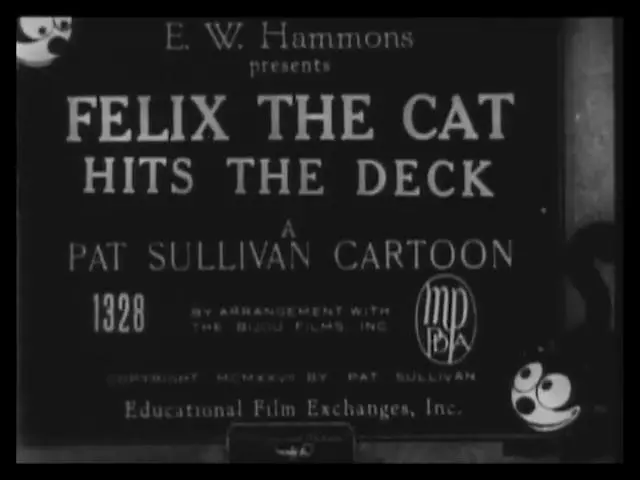
A definitive 6.4/10 rating for a film that redefined the boundaries of cult cinema. Felix the Cat Hits the Deck remains a cornerstone of transgressive art.
Does a nearly century-old cartoon about a cat playing with cards still hold any relevance for a modern audience? Short answer: yes, but only if you appreciate the raw, unpolished DNA of animation before it was sanitized by corporate polish. This film is a playground for experimental visual gags that would make modern CGI artists weep with envy at its sheer creative liberty. It is for the animation historian and the lover of the weird; it is most certainly not for those who require a coherent, logic-driven narrative.
Direct Answer: This film works because it embraces the 'rubber hose' physics of the 1920s to create a world where anything can happen, unburdened by the need for realism. This film fails because its pacing is frantic to the point of exhaustion, a common trait of late silent shorts trying to keep up with the burgeoning demand for spectacle. You should watch it if you want to see the exact moment where animation stopped mimicking life and started inventing its own rules.
Otto Messmer, the uncredited genius behind the Felix phenomenon, was never one for grounded storytelling. In Felix the Cat Hits the Deck, he takes a simple premise—a magic trick gone wrong—and turns it into a fever dream. The way the cards transform from flat objects into living entities is handled with a fluid grace that feels surprisingly modern. Take the scene where the Jack of Hearts leaps from the card stock; it’s not a transition, it’s an evolution. The ink feels alive.
Unlike the more grounded dramas of the era, such as The Dawn of a Tomorrow, Felix exists in a vacuum of pure imagination. There are no social stakes here, only the survival of a black-and-white cat against a deck of predatory royalty. It is a stark contrast to the heavy-handed morality found in films like The Splendid Sinner. Messmer’s work is refreshingly nihilistic; the world is out to get Felix, and his only defense is his own ingenuity and the occasional detachment of his own tail.
Yes, Felix the Cat Hits the Deck is worth watching for its historical significance and its inventive visual language. It provides a rare look at the peak of silent animation before the industry was transformed by the arrival of synchronized sound. If you enjoy seeing the boundaries of a medium being pushed, this short film offers more creativity in seven minutes than many feature-length films do in two hours.
The animation style is crude by today's standards, but that crudeness is an asset. There is a grit to the lines and a jitter to the movement that makes the experience feel tactile. When Felix interacts with the King of Spades, you can almost feel the scratch of the pen on the cel. It’s a visceral experience that modern, smoothed-out animation often lacks. It’s raw. It’s fast. It’s unapologetic.
The cinematography—if one can call it that in animation—is remarkably static, yet the frame feels crowded with energy. Messmer uses the 'center-frame' technique to keep the focus on Felix’s expressive movements. Every ear twitch and tail wag is calculated to convey emotion without a single word of dialogue. It’s a masterclass in pantomime that rivals the physical comedy of the great silent actors.
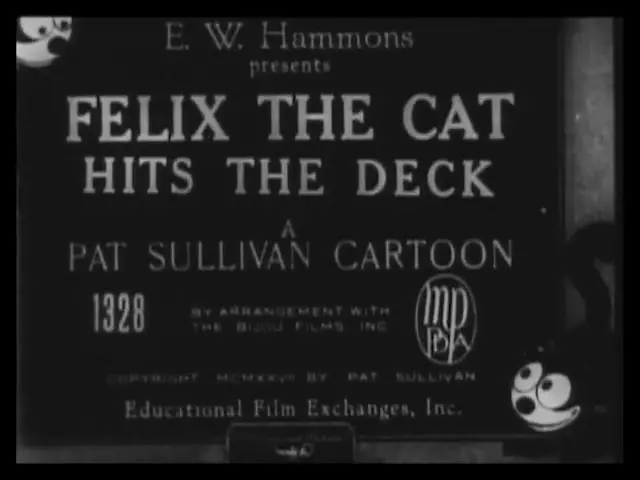
Consider the pacing. It’s relentless. From the moment Felix 'hits the deck,' there isn’t a single frame of wasted space. This is a far cry from the slower, more deliberate pacing of contemporary films like Glass Houses. While those films relied on building tension through character interaction, Messmer builds tension through escalating absurdity. The cards don't just attack; they reorganize reality. The background itself becomes a weapon.
There is a deeper layer here about the nature of performance. Felix starts as the performer, the one in control of the 'magic.' But the moment he enters the world of the cards, he becomes the audience, subject to the magic of the animator. It’s a clever reversal. It reminds me of the thematic shifts in The Moment Before, where the protagonist's perception of reality is fundamentally altered by a single event.
The film also plays with the concept of 'luck' and 'the hand you're dealt.' Felix is literally dealt a bad hand, and he has to fight his way out of it. It’s a simple metaphor, but in 1928, it was a fresh way to utilize the medium. The visuals are the message. There is no subtext because the text is so loud it drowns everything else out. It works. But it’s flawed by its own brevity.
Pros:
• Incredible visual inventiveness with minimal resources.
• Felix remains one of the most charismatic characters in animation history.
• The 'card world' concept is executed with surprising depth for a short film.
• A perfect example of the 'anything is possible' era of filmmaking.
Cons:
• The lack of sound can be jarring for those used to the 'Silly Symphonies' era.
• Some of the gags are repeated from earlier Felix shorts.
• The print quality of surviving versions can be quite poor, obscuring some details.
When looking at other films from the late 20s, like Extravagance or The Chorus Girl's Romance, you see a cinema trying to find its voice through melodrama. Felix, however, found its voice through chaos. While live-action films were becoming more sophisticated and 'theatrical,' animation was becoming more 'cinematic.' Messmer was using the camera to go places that the directors of My Official Wife couldn't even dream of.
Felix is the ultimate anarchist. He doesn't respect the rules of the world, because he knows he's made of ink. This self-awareness is what makes Hits the Deck so compelling. It’s not just a story about a cat; it’s a story about a drawing that knows it’s a drawing. This level of meta-commentary wouldn't be seen again in such a pure form until the Looney Tunes era decades later.
Felix the Cat Hits the Deck is a frantic, bizarre, and ultimately rewarding slice of animation history. It captures a moment in time when the medium was at its most experimental. It isn't 'high art' in the traditional sense, but it is a masterclass in visual storytelling. If you can look past the age of the film and the occasional flicker of the frame, you'll find a work that is as vibrant today as it was in 1928. It’s a wild ride through a deck of cards that proves, once and for all, that Felix is the king of the silent screen. Don't expect logic. Expect magic.
IMDb 6.8
1923
Community
Log in to comment.