DbcultAccessing Vault...
Cult Review
Senior Film Conservator

In the realm of early 20th-century cinema, 'South o' the North Pole' emerges as a fascinating artifact, a film that, on its surface, appears to be a lighthearted, family-friendly excursion into the snowy wilderness but, upon closer inspection, reveals itself to be a rich tapestry of interpersonal relationships, set against the stunning backdrop of a winter wonderland.
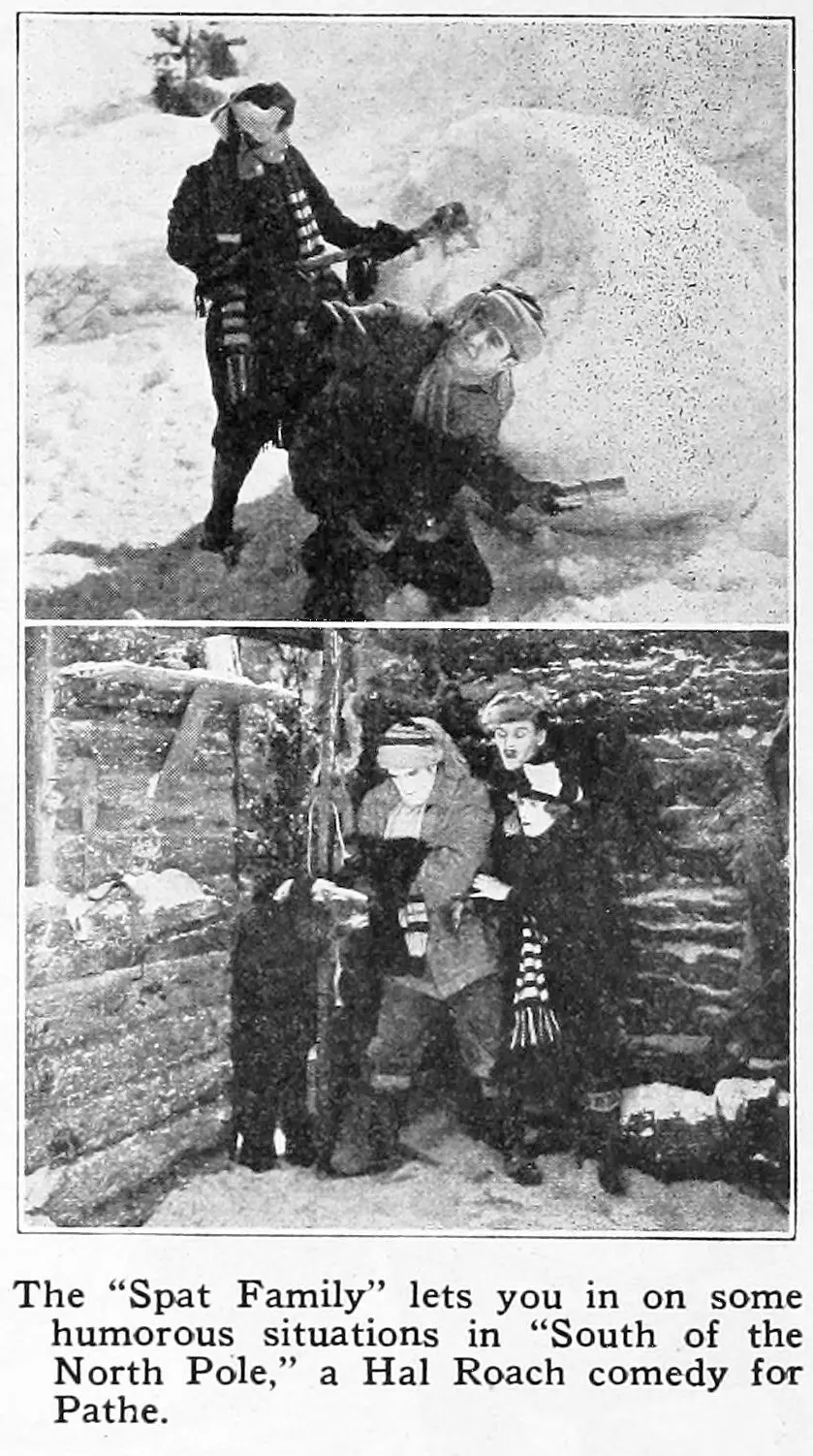
The film's narrative, much like the snow-covered landscapes it showcases, is at once familiar and refreshingly unique. A family of three, aided by the unwavering efforts of a dog and a goat, embarks on a journey through the snow-encrusted terrain, their sleigh traversing drifts that seem to stretch on forever. This setup, reminiscent of the The Essanay-Chaplin Revue of 1916's blend of slapstick humor and poignant storytelling, serves as the foundation upon which the filmmakers construct a nuanced exploration of family dynamics.
The cast, comprising Sidney D'Albrook, Frank Butler, Olive Borden, Laura Roessing, and Noah Young, brings to life a family unit that is at once endearing and infuriating. Their interactions, replete with spirited debates and heartfelt moments, inject a sense of authenticity into the film, rendering the viewer an empathetic observer of their journey. The decision to feature a dog and a goat as integral components of the family's travel party adds a layer of whimsy to the narrative, one that is expertly balanced by the film's more serious themes.
The cinematography in 'South o' the North Pole' is nothing short of breathtaking. The filmmakers' capture of the snow-covered landscapes, with their undulating drifts and towering snowbanks, creates a visually stunning environment that is at once captivating and serene. This attention to detail, reminiscent of the meticulous craftsmanship evident in The Witching Hour, underscores the filmmakers' commitment to immersing the viewer in the world of the film.
Upon reflection, 'South o' the North Pole' invites comparisons to a range of films that, like it, balance lighthearted entertainment with more substantial thematic explorations. I pesn ostalas nedopetoy, with its own blend of whimsy and poignancy, and God's Law and Man's, which explores complex moral themes, are two such films that share some of the same DNA as 'South o' the North Pole'.
In terms of character development, the film excels in its portrayal of the family's interpersonal dynamics. The script, while not formally attributed to any writer, demonstrates a keen understanding of how family members interact, often with a blend of humor and exasperation. This nuanced characterization adds depth to the film, rendering it more than a simple winter wonderland tale.
The influence of other films from the era can be discerned in 'South o' the North Pole', with Distilled Love and Ruth of the Rockies being notable examples. However, the film's unique blend of humor, pathos, and stunning winter landscapes sets it apart as a distinctive entry in the canon of early 20th-century cinema.
In conclusion, 'South o' the North Pole' is a cinematic treasure that warrants multiple viewings. Its richly detailed winter landscapes, coupled with a nuanced exploration of familial relationships, make for a viewing experience that is at once entertaining and thought-provoking. As a film critic, it is a pleasure to encounter a movie that so skillfully balances the demands of storytelling, character development, and visual aesthetics.
Ultimately, 'South o' the North Pole' stands as a testament to the enduring power of cinema to transport audiences to new and imaginative worlds. Through its captivating narrative and stunning visuals, the film invites viewers to embark on a journey that is as much about the human experience as it is about the breathtaking beauty of the natural world.
For those interested in exploring the broader cinematic landscape of the early 20th century, Colomba, Blandt Samfundets Fjender, and Smarty are recommended viewing, each offering unique insights into the era's filmmaking trends and thematic preoccupations.
The film's ability to balance lighthearted entertainment with more substantial thematic explorations is a notable achievement, one that speaks to the skill and craftsmanship of the filmmakers. In an era where cinema continues to evolve and expand its boundaries, 'South o' the North Pole' serves as a poignant reminder of the medium's capacity to enchant, educate, and inspire audiences.

IMDb 5.7
1934
Community
Log in to comment.