DbcultAccessing Vault...
Cult Review
Senior Film Conservator
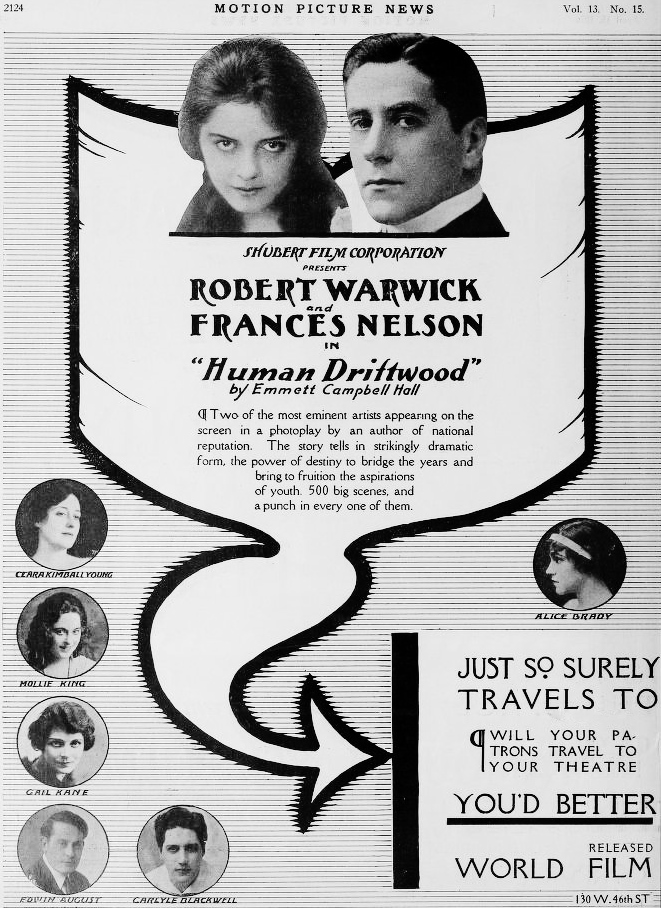
In the annals of early cinema, where moralistic narratives often served as both entertainment and cautionary tales, Emmett C. Hall's Human Driftwood (1916) emerges as a particularly potent and convoluted melodrama. This isn't merely a story; it's a grand, sweeping canvas depicting the relentless currents of fate, the insidious reach of past misdeeds, and the often-torturous path to redemption. From its nascent moments, the film eschews subtlety, plunging the viewer into a world where human desires and moral compromises dictate the trajectory of lives, much like flotsam tossed upon an unforgiving sea.
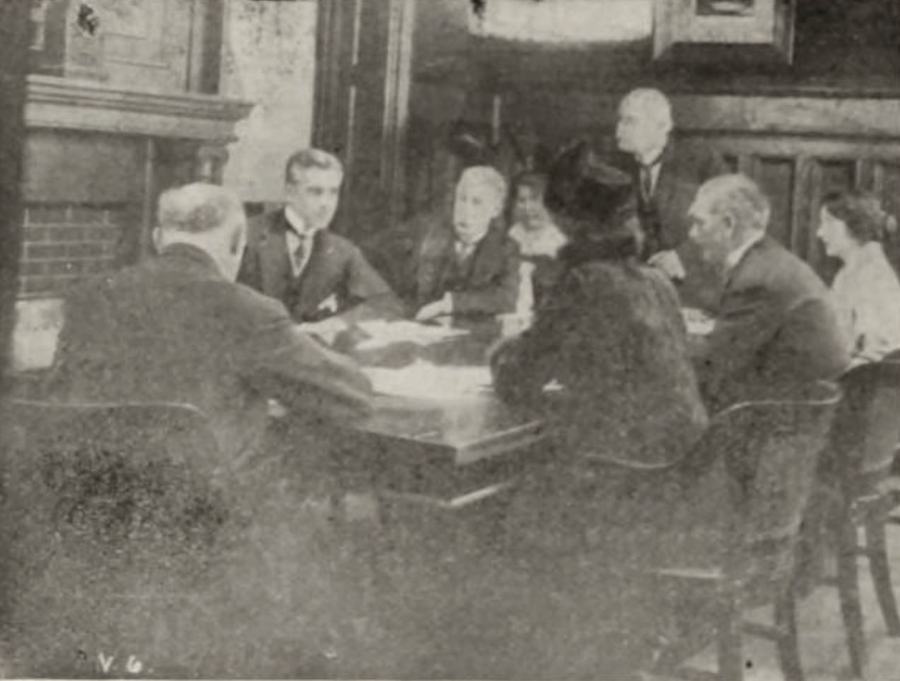
The narrative commences in the opulent yet morally ambiguous milieu of New York society, introducing us to Robert Hendricks, portrayed with a compelling blend of youthful recklessness and underlying vulnerability by Robert Warwick. Hendricks, a bachelor of considerable means, finds himself ensnared by the alluring, yet decidedly nefarious, charms of Myra, a dancer whose beauty masks a calculating and avaricious spirit. Leonore Harris imbues Myra with an almost hypnotic villainy, her performance a masterclass in silent film emoting, conveying deceit through every glance and gesture. Their initial tryst, a clandestine rendezvous in Hendricks’s apartment, is interrupted by the unexpected arrival of his attorney, Alec B. Francis, who delivers a substantial inheritance in the form of unregistered securities. It’s a pivotal moment, not for Hendricks, but for Myra, whose ears prick at the mention of wealth. Peeking through the portieres, she becomes an unwitting, yet crucial, witness to Hendricks secreting the bonds in a concealed wall-safe, an image that sears itself into her opportunistic mind.
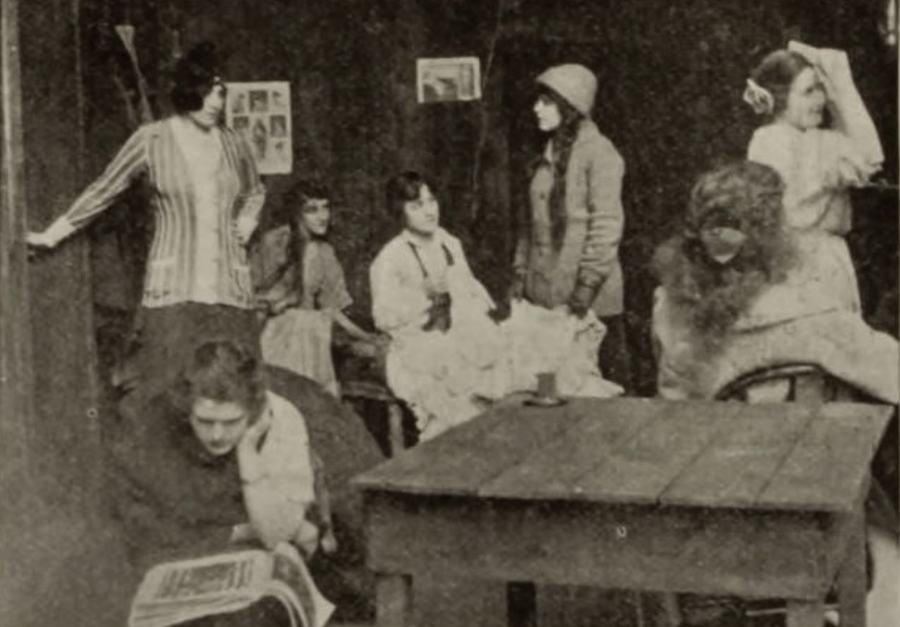
The stage is thus set for a dramatic turn. No sooner has Hendricks departed to consult his broker than Myra, with chilling efficiency, summons her confederates – a band of crooks whose collective avarice mirrors her own. The ensuing heist, however, spirals into chaos. Hendricks returns prematurely, interrupting the theft, and in the frantic melee, a shocking tragedy unfolds: Myra’s own lover is accidentally killed by her hand. This moment, delivered with stark visual impact typical of the era, is a testament to the film's unflinching portrayal of consequences. What follows is a choice that defines Hendricks’s character and sets the course for the entire narrative. Rather than surrender Myra to the gallows, he, with a bewildering display of magnanimity, allows her to escape. This act, born perhaps of a fleeting sense of responsibility or a deeper, more complex moral calculus, forms the indelible link that binds their lives, ensuring that their paths, however divergent, are destined to cross again. One might draw parallels here to the intricate moral dilemmas presented in films like Temptation, where characters grapple with the profound weight of a single, life-altering decision.
The passage of years is conveyed with the swift economy characteristic of silent cinema, transforming Hendricks from a dissolute bachelor into a formidable social reformer. His past, though buried, informs his present crusade, imbuing him with a zealous conviction to cleanse society's ills. Al Hart, credited in the cast, likely portrays one of the supporting figures in this transformative period, perhaps a mentor or a stalwart ally in Hendricks's new vocation. This arc of redemption, however, is not without its dramatic irony. His newfound purpose leads him to an Alaskan mining camp, a bastion of lawlessness and moral decay, a veritable upheaval of societal norms. The very place he seeks to purify, however, harbors the most potent symbol of his past: Myra, now the sinister proprietress of a dance hall, her influence casting a long, dark shadow over the camp.
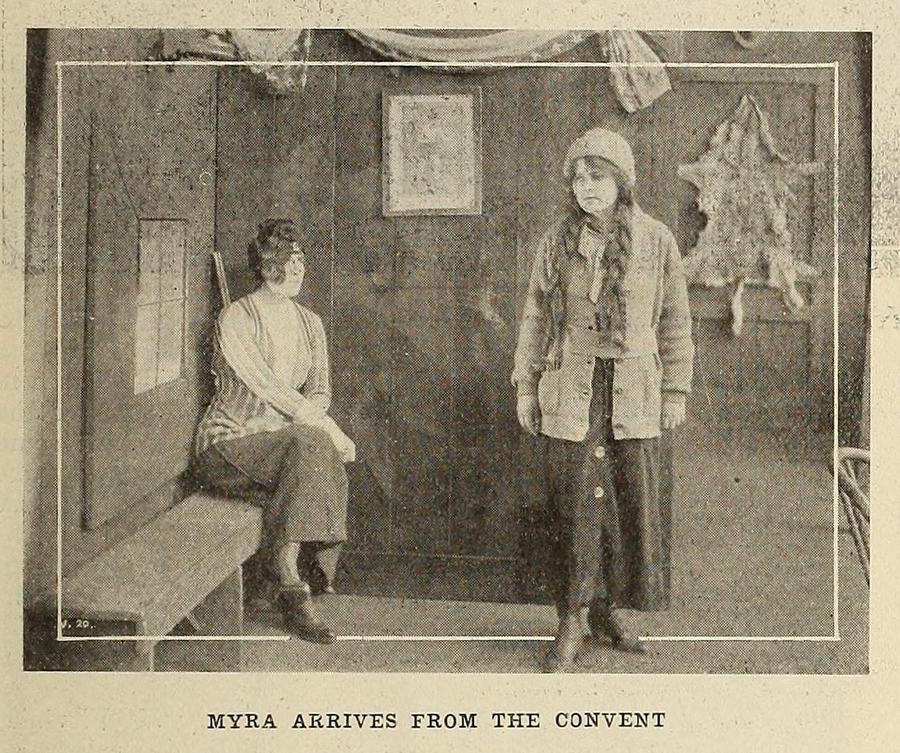
Amidst the grit and moral squalor of the Alaskan frontier, a poignant mystery emerges in the form of Velma, a young girl of startling purity, portrayed by Frances Nelson with an ethereal innocence that contrasts sharply with her surroundings. She is introduced as Myra's niece, a convenient facade for a deeper, more troubling truth. Velma's unblemished spirit, her heart untainted by the pervasive evil, captures Hendricks’s attention and, subsequently, his heart. Their burgeoning romance forms the emotional core of the second act, a delicate blossom in a desolate landscape. Yet, Myra, ever the manipulator, has already promised Velma to the camp's brutish bully, a newly rich ruffian whose wealth buys Myra's consent. This dynamic, reminiscent of the forced engagements and social strata depicted in films like Rose of the Alley, highlights the exploitation of innocence in a ruthless world.
The introduction of Father Harrigan, a voice of moral clarity and compassion, further complicates the narrative. He champions Velma’s cause, recognizing her true affection for Hendricks, and attempts to navigate the treacherous waters of Myra’s machinations. The tension escalates dramatically as Myra, seeking to thwart Hendricks and exact a twisted form of revenge, unleashes her most heinous lie. She reveals her identity to Hendricks, who, remarkably, had not recognized her after the intervening years and his own transformation. But it is her subsequent declaration that Velma is his own daughter, the offspring of their long-ago illicit liaison, that shatters Hendricks’s world. This revelation, a calculated act of cruelty, pushes him to the precipice of madness. The audience, privy to Myra's character, is left to grapple with the agonizing possibility of this truth, a masterful stroke of melodramatic suspense.
The film hurtles towards its electrifying climax. Driven by the hideous lie, Hendricks sets out in a desperate pursuit of the bully, who has carried off Velma after a violent confrontation in Myra’s dance hall. This struggle, a chaotic ballet of fists and fury, leaves Myra fatally wounded, her reign of terror drawing to a close. The final confrontation between Hendricks and the ruffian is a primal battle, a struggle for love, truth, and redemption in the unforgiving Alaskan wilderness. The bully meets a fearful end, a just if brutal resolution for his villainy. But the true unraveling of fate occurs with Myra’s dying confession. With her last breaths, she retracts her monstrous lie, revealing Velma's true identity, disentangling the knot of deceit that had threatened to destroy Hendricks’s soul. In a moment of profound relief and vindication, Hendricks finally gathers Velma into his arms, their love now freed from the specter of incest, a testament to the enduring power of truth, however belatedly revealed.
The success of Human Driftwood hinges significantly on its cast, who, in the absence of spoken dialogue, relied entirely on their physical presence, facial expressions, and body language to convey a vast spectrum of human emotion. Robert Warwick’s portrayal of Robert Hendricks is particularly compelling. He navigates the character’s transformation from a hedonistic youth to a righteous reformer with conviction, making his later descent into near-madness all the more impactful. His performance captures the internal struggle of a man haunted by a past he believed buried, yet constantly resurfacing to challenge his present. Leonore Harris, as Myra, is the quintessential silent film villainess. Her ability to project malice, cunning, and a desperate, self-serving ambition through subtle shifts in expression and dramatic gestures is remarkable. She is the dark heart of the film, a force of nature driven by greed and a twisted sense of retribution. Frances Nelson, in contrast, embodies the pure, unblemished spirit of Velma, her innocence a stark and necessary counterpoint to Myra’s depravity. Her fragile beauty and genuine emotional responses anchor the film’s romantic subplot, making the audience invest deeply in her plight. Alec B. Francis, as the attorney, and Al Hart, in his role, provide solid support, grounding the more melodramatic elements in believable human interactions. Emmett C. Hall’s script, while undeniably a product of its time with its heightened drama and clear-cut moralizing, constructs an intricate plot with surprising twists, ensuring that the audience remains engaged, constantly questioning the truth and anticipating the next revelation. The pacing, though occasionally deliberate, builds effectively towards its climactic confrontations.
The film's title, Human Driftwood, serves as a powerful metaphor for its central theme. Like debris cast adrift by powerful currents, the characters are buffeted by fate, by their own choices, and by the actions of others. Hendricks, initially a man of leisure, becomes a reformer, a conscious effort to steer his own vessel, only to find himself once more at the mercy of Myra’s manipulative currents. Myra herself is a creature of circumstance, driven by a primal desire for wealth and revenge, her life a continuous spiral of morally dubious decisions. Even Velma, the innocent, is swept into the torrent, her destiny seemingly dictated by the whims of those around her. This exploration of free will versus predestination, a recurring motif in many early films, finds a compelling articulation here. The film suggests that while past sins may cast long shadows, the human spirit, through acts of courage and the pursuit of truth, can ultimately find its way to calmer waters.
From a technical perspective, Human Driftwood, like many films of its era, relies on strong visual storytelling. The cinematography, while perhaps not groundbreaking by today's standards, effectively conveys the stark contrast between the urban opulence of New York and the rugged, untamed beauty of Alaska. Intertitles, the lifeblood of silent cinema, are used judiciously to advance the plot, convey dialogue, and emphasize key emotional beats. The use of dramatic close-ups on the actors' faces allows the audience to connect intimately with their internal struggles, a technique perfected in films like The Wrath of the Gods. The film's ability to maintain high dramatic tension over its entire runtime is commendable, a testament to the effective direction and the compelling nature of Hall’s story. While it may not possess the sprawling epic scope of some contemporaries, its focus on the intertwined fates of its core characters gives it an intimate power.
In conclusion, Human Driftwood stands as a fascinating artifact of early American cinema, a testament to the power of melodrama when executed with conviction and a keen understanding of human psychology. It’s a film that, despite its century-old vintage, still resonates with themes that remain universally relevant: the weight of our choices, the deceptive nature of appearances, the enduring quest for redemption, and the often-unpredictable hand of fate. For enthusiasts of silent film and those interested in the evolution of narrative cinema, Human Driftwood offers a rich and rewarding viewing experience, a compelling journey into the moral ambiguities and dramatic heights that defined an era. It’s a reminder that even in the absence of sound, the human story, with all its complexities and emotional depth, can be told with profound impact, leaving an indelible mark on the viewer long after the final frame.

IMDb 7.2
1930
Community
Log in to comment.