DbcultAccessing Vault...
Cult Review
Senior Film Conservator
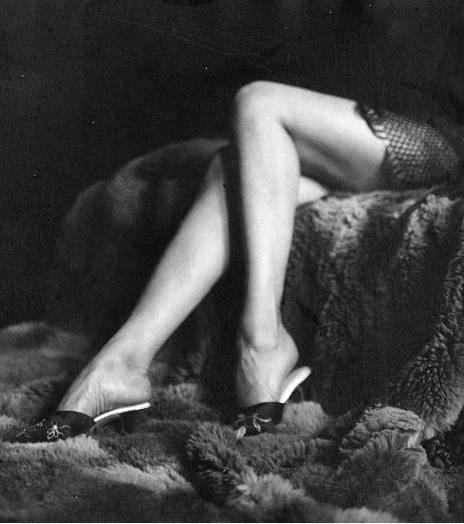
"Freie Liebe" stands as a haunting, resonant testament from an era when cinema was still finding its voice, yet already plumbing the profoundest depths of the human condition. Directed by the visionary duo of Adolf Lantz and Max Mack, this silent German masterpiece is far more than a simple romance; it is a meticulous, almost surgical, exploration of the psychological maelstrom unleashed when affection transcends mere passion and metastasizes into an overwhelming, all-consuming force. It challenges the very notion of 'free love' not as an act of liberation, but as a potential precipice into a self-imposed emotional prison, where the shackles are forged not of societal disapproval, but of an unmanageable heart.
From its opening frames, the film immerses us in a world where the internal landscape of its characters takes precedence over external machinations. The narrative, crafted with a nuanced hand by Lantz and Mack themselves, eschews simplistic portrayals of love, opting instead for a complex tapestry woven with threads of yearning, obsession, and eventual psychological fragmentation. We witness a protagonist whose journey is less about overt societal rebellion and more about an internal battle against the very intensity of their own heart. The film suggests that while freedom in love may be sought, its unbridled manifestation can lead to a more insidious form of captivity, a mental labyrinth from which escape becomes increasingly improbable, mirroring the intricate emotional traps seen in films like Serdtse dyavola, where inner demons prove to be the most formidable adversaries.
The performances are nothing short of revelatory, particularly given the constraints of silent cinema. Lucie Höflich, in a role demanding immense emotional range, delivers a portrayal of such raw vulnerability and escalating desperation that it is impossible to look away. Her expressive eyes and subtle gestures communicate volumes, painting a portrait of a soul caught in an inescapable emotional current. Similarly, Kurt Ehrle embodies the complexities of a character whose intentions might begin pure but become entangled in the web of an increasingly demanding devotion. The ensemble, including the deeply affecting Emilia Unda, the nuanced Hermann Thimig, and the captivating Marija Leiko, each contribute layers to this psychological drama, their reactions and interactions serving as crucial anchors in a narrative that often veers into the abstract realms of emotion. Even minor roles, like those delivered with quiet intensity by Fritz Spira, Rudolf Klix, Camilo Sacchetto, Else Berna, Edwin Schäfer, and Fritz Alten, are imbued with a quiet intensity that speaks to the film's overall commitment to psychological realism, ensuring every face tells a story.
The visual poetry of "Freie Liebe" is a masterclass in silent film aesthetics. Mack, known for his directorial prowess, along with Lantz's keen understanding of narrative flow, orchestrate a series of tableaux that are both stark and deeply expressive. The pervasive use of chiaroscuro, a hallmark of German Expressionism that was beginning to gain traction, is employed here not merely for dramatic effect, but to externalize the internal turmoil. Shadows cling to characters, symbolizing the encroaching darkness of their psychological states, while fleeting moments of light hint at transient hope or cruel deception. The camera often lingers on faces, allowing the audience to decipher the intricate dance of emotions playing out behind the eyes, a silent dialogue more potent than any spoken word. This meticulous visual storytelling, where every frame is laden with meaning, creates an immersive experience that transcends the absence of audible dialogue, compelling the viewer to engage on a deeply intuitive level.
The screenplay, a joint effort by Adolf Lantz and Max Mack, is remarkably sophisticated in its ability to convey complex psychological states without the aid of spoken words. It relies heavily on visual cues, character reactions, and the cumulative weight of escalating circumstances. The narrative progression is less about overt plot points and more about the subtle shifts in emotional dynamics, reflecting the insidious nature of an obsession taking root. This approach allows the audience to become active participants, piecing together the inner world of the characters through their expressions, actions, and the symbolic elements within the mise-en-scène. It is a testament to their writing acumen that such an intricate emotional landscape can be so vividly painted without a single spoken line, compelling a cognitive and empathetic engagement that is often lost in more verbose productions. The meticulous crafting of scenarios ensures that every gesture, every glance, every environmental detail contributes to the unfolding psychological drama.
The film’s exploration of love’s darker, more possessive aspects finds echoes in other cinematic works that dared to venture beyond conventional romantic narratives. While not a direct comparison in plot, the thematic resonance with films like Adele, which often explores the intense, sometimes destructive, emotional journeys of its female protagonists, is palpable. Both films delve into the singular, often isolating, experience of profound emotional states. Similarly, the thematic undercurrents of societal judgment and the struggle against predefined roles, though subtly handled in "Freie Liebe" through its very premise of 'free love', can draw parallels with the constraints explored in One Law for Both, where societal expectations clash with individual desires, often leading to tragic consequences. The film's audaciousness in tackling such a subject, especially in its era, makes it a significant precursor to later psychological dramas that dissect the human heart with such unflinching honesty. One might also find thematic parallels with the intense, often tragic, romantic entanglements depicted in Saffo, where passion itself becomes a double-edged sword, leading to both ecstasy and profound despair.

One cannot discuss "Freie Liebe" without acknowledging its profound contribution to the nascent art of cinematic storytelling in Germany. Emerging in the wake of World War I, the film reflects a certain societal introspection, a questioning of traditional values and the exploration of individual freedom – and its costs. The Weimar Republic era was a fertile ground for artistic experimentation, and this film, with its unflinching gaze into the human psyche, is a prime example of that creative ferment. It stands in stark contrast to simpler narratives of the time, demanding intellectual engagement from its audience rather than passive consumption. The film's influence, though perhaps understated in broader cinematic histories, is undeniable for those who appreciate the subtle power of early psychological drama, showcasing how profound emotional resonance could be achieved through visual artistry alone. The sense of an individual struggling against an overwhelming internal force also resonates with the thematic underpinnings of The Single Code, which often examines the personal battles against imposed structures, whether societal or self-inflicted.
The nuanced portrayal of relationships, where the line between devotion and obsession becomes increasingly thin, is a core strength. The characters are not mere archetypes; they are individuals grappling with complex emotions, their internal conflicts laid bare for the audience to scrutinize. This level of psychological depth was groundbreaking for its time and continues to resonate today. The film challenges viewers to consider the true meaning of 'free love' – is it freedom from constraint, or freedom to be consumed? The ambiguity is intentional, forcing a deeper engagement with the narrative and its implications. The emotional landscape is painted with broad, sweeping strokes yet filled with intricate details, much like a grand expressionist painting that reveals more upon closer inspection. This careful balance between the grand thematic statements and the minutiae of human emotion is what grants the film its lasting power, inviting repeated viewings and deeper analysis.
The direction by Lantz and Mack is particularly adept at building tension through visual means. There are no jump scares or overt dramatic flourishes; instead, the tension accumulates through lingering shots, the subtle shifts in an actor's posture, and the evocative power of the set design. Every element on screen seems to contribute to the pervasive atmosphere of emotional intensity. The film trusts its audience to interpret, to feel, rather than to be told. This minimalist approach to exposition, coupled with maximalist emotional expression, creates a truly immersive experience. It's a masterclass in how to evoke profound emotion through purely visual and performative means, a lesson that many contemporary filmmakers could still learn from. The deliberate pacing allows the psychological pressure to build organically, creating a suffocating atmosphere that mirrors the protagonist's internal state, a technique also powerfully employed in the slow-burn intensity of films like The Marble Heart, where emotional chill pervades the narrative.
Furthermore, the exploration of societal norms, albeit subtly, adds another layer of richness. While the primary focus remains on the internal psychological journey, the very title "Freie Liebe" inherently suggests a confrontation with conventional morality. The film doesn't preach; instead, it presents the consequences of such a path, allowing the audience to draw their own conclusions about the viability and sustainability of love unburdened by traditional strictures. This nuanced approach elevates the film beyond a simple cautionary tale, transforming it into a philosophical inquiry into the nature of human connection and its societal context. The film's willingness to 'smash barriers' – both emotional and social – through its narrative, connects it thematically to works like Smashing Barriers, albeit through a more introspective and less action-oriented lens. It highlights the eternal struggle between individual desire and communal expectation.
The enduring power of "Freie Liebe" lies in its timeless relevance. While the societal context of the early 20th century German silent film may seem distant, the emotional landscape it explores is universal. The perils of obsession, the fine line between devotion and destruction, the quest for profound connection, and the potential for love to become a cage rather than a liberation – these are themes that continue to resonate across generations and cultures. It forces us to reflect on our own understanding of love, its boundaries, and its capacity for both transcendence and torment. The film serves as a potent reminder that the human heart, in its pursuit of profound connection, can sometimes veer into territory that is both exhilarating and terrifyingly destructive. This psychological depth, which delves into the 'within the cup' of human emotion, is what truly sets it apart, revealing hidden truths about the soul's capacity for both rapture and ruin, much like the introspective journey promised by films like Within the Cup.
In an age saturated with explicit dialogue and overt exposition, the silent artistry of "Freie Liebe" offers a refreshing and profound experience. It’s a work that demands patience and attention but rewards it with an unparalleled depth of emotional and psychological insight. It stands as a testament to the fact that true cinematic power does not always reside in elaborate special effects or rapid-fire dialogue, but in the subtle nuances of human expression and the profound resonance of a well-told story, even one told in silence. It is a film that lingers long after the final frame, prompting contemplation on the very nature of human desire and its often-unforeseen consequences, leaving an indelible mark on the discerning viewer's psyche. The film's masterful evocation of intense emotional states through purely visual means is a testament to the early pioneers of cinema, proving that some stories are best told not with words, but with the language of the soul.
IMDb —
1921
Community
Log in to comment.