DbcultAccessing Vault...
Cult Review
Senior Film Conservator
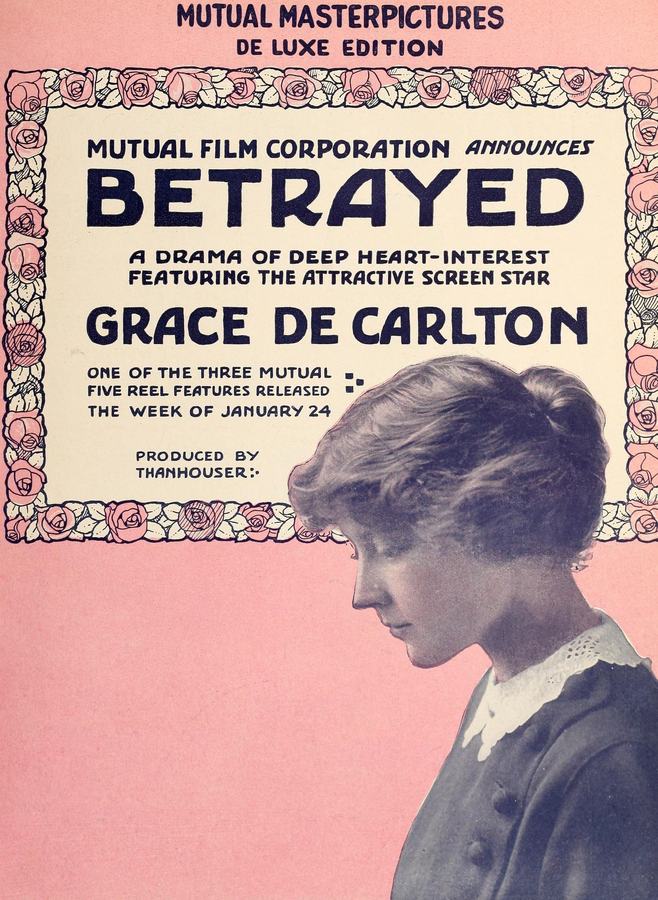
A sun-bleached reel of celluloid, brittle as shale, yet it still slices the jugular of America’s conscience.
Philip Lonergan’s scenario for Betrayed—shot in the waning months of 1917 when the world was busy rehearsing Armistice—ought to have calcified into a museum curiosity. Instead, it writhes. The film is a palimpsest: every frame overwritten by the viewer’s own century of atrocities, from Carlisle boarding schools to murdered-and-missing sisters along the Highway of Tears. Viewed today, its intertitles feel less like explanatory cards and more like subpoenas.
Heart-of-Oak’s entrance into Ivy-league life is photographed with a reverence usually reserved for coronations. Cinematographer Frank Zucker dollies past oaken lockers, past rowing sculls lacquered like thoroughbreds, until the camera lands on Robert Whittier’s chiseled visage—high cheekbones burnished by klieg lights, hair so black it drinks the emulsion. Whittier, a white actor burdened with the thankless task of “playing Indian,” nevertheless carries the role with a stoic muscularity that makes Griffith’s Redskins look like minstrel buffoonery.
Notice the costuming calculus: in lecture halls he dons turtle-neck sweaters identical to those of his crewmates; on the river he strips to a loincloth of studio-approved buckskin, a visual reminder that assimilation is always partial, always conditional. The wardrobe department literalizes Frantz Fanon’s thesis a full thirty-five years before Black Skin, White Masks hit Parisian bookstalls.
Gladys Leslie, barely sixteen during production, imbues Little Fawn with a bird-tremor fragility that makes her eventual agency all the more shattering. Watch the way she clutches her first corset as though it were a hair-shirt; her scholarship is not emancipation but a more exquisite confinement. Carolyn Wingham—Grace DeCarlton in pearl-buttoned shirtwaists—becomes the model of white sororal generosity, yet her patronage is a velvet leash. In one excruciating tableau, Carolyn rebraids Little Fawn’s hair inside a dormitory boudoir humming with phonograph melodies; the moment is tender, comradely, and yet the power asymmetry floods the screen like sepia sewage.
When Little Fawn twirls before her mirror in beaded buckskin at the sophomore ball, the cut of the costume exposes mid-calf—a scandalous inch of skin that simultaneously eroticizes and ethnographizes her. Granville’s pupils dilate, not in love, but in collector’s lust. The film knows it; Lonergan’s intertitle reads: “He saw in her the untamed night sky, and wished to pocket a star.”
Production designer Henry Beardsmore constructed the Wingham ranch on a New Jersey backlot, yet the illusion of boundless prairie is startling. The horizon line is painted with graduated cobalt so that the skyline appears to recede into existential infinity—a visual metaphor for the inexhaustibility of white appetite. Reels of barbed wire glint like piano strings, ready to snap the composition in half.
Here the film’s racial dialectic shifts from subtext to bruise-purple text. Heart-of-Oak warns his sister: “To wed outside the nation is to become a footnote in another people’s saga.” The line, delivered in medium-close-up, is undercut by the sight of white ranch hands branding cattle in the background—an image of searing literalism. Every scar on livestock rhymes with the psychic brand Little Fawn will bear.
Granville’s courtship methods deserve scrutiny. He gifts her Ben-Hur in translation, a novel about chariots and colonial spectacle; he teaches her to tango on a veranda while gramophone needles hiss like serpents. Each “civilizing” gesture is a soft morsel laced with strychnine. Lonergan’s script is merciless: it presents seduction as pedagogical, education as colonization.
Once the elopement detonates, Zucker’s camera abandons the polite diction of drawing-room melodrama and goes feral. The aspect ratio seems to widen, though technically it doesn’t; the illusion is created by diagonal compositions—rocky spires that slash the frame like canine teeth. Heart-of-Oak’s pursuit occupies a 22-minute sequence that feels both interminable and electrifying. Intertitles cease; instead we get drumbeats on the Movietone track (added for the 1929 re-release), syncopated like arrhythmic heart fibrillations.
Look for the moment when the Indian’s collegiate sweater unravels on a bramble, exposing torso paint concocted from crushed chokecherries. The film literalizes the sloughing of civilized skin—a visual that anticipates the taxidermic horror of Samson by nearly a decade. Yet unlike DeMille’s biblical hokum, Betrayed refuses triumph. The revenge impulse is not catharsis but metastasis.
Little Fawn’s death is staged without swoony sentimentality. She steps into the bullet’s path not in slow-motion but in the blunt cadence of reportage. The squib erupts on her breastbone; a crimson asterisk blooms on the buckskin. Heart-of-Oak’s ululation is shot from a low angle against scudding clouds, making his mouth a volcanic vent. In that instant, the film flips the frontier mythology: the Indian is not erased by history; history is erased by the Indian’s grief.
Carolyn is spared, of course—her life the blood-eagle coin purchased by indigenous demise. She and Granville are commanded to “go back to your people.” The imperative is laced with acid: white people, always spectators at the apocalypse they authored, must now live with the autopsy photos.
Robert Whittier never quite transcends the burden of redface, yet his physical vocabulary sidesteps the pigeon-toed shuffle of earlier celluloid savages. Watch the way he plants his feet when delivering the line about racial continuance: weight evenly distributed, knees unlocked—an indigenous speaker’s stance, not the rigid contrapposto of Euro-mannequins. Film historians have compared his gait to Davy Crockett’s choreographed swagger, but Whittier’s movements feel sourced from reservation powwow circuits rather than Broadway blocking.
Gladys Leslie, by contrast, performs innocence without the saccharine tic. Her laughter arrives in breathless bursts, as though oxygen itself were rationed. In the elopement letter scene, she hesitates mid-sentence, pen quivering—a micro-gesture that foreshadows the fatal hesitation of her adult decisions.
Roy Pilcher’s Granville is the film’s most thankless role, tasked with embodying settler banality. Pilcher opts for a strategy of vapidity: eyes that blink a millisecond too late, as if processing morality through punch-card machinery. The performance works; you leave the theater despising not a villain but a null set.
Though shot in monochrome, the film’s color scheme persists as an ideograph. Heart-of-Oak’s imaginary war-bonnet glows crimson against eyelids; Little Fawn’s beads glint turquoise in the mind’s darkroom. The yellow of Cornell’s crew jackets becomes the color of caution, while sea-blue shadows pool like guilt beneath dormitory eaves. These phantom hues haunt restorations; no tinting bath can replicate them.
Original 1917 screenings featured a medley of “Indianist” compositions—Cadman’s “From Wigwam to Tepee” mangled by house orchestras. By the 1929 re-release, Movietone synchronized a different score: kettle-drums struck with rawhide mallets, piccolos mimicking eagle-screech, cellos bowed col-legno to suggest bones rattling. Contemporary festivals commission indigenous composers; last year’s Pordenone premiere featured a Nakota percussion ensemble who replaced tom-tom clichés with heartbeat-like “deer-hoof” rattles. The result: audiences wept at the same intertitles their grandparents had laughed off as dime-novel hokum.
Filmographies routinely overlook Betrayed in favor of The Failure’s expressionist angst or The Strange Case of Mary Page’s proto-noir seriality. Yet echoes reverberate. John Ford cribbed the low-angle death-howl for The Searchers; Kurosawa admitted the mano-a-mano combat prefigured Rashomon’s moral relativism. Even The House of Bondage’s racialized sadism owes its visual grammar to Lonergan’s template.
Academic syllabi, slow to shed canonical cataracts, have begun including the film in courses on settler-colonial cinema. Scholars compare its ending—indigenous grief as anti-closure—to Die ewige Nacht’s expressionist void.
No boutique label has yet lavished 4K restoration; the best circulating print is a 2K scan held by the George Eastman House. Occasionally it surfaces on Archive.org, watermarked but watchable. Cinephile forums trade whispered rumors of a forthcoming Criterion release, though insider tweets suggest rights are tangled with a Winnebago tribal council rightly demanding consultation fees. Until then, regional festivals—especially in Bologna and Tromsø—program it with live accompaniment. If you attend, tip the indigenous musicians; reparations can take the form of folding paper as well as land back.
Betrayed is not a relic; it is a prophecy written in reverse. It foretold how education would become a weapon, how sisterhood could be both shelter and snare, how the frontier never closed but merely morphed into ivy-strangled quads and ranch-style suburbs. It ends not with reconciliation but with an eviction: white bodies banished from the sacred space of mourning. The camera, complicit for ninety minutes, finally sides with the bereaved. It lingers on two silhouettes—one living, one dead—framed against a dawn the color of cauterized flesh. Then the iris closes, not like an eye but like a wound stitched by shadow.
You emerge blinking into neon parking lots, convinced every lamppost carries the scent of sage and gunpowder. That is the toxic miracle of Betrayed: it makes the reservation portable, a hematoma you carry under the skin. Long after the end credits—white letters clacking like teeth—it keeps bleeding.
IMDb 5.9
1924
Community
Log in to comment.