DbcultAccessing Vault...
Cult Review
Senior Film Conservator
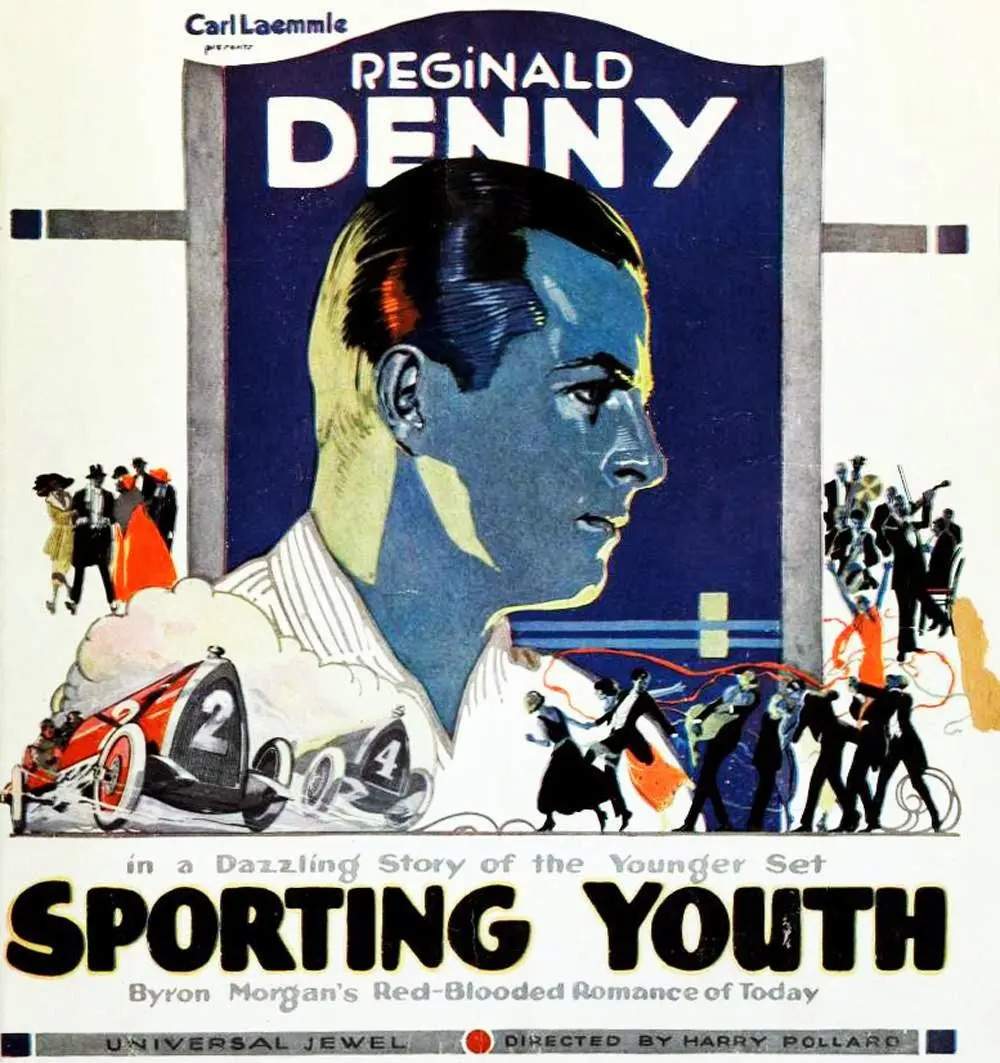
Ah, the silent era! A time when narratives unfurled with a poignant pantomime, and the grandiosity of human emotion was conveyed through the subtle tilt of a head or the dramatic flourish of a gesture. In this vibrant epoch, B. Reeves Eason's Sporting Youth, released in 1924, emerges as a spirited testament to the period's boundless energy and burgeoning fascination with speed, spectacle, and the perennial allure of the underdog. This isn't just another forgotten relic; it's a pulsating slice of cinematic history, brimming with charm, comedic flair, and genuine thrills.
At its core, Sporting Youth is a delightful romp predicated on the classic trope of mistaken identity, a narrative device frequently employed in silent comedies to great effect. Our protagonist, Jimmy Wood, portrayed with an endearing blend of earnestness and athletic dynamism by the inimitable Reginald Denny, is initially introduced as a humble chauffeur. His life, however, is far from idyllic, being shackled by considerable debt – a common predicament that instantly renders him relatable to audiences then and now. The narrative takes its pivotal turn when Jimmy, through a series of fortunate (or perhaps unfortunate, depending on your perspective) coincidences, finds himself conflated with the renowned racing sensation, Splinters Wood. This accidental identity theft forms the bedrock of the film’s comedic and dramatic tension.
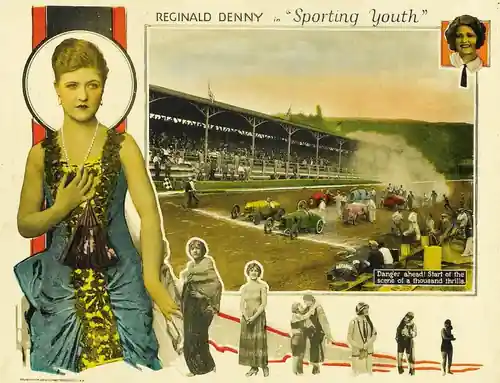
Enter Betty Rockford, played by the luminous Laura La Plante. She is the discerning daughter of a prominent automobile manufacturer, a figure of influence and affluence. Betty is not merely a damsel in distress; she is an active participant in Jimmy's fate. It is her astute observation and perhaps a dash of impish thrill-seeking that leads her to advise Jimmy to capitalize on his mistaken identity. Seeing his desperate financial straits, she suggests a daring gambit: to enter a high-stakes race, masquerading as the celebrated Splinters Wood. This proposition is audacious, perilous, and utterly captivating. It transforms Jimmy from a passive victim of circumstance into an active agent, albeit one navigating a perilous tightrope of deception.
The allure of the racing circuit, with its promise of glory and substantial prize money, becomes an irresistible siren call for Jimmy. The film masterfully builds suspense around whether this chauffeur, with his limited professional racing experience, can truly embody the persona of a champion. This tension is not merely about winning the race; it's about the very fabric of identity, the weight of expectation, and the intoxicating thrill of living a lie, however temporary. The stakes are immense, not just for Jimmy's financial solvency, but for his burgeoning connection with Betty, whose admiration he desperately seeks to earn, genuinely, despite the deceit.
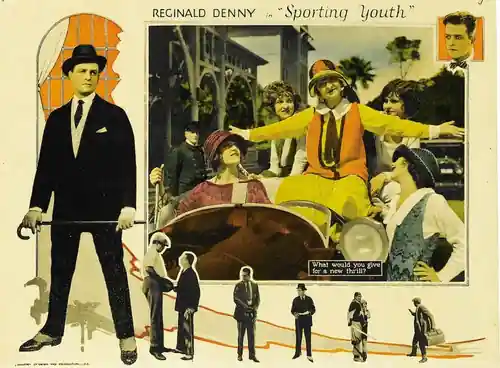
Reginald Denny, a British actor who found immense popularity in Hollywood during the 1920s, was perfectly cast for roles demanding both physical prowess and a charming, everyman quality. His athletic build and natural charisma made him a favorite in action-comedies and light dramas. In Sporting Youth, Denny's performance as Jimmy Wood is a tour de force. He conveys the character's initial trepidation, his growing confidence, and his underlying decency with remarkable clarity, even without spoken dialogue. His physicality is crucial, especially in the racing sequences, where his movements behind the wheel imbue the scenes with a palpable sense of speed and danger. Denny's ability to oscillate between comedic exasperation and heroic determination is a testament to his versatility and makes Jimmy Wood a deeply sympathetic figure.
Laura La Plante, a major star of the silent and early sound eras, brings a captivating blend of intelligence and grace to Betty Rockford. She's not just a pretty face; her character possesses agency and a keen understanding of the world around her. Her interactions with Denny crackle with a delightful romantic chemistry, elevating the film beyond mere slapstick. The supporting cast, including Leo White and Hallam Cooley, provide excellent comedic relief and enhance the overall dynamism of the ensemble.
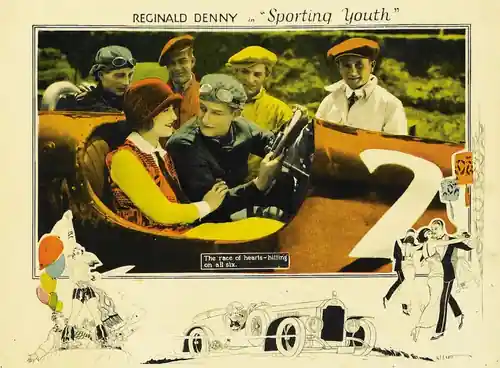
B. Reeves Eason, known for his robust action sequences and efficient storytelling, directs Sporting Youth with a keen eye for spectacle. The automobile races are undoubtedly the film's magnum opus, showcasing the nascent art of cinematic action. The cinematography of the racing scenes is particularly noteworthy, employing dynamic camera angles and thrilling close-ups to convey the dizzying speed and inherent peril of early motor racing. One can almost feel the grit and grease, the roaring engines, and the wind whipping past the drivers. Eason masterfully orchestrates these sequences, building tension with each lap, each near-miss, ensuring that the audience is on the edge of their seats, completely invested in Jimmy's improbable quest.
The use of intertitles, a cornerstone of silent cinema, is particularly effective here. They not only advance the plot and provide necessary dialogue but also inject humor and emotional depth. The pacing is brisk, a hallmark of 1920s filmmaking, ensuring that the audience remains engaged from the initial setup of Jimmy's predicament to the exhilarating climax of the race. The film’s visual storytelling is so compelling that one hardly notices the absence of spoken dialogue, a testament to the skill of the filmmakers and the expressive power of the actors.
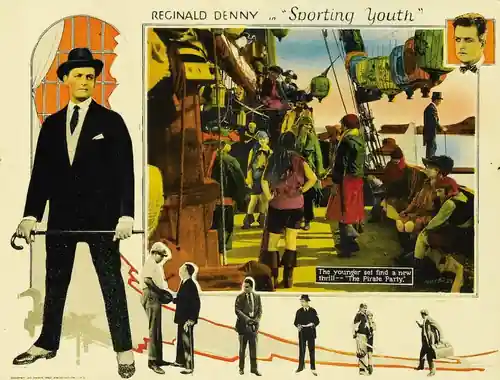
Beyond the surface-level entertainment, Sporting Youth delves into several resonant themes. The most prominent, of course, is identity and deception. Jimmy’s struggle to maintain his false persona while simultaneously striving for genuine achievement speaks volumes about the pressures of societal expectation and the yearning for recognition. This theme echoes in other narratives of the era, where individuals often sought to reinvent themselves or escape their circumstances. One might draw a thematic parallel to films like The Faith Healer, where belief and illusion play a central role in shaping perceptions and outcomes, albeit in a dramatically different context.
The film also subtly explores class and aspiration. Jimmy, a working-class chauffeur, dreams of transcending his station. The automobile, a symbol of progress and freedom in the Roaring Twenties, becomes his vehicle for upward mobility. His debt, a very real constraint, highlights the economic disparities of the time and the desperate measures individuals might take to overcome them. This struggle for betterment, often through unconventional means, is a recurring motif in cinema, seen in various forms from the ambitious plans of characters in Alarm Clock Andy to the more dramatic narratives of social climbing.
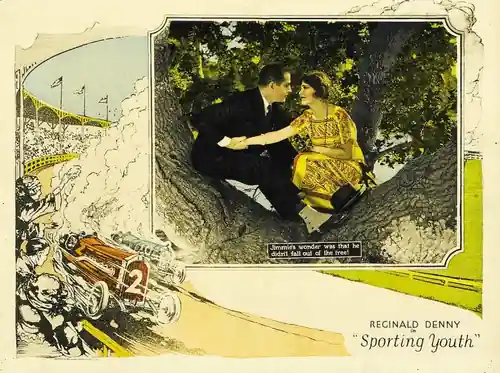
And, of course, there's the romance. The developing relationship between Jimmy and Betty is charmingly depicted. Betty’s initial amusement gives way to genuine affection, and her belief in Jimmy, even when he’s living a lie, is a crucial element of his transformation. This narrative thread, where a woman's influence helps shape a man's destiny, is a timeless cinematic device, resonating with the spirit of determination often seen in films like Once to Every Woman, where individual choices and relationships profoundly impact life's trajectory.
To fully appreciate Sporting Youth, one must contextualize it within its historical moment. The 1920s were an era of unprecedented technological advancement and social change. The automobile, once a luxury, was rapidly becoming accessible to the middle class, transforming American life. Car races were immensely popular, drawing huge crowds and creating national heroes. The film perfectly captures this zeitgeist, reflecting the public's fascination with speed, innovation, and daring feats of engineering and human skill. It’s a vivid representation of a society hurtling forward, embracing modernity with gusto.
The film’s portrayal of the racing world, though dramatized for cinematic effect, offers a glimpse into the nascent professionalization of sports and the idolization of athletes. The contrast between the opulent world of Betty Rockford’s family and Jimmy’s humble beginnings also highlights the shifting class dynamics of the era, where traditional hierarchies were beginning to be challenged by new forms of wealth and opportunity. The narrative’s focus on a high-stakes competition also brings to mind the dramatic tension found in adventure stories like Dead Men Tell No Tales, where characters face formidable challenges and often uncover truths under pressure.
Why does Sporting Youth continue to resonate nearly a century after its release? Its enduring appeal lies in its masterful blend of comedy, romance, and exhilarating action. It’s a film that doesn't take itself too seriously while still delivering genuine emotional beats. The universal themes of striving for success, overcoming adversity, and finding love against improbable odds ensure its timelessness. Reginald Denny's performance remains a charismatic anchor, showcasing why he was such a beloved star of his time. The film serves as an excellent entry point for those curious about silent cinema, offering a vibrant and accessible experience that challenges the misconception of silent films as dusty, slow artifacts.
Moreover, Sporting Youth is a valuable historical document, preserving not only the cinematic techniques of its era but also the cultural sensibilities, fashion, and technological marvels that captivated audiences of the 1920s. It reminds us of a time when the roar of an engine and the thrill of a race could ignite the collective imagination, a sentiment that, in many ways, persists even today. The film’s charm is infectious, its humor lighthearted, and its action sequences surprisingly potent, proving that a well-told story, regardless of its vintage, can still captivate and entertain.
In conclusion, Sporting Youth is far more than a simple silent comedy; it is a meticulously crafted piece of entertainment that exemplifies the best of its genre and era. With its engaging plot, stellar performances by Reginald Denny and Laura La Plante, and thrilling action sequences, it offers a rich and rewarding viewing experience. For anyone seeking to understand the allure of early Hollywood, or simply in search of a genuinely enjoyable film that stands the test of time, Sporting Youth is an absolute must-see. It's a reminder that sometimes, the greatest victories are achieved not by the person we pretend to be, but by the courage and ingenuity we discover within ourselves when pushed to the limit. So, buckle up and prepare for a joyous ride through a forgotten gem of cinematic history. This film truly deserves a place in the pantheon of classic silent cinema, a vibrant testament to the power of storytelling on the silver screen, even without a single spoken word.
IMDb —
1920
Community
Log in to comment.