DbcultAccessing Vault...
Cult Review
Senior Film Conservator
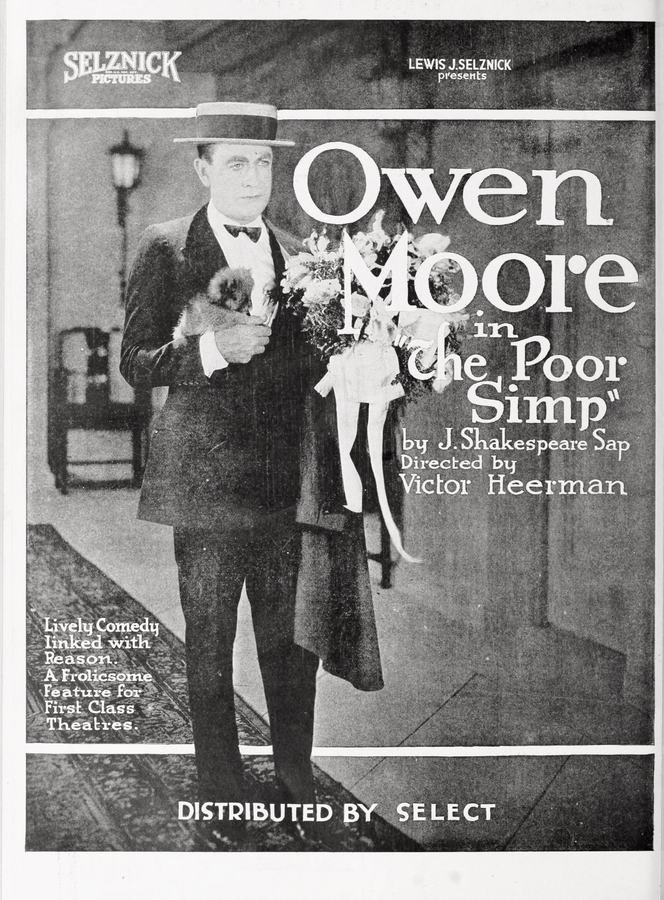
The year 1920 was a transformative epoch for American cinema, a period where the slapstick foundations of the previous decade began to synthesize with more nuanced, character-driven narratives. In the midst of this evolution, The Poor Simp emerged as a fascinating study of masculine vulnerability and social anxiety. Directed with a keen eye for situational irony, the film serves as a showcase for Owen Moore, whose portrayal of Melville Carruthers transcends the mere 'simpleton' trope indicated by the title. Unlike the more rugged protagonists found in contemporary works like The Knickerbocker Buckaroo, Melville is a man defined by his internal inhibitions rather than his external prowess.
The premise is deceptively simple: a man's shyness prevents him from proposing, leading him into a series of unfortunate events that jeopardize his reputation. However, the screenplay, co-authored by the prolific Sarah Y. Mason and the curiously named J. Shakespeare Sap, weaves a complex web of social mores. Mason, who would later win an Oscar for her work on Little Women, brings a certain sophistication to the domestic entanglements that elevate the film above standard farce. There is a palpable tension between the protagonist’s desire for traditional domesticity and the chaotic, almost surreal intrusion of the 'cabaret' underworld into his sterile environment.
The pivotal scene in the café is a masterpiece of silent era choreography. When Melville enters the establishment to calm his nerves, the shift in atmosphere is immediate. The transition from the polite, stifling world of Grace’s drawing room to the kinetic, unpredictable energy of the café is visually striking. The ensuing fight is not merely a comedic set-piece; it represents the shattering of Melville's controlled reality. As he is knocked unconscious, the film metaphorically strips him of his agency, a theme explored with more gravitas in La fête espagnole, yet handled here with a light, satiric touch.
When Melville awakens the following day, the presence of the cabaret girl (played with a delightful, unbothered pragmatism by Lassie Young) creates a visual and moral dissonance. In the context of 1920s social hierarchies, her presence is radioactive. This is not the tragic 'fallen woman' archetype seen in Arme Thea, but rather a working-class catalyst for Melville’s bourgeois nightmare. The film deftly navigates the class divide, showing the cabaret girl as surprisingly nurturing, while the 'respectable' characters—Grace and her father—are portrayed as rigid and judgmental.
Owen Moore’s performance is a clinic in physical comedy that relies on micro-expressions rather than grand gestures. His Melville is a man constantly at war with his own limbs, a trait that contrasts sharply with the stoic masculinity often celebrated in films like Sundown. Moore captures the specific agony of the socially anxious—the way a room can feel like it's closing in, the way a simple explanation can get stuck in the throat until it becomes a lie by omission.
The supporting cast provides a sturdy framework for Moore’s neuroses. Tom Kennedy, often known for his 'tough guy' roles, brings a necessary groundedness to the proceedings, while Nell Craig as Grace embodies the era's ideal of the 'proper' woman, albeit one whose patience is understandably frayed. The chemistry between the cast members ensures that the escalations feel organic rather than forced. The film shares a certain DNA with Sisters of the Golden Circle in its exploration of how chance encounters can irrevocably alter one's path.
Visually, The Poor Simp utilizes the limited technology of its time to maximize the sense of claustrophobia within Melville’s apartment. The framing is often tight, emphasizing the entrapment he feels when Grace and her father arrive. This use of space to convey psychological states is reminiscent of the stylistic choices in Spiritisten, though applied here to the realm of comedy. The lighting during the evening scenes at the café also deserves mention, as it creates a stark contrast to the flat, bright lighting of the domestic scenes, highlighting the two worlds Melville is struggling to reconcile.
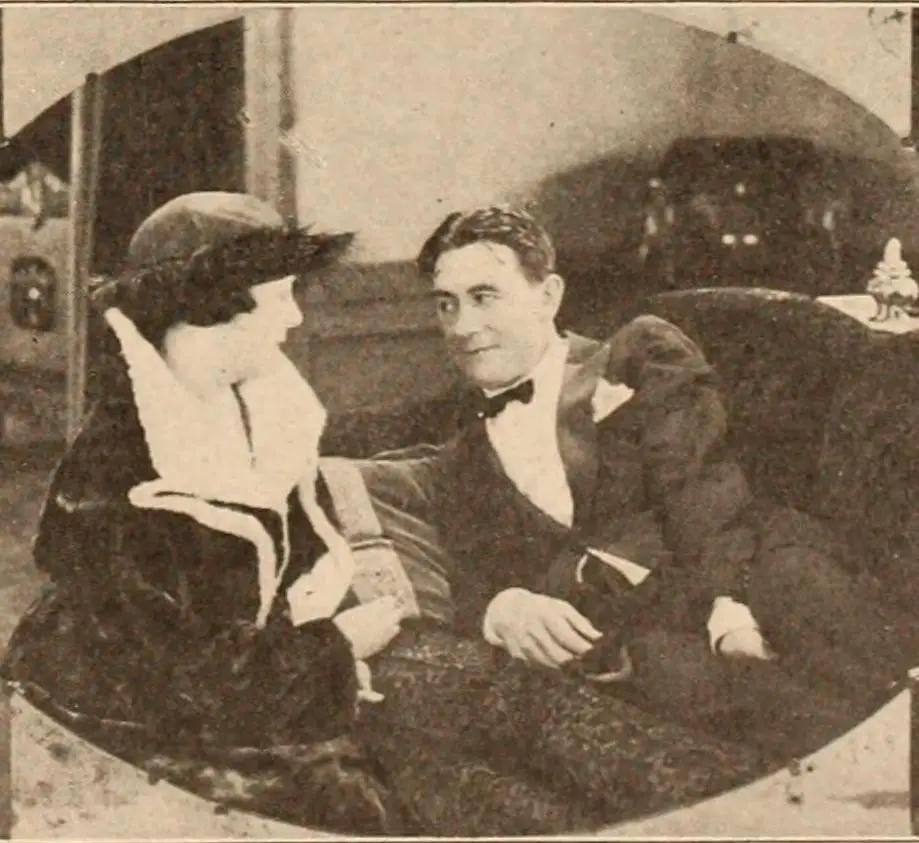
Thematically, the film grapples with the concept of truth and how it is mediated by social status. Melville’s inability to explain the girl’s presence stems from his awareness that the truth sounds like a fabrication. This exploration of the 'believability' of innocence is a recurring motif in silent cinema, notably in Should a Woman Tell?. In The Poor Simp, the stakes are lower, yet the social death Melville faces is treated with a sincerity that makes the comedy bite.
When placed alongside other releases of the era, such as the exoticized Mr. Wu or the melodramatic Infatuation, The Poor Simp feels remarkably modern in its focus on psychological frailty. It eschews the grand spectacles of Devi gory or the poetic realism of Mechta i zhizn, opting instead for a localized, intimate brand of chaos. It shares a certain spirit with The Parisian Tigress in its depiction of the 'bohemian' influence on the straight-laced, though the 'tigress' here is a helpful cabaret girl caught in a comedy of errors.
The film also touches upon the themes of identity and mistaken roles, a staple of the genre that we see in Her Father's Son. However, The Poor Simp distinguishes itself by making the protagonist's own character flaw—his shyness—the primary antagonist. It is not a villain from the outside, like the threats found in Out of the Dust, but Melville’s own internal struggle that drives the plot toward its near-disastrous conclusion.
The writing by Sarah Y. Mason is particularly sharp. She manages to balance the slapstick elements with a keen observation of human behavior. The dialogue intertitles are witty and economically used, allowing the visual storytelling to carry the weight of the narrative. This economy of language is something that many films of the time, such as Kadra Sâfa, could have benefited from. Mason understands that in a film about a man who cannot speak his mind, the silences are just as important as the actions.
As the complications ensue, the film moves toward a resolution that is both satisfying and slightly subversive. It doesn't just return Melville to his previous state of timid respectability; it forces him to navigate a world that is messier and more complicated than he initially believed. The resolution of the conflict with Grace and her father requires Melville to find a spine he didn't know he possessed, providing a character arc that is genuinely rewarding.
The Poor Simp is more than just a historical curiosity; it is a vibrant, funny, and surprisingly relatable exploration of social anxiety. In an era where we are often overwhelmed by digital noise, there is something profoundly refreshing about watching a man struggle with the simple act of speaking his heart. Owen Moore’s performance remains a high-water mark for the 'simp' archetype, and Sarah Y. Mason’s script provides a level of sophistication that ensures the film holds up a century later.
Whether you are a devotee of silent cinema or a casual viewer looking for a classic comedy, The Poor Simp offers a delightful blend of physical humor and social satire. It stands as a testament to the power of silent storytelling and the enduring appeal of the underdog. While it may not have the epic scale of some of its contemporaries, its charm lies in its intimacy and its keen understanding of the human condition. It is a film that reminds us that sometimes, the greatest battles we fight are not in the streets or on the frontier, but within the confines of our own hesitant hearts.
IMDb 5.7
1933
Community
Log in to comment.