DbcultAccessing Vault...
5.8/10
Senior Film Conservator
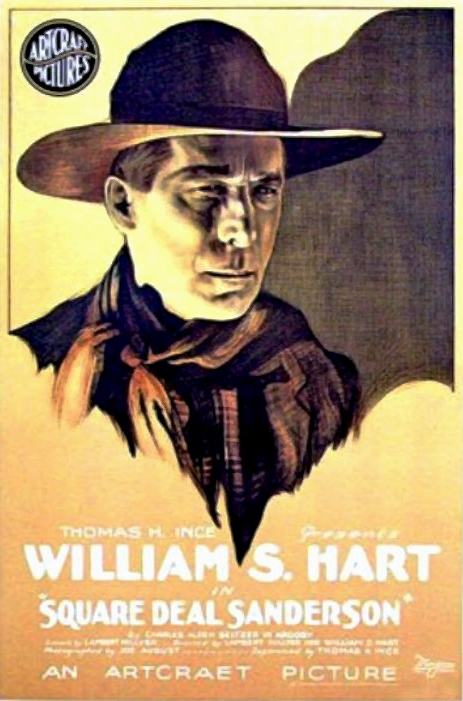
A definitive 5.8/10 rating for a film that redefined the boundaries of cult cinema. Square Deal Sanderson remains a cornerstone of transgressive art.
Ah, the silent era Western! There's a certain austere grandeur to these cinematic pioneers, a raw, unvarnished quality that speaks volumes without uttering a single word. Among the titans of this genre, William S. Hart stands as an undisputed icon, his weathered face and stoic demeanor embodying the very essence of the frontier hero. In 'Square Deal Sanderson', a film that pulsates with the rugged rhythms of "Arizona's yesterday," Hart delivers a performance that is both understated and profoundly impactful, crafting a narrative that transcends its temporal setting to explore universal themes of justice, vengeance, and the indomitable human spirit. It's a film that doesn't just tell a story; it etches it into the very fabric of the viewer's consciousness with sharp, deliberate strokes.
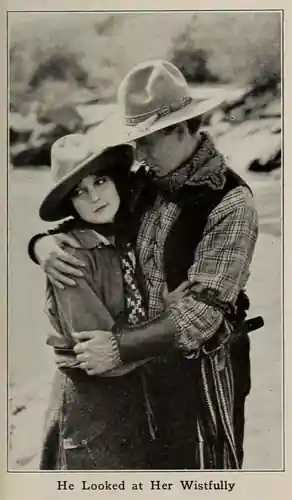
The film plunges us headfirst into a world where law is often a malleable concept, bending to the will of the powerful, and personal codes of honor are the only true compass. Our protagonist, known simply as Square Deal Sanderson, emerges from the vast, indifferent landscape, his introduction steeped in a kind of grim poetry. He discovers a poignant letter on the person of a deceased horse thief, a missive that serves as a desperate plea from Mary Bransford. This seemingly random act of discovery becomes the catalyst for Sanderson's journey into a moral wilderness, a New Mexico ranch where Mary's livelihood, and indeed her very safety, are threatened by the avarice of Alva Dale. Dale isn't just a land grabber; he's a systemic blight, his influence corrupting the town's governance and effectively dismantling any semblance of legitimate authority. Hart, as Sanderson, doesn't rush into heroics; his character is a man of measured intent, his actions born of a deeply ingrained sense of fairness and a quiet, simmering rage against injustice. His arrival is not heralded by trumpets, but by the subtle shift in the moral balance, a ripple in the stagnant waters of Dale's tyranny.
The brilliance of Hart's portrayal lies in his ability to convey immense inner strength through minimal expression. He’s not a verbose hero; his gaze, the set of his jaw, the deliberate movements of his body – these are his true dialogue. Assuming the identity of Mary's estranged brother, a strategic deception, Sanderson immediately asserts his presence, preventing the wrongful hanging of Barney Owen, a drifter who has already shown a commendable, if perhaps naive, loyalty to Mary. This initial act of intervention is a potent declaration of his intent, a clear challenge to Dale's corrupt dominion. The film masterfully establishes the stakes, painting a vivid picture of a community held hostage by one man's greed. Dale's response is swift and predictable: he manipulates the crooked sheriff to arrest Sanderson, leveraging his control over the local institutions. However, the bonds of nascent camaraderie forged between Sanderson and Owen prove stronger than Dale's machinations, leading to a cleverly executed escape that further solidifies their alliance.
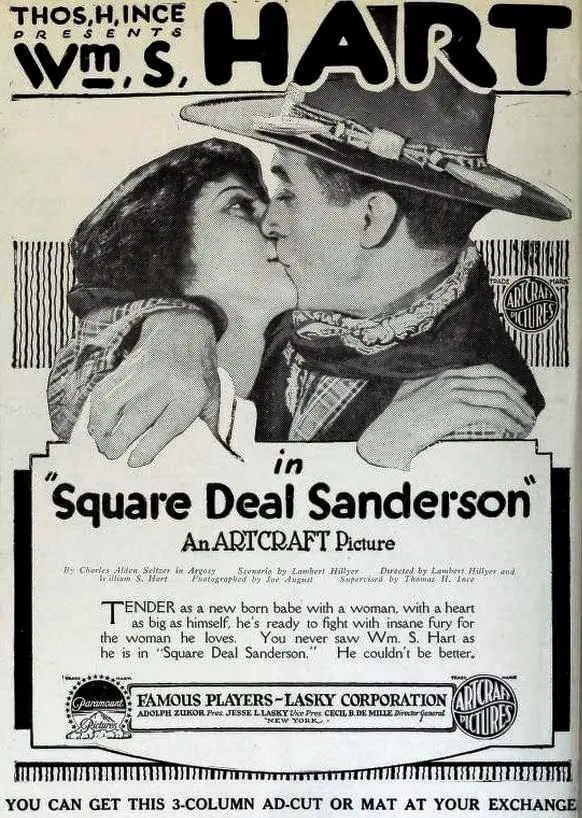
The narrative escalates with a horrifying act of brutality that underscores Dale's utter depravity. The poisoning of a vital watering hole, an act of ecological terrorism that decimates three thousand of Mary's cattle and claims the lives of three loyal cowboys, is a visceral reminder of the merciless nature of this conflict. This isn't just about land; it's about life, livelihood, and the very soul of the community. Sanderson's response is not impulsive, but calculated. He understands that justice, in this lawless land, must sometimes be extracted through unconventional means. His confrontation with the complicit banker, forcing the restitution of a staggering $90,000, is a moment of profound satisfaction, a financial blow that strikes at the heart of Dale's power structure. It’s a testament to Sanderson’s “square deal” ethos – an eye for an eye, but with an accounting ledger to back it up.
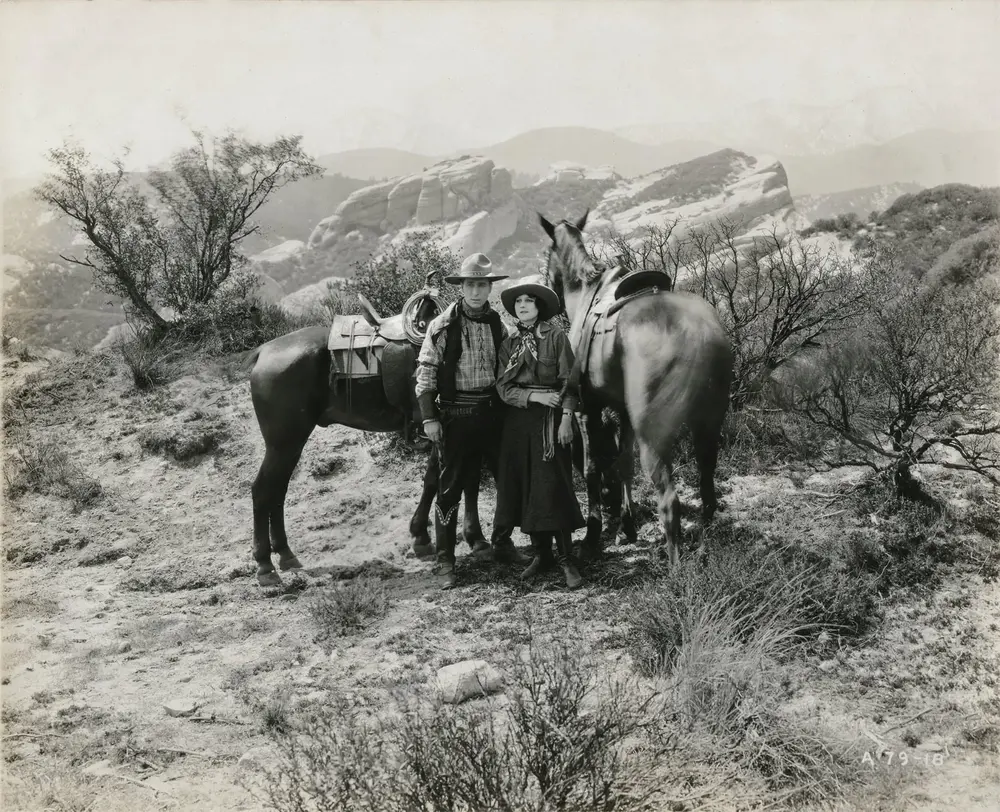
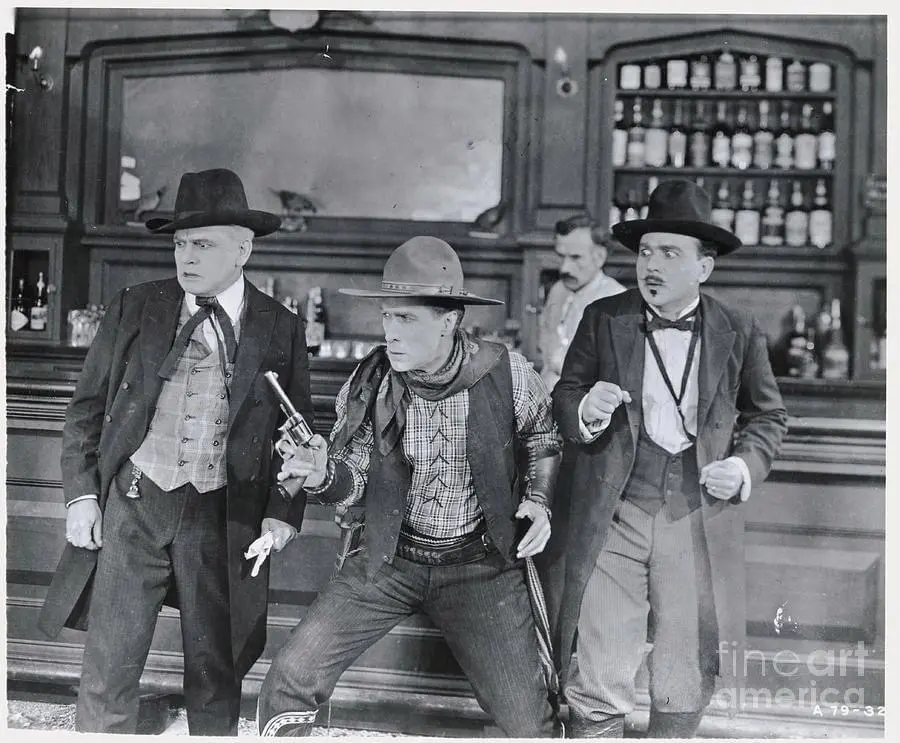
The film doesn't shy away from depicting the raw violence inherent in the frontier. A barroom brawl sees Sanderson dispatching two of Dale's enforcers with a grim efficiency, a stark illustration of the physical courage required to stand against such tyranny. Yet, even the most formidable heroes can be caught off guard. Sanderson's subsequent capture at Mary's ranch, a moment of vulnerability, heightens the tension to almost unbearable levels. Bound and helpless, his situation appears dire, particularly as Dale's predatory intent turns towards Mary in an adjacent room. This sequence is a masterclass in silent film suspense, relying on visual storytelling and the audience's empathy for the characters. The camera lingers on Sanderson's struggle, his face a mask of determination, as he painstakingly inches his chair towards a searing stove, the heat a harbinger of both danger and salvation. It’s a moment that could easily veer into melodrama, but Hart’s restrained performance grounds it in a powerful, desperate reality.
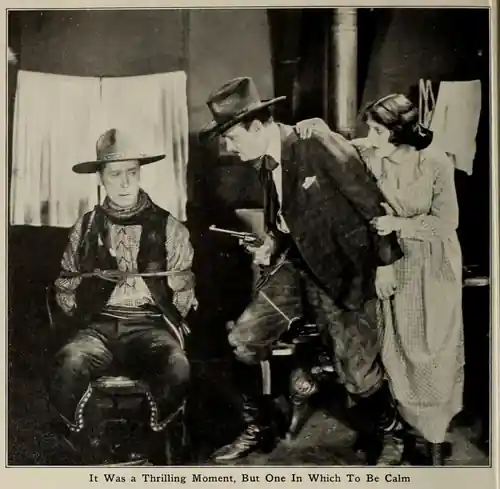
The climax of 'Square Deal Sanderson' is nothing short of iconic. The visual narrative of Sanderson, ropes burning away, then the audacious act of lassoing Dale through a transom and suspending him in a near-fatal tableau, is a stroke of pure cinematic genius. It's a symbolic hanging, a visceral representation of justice being meted out not by formal law, but by the unyielding hand of a man who embodies its spirit. This is where the film truly shines, showcasing the power of visual metaphor and the ability of silent cinema to communicate profound emotional and moral truths without dialogue. The psychological torment inflicted upon Dale, hanging by a rope, is far more potent than any bullet, a truly square deal delivered with cold, calculated precision. This scene, in its raw intensity, rivals the dramatic tension found in other silent era narratives of high stakes and personal vendettas, perhaps evoking the relentless pursuit of justice seen in films like Samhällets dom (Society's Judgment), where societal pressures and individual moral stands clash with devastating consequences.
The denouement offers a satisfying, if somewhat surprising, revelation: Barney Owen is, in fact, Mary's long-lost brother. This twist adds another layer to the narrative, transforming Owen from a mere sidekick into an integral part of Mary's family history and future. It's a clever narrative device that ties up loose ends while reinforcing the themes of loyalty and familial bonds. Sanderson, his immediate mission of justice complete, departs with Dale in tow, bound for Arizona on an outstanding warrant. His promise to return to Mary, a lingering echo across the vast, untamed landscape, leaves the audience with a sense of hopeful anticipation, a testament to the nascent romance that has subtly blossomed amidst the chaos.
William S. Hart's cinematic persona was meticulously crafted, a reflection of his deep respect for the authenticity of the Old West. He insisted on historically accurate costumes, realistic sets, and a nuanced portrayal of frontier life, often contrasting with the more flamboyant, less grounded Westerns of the era. In 'Square Deal Sanderson', his performance is a masterclass in this philosophy. He imbues Sanderson with a quiet dignity, a moral compass that remains unwavering even in the face of extreme provocation. His movements are deliberate, his expressions subtle, yet they convey a rich tapestry of emotion and resolve. This isn't a hero who revels in violence, but one who employs it as a necessary, regrettable tool for restoring balance. The film's direction, often attributed to Hart himself (though Lambert Hillyer is credited), mirrors this stoicism, favoring long shots that emphasize the vastness of the landscape and the isolation of its inhabitants, punctuated by close-ups that reveal the intense psychological drama playing out on the characters' faces. The sparse, yet effective, use of intertitles ensures that the narrative flows seamlessly, allowing the visual storytelling to take precedence.
The thematic undercurrents of 'Square Deal Sanderson' are rich and resonant. It explores the perennial conflict between established law and vigilante justice, a common trope in Westerns, but here handled with a particular gravitas. Sanderson isn't an outlaw; he's an enforcer of a higher moral code, stepping in where the official channels have been corrupted. The film also touches upon the vulnerability of women in the frontier, with Mary Bransford representing not just a romantic interest, but a symbol of the innocent, the homesteaders whose lives are constantly at the mercy of powerful, unscrupulous men. Her resilience, though, is equally noteworthy, making her a compelling figure in her own right. The film, in its depiction of a woman fighting to hold onto her land and dignity, resonates with the spirit of other strong female leads of the era, though perhaps less overtly rebellious than some, more quietly determined.
In an era dominated by rapid societal change and the burgeoning power of cinema, 'Square Deal Sanderson' stood as a powerful reflection of enduring American myths. It tapped into the collective imagination's fascination with the untamed West, presenting a hero who, while flawed, embodied the virtues of self-reliance, integrity, and unwavering determination. The film's legacy lies not just in its compelling narrative or Hart's iconic performance, but in its contribution to shaping the very archetype of the Western hero. It demonstrates how silent cinema, far from being a primitive form, was capable of profound emotional depth and sophisticated storytelling, utilizing visual language to its fullest potential. The stark black and white photography, the expansive landscapes, and the raw, unadorned performances combine to create a cinematic experience that remains potent and engaging even a century later. It's a testament to the power of a well-told story and the enduring appeal of a hero who truly believes in a 'square deal' for everyone.
Reflecting on 'Square Deal Sanderson' today, one cannot help but be struck by its timeless qualities. The struggle against corruption, the fight for what is rightfully one's own, and the inherent human desire for justice are themes that resonate deeply, regardless of the historical setting. William S. Hart's portrayal of Sanderson remains a benchmark for the stoic, moralistic Western hero, a figure who, despite his quiet demeanor, possesses an unshakeable resolve. The film is a vital piece of cinematic history, offering not just entertainment, but a window into the values and anxieties of its time. It’s a reminder that sometimes, the most powerful stories are told not with words, but with the raw, visceral language of action and consequence, a narrative etched in the dust and grit of the untamed frontier. It's a film that truly earns its place in the pantheon of classic Westerns, a testament to the enduring power of a good man fighting for a fair shake.
IMDb —
1917
Community
Log in to comment.