DbcultAccessing Vault...
7.2/10
Senior Film Conservator
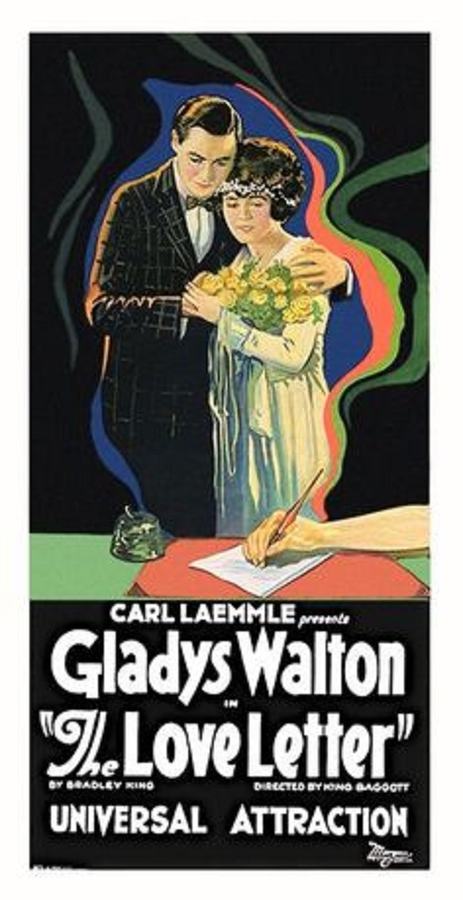
A definitive 7.2/10 rating for a film that redefined the boundaries of cult cinema. The Love Letter remains a cornerstone of transgressive art.
In the pantheon of silent-era cinema, few narratives capture the precarious intersection of industrial despair and romantic idealism quite like The Love Letter (1923). Directed by King Baggot and featuring the luminous Gladys Walton, this film serves as a poignant social document and a gripping melodrama. It is a work that transcends its generic boundaries, offering a sophisticated look at the lengths to which the human spirit will go to escape the soul-deadening reality of the early 20th-century assembly line. Unlike the more flamboyant scandals seen in films like The Cheat, Baggot’s work here is grounded in a gritty, proletarian realism that eventually blossoms into a lyrical, pastoral redemption.
The opening sequences of the film are a masterclass in visual storytelling. We see Mary Ann McKee (Gladys Walton) as a cog in the vast machinery of an overall factory. The cinematography emphasizes the repetition, the dust, and the exhaustion. It is here that the central motif—the mash note—is introduced. These letters are not merely flirtatious trifles; they are Mary Ann’s prayers cast into the void, a desperate attempt to assert her existence in a world that views her only as a labor unit. This theme of seeking identity through correspondence mirrors the psychological depth found in Jewel, though with a significantly more cynical edge.
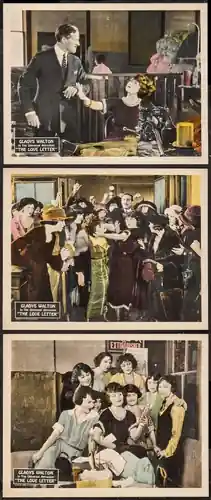
Walton’s performance is nothing short of revelatory. She manages to convey a weary optimism that is both heartbreaking and resilient. When she slips those notes into the pockets of the overalls, her eyes flicker with a spark of rebellion against the monochromatic life she leads. It is a subtle performance, lacking the exaggerated gesticulation often associated with the era, making her transformation throughout the film all the more believable. The writing by Hugh Hoffman and Bradley King provides a sturdy framework, ensuring that Mary Ann’s motivations are always clear, even as she descends into the criminal underworld with Red Mike.
The narrative takes a sharp, jagged turn with the introduction of Red Mike (George Cooper). If the factory represents the crushing weight of capitalism, Red Mike represents the chaotic, predatory nature of the urban fringe. The robbery sequence is staged with a tension that rivals the suspense found in Whitechapel. Here, the film flirts with the aesthetics of early film noir. The lighting becomes harsher, the shadows deeper, and Mary Ann’s vulnerability is heightened. She is no longer just a factory girl; she is an accomplice, a woman on the run, a figure of transit.
George Cooper’s portrayal of Red Mike is fascinating. He isn't a one-dimensional villain but rather a man driven by a different kind of desperation. His influence over Mary Ann is palpable, suggesting a history of manipulation that the film wisely leaves to the audience's imagination. This segment of the film serves as a stark contrast to the later scenes, highlighting the duality of the human experience—the struggle between our darker impulses and our yearning for stability. It’s a thematic resonance often explored in European cinema of the time, such as in Die Rache einer Frau, where the past acts as an inescapable tether.
When Mary Ann escapes to the small town to find the man who answered her letter, the film shifts its visual palette. The cramped, oppressive spaces of the city are replaced by the open, sun-drenched vistas of the countryside. Enter Bill Carter (Edward Hearn), the blacksmith. The choice of profession is deeply symbolic; Bill is a man who works with fire and iron to create, whereas Red Mike works with steel and gunpowder to destroy. The blacksmith’s shop becomes a forge for Mary Ann’s new identity.
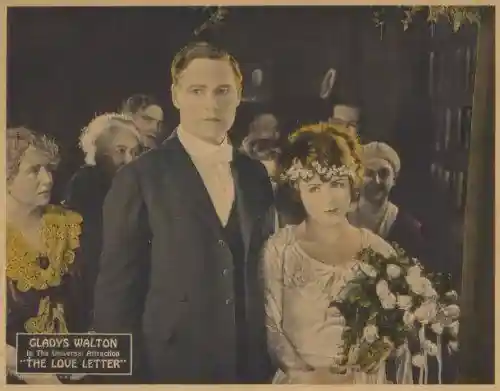
The romance between Mary Ann and Bill is handled with a delicate touch. It is not the feverish, destructive passion of the city, but a slow-burning, mutual respect. This transition from the urban to the pastoral is a common trope in silent melodrama, yet in The Love Letter, it feels earned. The film takes its time to show Mary Ann integrating into the community, finding a sense of belonging that she never had in the factory. This sense of domestic bliss is portrayed with a sincerity that avoids the saccharine pitfalls of films like Bringing Up Betty.
The third act of the film brings the inevitable collision of Mary Ann’s two worlds. The arrival of Red Mike in the peaceful town is staged like a gothic intrusion. He is the ghost of her transgressions, a reminder that the past can never be fully buried. The tension builds as Red Mike attempts to reclaim his hold over her, threatening to dismantle the fragile happiness she has built with Bill and their child. This conflict of hidden pasts and social exposure echoes the dramatic tension in The Golden Fetter.
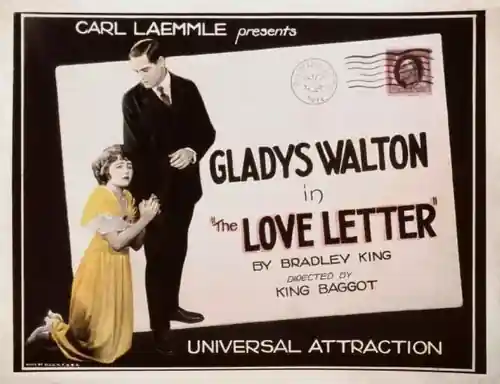
The resolution, however, is what elevates the film to a higher artistic plane. In many films of this era, the villain would meet a violent end, or the heroine would be forced into a tragic sacrifice. Instead, The Love Letter opts for a psychological resolution. When Red Mike sees Mary Ann saying goodbye to her child—a moment captured with exquisite tenderness by the camera—his resolve crumbles. It is the sight of pure, unadulterated maternal love that acts as the catalyst for his mercy. This moment of relenting is a powerful testament to the film's belief in the possibility of redemption, not just for Mary Ann, but for the 'villain' as well.
Technically, the film is a marvel of its time. The editing by Bradley King ensures a fluid narrative pace that never feels stagnant. The use of intertitles is sparse but effective, allowing the visual performances to carry the emotional weight. The lighting, particularly in the blacksmith’s forge, creates a chiaroscuro effect that adds a layer of mythic resonance to Bill Carter’s character. He is the 'protector,' the 'shaper' of iron, and his presence provides the grounding force the film needs. The film’s exploration of the 'fallen woman' trope is much more nuanced than in The Song of Songs, offering a path to grace that is through labor and love rather than suffering and death.
Furthermore, the supporting cast, including Walt Whitman and Florence Lee, provide a rich tapestry of small-town life that feels lived-in and authentic. They are not merely background characters but represent the community that Mary Ann so desperately seeks to join. The film’s ability to balance these intimate character moments with the larger-than-life themes of crime and redemption is a testament to King Baggot’s directorial vision. It shares a certain atmospheric dread with The Hound of the Baskervilles in its darker moments, yet it ultimately lands in a place of profound light.
Ultimately, The Love Letter is a film about the power of the written word to change the course of a life. A simple note, hidden in a pocket, becomes the bridge between a life of servitude and a life of sovereignty. It is a reminder that even in the most mechanical of environments, the human heart remains an unpredictable and powerful force. The film’s legacy lies in its empathetic portrayal of the working class and its refusal to condemn its protagonist for her past mistakes. It stands alongside other great silent works like Mathias Sandorf in its scale, yet remains deeply personal in its execution.
For modern viewers, The Love Letter offers a window into a bygone era, yet its themes of isolation, the search for connection, and the hope for a second chance are as relevant today as they were in 1923. Gladys Walton’s Mary Ann is a heroine for the ages—a woman who dared to write her own destiny in the margins of her industrial life. Whether compared to the high-stakes drama of L'ira or the adventurous spirit of The Forbidden Range, this film carves out its own unique space in cinematic history. It is a haunting, beautiful, and ultimately triumphant piece of art that deserves a prominent place in the discussion of silent cinema’s greatest achievements.
In the final analysis, the film’s success is a result of its perfect alchemy of performance, direction, and thematic depth. It avoids the easy out, choosing instead a path of moral complexity that respects the intelligence of its audience. The 'love letter' of the title is not just the note Mary Ann wrote; it is the film itself—a love letter to the resilience of the human spirit and the enduring power of mercy over vengeance. It is a cinematic experience that lingers long after the final frame has faded, much like the rhythmic tolling of a blacksmith’s anvil in the quiet of a summer afternoon.
IMDb —
1927
Community
Log in to comment.