DbcultAccessing Vault...
Cult Review
Senior Film Conservator
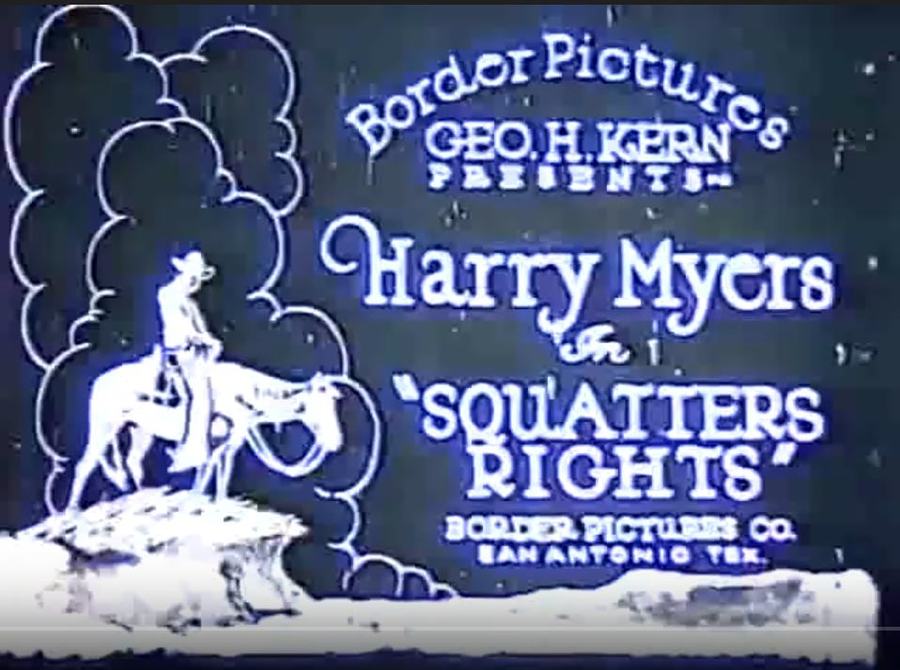
Stepping back into the annals of early cinema is always an illuminating journey, a chance to rediscover forgotten narratives and appreciate the foundational artistry that paved the way for modern storytelling. Among these unearthed treasures, Squatter's Rights emerges as a particularly charming, if understated, cinematic artifact. This 1920s silent film, featuring the magnetic Allene Ray and the affable Harry Myers, is far more than a simple period piece; it’s a delightful exploration of property, perseverance, and the unexpected blossoming of human connection amidst adversity. It’s a testament to the enduring appeal of the underdog narrative, infused with a generous dose of comedic misunderstanding and genuine heartfelt emotion.
At its core, Squatter's Rights crafts a narrative that, while seemingly straightforward, is rich with character-driven conflict and burgeoning romance. We are introduced to Elsie Vance, portrayed with vibrant energy by Allene Ray, a woman whose urban sophistication is abruptly stripped away by unforeseen circumstances, leaving her stranded and penniless in the vast, indifferent countryside. Her plight, however, is not one of despair, but rather a catalyst for her innate resourcefulness. She stumbles upon a dilapidated cabin, seemingly abandoned, a relic swallowed by the encroaching wilderness. With a spirit as untamed as the landscape itself, Elsie claims this ramshackle structure as her own, pouring her ingenuity into transforming its decay into a habitable, if rustic, home. Her quiet triumph, however, is destined to be short-lived.
Enter Barnaby “Buzz” Butterfield, brought to life by the effortlessly charming Harry Myers. Buzz is a quirky inventor, a man of curious contraptions and reclusive habits, who has long utilized the very same cabin as his secret workshop and occasional sanctuary. Unaware of any deeper legal complexities, he, too, has been a 'squatter' of sorts, albeit on ancestral land he believed to be rightfully, if informally, his. His return to this secluded haven, only to find it occupied by the audacious Elsie, ignites the central conflict of the film. Their initial encounter is a masterclass in silent film comedic timing: a furious battle of glares, gestures, and physical comedy as each asserts their dominion over the humble abode. Elsie, fiercely defensive of her newfound sanctuary, and Buzz, utterly bewildered by the unexpected intrusion, embark on a hilarious, yet ultimately poignant, struggle for ownership. This territorial dispute, far from being purely antagonistic, serves as the fertile ground upon which their unique connection begins to take root.
The burgeoning, if contentious, dynamic between Elsie and Buzz does not escape the notice of the local community, particularly the film's antagonist, Silas Grimsby. Grimsby is the archetypal unscrupulous land speculator, a character often seen in the cinema of the era, embodying the predatory side of ambition. He’s a man who views land not as a home or a livelihood, but as a commodity to be exploited. Aware of a forgotten, yet legitimate, claim to the land held by a distant relative of Buzz, Grimsby cunningly attempts to manipulate the two protagonists against each other. His scheme is simple: exacerbate their dispute, weaken their resolve, and then swoop in to acquire the coveted property for a pittance, capitalizing on their perceived vulnerability.
This external threat, however, proves to be the unlikely catalyst for a profound shift in Elsie and Buzz's relationship. Forced into an uneasy cohabitation by circumstance and the looming specter of Grimsby’s machinations, their initial animosity gradually softens. The shared struggle against a common enemy, the necessity of collaboration, begins to chip away at their defenses. They start to see beyond the 'squatter' label, recognizing each other's resilience, ingenuity, and inherent goodness. The comedic skirmishes slowly give way to moments of shared understanding, then mutual respect, and eventually, a tender, undeniable admiration. It's a beautifully paced evolution, executed with the nuanced expressions and physicality characteristic of peak silent film performances. The climax sees them uniting their wits and courage to expose Grimsby’s deception, not merely securing their claim to the land but, more importantly, solidifying their burgeoning love. It is a powerful affirmation that true ownership extends beyond legal deeds, finding its truest expression in shared effort, mutual affection, and the creation of a home built on partnership.
In the silent era, the power of performance rested almost entirely on the shoulders of the actors' physicality, their facial expressions, and their ability to convey complex emotions without uttering a single word. Allene Ray, a serial queen renowned for her athleticism and spirited portrayals, shines as Elsie Vance. She imbues Elsie with a compelling blend of vulnerability and fierce independence, making her instantly relatable and admirable. Ray’s expressive eyes and dynamic movements communicate Elsie's journey from desperation to defiant self-reliance, and finally, to tender affection. Her comedic timing is impeccable, particularly in the early scenes where she physically asserts her claim over the cabin, battling Buzz with a delightful mix of exasperation and determination.
Complementing Ray’s vivacity is Harry Myers as Buzz Butterfield. Myers, known for his amiable screen presence, crafts a character who is initially bewildered and somewhat out of his depth, but whose underlying kindness and ingenuity gradually surface. His portrayal of Buzz is endearing, capturing the essence of a man more comfortable with his inventions than with social confrontation. The transformation of Buzz from a reclusive oddball to a protective and loving partner is handled with subtle grace, making his eventual connection with Elsie feel authentic and earned. Together, Ray and Myers possess a palpable on-screen chemistry, their silent interactions speaking volumes and building a romance that feels genuinely earned. Their performances are a masterclass in silent film acting, utilizing every nuance of body language to tell a compelling story.
Beyond the charming performances and engaging plot, Squatter's Rights delves into themes that resonate even today. The concept of 'squatter's rights' itself is a fascinating legal and moral quandary, exploring the fine line between legal ownership and practical possession, between inherited claims and earned sanctuary. The film cleverly uses this premise to examine what truly constitutes 'home' and 'belonging.' Is it a piece of paper, a deed, or is it the effort, love, and community one invests in a place? Elsie's journey particularly highlights the theme of female independence and resourcefulness in an era when such traits were often constrained. She doesn't wait for rescue; she actively creates her own haven, embodying a spirit of self-reliance that was both aspirational and revolutionary for its time.
The burgeoning romance between Elsie and Buzz further explores the idea of connection as a form of ownership. They don't just stake a claim on the land; they stake a claim on each other, building a shared future from a foundation of initial conflict. This exploration of property as both a physical space and an emotional bond elevates the film beyond a simple romantic comedy. It suggests that true wealth lies not in material possessions but in the relationships forged and the shared experiences that transform a mere structure into a cherished home. The film subtly critiques the purely capitalistic view of land (represented by Grimsby) by contrasting it with the deeply human desire for belonging and community.
While specific directorial credits for many silent films can be elusive, the craftsmanship evident in Squatter's Rights is commendable. The cinematography effectively captures the rustic beauty of the countryside, contrasting it with the initial dilapidation of the cabin and the later warmth it acquires through Elsie’s efforts. The use of intertitles is judicious, providing necessary dialogue and exposition without hindering the visual storytelling. The pacing is lively, particularly in the comedic sequences, maintaining audience engagement throughout. The film understands the rhythm of silent comedy, allowing moments of physical humor to breathe while also building dramatic tension effectively. The staging of the various confrontations, both between Elsie and Buzz and later against Grimsby, is well-orchestrated, ensuring clarity and impact without relying on spoken words.
Placing Squatter's Rights within the broader context of silent cinema illuminates its particular strengths. It shares a thematic kinship with other films that explore property disputes and the struggle for survival, though often with a lighter touch. One might draw parallels to the rugged individualism seen in Westerns of the era, such as The Spoilers, which also centered on land claims, albeit with far greater dramatic intensity and violence. However, Squatter's Rights leans more towards the comedic and romantic, finding its kin in films where charming protagonists overcome adversity through wit and heart.
The independent spirit of Allene Ray's Elsie, for instance, echoes the strong female characters often seen in serials of the time, where heroines like those in Bound in Morocco or even the more dramatic Should She Obey?, navigate complex situations with agency. While Squatter's Rights doesn't delve into the darker psychological depths of a film like Lolita (a vastly different era and genre, of course) or the intricate moral dilemmas of Other People's Money, it succeeds in creating a compelling, character-driven narrative within its more lighthearted framework. Its charm lies in its simplicity and the universal themes it touches upon, much like the timeless appeal of a well-crafted fairy tale or a classic romance.
For those interested in the evolution of romantic comedy, Squatter's Rights offers an early blueprint. The 'enemies-to-lovers' trope, so prevalent in modern cinema, is skillfully executed here, relying on visual cues and the actors' innate charm. It stands apart from more overtly melodramatic silent films such as Die Gespensterstunde or the existential dread of Glinyanyy bog, opting instead for a narrative imbued with hope and human warmth. The film's relatively optimistic outlook and focus on resourceful individuals finding their way through challenging circumstances align it more closely with the spirit of adventure and discovery that defined much of early American cinema.
While not as widely remembered as some of its more epic contemporaries, Squatter's Rights holds a significant place in the tapestry of silent film. It serves as an excellent example of how compelling storytelling, strong performances, and universal themes can transcend the limitations of spoken dialogue. It's a reminder that the human experience – the desire for home, the struggle for independence, the unpredictable nature of love – has been a constant source of inspiration for filmmakers across generations. The film's enduring appeal lies in its ability to transport viewers to a simpler time, yet engage them with conflicts and emotions that remain deeply resonant. It's a testament to the power of silent cinema to communicate complex ideas and forge profound connections with its audience.
For aficionados of silent film, and indeed for anyone interested in the foundational elements of cinematic narrative, Squatter's Rights is a delightful discovery. It’s a film that, despite its age, feels remarkably fresh in its characterizations and its optimistic outlook. It invites us to appreciate the subtle artistry of a bygone era, where a glance, a gesture, or a well-timed physical comedy routine could convey more emotional depth than pages of dialogue. It reinforces the idea that true cinematic magic often lies in the unspoken, in the unspoken connection between characters, and between the screen and the viewer. A truly enjoyable and historically significant piece of filmmaking.
IMDb 7.4
1933
Community
Log in to comment.