DbcultAccessing Vault...
Cult Review
Senior Film Conservator
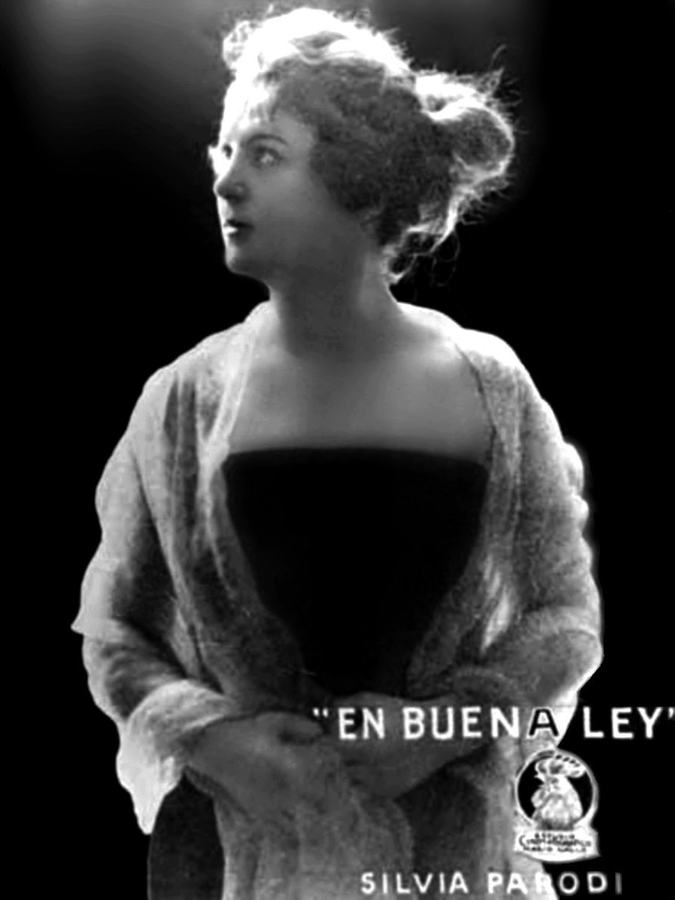
The cinematic landscape of the early 20th century, particularly within the nascent yet vibrant South American film industry, often served as a powerful mirror reflecting societal anxieties and moral quandaries. Among these early gems, Ricardo Flores’s “En buena ley” (1918), penned by the insightful duo Ana Sofia Ramos and Emilio Vargas, stands as an enduring testament to the medium’s capacity for profound ethical interrogation. This silent masterpiece, starring the formidable talents of Alberto Traversa and Mario Gallo, transcends its era, presenting a timeless narrative that probes the very essence of justice, compassion, and the often-unforgiving letter of the law. It’s a film that doesn't merely tell a story; it poses a fundamental question to its audience: where does true justice reside when human suffering collides with unyielding statutes?
At the heart of “En buena ley” beats the conflicted soul of Judge Eduardo Montalvo, brought to life with profound gravitas by Alberto Traversa. Traversa’s portrayal is a masterclass in silent film acting, where every gesture, every flicker of his eyes, conveys volumes. Montalvo is introduced as an embodiment of judicial rectitude, a man whose life is meticulously ordered by the precedents and principles of the law. His courtroom is a sanctuary of order, his judgments delivered with an almost mechanical precision, devoid of overt emotional sway. Yet, beneath this stoic exterior, Traversa skillfully hints at a deeper, more vulnerable man. We perceive the echoes of a past personal tragedy, a wound that has perhaps cemented his rigid adherence to legalism as a defense mechanism against the chaos of human emotion. His performance is a slow burn, a gradual erosion of an unyielding facade as the case of Elena unfolds before him. The internal struggle is palpable; Traversa doesn't resort to histrionics, but rather a nuanced progression of doubt and introspection. One can almost feel the weight of his conscience pressing down, a stark contrast to the outward composure he maintains. His Montalvo is not a villain, nor is he a simplistic hero; he is a man grappling with the complexities of his profession and the inherent fallibility of human systems, a portrayal that elevates the film beyond a simple courtroom drama to a poignant character study. It’s a performance that rivals the expressive subtlety seen in European contemporaries, perhaps even echoing the depth of character found in films like Sumerki zhenskoy dushi, albeit within a distinct legal framework.
Counterbalancing Traversa's nuanced portrayal is Mario Gallo as the formidable industrialist Don Ricardo. Gallo crafts a character who is not merely an antagonist but a chilling personification of unchecked power and societal indifference. Don Ricardo is not driven by passion or revenge in the traditional sense; rather, his pursuit of Elena's maximal condemnation stems from a cold, calculated desire to maintain his authority and deter any perceived challenge to his dominance. Gallo’s presence on screen is commanding, his gestures often subtle but laced with an undeniable menace. He embodies the 'letter of the law' taken to its most draconian extreme, leveraging his influence to manipulate the legal system for personal vindication rather than genuine justice. The contrast between his unfeeling pursuit and Elena's desperate plight is stark, highlighting the vast chasm between the privileged and the marginalized. Gallo’s performance ensures that Don Ricardo is not a cardboard cutout villain but a believable, albeit deplorable, force within the narrative, reflecting the harsh realities of class disparity prevalent in that era. His portrayal resonates with the powerful, often cruel figures seen in other social commentary films of the period, such as the exploitative characters in Paws of the Bear or even the more allegorical representation of greed found within Creation.
Beyond its compelling character arcs, “En buena ley” masterfully weaves a complex tapestry of themes that remain strikingly relevant today. The central conflict—the agonizing chasm between rigid legalism and the profound exigencies of human compassion—is explored with an unflinching gaze. The film doesn't offer simplistic answers but forces the audience to confront the imperfections inherent in any system designed by humans. Elena's act of larceny, born not of malice but of sheer desperation to save her ailing brother, challenges the very definition of culpability. Is an act committed under duress, driven by love and survival, truly a crime in the same moral universe as one motivated by greed or malice? This question is the crucible in which Montalvo's principles are tested.
The film also serves as a potent piece of social commentary, exposing the stark inequalities of the era. Don Ricardo's ability to wield influence and manipulate the legal process underscores the privilege of power, contrasting sharply with Elena's utter powerlessness. The introduction of Montalvo's estranged daughter, Clara, a fervent social worker advocating for the marginalized, provides a crucial ethical counterpoint. Her idealism and practical engagement with the suffering of the poor force Montalvo to confront the abstract nature of his legal judgments against the tangible human cost of societal neglect. This dynamic adds another layer to the film’s exploration of justice, suggesting that true equity extends beyond the courtroom into the broader societal structure. It's a thematic richness reminiscent of the social consciousness found in films like Life's Harmony or even the more direct critiques of class present in His Last Dollar, yet “En buena ley” distinguishes itself through its intimate focus on the judge's internal moral dilemma.
The film’s exploration of personal redemption is another powerful thread. Montalvo’s journey is not merely about making a legal decision but about reconciling his past, understanding his own emotional scars, and ultimately redefining his personal philosophy of justice. The narrative arc allows for a profound transformation, subtly communicated through Traversa’s performance. This journey of self-discovery, prompted by external pressures and internal echoes, makes Montalvo one of the most compelling figures in early cinema, standing alongside complex protagonists found in works such as Das wandernde Auge or Il sogno di Don Chisciotte, which also delved into the psychological landscapes of their characters.
In an era reliant entirely on visual storytelling, the cinematography and direction of “En buena ley” stand out for their clarity, emotional impact, and innovative use of the medium. Ricardo Flores, the director, demonstrates a keen understanding of how to build tension and convey complex emotions without spoken dialogue. The framing of shots is deliberate, often isolating Montalvo within his grand, austere office or placing Elena in stark, vulnerable compositions, visually emphasizing their respective positions in society and the impending conflict. The use of close-ups is particularly effective in capturing the subtle shifts in Traversa’s facial expressions, allowing the audience to witness his internal turmoil firsthand. The pacing, while measured, never feels sluggish; instead, it allows the narrative to unfold with a methodical precision that mirrors Montalvo’s own approach to justice. The courtroom scenes are particularly well-staged, using depth and blocking to highlight the power dynamics at play. The contrast between the dark, imposing interiors of the courthouse and the glimpses of the vibrant, yet struggling, city outside further enriches the film’s visual commentary on social stratification. The artistic vision here is comparable to the sophisticated visual narratives seen in films like För sin kärleks skull or even the atmospheric qualities of The Haunted Manor, despite their differing genres. The film’s ability to communicate such profound themes through purely visual means is a testament to Flores’s directorial prowess and the expressive capabilities of silent cinema.
The film's climax, with Montalvo's fateful decision, is a moment of profound tension and emotional release. It is a testament to the meticulous buildup that the verdict, whatever it may be, feels earned and impactful. “En buena ley” doesn't shy away from the complexities of its premise, offering a resolution that is both satisfying in its dramatic arc and thought-provoking in its implications. The film challenges its audience to consider not just what is legally permissible, but what is morally right, and the often-painful intersection of the two. It advocates for a justice that is tempered with empathy, a legal system that recognizes the human element behind every statute. The writers, Ramos and Vargas, crafted a narrative that is both intricate and accessible, allowing for deep philosophical reflection while maintaining a compelling dramatic thrust. Their script, brought to life by Flores's direction and the stellar cast, ensures that the film's message resonates long after the final fade to black.
In the grand pantheon of early cinema, “En buena ley” carved out a singular niche. It is more than just a historical artifact; it is a living, breathing work of art that continues to speak to contemporary concerns about justice, inequality, and the human spirit. Its powerful performances, particularly from Traversa and Gallo, coupled with its insightful thematic exploration and masterful visual storytelling, solidify its status as a silent film masterpiece. It invites viewers to ponder the delicate balance between the letter of the law and the spirit of humanity, a timeless question that finds one of its most eloquent expressions in this remarkable cinematic achievement. For those interested in the ethical dilemmas explored in other films of its time, comparisons could be drawn to the moral quandaries in Rebecca the Jewess or the social critiques found in Beauty in Chains, yet “En buena ley” stands alone in its profound and deeply personal examination of a judge’s conscience.
IMDb 6.4
1929
Community
Log in to comment.