DbcultAccessing Vault...
Cult Review
Senior Film Conservator
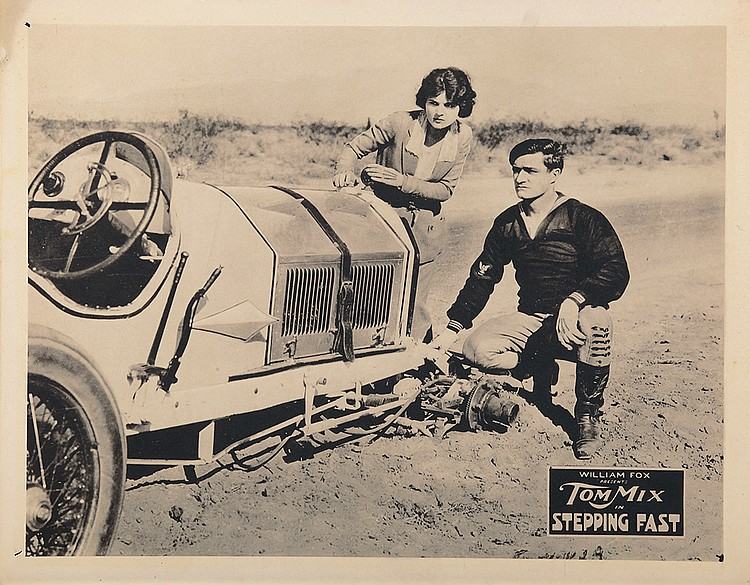
Ah, the silent era! A time when storytelling on screen was a grand ballet of gesture, expression, and the sheer audacity of spectacle. And within that vibrant tapestry, few stars shone as brightly, or galloped as fearlessly, as Tom Mix. Today, we're dusting off a true gem from 1923, a film that, by its very title, promises kinetic energy and relentless forward momentum: Stepping Fast. This isn't just another Western; it's a genre-bending odyssey that takes the quintessential American cowboy and hurls him across oceans, through international intrigue, and into a battle for fortune and justice that transcends geographical boundaries.
What makes Stepping Fast so compelling, even a century after its initial release, is its audacious refusal to be confined. Most Tom Mix vehicles, while undeniably thrilling, kept him firmly planted in the saddle, patrolling the vast, untamed American West. Here, however, the narrative takes a delightful, unexpected detour. We begin in the familiar, sun-drenched Arizona desert, a landscape synonymous with Mix's heroic persona. Our protagonist, a young ranch man (played with characteristic vigor by Mix himself), finds himself embroiled in a classic Western predicament: he holds the secret to a lucrative gold mine. This isn't merely a map or a whispered rumor; it's a deeply held, perhaps even intuitive, knowledge of the mine's precise location, making him a walking, talking treasure chest for those with ill intent.
The villains, a shadowy cabal of avarice and ruthlessness, quickly make their move. The capture is swift, brutal, and sets in motion a chain of events that will redefine the boundaries of silent film adventure. Instead of a dusty jail cell or a remote hideout, Mix's character is subjected to an almost theatrical act of villainy: he's thrown into the churning, unforgiving waters of San Francisco Bay. This act alone immediately elevates the stakes and broadens the scope. It’s a moment that could easily fit into a thrilling serial like The Shadow, albeit with a distinctly Western hero at its core, hinting at a more complex, less straightforward brand of peril than typically encountered on the frontier.
The miraculous rescue by a tramp steamer is a narrative device that, while convenient, serves its purpose with aplomb, launching our hero into uncharted waters, both literally and figuratively. Forced to work his passage, Mix's character endures the harsh realities of maritime life, a stark contrast to the open plains he knows so well. This segment of the film, though perhaps brief, offers a fascinating glimpse into the versatility of Mix's appeal. He's no longer just a cowboy; he's a man of grit, adaptable to any environment, capable of surviving against all odds. This resilience is a hallmark of his screen persona, but rarely tested in such diverse settings.
The destination: China. This is where Stepping Fast truly distinguishes itself. To transport a Western hero, a symbol of American rugged individualism, to the mysterious, exotic East was a bold stroke for a film of this era. It speaks to a burgeoning global awareness in popular culture, an appetite for adventure that transcended national borders. And, predictably, the same nefarious gang, seemingly omnipresent and tirelessly pursuing their golden quarry, reappears. The audacity of their international reach underscores their menace and the high stakes of the treasure.
Mix, of course, is the undeniable star, his athleticism and charm radiating even through the silent medium. His expressive eyes and dynamic physicality convey volumes without a single spoken word. But he's not alone in this grand adventure. Claire Adams, as the daughter of the scientist who originally discovered the mine, brings a vital intelligence and spirited independence to the narrative. Her character isn't a mere damsel in distress; she's an active participant, a resourceful ally whose knowledge is as crucial as Mix's brawn. This kind of strong female character was not always a given in early cinema, making Adams's portrayal all the more commendable.
The villains, led by the formidable George Siegmann, are suitably menacing. Siegmann, known for his imposing stature and ability to convey sinister intent, provides a perfect foil for Mix's heroic resolve. His presence grounds the global chase in a tangible threat, ensuring that the audience feels the constant peril. Edward Jobson, Donald MacDonald, and the rest of the supporting cast, including the inimitable Tony the Horse, all contribute to the film's vibrant energy. Tony, Mix's legendary steed, often steals scenes with his intelligent performances, and his absence during the maritime and Chinese segments only makes his eventual return more impactful, a symbol of home and steadfast loyalty.
The Chinese setting provides a rich, visually stimulating backdrop for the film's middle act. While perhaps relying on some period tropes, the sheer novelty of seeing Mix navigate this unfamiliar landscape is captivating. The action sequences here are particularly inventive, moving from ship decks to bustling streets and, finally, to a dangerous 'Chinese den' – a common trope of the era signifying illicit activities and shadowy dealings. It is here that Mix, with the invaluable assistance of some American sailors, stages a daring breakout. This alliance speaks to a sense of camaraderie and shared national identity in a foreign land, a unifying force against a common enemy. The fight sequences are classic Mix: agile, acrobatic, and always with a touch of his signature showmanship.
The journey back to the States is less detailed in the plot summary, but one can imagine it as a race against time, with the villains hot on their heels. The ultimate success in securing the treasure, however, is a foregone conclusion in a Tom Mix film, but the joy lies in the 'how.' It’s a testament to perseverance, cunning, and the unwavering spirit of adventure. In a way, the narrative arc mirrors the structure of an epic serial, where each escape and new location builds upon the last, culminating in a satisfying resolution. Films like I Will Repay or The Craving (1918), while different in genre, share that intense drive towards a final reckoning, a promise of justice delivered.
The screenplay, penned by Bernard McConville, is a marvel of its time. To conceive such a sprawling narrative, one that effortlessly transitions from Western action to maritime drama and then to international espionage, demonstrates a keen understanding of audience desires and the capabilities of the silent film medium. McConville doesn't just write a plot; he crafts an experience. His ability to weave together disparate elements into a cohesive, thrilling whole is the backbone of Stepping Fast's enduring appeal. While directorial credits for many silent films can be murky or shared, the narrative structure itself often speaks volumes about the writer's vision. This isn't the simple, morality-play Western of earlier days; it's a complex, multi-layered adventure that requires investment from the audience.
The film's pacing, as suggested by its title, is likely relentless. Silent films often relied on a brisk tempo to maintain audience engagement, a continuous flow of action and dramatic tension punctuated by intertitles. One can imagine the visual dynamism of the desert chases giving way to the claustrophobia of a steamer's hold, then to the chaotic energy of Chinese ports, all propelled by an urgent, almost breathless rhythm. This sustained momentum is crucial for a story that spans such vast distances and cultural landscapes. It’s a masterclass in how to keep an audience on the edge of their seats without the aid of spoken dialogue or complex sound design.
Tom Mix was more than an actor; he was an icon. His films were not just entertainment; they were events. Audiences flocked to see his daring stunts, his charming grin, and his unwavering commitment to justice. Stepping Fast offers a prime example of why. It takes his established persona and stretches it, proving that his heroism wasn't confined to one genre or one continent. He was, in essence, a global adventurer before the term was widely popularized. The film serves as a fantastic entry point for those curious about silent cinema, offering a narrative that is both accessible and surprisingly sophisticated in its scope.
Moreover, the film's production values, even for a 1923 release, would have been considerable, especially given the international settings. While 'China' might have been recreated on a backlot or through clever set dressing, the illusion must have been convincing enough to transport audiences. The use of real locations, even if only for the San Francisco Bay scenes or the early Arizona sequences, would have added a layer of authenticity that contemporary viewers appreciated. This commitment to visual storytelling, to creating believable worlds, is a testament to the artistry of silent film production.
Comparing Stepping Fast to other films of its era, one might see echoes of the pure adventure in something like Der Klosterjäger, where a protagonist is similarly thrust into perilous circumstances. Or perhaps the dramatic tension of a revenge plot found in I Will Repay. Yet, Stepping Fast stands out due to its unique fusion of genres. It’s not just a Western, not just an adventure film, but a thrilling hybrid that keeps its audience guessing at every turn. It’s a testament to the creative ingenuity of early Hollywood, a period often underestimated in its narrative ambition.
Ultimately, Stepping Fast is more than a historical curiosity; it's a vibrant piece of cinematic history that showcases the boundless potential of silent storytelling. It reminds us that fundamental human desires – for adventure, for justice, for wealth, and for survival – are universal and timeless. Tom Mix, in his intrepid journey from the Arizona desert to the bustling ports of China, embodies a spirit of indomitable courage that resonates even today. His ability to connect with audiences through sheer physicality and genuine charisma ensured his place in the pantheon of early film stars, and films like this demonstrate precisely why.
For modern viewers, watching Stepping Fast is an invitation to step back in time, to appreciate the craft of filmmaking before the advent of sound changed everything. It's an opportunity to witness the birth of the action hero as we know him, a figure capable of navigating any crisis, no matter how outlandish. The film is a thrilling ride, a testament to the power of a well-told story, and a sparkling example of Tom Mix at the height of his powers. It certainly steps fast, and it leaves a lasting impression.
IMDb 6.5
1932
Community
Log in to comment.