DbcultAccessing Vault...
Cult Review
Senior Film Conservator
The Dissonance of the Melodic Macabre
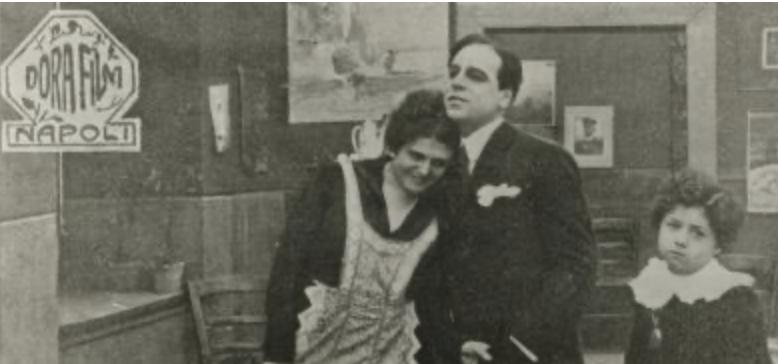
The title Mandolinata a mare suggests a lyrical, perhaps even whimsical, journey through the sun-drenched coastal vistas of Italy, yet the film itself stands as a stark, monochromatic antithesis to such romantic expectations. It is a work of profound, almost suffocating gravity, navigating the liminal spaces between social neglect and the grotesque. The narrative trajectory of Maria, portrayed with a haunting, fragile intensity by Isabella Zanchi, serves as a visceral indictment of a society that views the disenfranchised not as souls in need of sanctuary, but as detritus to be managed, and eventually, utilized. Unlike the more traditional melodramatic arcs found in contemporary works like A Love Sublime, this film offers no cathartic ascent, only a steady, inexorable plunge into the abyss.
Maria’s existence within the insane asylum is depicted with a gritty realism that bypasses the era’s penchant for theatrical madness. Her destitution is not merely a plot point; it is an atmospheric weight that colors every frame. When the fire breaks out, it is not presented as a divine intervention or a poetic cleansing, but as a chaotic, terrifying erasure. The cinematography captures the flickering shadows and the encroaching heat with a sense of urgency that mirrors the internal fragmentation of its protagonist. This pyrotechnic climax serves as the bridge between Maria’s life as a social pariah and her afterlife as a medical specimen. In this regard, the film shares a thematic kinship with the social critiques found in The Dollar and the Law, where the human cost of economic and social structures is laid bare with unflinching precision.
The Corporeal Commodity and the Clinical Gaze
The transition from the asylum to the anatomy academy is perhaps one of the most jarring shifts in early silent cinema. The donation of Maria’s "unwanted" corpse is handled with a chilling administrative coldness. There is a profound sense of violation in this act—a final theft of dignity that resonates far more deeply than the physical fire that claimed her life. This sequence invites comparison to the tragic moral dilemmas in Her Atonement, though here, the atonement is not sought by the character, but forced upon her body by a patriarchal medical establishment. The academy becomes a site of secular ritual, where the sacredness of the human form is sacrificed at the altar of empirical knowledge.
The final scene in the dissection theatre is a masterpiece of composition and subtext. Maria lies on the table, a pale, static figure surrounded by a sea of dark-suited men—doctors and students played by the likes of Miguel Di Giacomo and Eduardo Notari. The contrast is stark; the female body is the object, the male presence is the observer. This is the "spectral gaze" in its most literal form. The camera lingers on the faces of the students, capturing a mixture of professional curiosity and a deeper, more unsettling voyeurism. This dynamic echoes the performative vulnerability seen in Vampyrdanserinden, yet here the performance is involuntary, stripped of the dancer's agency and replaced by the stillness of death.
Societal Neglect and the Medicalization of the Soul
The ensemble cast, including Silvia Simar, Gennaro Labriola, and Alberto Alberti, populates a world that feels both expansive and claustrophobic. Each character represents a facet of a society that has failed Maria. The film does not rely on a singular villain; rather, the villainy is systemic, diffused through the institutions of the state and the academy. This approach is reminiscent of the educational and social hygiene themes explored in Es werde Licht! 1. Teil, though Mandolinata a mare lacks the didactic optimism often found in such reformist films. Instead, it offers a more nihilistic perspective, suggesting that for some, the only escape from social invisibility is the cold permanence of the dissection table.
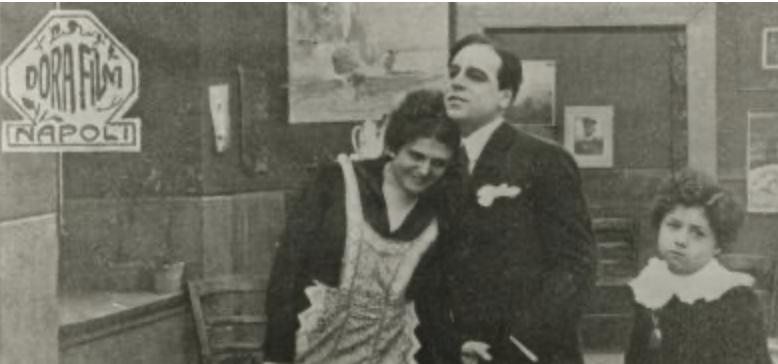
The presence of Max Lind and Mariù Gleck adds layers to the social fabric of the film, hinting at the domestic lives and societal expectations that Maria was excluded from. Their performances provide a necessary counterpoint to the clinical atmosphere of the latter half of the film. While The Silent Lie deals with the repercussions of hidden truths within a social context, Mandolinata a mare deals with the ultimate truth of the body—its vulnerability and its eventual reduction to matter. The film’s preoccupation with the physical reality of death serves as a precursor to the more explicit horror genres that would follow, yet its horror remains grounded in the sociological rather than the supernatural.
Aesthetic Mastery Amidst the Macabre
Visually, the film utilizes a sophisticated interplay of light and shadow, particularly in the asylum sequences. The use of chiaroscuro heightens the sense of madness and impending doom, creating a phantasmagoric environment that reflects Maria's internal state. When the setting shifts to the anatomy theatre, the lighting becomes flatter, more objective, and more terrifying in its clarity. This shift in visual language reflects the film's central theme: the transition from the subjective experience of the individual to the objective scrutiny of the institution. It is a transition that is also explored, albeit in a different context, in The Senator, where political machinations replace medical ones as the primary force of dehumanization.
The supporting roles by Giuseppe Gherardi and Giuseppe De Blasio further anchor the film in its specific historical and cultural milieu. Their interactions within the medical academy highlight the professional detachedness that allows such a dehumanizing process to occur. They are not "evil" men; they are men of science, and it is precisely this lack of malice that makes the film so unsettling. It suggests that the greatest atrocities are often committed with the best intentions—or at least, with a complete indifference to the humanity of the subject. This theme of unintended consequences and the weight of social duty can also be seen in Mary Moreland, though the stakes here are far more visceral.
The Legacy of the Spectral Gaze
In the broader context of early 20th-century cinema, Mandolinata a mare stands as a singular achievement in its refusal to offer easy answers. It lacks the moralizing resolutions of Divorced or the adventurous spirit of The Spoilers. Instead, it leaves the viewer with a sense of profound unease. The image of Maria on the table is one that lingers long after the credits roll, a testament to the power of the silent image to communicate complex philosophical and ethical questions. It challenges the viewer to consider their own role in the "spectral gaze"—are we, as the audience, any different from the students in the theatre, observing Maria’s tragedy for our own edification or entertainment?
The film’s exploration of the female body as a site of both suffering and study remains relevant today. It prefigures modern discussions about medical ethics and the representation of the marginalized in media. By comparing it to films like The Cotton King, which focuses on industrial exploitation, we can see Mandolinata a mare as a critique of a different kind of industry—the industry of knowledge and the medicalization of the human experience. It is a film that demands to be seen not just as a relic of the past, but as a mirror to our own contemporary anxieties about the body and the state.
Ultimately, Mandolinata a mare is a work of somber beauty and devastating critique. It takes the tropes of the era—the madwoman, the fire, the medical marvel—and weaves them into a narrative that is both deeply personal and broadly allegorical. Isabella Zanchi's performance is the soul of the film, providing a human anchor in a world that seems determined to drift into clinical abstraction. While it may not offer the sentimental comfort of My Old Dutch or the mystical intrigue of The Devil-Stone, it offers something far more valuable: a confrontation with the uncomfortable truths of our shared humanity. It is a mandatory viewing for anyone interested in the intersection of film, ethics, and the history of the medical gaze. Even when compared to the lighter fare of The Magnificent Meddler, this film’s weight is undeniable, marking it as a significant, if dark, milestone in cinematic history.
A final note on the film's title: the contrast between the mandolin’s song and the scalpel’s silence is the ultimate irony of this masterpiece. It is a mandolinata that ends not in a song, but in a clinical, terrifying silence.
IMDb 6.6
1919
Community
Log in to comment.