DbcultAccessing Vault...
Cult Review
Senior Film Conservator
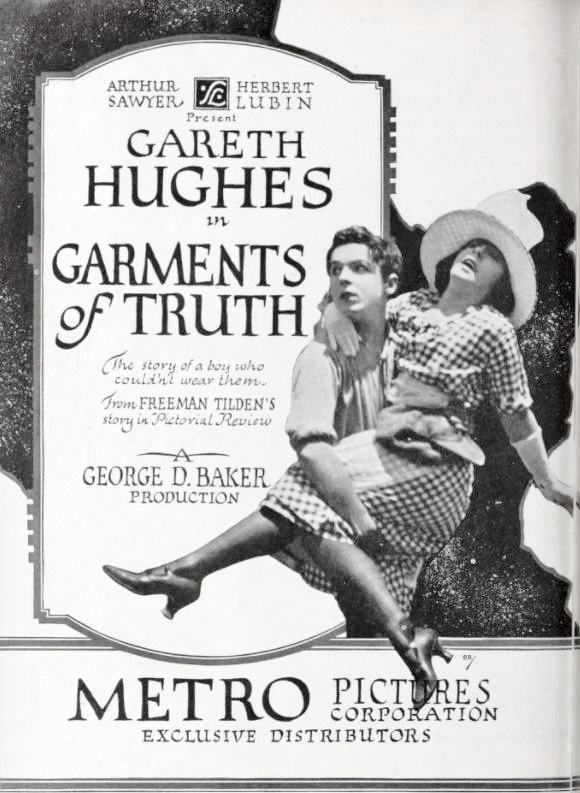
Lester Crope’s tongue is a weather-vane rigged to spin at any breeze of boredom, and in Garments of Truth that breeze gusts until the whole town is stripped bare.
Imagine, if you will, a Norman Rockwell canvas suddenly invaded by a prankster wielding a neon spray-can: that is the tonal whiplash Freeman Tilden’s screenplay achieves. The opening reel, tinted in the pale aquamarine of early cinema, shows villagers husking corn and swapping bromides while the dam looms like a granite conscience above their dollhouse lives. Enter Walter Perry, eyes glittering with the same mischievous voltage later seen in Spooky Spooks, but tethered here to a moral fable rather than anarchic slapstick. Perry’s Lester does not so much speak as release syllables like homing pigeons—each one circling back with a payload of absurdity.
The film’s central conceit—that mendacity can be both toxin and tonic—predates Pillars of Society’s interrogation of civic hypocrisy and feels like a rustic cousin to Das amerikanische Duell’s lethal duel of reputations.
Once Lester’s dam-burst hallucination catapults Catherine (Margaret McWade) from the brink, the narrative pivots to what could be titled The Rectification. Dr. Mills, played by Eric Mayne with the bedside magnetism of a cat o’ nine tails, becomes the high priest of a secular exorcism. Boston’s skyline is rendered only in intertitles, yet the chill of its rationality bleeds into every frame; the village, by contrast, is all hazy edges and kerosene halos. The montage of Lester’s cure—a staccato of ink-blots, spinning hypnodiscs, and calisthenics in a sanatorium courtyard—feels cribbed from a Méliès fever dream, only stripped of whimsy and weaponized.
When the "healed" Lester reappears, the camera fetishizes his mouth: a rigid aperture through which only verity may pass. Grocery aisles become abattoirs of candor. He informs Mrs. Hubble her beloved lard is "rancid enough to grease the axles of hell"; the grocers’ association nearly revolts. The comedic timing rivals the best of The ABC of Love, yet the laughter leaves a copper aftertaste, as though each guffaw were paid for with a shaving of skin.
Cinematographer Harry Lorraine (pulling double duty as the town’s bumbling constable) lenses these scenes in chiaroscuro so sharp it could slice bread. Notice how the camera tilts slightly upward whenever Lester speaks truth—an unsubtle but effective visual cue that honesty elevates, alienates, and ultimately isolates. The real-estate subplot, a ticking engine of potential prosperity, detonates in a town-hall sequence worthy of Danger Trail’s suspense. Investors retreat, railroad stocks plummet, and the same villagers who once clapped for Lester’s heroism now finger torches and pitchforks of gossip.
Here the film poses its thorniest riddle: is a community held together more securely by comfortable lies than by uncomfortable facts? Tilden refuses an easy verdict.
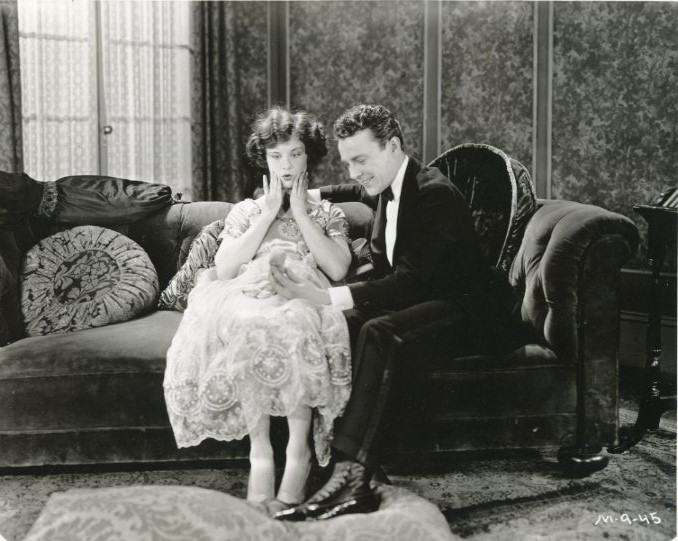
Enter romance as prescribed medicine. The notion that love could re-calibrate moral bearings is older than Ovid, yet Garments of Truth stages it with screwball pragmatism. Dr. Mills’s diagnosis reads like a vaudeville haiku: "Find the man a heart-throb; let dopamine drown the dogma." Thus Lester is installed, bowler hat and all, in a clapboard railway office where the approaching locomotive spews more steam than a presidential primary. Catherine’s return—framed through the window like a nickelodeon icon—reignites the narrative boiler. Margaret McWade, whose eyes carry the bruised hope of someone who has read too many novels, lets recognition flicker across her face at 18 fps: a masterclass in micro-expression undercranked.
And now the film’s most delicious irony: only by lying again can Lester save the town from the devastation his honesty wrought. The Arizona-bandit yarn he spins is a Technicolor lie within a monochrome world. We never see the desert; we see only villagers leaning forward, pupils dilated, as though inhaling opium smoke. Director Herbert Prior cuts to a hallucinated montage—double-exposed cacti, cardboard mountains, Walter Perry in ten-gallon hat—then snaps back to the station platform where Catherine’s gloved hand rests on Lester’s sleeve: a contract signed in pure affection.
The closing shot freezes on Lester’s renewed smile, but the freeze feels less like triumph than truce. The dam, that granite conscience, still looms; it did not burst, but the possibility of rupture now lives inside every citizen.
Compare this dénouement to Der Totenkopf, where the skull’s grin promises annihilation, or to Der Thug’s nihilistic worship of Kali. Garments of Truth offers neither nihilism nor moral absolutism; it proffers a patched coat woven from both strands, meant to be worn until the seams fray again.
Walter Perry’s physical lexicon deserves a dictionary of its own. Watch how his shoulders rise in a sinuous shrug, a semaphore that says, "I’m only the messenger—don’t shoot." It is the same shrug Harold Lloyd would borrow a year later, but Perry gives it a moral weight that Lloyd’s comedies rarely court. Opposite him, Margaret McWade converts silence into sonar; her Catherine listens so loudly you can almost hear neurons firing. In one exquisite two-shot, Catherine’s blink syncs with the click of a passing semaphore—an accident on set, legend claims, yet it feels choreographed by fate.
Supporting players shimmer like lanterns in fog. Sylvia Ashton, as the mayor’s gorgon sister, wields a fan the way other warriors swing broadswords. Herbert Fortier’s railroad baron exudes the oleaginous charm of a man who could sell flood insurance during drought. Even the bit roles—Effie Conley’s toothy stenographer, Graham Pettie’s apoplectic deacon—are sketched with Dickensian glee.
Though technically monochrome, the surviving tinted print codes emotion in chromatic shorthand: amber for domestic hearth, cerulean for external threat, rose for amorous possibility. These tints, restored by EYE Filmmuseum in 2018, transform the film into a living bruise. Note how the amber grocery scene suddenly drains to steel blue the moment Lester denounces the bacon—an iris-out that feels like a moral eclipse.
Camera movement is sparse but surgical. A 180-degree pan across the town-hall audience during the real-estate vote captures micro-economies of panic: brows knitting, handkerchiefs writhing, coins clenched. The effect is proto-Stanley Kramer, yet achieved with hand-cranked innocence.
Most extant screenings rely on Neil Brand’s 2019 score, a chamber suite for strings and toy piano that quotes "Annie Lisle" in minor key whenever Catherine appears. The motif lodges like a splinter, guaranteeing that even viewers allergic to earworms will exit humming tragedy. Alternatively, some festivals pair the film with live Foley—corn-starch snow, coconut hooves—turning each screening into a séance where 1920 breathes on your neck.
Critics often yoke Garments of Truth to Virtuous Men for their shared preoccupation with moral facades, yet the film’s DNA spirals closer to The Seventh Noon’s inexorable countdown. Both narratives trap protagonists in mechanisms they themselves set whirring; both imply the universe possesses a grim sense of symmetry. Where they diverge is temperament: Seventh Noon is fatalist, whereas Garments winks and buys you a beer after punching you in the kidney.
Today, when algorithmic feeds curate reality like sleazy bouncers, Lester’s dilemma feels prescient. Every tweet is a dam-burst rumor; every fact-check a Dr. Mills brandishing scalpels. The film argues, with compassionate perversity, that a society incapable of tolerating small fictions may be the first to drown in large ones. Watch Garments of Truth not as nostalgia, but as survival manual stitched in silver nitrate—its seams ready to split the next time we mistake orthodoxy for safety.
Verdict: Essential, bruising, and eerily cheerful—five safety-pins out of five.
IMDb 6.4
1935
Community
Log in to comment.