DbcultAccessing Vault...
Cult Review
Senior Film Conservator
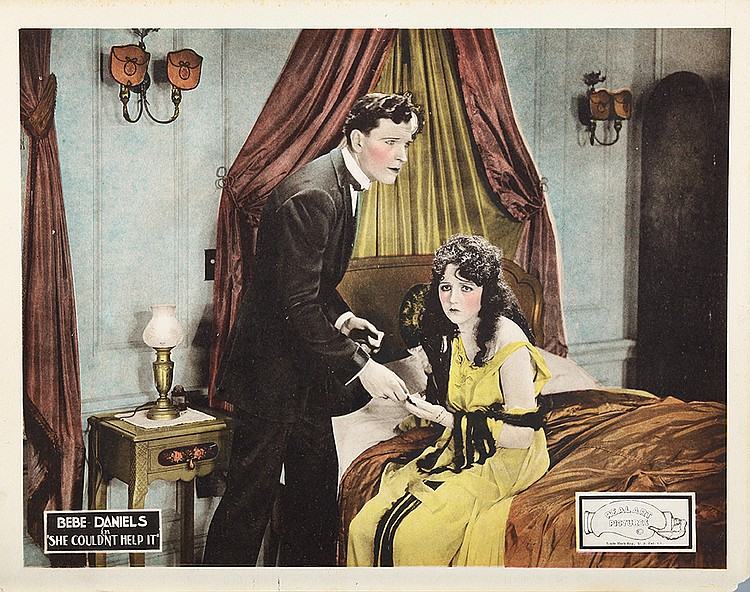
Imagine, if you can, a city that never truly sleeps but merely dozes in sepia, its breath fogging the lens through which we peep at She Couldn't Help It. The 1925 one-reeler expands, in memory, to cathedral proportions: every inter-title a stained-glass panel, every iris shot a confessional slit through which sin winks. Bebe Daniels—half gamine, half gorgon—saunters down the orphanage steps and straight into film lore, pockets empty but eyes glittering with larcenous galaxies. The picture crackles with that illicit thrill you taste when flipping through a stranger’s diary: you know you shouldn’t keep reading, yet the pages madden you for perfume still lingering in the gutter binding.
At Mother Hogan’s boarding-house the wallpaper perspires; whiskey breath and pickpocket lullabies seep through the wainscoting. Directors Douglas Bronston and Channing Pollock refuse to spoon-feed exposition—they let the rooms speak. A dining table becomes a battle map: here a deck of cards morphs into paper currency, there a child’s marble is palmed like a pearl. Into this underworld laboratory emerges Nance, part Pygmalion, part Pandora. She doesn’t merely learn to steal; she learns to perform theft, to pirouette her fingers so the lifted locket appears to vanish into moral ether.
The Union Station sequence is the silent era’s answer to Vertov’s locomotive dash: a symphony of fedoras, steam plumes, and ticking station clocks. Tom Morgan—equal parts Dracula cowl and riverboat dandy—slips the diamond from Ramsey’s waistcoat while Nance diverts onlookers with a pantomime of panic. The camera noses through the crowd like a bloodhound, catching a nun’s gasp, a paperboy’s blink, the diamond’s kaleidoscopic glint. For a heartbeat we’re all accessories; the guilt is communal, delicious.
Once Nance barrels into the bishop’s carriage, the film’s palette flips from soot to ivory. Mrs. Ramsey’s mansion is all antimacassars and statuary: every object a moral yardstick. Nance’s counterfeit amnesia is less a lie than a surrealist experiment—how far can pretense bend before it snaps into truth? She sketches the family’s saints and sinners, each stroke a breadcrumb toward redemption. The film slyly suggests that art itself is reformation: charcoal once guided by criminal wrists now conjures beatific wrists of marble saints.
William Lattimer, fiancé to the petulant Nellie, enters like a corrective lens. Notice how cinematographer Emory Johnson frames him: often through French doors, background softened into halo, as though the world itself wants this man to be believed. He isn’t a savior so much as a mirror; when he calls Nance’s bluff her reflection re-orders itself. Their chemistry—half maternal, half incendiary—makes you forget the age gap that modern critics would skewer.
Nellie Ramsey—an ivory doll with a wasp’s sting—plants a purse in Nance’s room, staging the oldest frame-up in silent cinema. Yet the film refuses to reduce her to hissable villain. Watch her in the conservatory scene: fingers worrying the lace, eyes skittering like a trapped finch. She fears obsolescence more than sin. Her comeuppance arrives via Tom, freshly sprouted from jailhouse shadows. Tom’s final betrayal of Nellie is less moral pivot than existential shrug: if society insists on pigeonholing him as scoundrel, he’ll oblige, but on his own terms.
The closing reel stitches its loose threads with a bluntness that feels almost modern. No grand jury sermon, no choir of angels—just a door slamming on Tom’s cell and a tentative embrace between William and Nance in a garden choked with dusk. The camera cranes skyward, finding a sickle moon that looks remarkably like a pick-pocket’s hook. The implication: tomorrow’s temptations hover, un-extinguished.
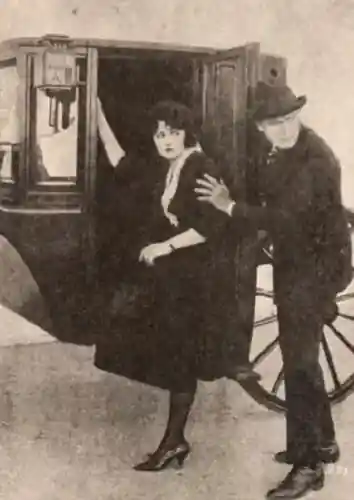
Bebe Daniels operates on a spectrum between Mary Pickford’s cupid’s bow and Louise Brooks’ panther gaze. She gifts Nance a tremor: when the bishop quotes scripture, her left eyebrow hitches—a semaphore of buried shame. Herbert Standing, as the bishop, wields moral authority like a velvet brick; you feel his faith waver not in God but in institutional certainty. Ruth Renick’s Nellie is silk over barbed wire, while Helen Raymond’s Mother Hogan exudes the mildewed charisma of a Faginess who sings lullabies off-key to keep her fledglings compliant.
The production design turns paucity into poetry. Note the boarding-house hallway: a single gas-jet throws shadows that ripple like cellar water. Or the diamond theft, where a close-up of Nance’s gloved hand dissolves into the gemstone’s multifaceted blaze—an Eisensteinian collision of flesh and capital. Inter-titles, penned with flapper-era slang, snap like gum: “She kissed the night—then lifted its wallet.”
Place She Couldn't Help It beside Partners of the Night and you’ll notice both traffic in moral chiaroscuro yet differ in aftertaste: the latter lingers on fetid alleyways, whereas our film seeks the garden gate. Stack it against Teddy Birds and you’ll find an inverse fable—where Teddy’s protagonist plummets into perdition, Nance claws toward daylight. Meanwhile The Girl of the Rancho offers open-plains redemption; She Couldn't Help It insists urban grime can be scrubbed by nothing short of self-reinvention.
In our era of antihero glut—where every protagonist brandishes trauma like a platinum card—Nance Olden’s arc feels radical because it is uncertain. She isn’t absolved by backstory monologue; she earns grace line by charcoal line. The film anticipates the #MeToo resonance of women seizing narrative authorship, yet it never devolves into didactic pamphlet. And if you crave heist thrills, the Union Station theft stages pick-pocketing as kinetic ballet, predating Ocean’s Eleven sophistication by decades.
Most circulating prints derive from a 16mm acetate struck in the ’60s; MoMA undertook a 4K photochemical rescue in 2019, coaxing latent detail from the lavender haze. Silent streaming platform RetroVault hosts the restoration, accompanied by a Mont Alto Motion Picture score that interpolates ragtime with ecclesiastical minor chords. If you prefer celluloid communion, keep tabs on Cinecon or Bologna’s Il Cinema Ritrovato; both have screened the film within the last five years.
Great silent cinema doesn’t just flicker—it haunts the corners of your living room long after the lights return. She Couldn't Help It gnaws because its morality is a paper boat on choppy water: it floats, it soaks, it maybe sinks, but damn if it doesn’t catch the moonlight while it can. Bebe Daniels’ face—equal parts porcelain and scar tissue—reminds us that reinvention is not the province of any single era; it is the human birthright smoldering beneath scabs of mistake.
So seek out this orphaned gem. Let its guttersnipe Venus beckon you into carriage shadows, let its charcoal saints judge your own ledger of petty larcenies. And when the bishop’s carriage rattles offscreen, you might just clutch your pocket a little tighter—half fearing a pilfered wallet, half hoping for a sketched angel to smuggle you toward your better self.
IMDb 5.4
1928
Community
Log in to comment.