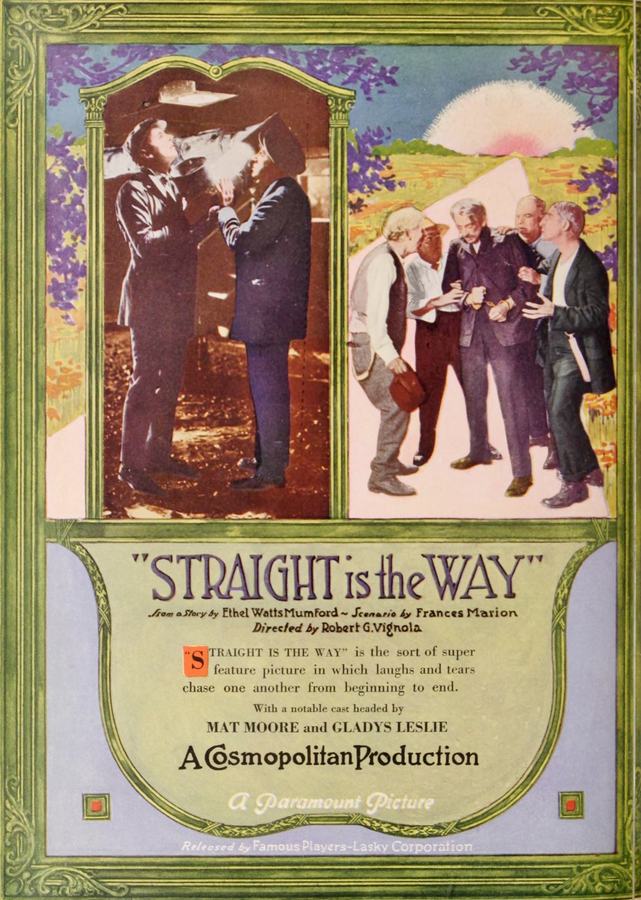
Treasure maps drawn by candle-grease, mortgage sharks circling like turkey vultures, and a planchette that scribbles moral arithmetic—Straight Is the Way feels less like a 1921 programmer and more like a séance where nickelodeon ghosts admit their sins.
Frances Marion and Ethel Watts Mumford’s screenplay, lacquered with small-town malaise, pirouettes on the notion that larceny can be a vocational calling until real estate and rheumatism demand reformation. Director Matt Moore (doubling as the penitent Bob Carter) stages interiors like Dutch still-lifes: every cracked delft plate and moth-eaten antimacassar murmurs history. Moore’s Bob, equal parts matinee silhouette and Calvinist conscience, lets the camera linger on the tremor of his jawline whenever Mehitable clasps the mortgage deed—a silent admission that debt is merely guilt wearing an accountant’s visor.
George Parsons’ “Loot” Follet is the film’s percussive heartbeat—part Harlequin, part pickpocket, forever windmilling into frame with the kinetic absurdity of a Buster Keaton sidekick who’s swallowed a live wire. His double-takes at the Ouija board—eyebrows ricocheting like exclamation points—provide the levity that keeps the parable from calcifying into Sunday-school homily.
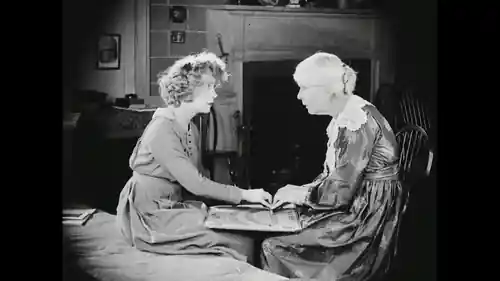
Emily Fitzroy’s Aunt Mehitable deserves curatorial placement in the pantheon of formidable spinsters. She wields propriety like a rapier, yet when she kneels to interrogate the Ouija, her voiceless lips quiver with the ache of someone who has rationed hope the way others ration tea during wartime. Beside her, Peggy Parr’s Dorcas radiates a phosphorescent innocence—wide eyes that seem to have borrowed their lumens from the treasure itself.
Cinematographer Van Dyke Brooke (also cameoing as the taciturn deacon) exploits the monochrome spectrum like a charcoal savant. Note the sequence where moonlight drips through attic rafters, striping Bob’s face into a prison-bar pattern—an omen that even free men do time inside their own skin. The discovery of the chest is shot from inside the hollow floorboards: coins tumble toward the lens like metallic meteors heralding a new orbit for every character.
Sound of Silence, Echo of Coins
Because the film is mute, every prop becomes phonetic—the Ouija’s felt feet scrape mahogany with a screech you can almost hear, while Mehitable’s creaking corset translates into a Morse code of anxiety. In this acoustic void, the eventual combustion of Squoggs’s promissory notes crackles louder than any talkie explosion.
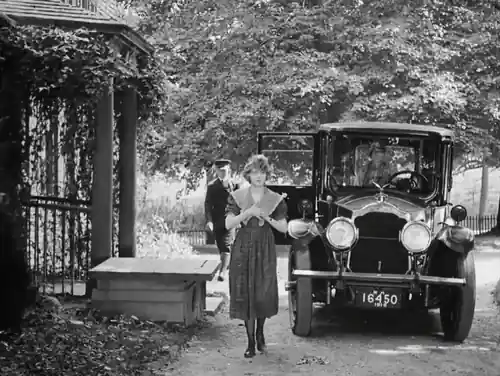
Compare this to Little Miss Jazz, where jazz-age euphoria trumpets through intertitles; Straight Is the Way prefers the hush before contrition, a cinematic whisper that resounds longer than a brass section.
The Redemptive Alchemy of Genre
Redemption narratives in 1921 usually tasted like castor oil—good for you, but leaving a sanctimonious aftertongue. Marion and Mumford lace the tonic with arsenic-laced humor: Loot attempting to bless himself with a stolen candle, or Bob calculating the interest rate on salvation. The film’s ideological coup is locating penance not in a church pew but in a hole dug by greed and refilled by communal necessity.
Yet the screenplay refuses to sanctify its thieves. When Bob pockets a single doubloon “for expenses,” the camera frames him against the yawning blackness of the pit—an abyss that will gulp him again should cupidity rekindle. Compare that nuance to the schematic morality of The Guilty Man, where guilt is a monogrammed brand rather than a chronic limp.

Performances as Pocket Universes
Parr’s Dorcas embodies the seismic shift of post-war womanhood—demure yet destiny-curious. Watch her pupils dilate when Bob confesses his criminal vita; the flicker is half terror, half intoxication with the dangerous terra incognita of male vulnerability. It is a masterclass in micro-acting, worthy of anthologizing beside Mary Pickford’s tremulous children.
Rita Rogan’s supporting turn as the housemaid Letty provides the film’s most subversive wink. She rolls her eyes at the Ouija with the practiced skepticism of someone who has navigated white folk’s superstitions and bills for decades, yet her final grin—gold coin clenched between molars—signals that miracles, however absurd, still spend like legal tender.
The Treasure as Palimpsest
The chest, when pried open, reveals not mere specie but a palimpsest of American sins: stolen indigenous land, war profiteering, indentured labor—all melted into disks that jingle with the promise of reinvention. The film shrewdly withholds a pious lecture; instead, it lets the metallic clink score the characters’ faces, each reflection a silent reckoning.

Jonathan Squoggs, essayed by Henry Sedley with mutton-chop menace, arrives flanked by shadows that seem stitched to his coattails. His eventual comeuppance—tarred not with violence but with legal parchment—feels oddly egalitarian, as if the narrative insists that systemic predators fall harder by bureaucracy than bullets.
Staging the Uncanny
Brooke’s camera repeatedly dollies backward through doorframes, turning the domestic into the voyeuristic. The Ouija séance is lit solely by a hand-cranked lantern, its flame stuttering like a faulty moral compass. When the planchette glides to “T-R-E-A-S-U-R-E,” the letters superimpose across Dorcas’s throat—an omen that wealth could strangle virtue.
Note the symmetry: the film opens with Loot slamming a window shutter against a thunderclap; it closes with Mehitable opening the same shutter to sunrise, the squeal now a sigh. The reversal is wordless theology—darkness departs not through exorcism but through the simple insistence on opening house and heart to the coming day.
Comparative Contexts
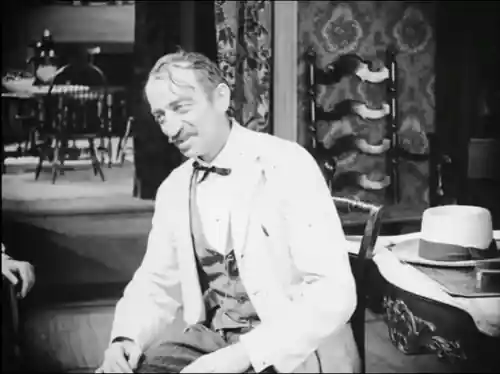
Against The Dollar-a-Year Man’s patriotic slapstick or My Old Dutch’s sentimentalized poverty, Straight Is the Way opts for a third path: proletarian pastoral, where class anxiety is exorcised via communal folkloric ritual. Its nearest spiritual cousin might be As Ye Sow, yet where that title preaches agricultural determinism, this film champions the lottery of grace—random, hilarious, solvent.
Cinephiles who revere the metaphysical slapstick of Possession will find a more grounded, yet equally uncanny, exploration of how objects—coins, boards, corsets—haunt their owners.
The Afterglow
As the end card fades, the surviving prints exhibit scuffs that flicker like fireflies—blemishes that somehow magnify authenticity. Restoration advocates argue over grain vs. gloss, yet the scratches feel like the moral scars these characters would carry into their newly solvent futures. Maybe Bob opens a garage where he fixes more than Fords; maybe Loot becomes a deacon who pickpockets only despair. The film refuses to flash-forward, insisting instead that redemption is a horizon one chases, not a parking space one occupies.
In an era when algorithmic blockbusters calcify heroism into brand loyalty, Straight Is the Way offers a radical thesis: people are perpetually unfinished, and the most cinematic act is to hand them shovels—literal or metaphysical—to dig themselves toward daylight.
Seek it out in 16 mm basement vaults, digitized ripples on arthouse streams, or wherever forgotten flickers convene. Let its lantern-lit Ouija warn you that the real treasure is the moment you decide the past need not be a life sentence—just a plot twist awaiting a rewrite.