DbcultAccessing Vault...
Cult Review
Senior Film Conservator
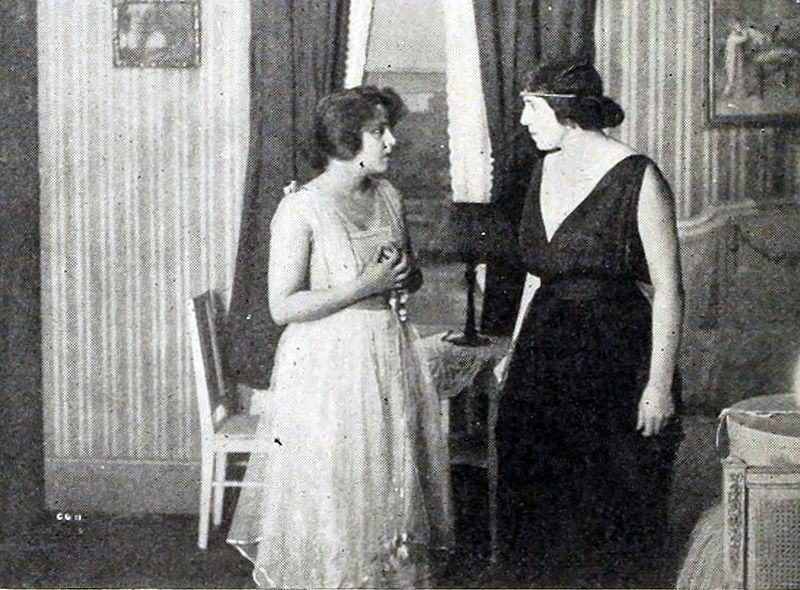
In the nascent years of American feature filmmaking, the transition from simplistic moral fables to sophisticated urban dramas was often paved with the grit of the 'fallen woman' or 'innocent in peril' tropes. The Decoy (1916), directed with a surprisingly modern sense of spatial tension, stands as a quintessential artifact of this evolution. It is a film that captures the burgeoning anxieties of a society shifting from rural stability to the predatory anonymity of the metropolis. While many contemporary reviews of the era might have categorized it as a standard melodrama, a retrospective gaze reveals a work of significant structural complexity, particularly in its deployment of suspense and its proto-noir visual language.
The narrative begins with a classic dispossession. Glory Moore’s journey from the bucolic safety of the farm to the gilded cages of New York City mirrors the trajectory seen in Her Reckoning, yet The Decoy infuses this migration with a more cynical edge. The character of Mrs. Lawrence, portrayed with a chillingly calculated elegance, subverts the archetype of the maternal savior. She is not the sanctuary Glory seeks; she is the gatekeeper of a den of thieves. This subversion of the family unit was a common theme in early 20th-century cinema, reflecting a deep-seated fear of the moral decay inherent in the city's high-society circles.
The introduction of Milt Bannon and Harvey Dix establishes a triad of villainy that feels remarkably modern. These are not mustache-twirling caricatures but socioeconomic predators who view human innocence as a commodifiable asset. Their plan to use Glory as a 'decoy' to fleece Jim Danvers provides the film with its central tension. Unlike the more fantastical threats found in The New Exploits of Elaine, the dangers in The Decoy are grounded in the plausible reality of social and financial ruin. The film explores the concept of the 'social vampire' with a fervor that predates the more overt horror of the genre.
Lois Wilson’s performance as Glory Moore is a revelation of silent-era nuance. While the script demands moments of 'wild panic,' Wilson avoids the histrionics that plagued many of her contemporaries. Her transition from the wide-eyed optimism of the rural transplant to the steely resolve of a woman fighting for her life is handled with a commendable subtlety. In many ways, her character arc is more robust than that found in similar 'innocent abroad' narratives like Nearly a Lady or A Ticket in Tatts.
"Wilson captures the precise moment when innocence curdles into experience, not through a loss of virtue, but through a gain of strategic intellect. Her Glory Moore is not merely a victim; she is a survivor who learns to speak the language of her oppressors to dismantle them."
One of the most technically impressive sequences in the film involves Glory’s escape from her confinement. The cinematography during the rooftop chase utilizes the verticality of New York in a way that presages the urban thrills of Hitchcock. The fire escape, the wandering over adjacent roofs, and the accidental fall through a skylight are not just plot devices; they are visual metaphors for Glory’s precarious position in the social hierarchy. This sequence possesses a kinetic energy that rivals the best moments in The Vampires: The Thunder Master.
The fall through the skylight into Jim Danvers' apartment is a masterstroke of serendipity. It bridges the gap between the film's two worlds: the predatory underworld of the Lawrence gang and the misguided but ultimately redeemable world of the wealthy elite. The apartment set design, with its opulent but stifling decor, contrasts sharply with the sparse, cold reality of the furnished room Glory later inhabits. This visual dichotomy highlights the class struggle that bubbles beneath the surface of the melodrama, a theme explored with perhaps more heavy-handedness in The Hidden Scar.
The second half of the film takes a sharp turn into the territory of the police procedural. The murder of Bannon by Dix, and the subsequent framing of Jim and Glory, introduces the audience to the 'third degree'—the brutal interrogation techniques of the era. This segment of the film is surprisingly dark, offering a critique of the justice system that feels far ahead of its time. Where films like The Unpardonable Sin deal with grand moral transgressions, The Decoy focuses on the systemic failure to protect the innocent from circumstantial evidence.
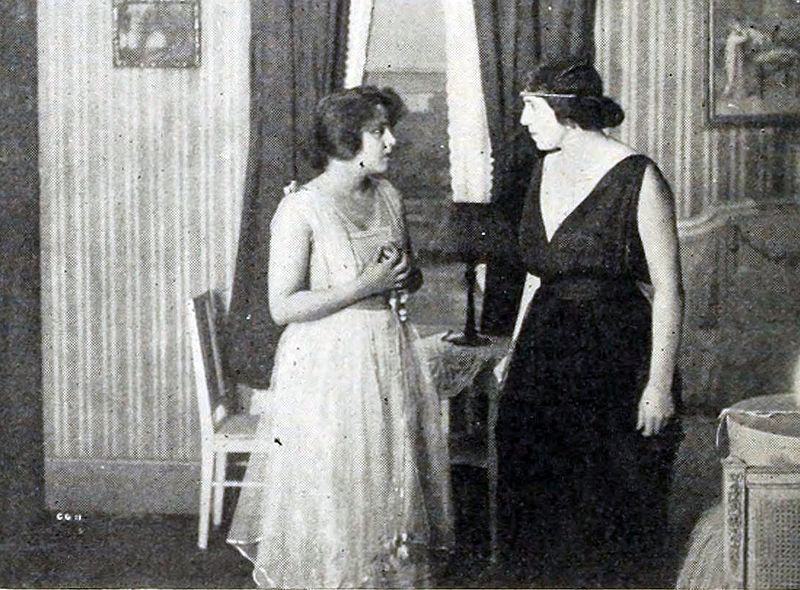
The psychological toll of the interrogation is palpable. The police are not depicted as heroic saviors but as pragmatic, almost callous figures who release the protagonists not out of a belief in their innocence, but as pawns to flush out the real killer. This cynicism adds a layer of sophistication to the film that distinguishes it from the more sentimental approach to crime seen in The Kid.
The film’s resolution hinges on a fascinating reversal of the 'decoy' theme. In the beginning, Glory was an unwitting decoy used for evil; in the end, she becomes a conscious decoy to achieve justice. Her performance within a performance—pretending to love Dix to elicit a confession—is the film's emotional and intellectual peak. The tension is doubled by Jim’s misunderstanding of her actions. This trope of the 'misunderstood sacrifice' is a staple of silent drama, yet here it feels earned, rooted in the character's established resilience.
The final confrontation, resulting in Dix’s fatal plunge into the courtyard, provides a visceral sense of closure. It is a 'poetic justice' ending that satisfies the moral requirements of 1916 audiences while maintaining the film's dark, urban atmosphere. The fall mirrors Glory's earlier fall through the skylight, but whereas hers led to salvation, his leads to the abyss. This thematic symmetry is indicative of a screenplay—penned by Herbert Hall Winslow—that is far more structured than the average quickie production of the mid-teens.
When compared to the hypnotic, almost surreal qualities of Trilby (1915), The Decoy feels much more grounded in the sociopolitical reality of its time. It lacks the operatic scale of Sapho (1913), but it gains in its depiction of the specific mechanics of crime and urban survival. Even when placed alongside international efforts like Huo wu chang, its focus on the 'confidence game' remains a distinctively American contribution to the genre.
The film also touches upon the themes of addiction and moral decline found in John Barleycorn, though it treats Jim Danvers' 'going the pace' as a symptom of boredom rather than a terminal disease. Similarly, the film’s exploration of the 'furnished room' lifestyle provides a haunting look at the transience of city life, a motif that would later be explored with more poetic melancholy in Dust or the enigmatic C.O.D..
The Decoy is more than a mere footnote in the filmography of Lois Wilson. It is a robust, intelligently crafted thriller that utilizes its runtime to explore complex themes of identity, betrayal, and the corruptive influence of the city. Its blend of high-society melodrama and gritty crime procedural makes it a fascinating precursor to the hard-boiled narratives of the 1930s and 40s. For students of early cinema, it offers a compelling look at how filmmakers were beginning to use the medium to reflect the multifaceted dangers of the modern world. It is a film that deserves to be pulled from the shadows of its more famous contemporaries like The Valley of Decision and recognized for its own unique, sharp-edged brilliance.
In conclusion, the film remains a testament to the power of the silent image to convey complex psychological states. From the claustrophobia of Glory’s locked room to the expansive, dangerous freedom of the New York skyline, The Decoy navigates the extremes of the human experience with a confidence that is as rare as it is rewarding. It is a stark reminder that even in 1916, the 'urban jungle' was already being mapped with a sophisticated, cynical, and ultimately hopeful eye.
IMDb 7.1
1936
Community
Log in to comment.