DbcultAccessing Vault...
Cult Review
Senior Film Conservator
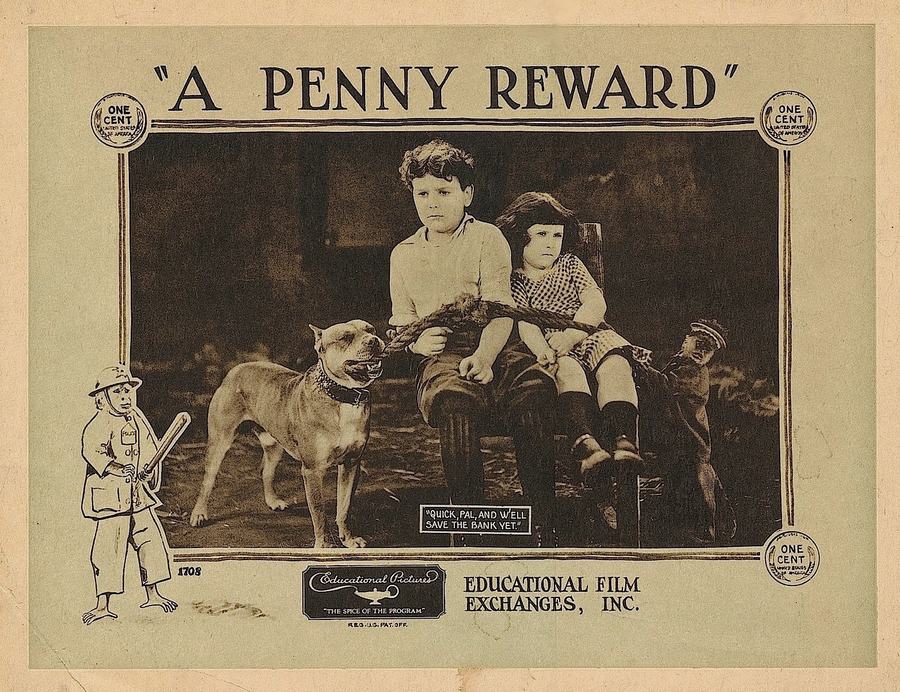
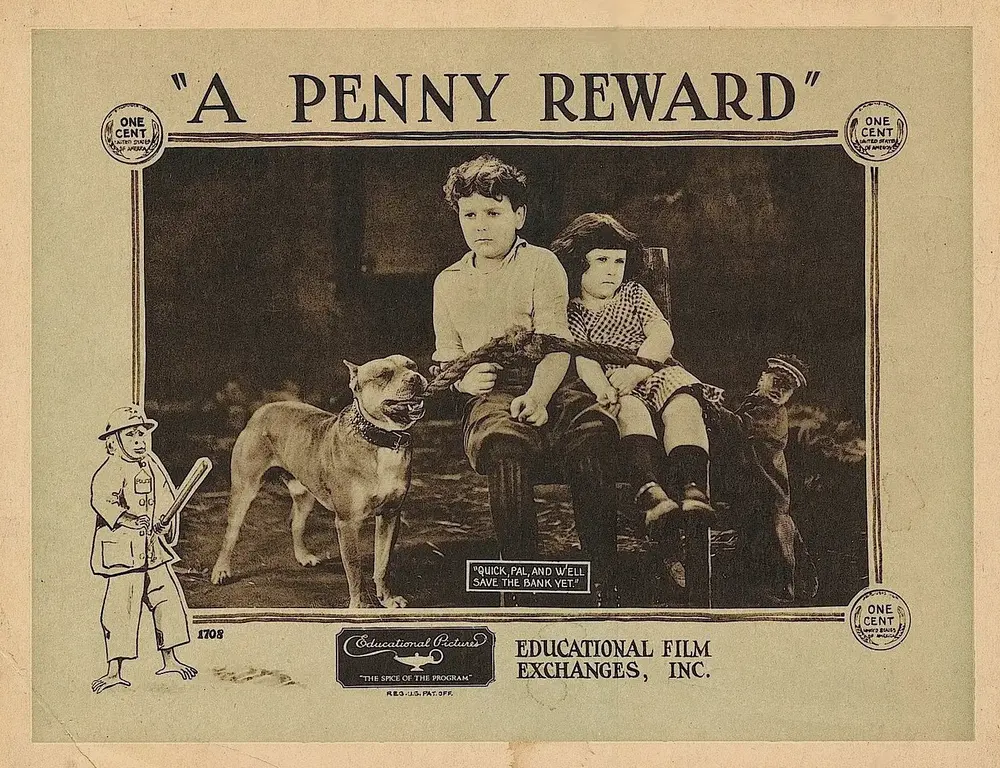
Shot in the chiaroscuro of pre-war New York winters, A Penny Reward drapes its façades in soot so thick the very air resembles ground graphite. Cinematographer Lawrence Licalzi tilts the camera like a drunk sidewalk, making skyscrapers loom with predatory intent; every ledger column becomes a gallows pole. The film’s tenement interiors—clapboard walls sweating kerosene fumes—stage a moral theatre where charity is weighed on assay scales and found counterfeit.
Joe the Monkey, billed simply as “himself,” steals not only wallets but the entire narrative. His close-ups—iris shots that contract like sphincters—mirror our own complicity: we root for the thief because the system is the bigger crook. When he perches atop a brass teller cage, tail curling like a banker’s cigar, the image foreshadows every Occupy placard a century later. He is Harpo Marx with opposable toes, a furry anarchist redistributing wealth one pocket at a time.
Once the robbers slam the vault door, the film’s temperature plummets. Intertitles—usually florid—pare down to a single stuttering word: “Air…” The boss, a man who once hoarded oxygen in the form of dollars, now discovers capital is useless without respiration. The children’s rescue mission plays like a birth in reverse: they thread a fire hose down the safe’s gullet, inflate the chamber with pressure, and wrench the steel jaws apart. The imagery is unmistakable; capital must be midwifed by those it exploits.
The final close-up lingers on the coin: Lincoln’s profile warped by copper corrosion. It is both Eucharist and insult, a wafer of salvation stamped with the face of the man who freed no one from wage slavery. When the clerk pockets it, the gesture carries the weight of every unpaid overtime hour. The penny becomes a black hole: infinitesimal yet dense enough to bend the film’s moral spacetime.
As the bedridden mother, Doreen Turner never rises, yet her presence haunts every frame. She sings a wordless lullaby—actually a scratched Edison cylinder played backward—creating a ghost track that seeps under the orchestra. Her death is not shown; instead, an intertitle flashes “The monkey no longer tips his cap.” In that absurdity lies the film’s coldest truth: grief is measured by the cessation of small rituals.
Where The Firm of Girdlestone moralizes over mercantile fraud across Atlantic drawing rooms, A Penny Reward stages its critique in a single reel, proving brevity can wound deeper than prolixity. Likewise, A Manhattan Knight flirts with urban chivalry yet retreats into slapstick; our one-reeler refuses such cowardice, letting the penny stand as both punch-line and gut-punch.
In 1915, blackface gags still drew cheap laughs, yet this film swaps minstrelsy for simian solidarity. Joe’s brown fur substitutes for melanin, positioning the animal as racialized other. When he vaults over the cashier’s counter—an act literally above his station—he enacts a fantasy of upward mobility denied to human workers of color. The children who assist him are themselves a United Nations of newsboys: Irish, Italian, Jewish, Black. Their coalition forecasts the 1919 strike waves, suggesting revolution will arrive on paws, bare feet, and roller skates.
Watch Joe swing from a chandelier to escape a guard and you’ll spot the DNA of The Kid rooftop chase. The boss’s oxygen-deprived hallucination—intercut with melting coins—prefigures Zero for Conduct’s sack of schoolbooks tumbling in slow motion. Both borrow the film’s core equation: childhood + animal + institutional oppression = incendiary poetry.
The only known 35 mm print languishes in the EYE Filmmuseum, but a 2K transfer leaked onto the Internet Archive under the deceptive filename “monkey_bank_1903.” Cinephile Reddit threads trade passwords like speakeasy tokens. For the authentic experience, attend Il Cinema Ritrovato in Bologna; last year they screened it with a live Gypsy brass band that segued from lullaby to Balkan punk the moment the vault blew open.
Most one-reelers of the era are curiosity shop trinkets; A Penny Reward is a shrapnel shard. It lodges under the skin, festers, and every payday you feel it migrate toward the heart. The penny is not gratitude—it’s a receipt proving transaction complete, humanity bought and returned as scrap metal. Accept it, and you’ve signed a blood compact with capital. Refuse it, and you join the monkey on the rooftop, tail twitching, eyes scanning for the next pocket to pick.
“A penny for your thoughts? Too dear—thoughts cost blood.” —Intertitle never used, but should have been.
Stream it, scream at it, then spend that penny on something sharp.
IMDb 7
1927
Community
Log in to comment.