DbcultAccessing Vault...
Cult Review
Senior Film Conservator
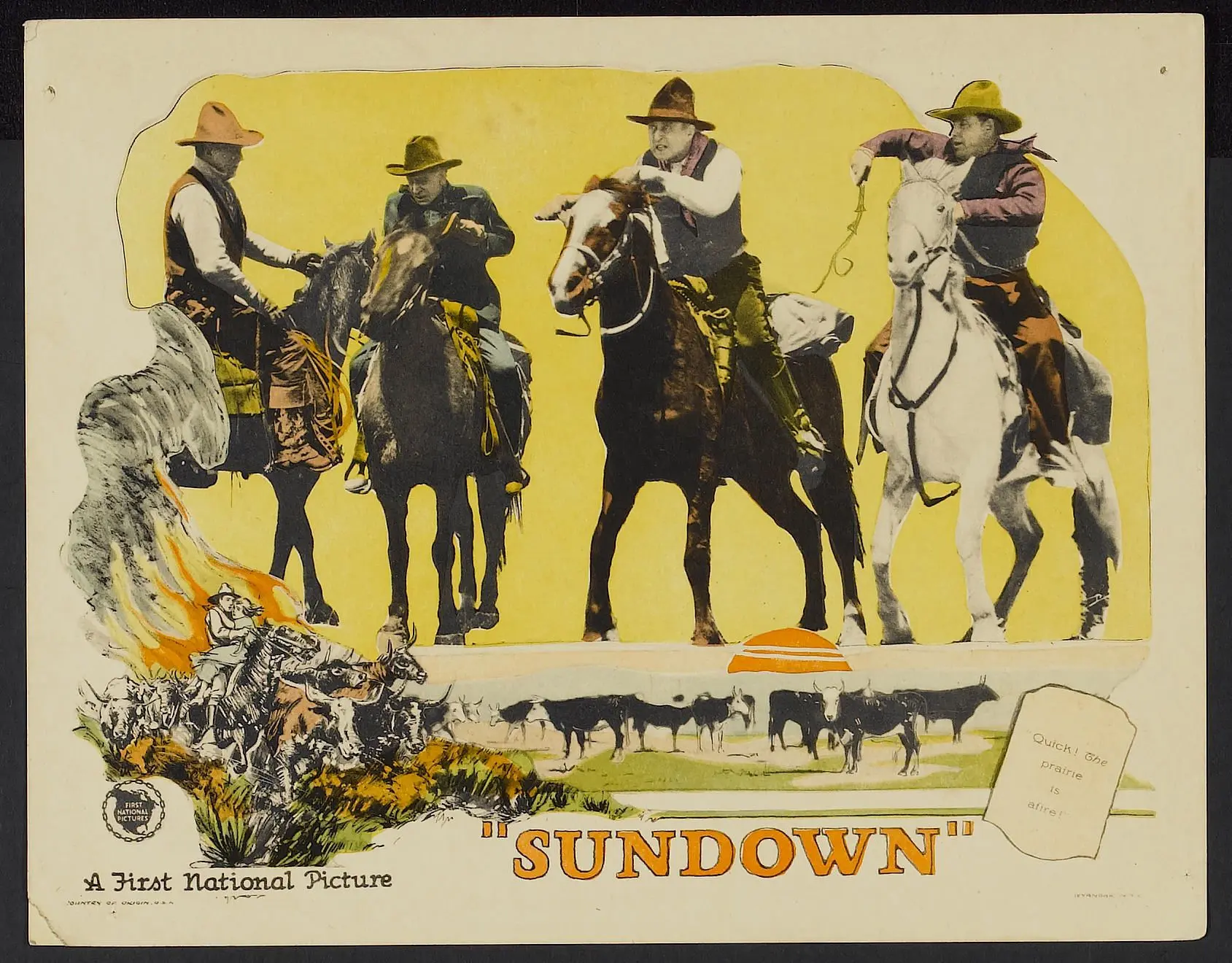
Ah, the silent era western. There’s a particular kind of magic, a raw, elemental power that emanates from those early cinematic ventures into the vast, untamed American frontier. And among them, Sundown (1924) stands as a compelling, if often overlooked, artifact. It's more than just a simple tale of cowboys and land; it’s a profound meditation on the collision of civilizations, the relentless march of progress, and the tragic beauty of a way of life fighting for its very existence against an unstoppable tide. This isn't merely entertainment; it's a historical document, a visual poem etched onto celluloid, capturing the palpable tension of a nation in flux.
The premise, at its heart, is deceptively simple: cattlemen attempting to keep their lands and herds from being overrun by nesters. Yet, within this straightforward conflict lies a universe of complexity. The cattlemen, epitomized by the stoic figures played by Jere Austin and Roy Stewart, represent an older order. They are the inheritors of an expansive, almost boundless vision of the West, where fences were anathema and the open range was a birthright. Their wealth, their identity, their very soul is intertwined with the freedom to drive their herds across vast, unfenced territories. Their existence is one of constant movement, a nomadic ballet dictated by seasons and grazing grounds. This lifestyle, while romanticized, was also brutal, demanding a particular kind of resilience and an unyielding connection to the land.
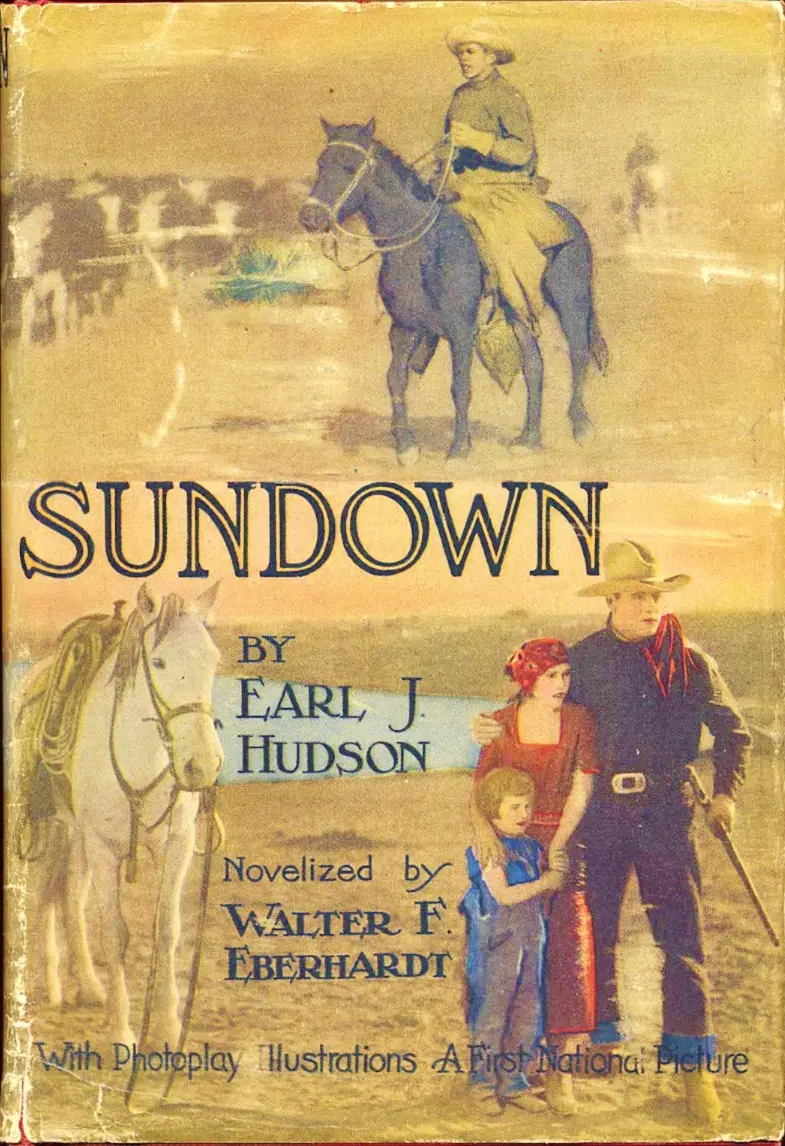
On the other side stand the nesters, the settlers, the farmers, whose arrival signals an entirely different philosophy. These are the pioneers, often portrayed as tenacious and hardworking, seeking to carve out individual parcels of land, to plant roots, to build homes and communities. They are the harbingers of a more sedentary, agricultural future, one where land is divided, owned, and cultivated. Their dream is the promise of a settled life, a patch of earth to call their own, a future built on permanence rather than transience. The clash, therefore, is not just over property lines; it's a fundamental ideological struggle over the very definition of progress and ownership in a rapidly developing nation.
What makes Sundown so captivating is its ability to convey this epic struggle without a single spoken word. The performances, particularly from the seasoned cast including Charles Sellon, Margaret McWade, and Bessie Love, rely on exaggerated yet deeply felt gestures, facial expressions, and body language to communicate the full spectrum of human emotion. A furrowed brow, a clenched fist, a desperate plea in the eyes—these are the tools through which the narrative unfolds. The grandeur of the landscape itself becomes a character, mirroring the vastness of the conflict and the smallness of individual struggles against such immense forces. The cinematography, even in its early form, must have worked wonders to capture the sweeping vistas and the claustrophobic tension of close quarters. One can almost feel the dust, taste the sweat, and hear the thundering hooves through the sheer power of the visual storytelling.
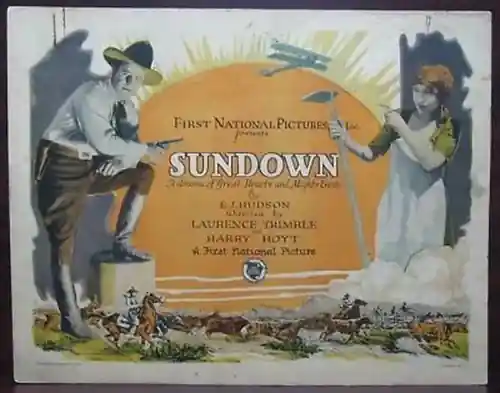
The film navigates the complexities of right and wrong with a nuanced hand. It resists the urge to paint one side as purely villainous and the other as purely heroic. Instead, it presents a more realistic, albeit dramatized, portrayal of a conflict where both sides believe they are justified. The cattlemen are fighting for their traditions, their livelihoods, and what they consider their rightful domain. The nesters are fighting for opportunity, for a new life, for the chance to build a future. This moral ambiguity is one of the film's strengths, elevating it beyond a simple good-versus-evil narrative. It forces the audience to confront the inevitability of change and the pain it often brings.
In this regard, Sundown shares thematic resonance with other films that explore the friction between established orders and encroaching new realities. While vastly different in setting and tone, one might draw a faint parallel to a film like His House in Order, which, despite its drawing-room drama, also grapples with the disruption of an established domestic order by an outsider. The struggle to maintain a certain way of life, to defend one's perceived rights and traditions against an invading force, whether that force is a new wife or a wave of homesteaders, is a deeply human one. The emotional stakes, though presented through different cultural lenses, remain universally potent.
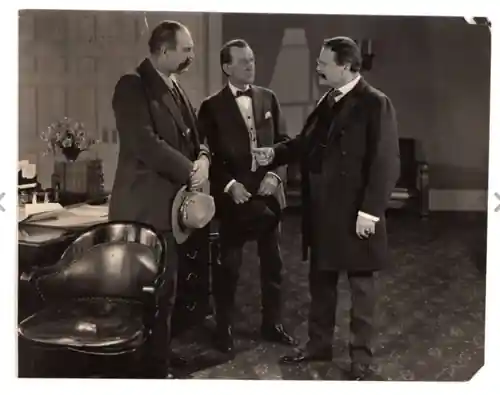
The writers, Kenneth B. Clarke, Earl Hudson, and Frances Marion, crafted a narrative that, despite its silent nature, feels remarkably robust. They understood the power of visual metaphor and character archetypes to carry the story. The character of the determined cattleman, perhaps played by Roy Stewart, embodies the rugged individualism that defines the frontier myth, while a figure like Bessie Love might represent the resilience and quiet strength of the women caught in the maelstrom, often acting as the moral compass or the voice of reason amidst the escalating conflict. Their contributions are crucial in shaping the emotional landscape of the film, ensuring that the audience connects with the personal stakes involved, beyond the grand sweep of historical change.
The sense of impending doom, or at least irreversible transformation, hangs heavy over the proceedings. The cattlemen's world is literally shrinking, parcel by parcel, fence post by fence post. This isn't a battle where a decisive victory for the old guard seems plausible; it's a desperate holding action against the forces of what was then considered progress. The film subtly critiques the idea of Manifest Destiny, not by condemning it outright, but by showing the human cost of its relentless push westward. The land, once a symbol of infinite possibility, becomes a finite resource, fiercely contested. The iconic shots of vast herds thundering across the plains, which define the early Western, are here imbued with a sense of elegy, a farewell to a bygone era.
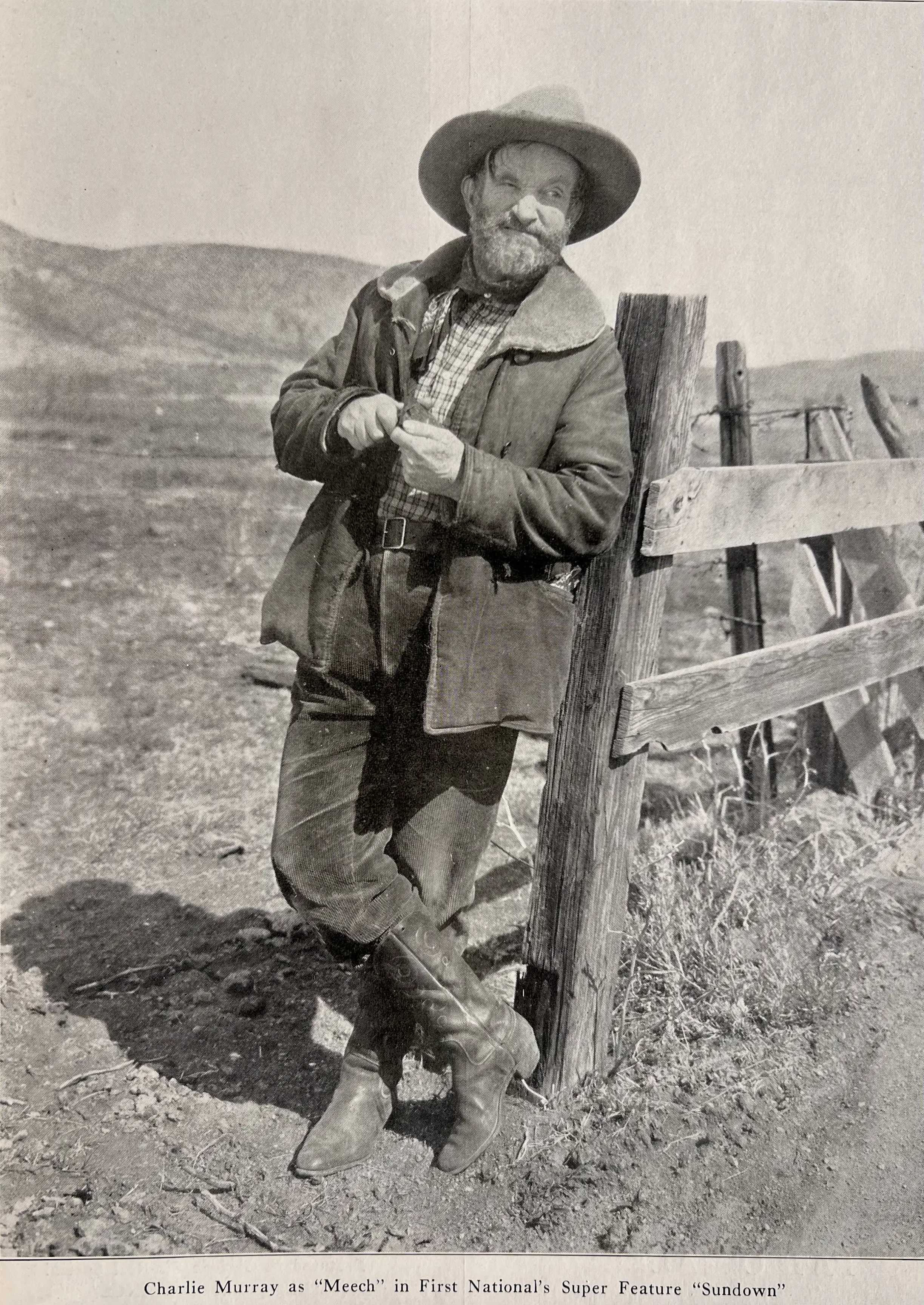
Consider the role of law and its interpretation in this evolving landscape. For the cattlemen, their law was often tradition, mutual understanding, and the unwritten rules of the range. For the nesters, the law was the surveyor's chain, the deed, the legal framework of a nascent government seeking to impose order on chaos. This collision of legal and extra-legal systems often led to violence, a brutal necessity in the absence of universally accepted authority. The film, through its dramatic confrontations, underscores how easily society can devolve when foundational principles are contested, a theme that resonates even today in discussions about property rights and resource allocation. The very idea of a 'door between' (to borrow from The Door Between) these two worlds becomes increasingly narrow, leading to inevitable friction.
The portrayal of community, or the lack thereof, is also a fascinating aspect of Sundown. The cattlemen represent a loose confederation, bound by shared interests and a common enemy. The nesters, on the other hand, are attempting to forge new communities, built on shared labor and the hope of a stable future. The film explores the arduous process of community formation, the initial suspicion and conflict, and the eventual, sometimes forced, integration that occurs as a new order begins to take hold. It’s a powerful testament to the human drive to belong, to build, and to find stability amidst upheaval.
While the film’s specific historical context is rooted in the early 20th century American West, its themes are remarkably timeless. The struggle over resources, the clash between traditional ways of life and modernization, the challenges of immigration and settlement—these are universal narratives that continue to play out across the globe. Sundown provides a window into a pivotal moment in American history, but its emotional core speaks to broader human experiences. It reminds us that progress, while often necessary, is rarely without its victims, and that the beauty of a dying world often gives way to the harsh realities of a new one.
The legacy of Sundown, though perhaps not as widely celebrated as some of its contemporary silent Westerns, lies in its unflinching portrayal of this foundational conflict. It’s a film that demands close attention, rewarding the viewer with a rich tapestry of human drama, environmental spectacle, and profound thematic depth. It's a reminder of the power of silent cinema to convey complex ideas and deep emotions through pure visual storytelling. For those interested in the origins of the Western genre, the social history of the American frontier, or simply the sheer artistry of early filmmaking, Sundown (1924) is an essential viewing experience. It allows us to reflect on the choices made, the paths taken, and the enduring spirit of those who shaped a nation, one fence post, one cattle drive, one desperate stand at a time.
The film’s conclusion, without giving away specifics, likely offers a reflection on the cost of this transformation. It’s rarely a clean victory for either side, but rather a somber acknowledgment of the sacrifices made and the compromises forced upon individuals and communities. The vast, blue skies that once offered limitless horizons for the cattlemen now look down upon a patchwork quilt of fenced-off farms, a testament to a new era. This visual juxtaposition, a silent elegy, is where the film truly shines, cementing its place as a significant piece of cinematic history and a poignant commentary on the human condition.
IMDb 5.2
1936
Community
Log in to comment.