DbcultAccessing Vault...
6.1/10
Senior Film Conservator
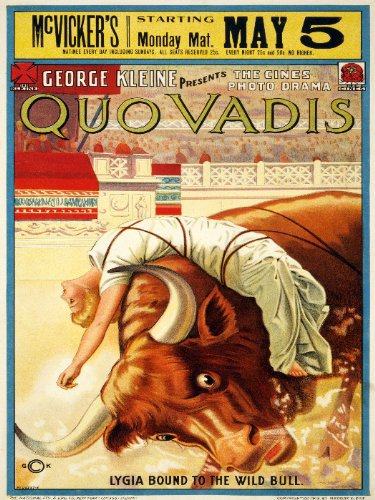
A definitive 6.1/10 rating for a film that redefined the boundaries of cult cinema. Quo Vadis? remains a cornerstone of transgressive art.
Stepping back into the cinematic annals of 1913, one encounters Quo Vadis?, a film that, even a century later, retains an almost mythical aura. This isn't merely a silent film; it's a colossal cinematic event, a groundbreaking spectacle that redefined what early motion pictures could achieve. Long before Hollywood perfected its biblical epics, Italian cinema, spearheaded by visionaries like Enrico Guazzoni, dared to tackle Henryk Sienkiewicz's monumental novel, bringing ancient Rome's decadent splendor and brutal persecution to life on an unprecedented scale. The sheer ambition of this production, particularly for its era, is nothing short of breathtaking, demonstrating a nascent industry's audacious reach beyond mere novelty into the realm of grand storytelling.
The film plunges us headfirst into the tumultuous heart of Nero's Rome, a city synonymous with both unparalleled power and unimaginable depravity. Here, we witness the intricate dance between pagan excess and burgeoning Christian faith, a conflict that forms the very bedrock of the narrative. Our initial guide through this labyrinthine world is Marcus Vinicius, a Roman commander portrayed with a compelling blend of arrogance and underlying vulnerability by Amleto Novelli. Vinicius is a product of his environment – a warrior, a man of power, accustomed to taking what he desires. His initial encounter with Lygia, a Christian hostage embodied with serene grace by Amelia Cattaneo, is less an act of romance and more an assertion of ownership, a potent symbol of Rome's imperialistic mindset.
What begins as a captor's whim, however, gradually transforms into a profound spiritual odyssey for Vinicius. Lygia's unwavering faith, her quiet dignity in the face of immense cruelty, acts as a stark counterpoint to the hedonistic bacchanals and brutal spectacles that define Neronian society. This transformation is the narrative's beating heart, a testament to the power of love and conviction to reshape even the most hardened soul. As Vinicius witnesses the plight of the Christians, their serene acceptance of martyrdom, and the profound teachings of figures like the apostle Peter – a role imbued with gravitas by Gustavo Serena – he begins to question the very foundations of his world. The opulent, blood-soaked altars of Roman gods suddenly seem hollow, their promises of earthly power paling in comparison to the spiritual solace offered by the 'new' religion.
This internal struggle is skillfully externalized against the backdrop of Emperor Nero's increasingly tyrannical and erratic rule. Carlo Cattaneo's portrayal of Nero is a masterclass in silent film villainy – a figure of chilling artistic megalomania, whose every whim becomes law, and whose insecurity fuels a terrifying capacity for destruction. The legendary burning of Rome, depicted with impressive practical effects for the time, serves not only as a pivotal plot point but also as a powerful metaphor for Nero's destructive ego and the moral decay of an empire spiraling into chaos. The Christians become convenient scapegoats, their persecution serving as a brutal spectacle to distract the populace and satisfy the emperor's sadistic desires.
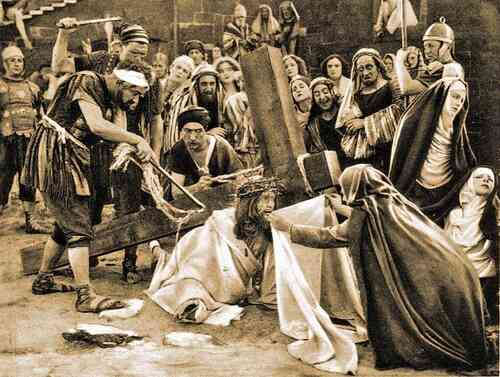
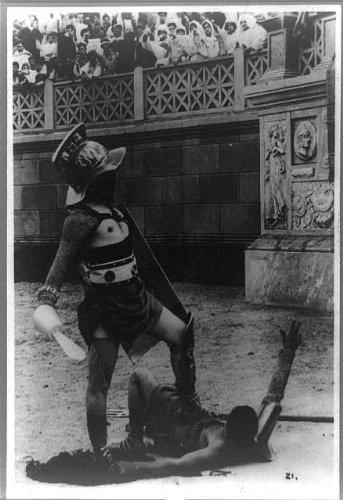
Guazzoni's direction is characterized by an almost painterly eye for composition and an ambitious use of hundreds of extras, creating truly panoramic scenes that were revolutionary for the period. The film's crowd scenes, depicting Roman forums, gladiatorial contests, and the horrific executions in the arena, convey a sense of genuine scale and historical immersion. While contemporary audiences, accustomed to CGI and rapid-fire editing, might find the pacing deliberate, it's crucial to appreciate Quo Vadis? within its historical context. It was a grand spectacle, a proto-blockbuster that captivated audiences with its sweeping scope and dramatic intensity. Its influence can be seen in later biblical and historical epics, from the grand narratives of From the Manger to the Cross (1912) and Life and Passion of Christ (1913) to the more elaborate productions that would follow decades later.
The film's visual language, though silent, speaks volumes. Elaborate sets recreate the grandeur of Roman palaces and the grim realities of its dungeons. Costumes are meticulously detailed, contributing significantly to the period's authenticity. The use of intertitles, while a necessity, is integrated effectively, providing crucial exposition and conveying the characters' inner thoughts and dialogues. The acting, in typical silent film fashion, relies heavily on exaggerated gestures and facial expressions, yet the lead performers manage to convey genuine emotion and character development. Novelli's Vinicius undergoes a tangible transformation, while Cattaneo's Lygia embodies a quiet strength that resonates deeply, making her a compelling moral anchor in a world adrift in vice.
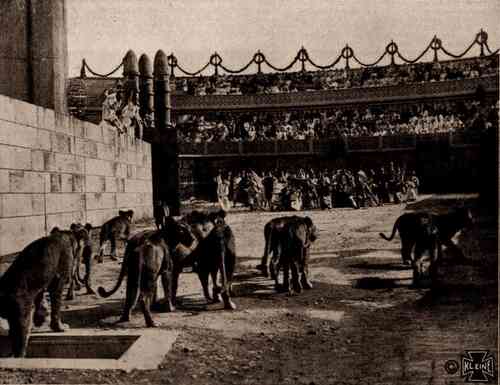
The central conflict between paganism and Christianity is not merely a theological debate but a clash of entire worldviews. Roman paganism, as depicted, is intrinsically linked to imperial power, military might, and the pursuit of earthly pleasures. Its gods are anthropomorphic, reflecting human vices and virtues on a grander scale. Christianity, in stark contrast, offers a doctrine of humility, love, and spiritual salvation, challenging the very foundations of Roman authority. The film portrays this ideological struggle through the personal journeys of its characters, particularly Vinicius, who is torn between the familiar comforts of his Roman identity and the profound, unsettling truths offered by Lygia and Peter. This personal struggle mirrors the larger societal upheaval that Christianity would eventually bring to the Roman Empire.
The narrative’s strength lies in its ability to humanize this epic conflict. We don’t just see abstract forces at play; we witness the individual suffering, the acts of courage, and the moments of profound faith that define the Christian community. The scenes depicting their secret gatherings, their steadfast refusal to renounce their beliefs even under torture, are deeply moving. These moments of quiet defiance stand in stark contrast to the boisterous, often cruel, public spectacles orchestrated by Nero. Such a portrayal of resilience against overwhelming odds finds parallels in other early cinematic explorations of societal injustice, such as the poignant struggles seen in Les misérables (1913) or the social critiques embedded within adaptations like Oliver Twist (1912), though Quo Vadis? elevates it to a spiritual plane.

The film’s historical scope is truly remarkable. It attempts to reconstruct a sprawling ancient world, from the bustling streets of Rome to the solemnity of its temples and the terror of its arenas. The scale of the production was a significant factor in its success, drawing audiences eager for grand historical narratives. In an era where cinema was still finding its voice, Quo Vadis? proved that it could compete with, and often surpass, the theatrical stage in terms of visual grandeur. This pursuit of historical spectacle was a defining characteristic of early Italian cinema, evident in other ambitious productions like Cleopatra (1912) and The Last Days of Pompeii (1913), both of which also delved into classical antiquity with impressive visual flair.
Writers Henryk Sienkiewicz and Enrico Guazzoni, adapting Sienkiewicz's Nobel Prize-winning novel, understood the dramatic potential of this historical period. The novel itself was a global phenomenon, and the film successfully translated its core themes of love, faith, and political intrigue to the screen. The sheer duration of the film, often running several hours, was also a novelty, cementing its status as a major cultural event. Audiences were not just watching a movie; they were experiencing an immersive journey back in time, witnessing epic events unfold before their eyes. This immersive quality, achieved through meticulous set design and crowd management, truly set a benchmark for future historical dramas.
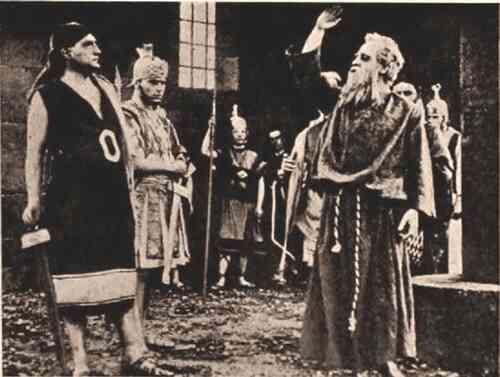
Despite the limitations of early cinematic technology, Quo Vadis? manages to convey the emotional weight of its story. The performances, while broad by modern standards, are heartfelt. Amleto Novelli captures Vinicius's initial arrogance and subsequent spiritual awakening with conviction. Amelia Cattaneo imbues Lygia with an ethereal purity and strength that makes her an unforgettable figure of faith. Gustavo Serena’s portrayal of Peter is dignified and wise, providing the moral compass for the burgeoning Christian community. Even Carlo Cattaneo’s Nero, often teetering on caricature, effectively embodies the capricious and cruel nature of a despotic ruler, a figure of compelling villainy whose self-absorption leads to widespread suffering.
The film is more than just a historical curiosity; it is a foundational text in the development of epic cinema. It demonstrated the commercial viability and artistic potential of large-scale historical dramas, paving the way for countless successors. Its depiction of Christian persecution, while dramatized, resonated deeply with audiences and contributed to the genre's enduring appeal. Much like other early cinematic explorations of faith and morality such as Pilgrim's Progress (1912) or the various Life of Christ adaptations, Quo Vadis? tapped into universal themes of good versus evil, sacrifice, and redemption, but on a grander, more secularly accessible stage.
Viewing Quo Vadis? today requires a willingness to appreciate it on its own terms, not through the lens of modern filmmaking conventions. It’s a powerful artifact, a window into an era when cinema was still discovering its immense power to transport and inspire. Its grand scale, its compelling narrative of love and faith against tyranny, and its pioneering spirit make it an essential watch for anyone interested in the history of film. It stands as a testament to the fact that even in its nascent stages, cinema was capable of delivering stories of profound human drama and breathtaking spectacle. The journey of Vinicius, from a pagan Roman officer to a man transformed by love and faith, remains as compelling as the epic backdrop against which it unfolds, a powerful reminder of the questions posed in its very title: “Whither goest thou?”
IMDb —
1915
Community
Log in to comment.