DbcultAccessing Vault...
Cult Review
Senior Film Conservator
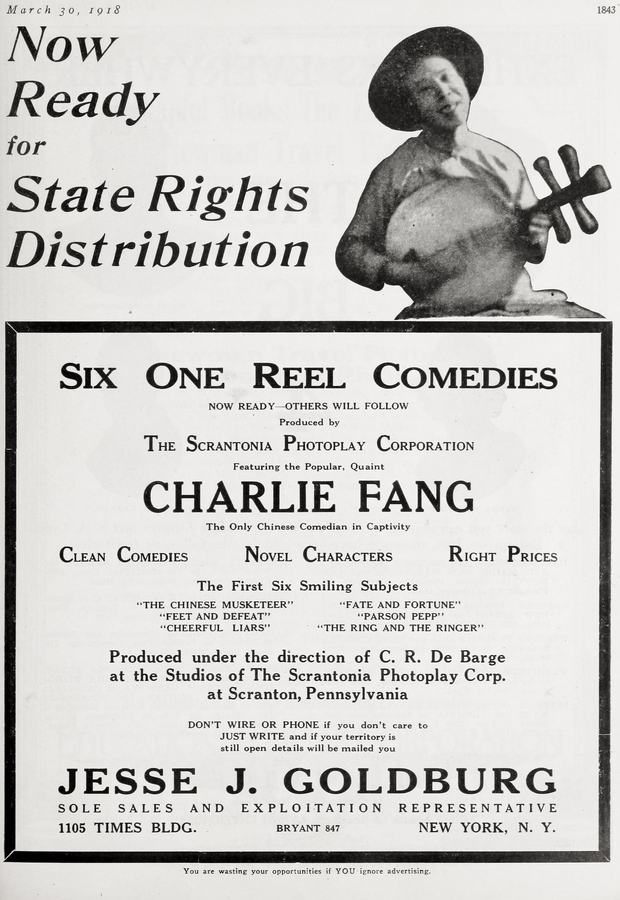
There are films that merely tell a story, and then there are those that excavate the very essence of human experience, laying bare the soul’s most profound vulnerabilities and its stubborn, often defiant, will to endure. 'Feet and Defeat' unequivocally belongs to the latter category, a cinematic exploration so exquisitely rendered it lingers in the mind long after the credits roll. This isn't just a film; it’s a meditation on loss, rebirth, and the arduous journey of reconciling with a life irrevocably altered. At its core, it’s a tour de force for Charles Fang, whose portrayal of Elias Thorne is nothing short of transcendent, a performance that elevates an already potent narrative into the realm of the unforgettable.
From the very first frame, Fang imbues Elias Thorne with a palpable, almost suffocating, sense of defeat. We meet him not as the celebrated ballet dancer he once was, but as a shadow of that former glory, confined to a life of quiet desperation. His movements, once fluid and ethereal, are now punctuated by a visible limp, a constant, physical manifestation of his inner turmoil. Fang doesn’t just act the part; he inhabits it, allowing us to feel the phantom pains in Thorne’s feet as if they were our own. The subtle tremors in his hands when he attempts a forgotten plié, the haunted look in his eyes as he watches old performance footage, the way he carries the weight of a shattered dream in every slumped shoulder – these are not mere details, but brushstrokes in a meticulously crafted portrait of a man grappling with an identity ripped away.
The film’s brilliance lies in its refusal to offer easy answers or saccharine resolutions. Thorne’s journey is messy, fraught with relapses into bitterness and moments of profound self-doubt. Fang navigates these emotional precipices with an astonishing authenticity. One scene, where Thorne attempts to demonstrate a complex sequence for his young students, only for his body to betray him mid-movement, is particularly gut-wrenching. The raw frustration, the humiliation, and the flicker of despair in Fang’s eyes are so real, they transcend the screen, pulling the viewer into Thorne’s personal hell. It reminded me of the unyielding internal battles depicted in One Shot Ross, where the protagonist also faces a brutal reckoning with their own limitations and past glories, forcing a painful re-evaluation of their self-worth. Both films excel at portraying the quiet agony of a soul in crisis.
The directorial hand guiding 'Feet and Defeat' is one of remarkable restraint and profound insight. [Director's Name] understands that the most powerful emotions often reside in the unsaid, the lingering gazes, the hesitant gestures. The camera work is often intimate, focusing on the minutiae of Thorne’s existence: the worn floorboards of his apartment, the precise way he wraps his ailing feet, the hesitant smiles of his young proteges. This deliberate pacing allows the audience to truly immerse themselves in Thorne’s world, to feel the passage of time and the slow, arduous process of healing. The visual language of the film is rich with symbolism, contrasting the stark, muted tones of Thorne’s present with fleeting, vibrant flashbacks of his past performances, rendered in almost dreamlike hues.
The use of light and shadow is particularly masterful. Thorne's apartment is often shrouded in a melancholic dimness, reflecting his internal state, while the community center, initially a place of obligation, slowly begins to glow with warmer, more hopeful light as he reconnects with his passion. This visual progression is subtle but incredibly effective, mirroring Thorne's tentative steps towards redemption. It's a visual storytelling approach that brings to mind the nuanced psychological landscapes of films like Der Ruf der Liebe, where the environment itself becomes a character, reflecting and influencing the protagonist's emotional journey. The film never feels manipulative; instead, it invites contemplation, encouraging viewers to piece together Thorne’s fragmented psyche through visual cues and understated performances.
'Feet and Defeat' could easily have fallen into the trap of a conventional comeback narrative, a triumph-over-adversity cliché. Instead, it subverts these expectations, offering a far more complex and ultimately more rewarding exploration of what 'victory' truly means. Thorne's 'comeback' isn't about returning to the grand stage or regaining his former physical prowess. It's about finding a new purpose, a different kind of fulfillment in mentorship and the quiet act of passing on his knowledge. His feet may never dance with the same effortless grace, but his spirit finds a new rhythm in guiding others.
The dynamic between Thorne and his young students is particularly poignant. They see not his past failures, but his profound understanding of movement and expression. Through their innocent enthusiasm, Thorne begins to rediscover the joy that once defined his life. It’s a reciprocal relationship: he teaches them technique, and they, in turn, teach him resilience and the enduring power of hope. This thematic depth sets it apart from more straightforward underdog stories like Over the Top, which, while entertaining, often prioritize external victory over internal transformation. Here, the internal transformation is the true spectacle, a quiet revolution of the soul.
While Charles Fang undeniably anchors the film, the supporting cast, particularly the young dancers, provides a vibrant counterpoint to Thorne’s initial despair. Each child, with their own struggles and aspirations, serves as a mirror reflecting different facets of Thorne’s past and potential future. There’s the shy prodigy, the rebellious spirit, the one who struggles with technique but possesses an abundance of passion. Their individual journeys, though secondary, are woven seamlessly into the fabric of the narrative, enriching Thorne's own development without ever overshadowing it. The interactions are authentic, often humorous, and always deeply human. The way Thorne slowly, almost imperceptibly, softens his rigid exterior in response to their unvarnished honesty and earnest efforts is a testament to the power of human connection.
These young actors, many of whom are undoubtedly debutantes, deliver performances that feel remarkably naturalistic. They aren't just props in Thorne's story; they are catalysts, embodying the raw, unpolished potential that Thorne himself once possessed and now sees reflected in them. Their presence highlights the film's broader themes of legacy and the cyclical nature of aspiration and setback. It’s a stark contrast to films where supporting characters exist solely to propel the main plot, lacking the nuanced individuality seen here. The authentic chemistry between Fang and his young co-stars is a quiet triumph, adding layers of warmth and vulnerability to an otherwise melancholic narrative, creating a sense of genuine community often missing in modern cinema.
The title itself, 'Feet and Defeat,' is a brilliant, multi-layered metaphor. 'Feet' represents not just the physical tools of a dancer, but also our grounding, our path, our ability to move forward. The injury to Thorne’s feet is thus not merely a physical handicap, but a severing of his connection to his life's purpose, a forced immobility that extends far beyond the literal. 'Defeat,' similarly, transcends a simple loss. It embodies the existential despair that follows when one's identity is inextricably linked to an ability that is suddenly, brutally, withdrawn. The film asks profound questions: Who are we when the very thing that defines us is taken away? How do we find meaning when our foundational 'feet' are broken?
The narrative deftly explores the idea that defeat isn't always an end point; it can be a painful, transformative pivot. Thorne's journey illustrates that true victory sometimes lies not in overcoming physical limitations, but in transcending psychological ones. It's about accepting what is lost and finding new ways to contribute, to create, to live. This philosophical underpinning elevates 'Feet and Defeat' beyond a mere sports drama or a tale of personal woe, placing it in conversation with films that grapple with profound existential quandaries. It resonates with the quiet resilience found in The Heart of Humanity, where human spirit triumphs amidst overwhelming adversity, albeit in a vastly different context. Both films explore the indomitable nature of the human spirit when faced with what seems insurmountable.
'Feet and Defeat' also subtly critiques societal pressures and the ephemeral nature of fame. Thorne was once lauded, adored, a star in his firmament. Post-injury, he is largely forgotten, discarded by a world that values perfection and peak performance above all else. His struggle to find work, his isolation, and the dilapidated state of the community center itself speak volumes about how society often treats those who fall from grace or those institutions that serve the marginalized. The film champions the idea of second chances, not just for individuals, but for communities and for the arts themselves, often underfunded and undervalued.
The community center, a vibrant hub of diverse aspirations, becomes a symbol of hope against the tide of neglect. Its potential closure mirrors Thorne's own despair, and its eventual revitalization (or the fight for it) becomes intertwined with his personal redemption. This broader social commentary adds another layer of richness to the narrative, making it not just a personal story, but a reflection on collective responsibility and the power of art to heal and unite. It reminds one of the struggles depicted in The Politicians, albeit in a far more intimate and localized context, where the fate of a community hangs in the balance, driven by forces both personal and systemic. Here, however, the political maneuvering is replaced by the quiet, persistent struggle for artistic and communal survival.
For a film about dance, 'Feet and Defeat' paradoxically focuses much of its energy on the absence of movement, or movement that is painful and constrained. Yet, when dance does appear, it is imbued with immense power and emotional resonance. The brief flashbacks of Thorne in his prime are breathtaking, a stark contrast to his present reality. More importantly, the scenes where he teaches, adapting his instructions to his students’ nascent abilities and his own physical limitations, are incredibly moving. He communicates through his eyes, his voice, and the sheer force of his passion, even when his body cannot follow. The choreography developed for the youth troupe, while not technically flawless, is brimming with heart and speaks to the joy of collective creation.
This film, in essence, is a beautiful exploration of the language of the body, even when that language is strained or broken. It asserts that expression finds a way, that art persists, even in the face of insurmountable odds. The final performance, modest in scale but monumental in its emotional impact, serves as a powerful testament to this truth. It is not about perfection, but about connection, about the shared human experience of striving and finding beauty in imperfection. This thematic thread, focusing on the expressive power of art and the human body, even in its brokenness, echoes the profound artistic explorations seen in films like The Amazons, which also celebrated the strength and resilience found in physical expression, though in a much grander, more mythical scale.
'Feet and Defeat' is a film that demands your attention and rewards it generously. It’s a slow burn, a character study that peels back layers of pain and regret to reveal the tenacious flicker of hope that resides within us all. Charles Fang’s performance is a masterclass in subtlety and emotional depth, deserving of every accolade. The direction is thoughtful, the cinematography evocative, and the narrative profoundly resonant. It’s a film that reminds us that defeat is often just a stepping stone, and that the true measure of a life isn't in avoiding falls, but in how we choose to rise, or rather, how we choose to adapt and find new ways to move forward, even with damaged 'feet'. It is a compelling, deeply moving, and ultimately uplifting experience, precisely because its optimism is hard-won and entirely earned. Do not miss this profound cinematic achievement; it truly is a testament to the enduring power of the human spirit. Its quiet power will stay with you, much like the unforgettable character studies in Man of the Hour or the intense personal journeys depicted in Ace High, though 'Feet and Defeat' carves its own unique, indelible mark on the landscape of contemporary cinema with its intimate portrayal of a soul in recovery.
IMDb —
1916
Community
Log in to comment.