DbcultAccessing Vault...
Cult Review
Senior Film Conservator
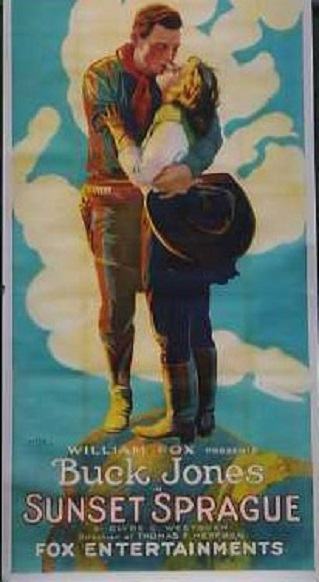
The first thing that strikes you about Sunset Sprague is how aggressively it refuses the postcard veneer most 1919 westerns still clung to. Instead of sun-dappled meadows we get bruised skylines; instead of square-jawed virtue, a protagonist whose eyes carry the weight of unspoken winters. Director Clyde Westover, working from his own lean script, stages the opening ambush in a half-dry creek bed where the shadows pool so black they swallow horse hooves. The effect is less Tom Mix, more Jacobean revenge sketch in chaps.
Plot mechanics, on paper, read like boilerplate frontier pulp: stranger rescues rancher, swears to protect widowed niece, exposes snake-in-the-grass suitor. Yet the film’s emotional algebra is trickier. Every gain in honor is paid for with a counter-reversal that leaves even the hero looking momentarily culpable. When Sprague agrees to escort Rose to town, the camera lingers on his gloved hand brushing the butt of his Colt—a fleeting gesture that suggests protection and menace are opposite faces of the same coin. That duality seeps into the geography itself; mesas resemble broken cathedral spires, arroyos yawn like open graves.
Cinematographer Gus Saville, who cut his teeth shooting snow-dragged exteriors for the Yukon two-reeler Sunshine and Gold, transposes that same chill to the high desert. Day-for-night tinting is pushed so far into indigo that star-fields appear etched with phosphorus. Interiors, by contrast, glow amber from kerosene lanterns, faces half-submerged in umber gloom—an effect that anticipates the low-key noir palettes of the mid-forties. Watch the scene where Mace Dennison offers Rose a gilt-edged mirror: the reflection fractures, doubling her visage into anxious twins. Silent-era viewers weren’t yet fluent in expressionist symbolism, yet the image lands like an omen.
Buck Jones, years before Fox molded him into the affable cowpoke of serials, plays Sprague with a containment that verges on unsettling. His smiles arrive late and leave early; the real action is in the sinewy shrug with which he holsters his gun after each showdown. Opposite him, Patsy De Forest’s Rose is no fainting violet but a woman caught between financial ruin and emotional complicity—she likes Dennison’s polish until the smell of blood seeps through. Henry Hebert essays Dennison with silk-voued menace, forever resetting his tie pin as though propriety could muffle the body count. The most tragic register belongs to Jack Rollens as Red: accused of patricide, he spends half the film caged in a freight-car jail that rattles like a broken promise, every shake underscored by Edwin B. Tilton’s nervy orchestral cue.
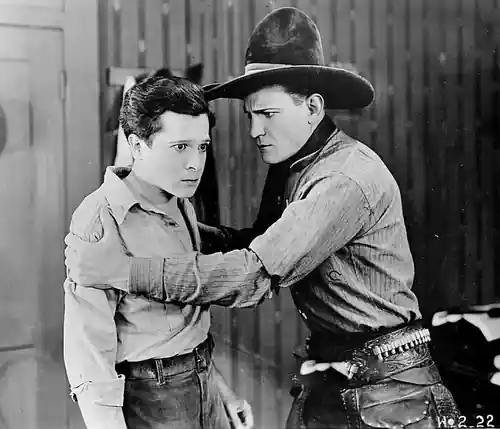
Westover’s screenplay weaponizes the mine as both MacGuffin and moral litmus. Characters speak of "color in the ground" with the reverence others reserve for scripture, yet the yellow ore never appears on-screen; we glimpse only its gravitational pull. In a genre that usually treats land as blank canvas, Sunset Sprague insists that every surveyed acre is haunted by prior violence—Indigenous expulsion, range wars, capitalist incursion. The outlaws aren’t random predators; they’re the logical culmination of a value system equating ore with destiny. When the Crow, gut-shot and repentant, gasps out his confession, the moment plays less like convenient exposé than ritual purging: truth wrested from the margins of a ledger written in red ink.
Compare this moral unease to the feather-light caper of Light Hearts and Leaking Pipes, released the same year. Where that rom-com seals every rupture with a slapstick kiss, Sunset Sprague leaves its survivors fissured. Rose inherits the mine—and with it the perpetual target on her back—while Sprague, having tasted the intoxicating clarity of violence, rides toward the horizon with no promise of rest. The final intertitle card reads: "The sun sets alike on the just and the damned." Studios excised it from some prints, fearing audiences would find the sentiment nihilistic; surviving nitrate reels confirm its inclusion, and the line stings precisely because it refuses catharsis.
Though technically silent, the picture was conceived with a prescribed score: violin tremolos for prairie vistas, bass drum hits synchronized to rifle reports, a wheezing harmonica whenever Red contemplates his shackled fate. Exhibitors often swapped cues, yet cue sheets discovered in the Library of Congress reveal Westover’s meticulous tempo markings. The climactic standoff—three minutes of almost wordless staging inside a half-collapsed assay office—was meant to play at 78 beats per minute, the heartbeat of a trotting horse. Projectionists who honored the directive describe audiences audibly inhaling when the harmonica drops out, leaving only the rattle of wind through broken shutters. That negative space, more than gunfire, sells jeopardy.
Rose’s agency hinges on a series of constrained choices—sell the mine and flee, or keep it and fight—yet De Forest nuances each hesitation with micro-gestures: a fingertip whitening around a deed parchment, a glance at Sprague that measures him as both shield and threat. Early press booklets tried marketing her as "the western maiden in peril," but contemporary feminist critics rightly reclaim her as locus of economic tension. Her eventual rejection of Dennison is not simple moral epiphany; it’s a calculated risk that reallocates erotic loyalty toward the man who respects her title to the land. The film, knowingly or not, anticipates ecofeminist readings: control over earth’s body and woman’s body are entwined commodities in 1919 speculative capitalism.
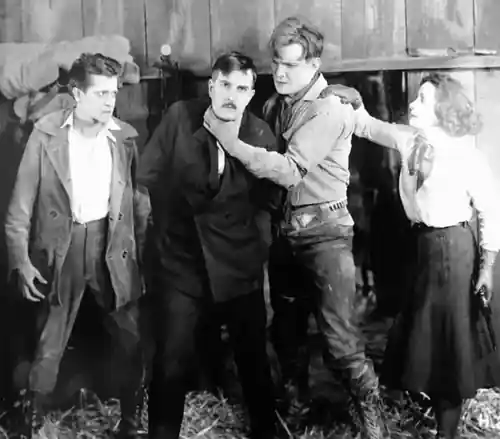
Trade papers of the era praised the film’s "vigorous atmosphere" while lamenting its dearth of comic relief. Moving Picture World opined that audiences might find the ending "unrelieved of cheer." Yet box-office ledgers for Texas and Oklahoma territories show record hold-over weeks, suggesting rural viewers craved the unvarnished article. In the centennial reappraisal, Sunset Sprague screens at Bologna and Pordenone to hushed cinephiles who spot its DNA in later works like Pursued and Johnny Guitar. Archives cite it as a missing link between the Victorian morality play It Is Never Too Late to Mend and the psycho-sexual noir of The Divorcee.
Only two incomplete 35mm prints survive: one in the BFI’s nitrate vault (missing reel three), another in a private Montana collection (scorched by projector fire). A 4K photochemical restoration stalled when funding evaporated in 2021, but rumor links an upcoming crowdfunding campaign to the American Silent Film Institute. Should the stars align, audiences might finally stream a 2K scan accompanied by a newly commissioned score fusing Appalachian fretwork with ambient drone—an aural bridge between 1919 and now. Until then, bootleg rips from 16mm educational dupes circulate among cine-clubs, their washed-out contrast ironically muting the very chiaroscuro that defines the picture.
If you’ve devoured the righteous swagger of Rider of the Law and crave something that gnaws at the soul’s underbelly, queue up Sunset Sprague. Pair it with a double feature of Treason for a night of ethically corroded Americana. Keep the room dim, the sound up, and let the sepia ghosts remind you that every frontier myth is built on an unmarked grave.
Verdict: A bruised beauty of a western that interrogates the very mythology most silents celebrate. Imperfect, fragmentary, and utterly essential.
IMDb 6.4
1935
Community
Log in to comment.