DbcultAccessing Vault...
6.8/10
Senior Film Conservator
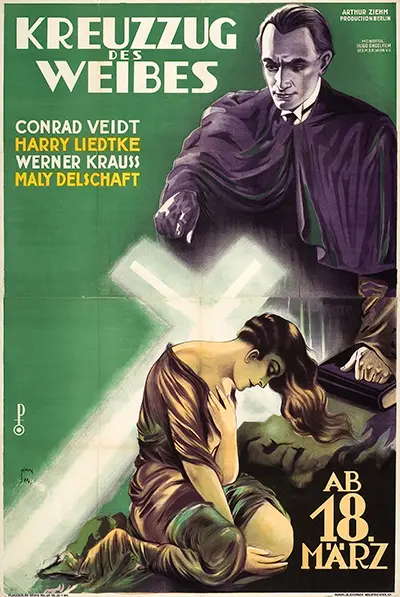
A definitive 6.8/10 rating for a film that redefined the boundaries of cult cinema. Kreuzzug des Weibes remains a cornerstone of transgressive art.
Is it worth sitting through a silent film about legal reform from 1926? Short answer: yes, but only if you are prepared for a cinematic experience that values political fury over narrative subtlety. This film is for the historian of human rights and the lover of German Expressionism; it is absolutely not for those seeking light escapism or a polished, easy-to-digest story.
Kreuzzug des Weibes (The Woman's Crusade) is a jagged piece of history. It does not ask for your attention; it demands your outrage. Unlike the more whimsical Off the Trolley, this film is rooted in the dirt and despair of the Weimar Republic’s legal failings.
This film works because it leverages the haunting, high-contrast aesthetics of the era to turn a legal debate into a visceral horror story of the soul.
This film fails because its commitment to being a 'protest film' often leads it into heavy-handed didacticism that can make characters feel like puppets of the state.
You should watch it if you want to witness the incredible screen presence of Conrad Veidt and Werner Krauss in a film that was once deemed too dangerous for public eyes.
Martin Berger was not interested in the romanticism found in films like Faint Hearts. He was a filmmaker of the streets. In Kreuzzug des Weibes, he tackles Paragraph 218—the German law criminalizing abortion—with a sledgehammer. The film’s structure is episodic, showing how one law can ripple through a community like a plague.
One specific scene stands out: the courtroom sequence. Here, the camera doesn't just observe; it interrogates. The lighting is harsh, casting long, skeletal shadows that mimic the internal decay of the characters. It reminds me of the visual tension in A Celebrated Case, but with a much sharper political edge.
The pacing is deliberate. It is slow, almost agonizingly so, which serves to mirror the bureaucratic nightmare the characters are trapped in. Berger uses the silence of the medium to amplify the sense of being unheard. It is a film that breathes through its gaps.
The casting is a masterstroke. Conrad Veidt, known for his work in The Dream Cheater, brings a haunting vulnerability here. He doesn't just act; he haunts the frame. His eyes carry a weight that dialogue could never convey. He represents the intellectual conscience of the film, a man caught between his duty and his empathy.
Then there is Werner Krauss. If Veidt is the soul, Krauss is the grit. His performance is more grounded, more physical. Seeing them together is a lesson in the diversity of silent acting techniques. While some films of the era, like The Waif, relied on sentimental gestures, Veidt and Krauss use restraint to generate power.
The female lead, Maly Delschaft, provides the emotional core. Her performance is a marathon of suffering. In the scene where she realizes her options have vanished, the camera stays on her face for an uncomfortably long time. It is brutal. It is honest. It makes modern dramas look cowardly by comparison.
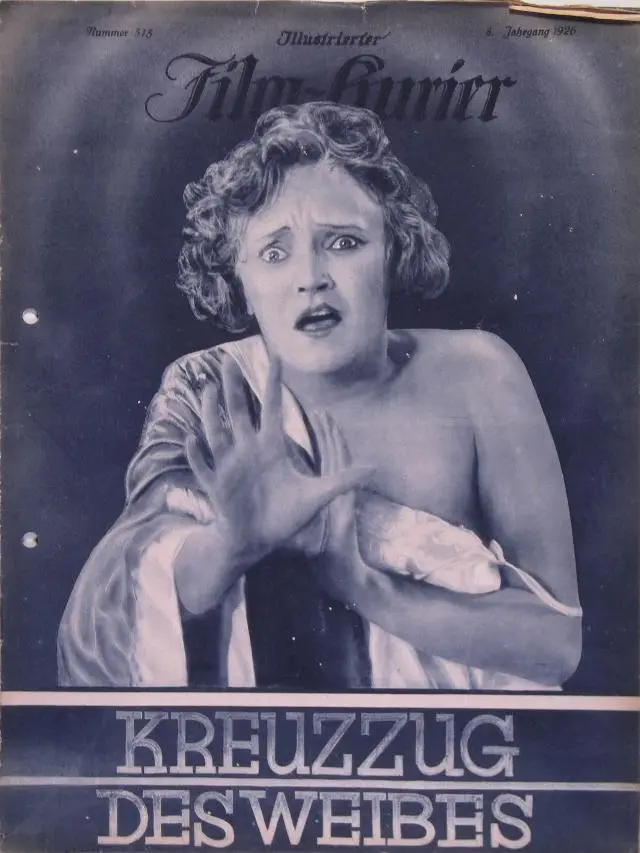
The cinematography in Kreuzzug des Weibes is a far cry from the soft-focus aesthetics of An American Widow. This is sharp, high-contrast work. The use of shadows is not just for style; it is symbolic of the 'underground' nature of the film's subject matter. The city is depicted as a labyrinth of cold stone and unforgiving angles.
There is a recurring motif of doors closing. It’s simple, but effective. Every time a character seeks help, a door is physically or metaphorically shut in their face. This visual repetition builds a sense of claustrophobia that is almost unbearable by the third act. The film’s visual DNA shares more with La marcia nuziale than with contemporary American films.
However, the film isn't without its technical flaws. Some of the transitions are clunky, and the intertitles can be overly wordy, attempting to explain things that the actors have already conveyed with a single look. It’s a common issue in early social-hygiene films like Film 19, but it’s particularly noticeable here because the acting is so strong.
Yes, Kreuzzug des Weibes is worth watching because it is a vital document of cinema as a tool for social change. It provides a rare look at the political activism of the Weimar era through a lens that is both artistic and unapologetic. If you appreciate films that challenge the status quo, this is essential viewing.
The film serves as a bridge between the expressionism of the early 20s and the 'New Objectivity' that followed. It’s not just a movie; it’s a time capsule of a society in transition. For those who enjoyed the thematic depth of Just a Woman, this film offers a much more radical exploration of similar themes.
It is shocking how little the arguments have changed. Watching a film from 1926 and hearing the exact same rhetorical points used in modern political debates is jarring. It makes the film feel contemporary in a way that is both impressive and deeply depressing. It works. But it’s flawed by its own anger.
"The law is a wall that the poor must climb, while the rich simply walk around it." - This sentiment echoes through every frame of Berger's work.
Pros:
Cons:
When you compare this to something like The Bigger Man or Hearts and Let Us, the difference in intent is staggering. While those films were exploring personal character arcs within a conventional framework, Kreuzzug des Weibes was trying to tear the framework down. It shares a certain grim DNA with A Debtor to the Law, but it is far more sophisticated in its visual execution.
Even in its quieter moments, the film feels louder than its contemporaries. There is a scene involving a simple dinner that is thick with unspoken tension, far more effective than the overt melodrama found in Saint, Devil and Woman. It is in these small, human moments that Berger’s direction truly shines.
Kreuzzug des Weibes is a difficult, demanding, and ultimately rewarding piece of cinema. It is not 'fun' in any traditional sense of the word. It is a scream from the past that still resonates with uncomfortable clarity. While it lacks the polish of later Hollywood efforts like Sawdust, it possesses a raw integrity that cannot be manufactured.
If you can get past the dated intertitles and the occasional heavy-handedness, you will find a film that is remarkably modern in its concerns. It is a testament to the power of film as a medium for protest. It is a crusade that, unfortunately, feels like it is still being fought today. It’s a tough watch. It’s a necessary watch.
IMDb 5.4
1935
Community
Log in to comment.