DbcultAccessing Vault...
Cult Review
Senior Film Conservator
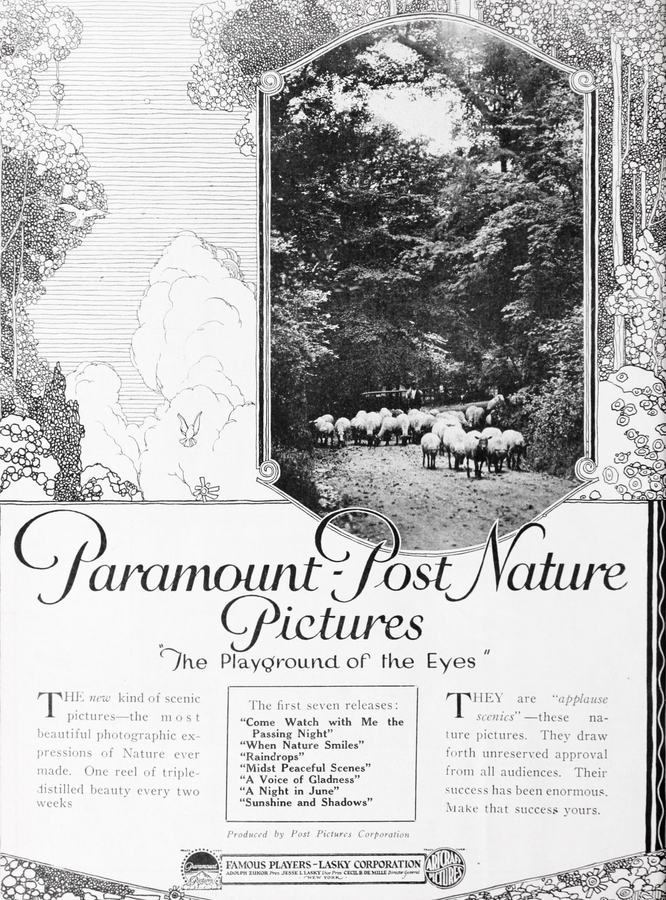
"Sunshine and Shadows" does not merely document; it orchestrates a profound sensory immersion, a visual poem etched onto the celluloid canvas. This is not a travelogue, nor a scientific exposition, but a contemplative journey into the very soul of the wilderness, a cinematic pilgrimage guided by the discerning eye of W.A. Van Scoy. The film invites viewers to shed their urban preoccupations and surrender to the elemental rhythms of Earth, revealing the sublime grandeur that often eludes our hurried gaze. It's an exploration of light's transformative power, of water's ceaseless journey, and of the stoic, enduring majesty of the land itself. From its opening frames, the documentary establishes an almost spiritual connection with its subjects, allowing the landscapes to breathe, to speak, to narrate their own ancient sagas without the need for verbose commentary. The absence of a conventional human narrative voice paradoxically amplifies the voices of the wind, the water, and the rustling leaves, creating an intimate dialogue between the viewer and the untamed. It is a testament to the power of pure visual storytelling, where every sunbeam, every ripple, every craggy peak becomes a character in a drama far grander than any human endeavor, compelling us to reflect on the transient nature of our own existence against the backdrop of geological time. The film is a masterclass in patient observation, a slow cinema experience that rewards attentiveness with moments of breathtaking beauty and profound tranquility. It elevates the natural world from a mere setting to the central protagonist, whose moods and transformations drive the entire cinematic experience. The subtle shifts in light, the changing seasons, the relentless erosion and creation — these are the plot points of this magnificent, silent epic.
The journey commences within the verdant embrace of ancient woodlands, where shafts of sunlight pierce the dense canopy, dappling the forest floor in an ever-shifting mosaic of luminosity. Here, Van Scoy's camera lingers, capturing the intricate textures of bark, the delicate unfurling of ferns, and the silent, slow growth that defines these sylvan cathedrals. The interplay between light and shadow is particularly exquisite, transforming familiar trees into sculptures of abstract form and creating a sense of depth and mystery that draws the viewer ever deeper into the arboreal heart. We observe the delicate dance of flora, the subtle undulations of leaves stirred by an unseen breeze, and the profound stillness that often settles beneath the boughs. It's a world teeming with unseen life, yet presented with a quiet reverence that underscores its timelessness. The film avoids grand, sweeping gestures in these moments, opting instead for intimate vignettes that highlight the intricate beauty of the microcosm – a moss-covered stone, a sun-drenched patch of wildflowers, the intricate web of branches against a pale sky. This meticulous attention to detail evokes a powerful sense of presence, as if one is physically wandering through these hallowed spaces, inhaling the earthy scent, feeling the cool air. The forest sequences are not merely picturesque; they are an invitation to introspection, a reminder of the quiet resilience and interconnectedness that defines natural ecosystems. The way the light filters through the leaves, creating pockets of intense brilliance and profound gloom, mirrors the complex emotional landscapes often explored in human dramas. While a film like Shadows from the Past might explore the haunting interplay of memory and regret through its narrative, "Sunshine and Shadows" achieves a similar emotional depth through purely visual means, allowing the natural world's own "shadows" to evoke a sense of history, transformation, and the cyclical nature of existence, devoid of human sorrow but rich with the quiet drama of growth and decay.
Transitioning seamlessly, the documentary then immerses us in the dynamic world of water. From the gentle murmur of nascent springs, barely discernible amidst the forest undergrowth, to the exhilarating roar of colossal waterfalls, the film charts water's relentless, life-giving journey. The cinematography here is particularly captivating, capturing the liquid grace of currents, the mesmerizing swirl of eddies, and the explosive power of cascades. Each droplet, each spray, becomes a tiny prism reflecting the surrounding world, creating a kaleidoscopic dance of light and motion. We witness rivers carving their inexorable paths through ancient rock, a testament to enduring patience and unyielding force, shaping the very topography of the land over millennia. The waterfalls are presented not just as spectacles of natural power, but as living entities, their ceaseless plummet a constant, rhythmic pulse in the heart of the wilderness. The visual poetry of water, in all its forms – from placid, reflective pools mirroring the sky to turbulent rapids churning with primal energy – is explored with an almost painterly eye. The soundscape, even if imagined in a silent film context, is palpable; one can almost hear the rush, the spray, the gurgle. This segment powerfully conveys the idea of continuous flow, of constant change within permanence, a fundamental truth of the natural world. It's a visceral experience that connects the viewer to the very source of life, highlighting water's essential role in shaping both landscapes and life itself. The sheer force of these natural elements makes one ponder human endeavors; while films like The Daughter of the Don might focus on human struggles for control and power, "Sunshine and Shadows" showcases a power that dwarfs all human ambition, a force of nature that simply exists, untamed and magnificent.
The final, and perhaps most awe-inspiring, chapter of this visual epic transports us to the towering grandeur of mountain ranges. Here, the scale shifts dramatically, from the intimate details of the forest floor to the vast, expansive vistas that dwarf all else. The camera ascends, revealing peaks that pierce the clouds, their jagged silhouettes carved against skies of dramatic intensity. These are the Earth's ancient sentinels, silent witnesses to geological epochs, their craggy faces etched with the stories of wind, ice, and time. Van Scoy captures the sublime beauty of these elevated realms, from snow-capped summits gleaming under a brilliant sun to mist-shrouded valleys that evoke an ethereal, otherworldly feel. The play of light and shadow across these monumental forms is particularly striking, emphasizing their three-dimensionality and the raw, untamed power they embody. We see the stark contrast between rugged rock and resilient alpine flora, a testament to life's tenacity even in the harshest environments. The panoramic shots are breathtaking, instilling a profound sense of humility and wonder. These sequences are not merely scenic postcards; they are a meditation on permanence and change, on the immense forces that shape our planet, and on humanity's relatively fleeting presence within this grand design. The mountains stand as symbols of endurance, their silent majesty offering a perspective that transcends the everyday. There's a particular kind of quietude in these elevated landscapes, a stillness that is both intimidating and deeply comforting. It's a reminder of forces utterly indifferent to human concerns, yet profoundly beautiful in their indifference. In contrast to the intricate human relationships depicted in a film like The Honeymoon, where personal dramas unfold against a backdrop, the mountains in "Sunshine and Shadows" are not merely a backdrop; they are the very essence of the drama, the protagonists whose grand, slow movements define the narrative of the Earth itself.
W.A. Van Scoy, the credited eye behind this magnificent endeavor, demonstrates an extraordinary sensibility for the natural world. His cinematography is not merely technically proficient; it is imbued with a palpable reverence for his subjects. The camera is often static, allowing the scene to unfold organically, demanding patience from the viewer but richly rewarding it with moments of profound beauty. When it moves, it does so with purpose and grace, often mimicking the slow, deliberate movements of nature itself – a gentle pan across a vast valley, a slow tilt up a towering peak, a fluid tracking shot alongside a flowing river. There's a masterful understanding of composition, where every frame feels meticulously balanced, yet entirely natural. The use of natural light is particularly noteworthy; Van Scoy seems to possess an innate ability to capture the golden hour's ethereal glow, the stark contrast of midday sun, and the soft, diffused light of an overcast sky, each contributing to the film's rich emotional palette. This isn't just about recording images; it's about interpreting the landscape, finding its inherent drama, its unspoken poetry. The editing, too, supports this contemplative approach, allowing scenes to linger, giving the viewer ample time to absorb the visual information and reflect on its implications. There are no jarring cuts or rapid-fire sequences designed to stimulate; instead, the rhythm is organic, mirroring the slow, majestic pace of geological and ecological processes. It's a filmmaking philosophy that prioritizes immersion and contemplation over narrative urgency, a bold choice that pays immense dividends. The visual language speaks volumes, conveying emotions and ideas without recourse to dialogue or exposition. This artistic commitment makes "Sunshine and Shadows" a timeless piece, demonstrating that the most profound stories are often those told by the world around us, if only we take the time to truly see and listen. The dedication to capturing the essence of a place, its unique character, can be seen as a precursor to the geographical specificity sometimes used in narrative films like Southern Pride, where the landscape itself becomes integral to the identity and narrative of its characters, though here, the landscape *is* the character, unfiltered and unadorned by human drama.
The title "Sunshine and Shadows" is far more than a descriptive label; it encapsulates the core thematic explorations of the film. It's a meditation on duality, on the constant interplay of opposing forces that define existence itself. Light, in its myriad forms, is almost a character, revealing, illuminating, and transforming the landscapes. But it is the shadows, often deep and encroaching, that provide contrast, depth, and a sense of mystery. They symbolize the unknown, the hidden, the passage of time, and the darker, more primal aspects of nature's power. This delicate balance is omnipresent, from the dappled forest floor to the stark contrasts on mountain faces. The film also delves implicitly into the concept of time – not human time, measured in minutes and hours, but geological time, where mountains rise and fall over eons, and rivers carve canyons with patient, relentless force. We are given glimpses of processes that unfold on scales far beyond our comprehension, fostering a profound sense of humility and perspective. The cyclical nature of existence is another powerful undercurrent: water endlessly flowing, seasons inexorably turning, life flourishing and decaying, only to be reborn. There's a serene acceptance of this cycle, a lack of sentimentality that makes the film's observations all the more potent. It's a film that asks us to consider our own fleeting presence against the backdrop of an ancient, enduring world. The "call" of the wild, so subtly yet powerfully conveyed, might draw parallels to the powerful, almost spiritual yearning portrayed in The Call of the East, but here, the summons is not to a distant land of human intrigue, but to a deeper understanding of our own planet, an invitation to reconnect with the elemental forces that shaped us. This documentary, through its silent grandeur, proposes that true wisdom lies in observing, in listening to the Earth's ancient whispers, and in understanding the profound lessons embedded within its ever-changing, yet immutable, forms.
"Sunshine and Shadows" ultimately leaves an indelible mark, not through dramatic narrative or complex character arcs, but through its sheer, unadulterated beauty and its profound respect for the natural world. It is a film that speaks to the soul, bypassing intellectual filters to tap directly into our primal connection with the Earth. The imagery, meticulously composed and lovingly captured by W.A. Van Scoy, resonates long after the final frame fades. One finds oneself contemplating the intricate patterns of light on a river, the silent majesty of a mountain, or the quiet resilience of a forest, seeing the world with a renewed sense of wonder. It serves as a powerful reminder of the preciousness of our planet's wild spaces and the urgent necessity of their preservation. This documentary is more than just a visual treat; it is an experience, a meditation, and a quiet call to reconnect with the foundational elements of our existence. Its impact is not loud or sensational, but rather a deep, persistent hum of appreciation for the enduring artistry of nature. It’s a work that stands as a timeless ode to the planet, a cinematic balm for the modern soul, urging us to pause, to observe, and to simply be present in the face of such magnificent, unspoken grandeur. It's a rare achievement, a film that doesn't just show us nature, but allows us to feel it, to breathe it, and to be utterly consumed by its quiet, overwhelming power. The film's lasting impression is one of profound peace, infused with a subtle melancholy for the sheer scale of time and the fleetingness of all things, even as it celebrates their eternal cycles. It is a testament to the fact that some of the most compelling stories are found not in human drama, but in the ceaseless, majestic unfolding of the natural world itself.

IMDb —
1928
Community
Log in to comment.