DbcultAccessing Vault...
Cult Review
Senior Film Conservator
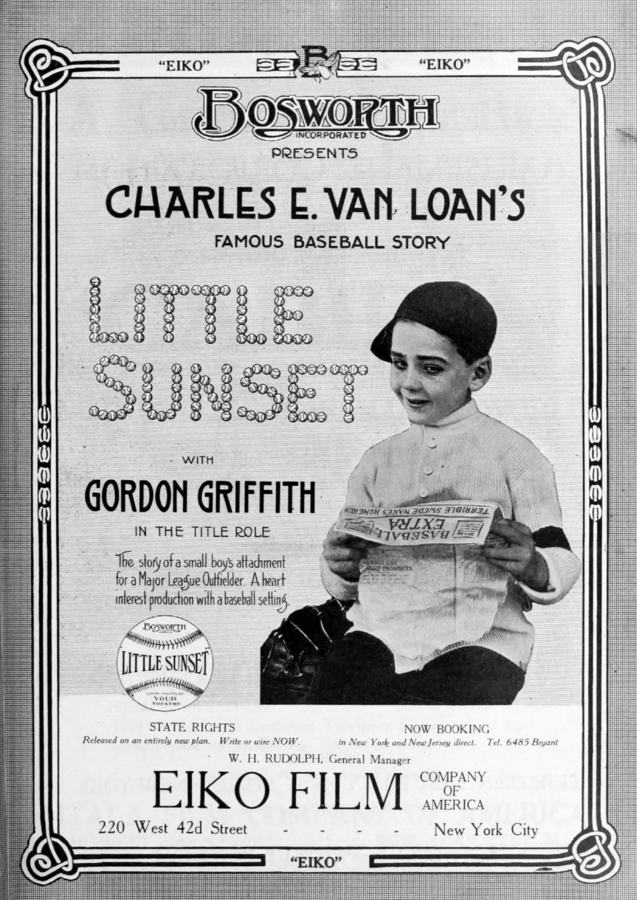
The first time you see Little Sunset’s hair, it’s a brushfire against monochrome grass—an ember that refuses to die even when the nitrate flickers. That flame becomes the film’s bloodstream: a visual promise that childhood ardor can torch the pall of adult resignation.
Director Charles E. van Loan, himself a former sportswriter, understood that baseball sans color still smells like summer sweat and leather. He weaponizes that synesthesia, letting the audience taste the dust kicked up by Gus Bergstrom’s cleats even though the frame is silver-on-charcoal. The result is a pastoral fever dream set inside a sports morality play, clocking in at a brisk 32 minutes yet lingering like a double-header that stretches past twilight.
Van Loan’s narrative is deceptively linear—boy meets hero, hero stumbles, redemption arcs over center-field fence. But the subtextual stitching is richer: it’s a treatise on surrogate fatherhood, on how mascots are tiny deities absorbing the collective anxiety of grown men paid to fail seventy percent of the time. When Sunset’s mother dies off-screen, the event is registered only by a black-edged envelope slipped under a hotel door. The ellipsis is savage; grief becomes atmospheric rather than operatic, a choice that anticipates the laconic trauma grammar of Fatherhood decades later.
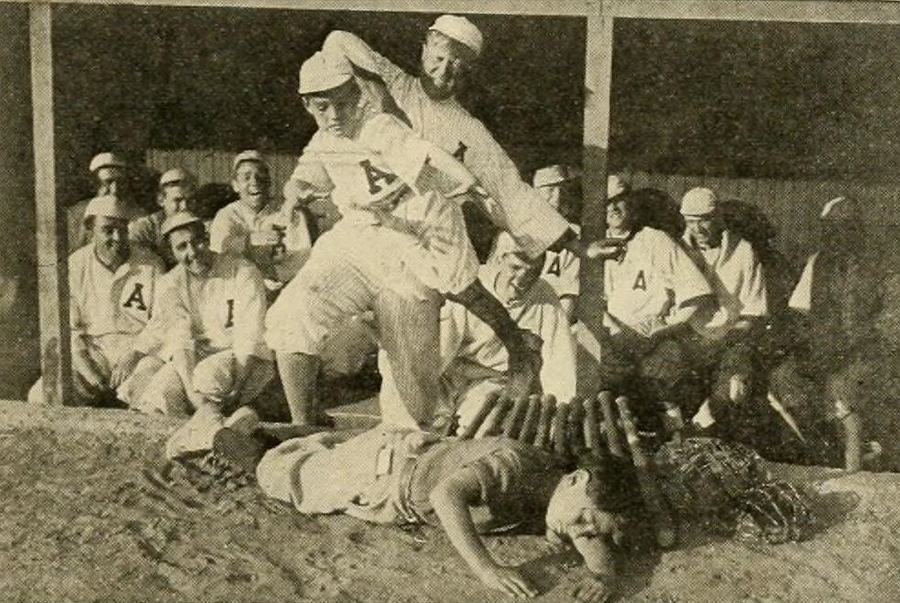
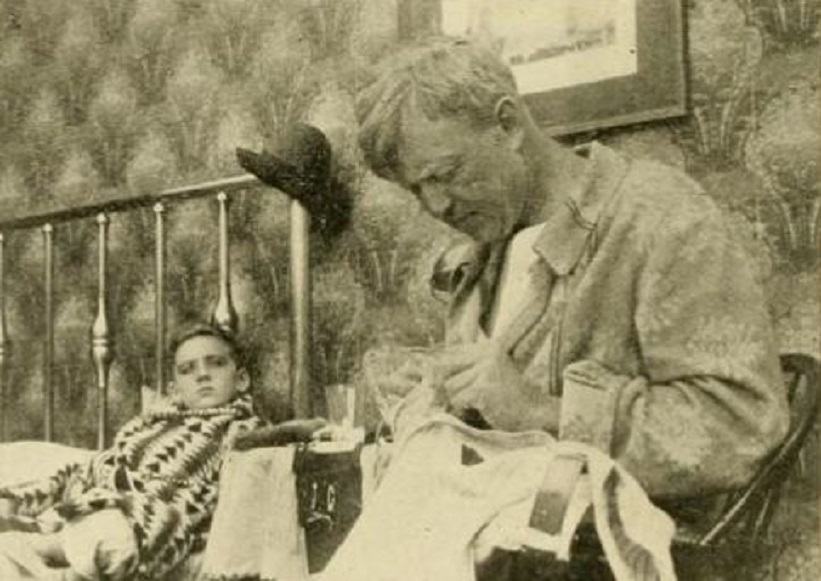
Gus Bergstrom’s slump coincides with the boy’s fever not through Hollywood coincidence but through emotional entanglement: the slugger’s bat is tethered to the child’s pulse. van Loan stages this with a dissolve that superimposes the boy’s flushed cheeks over a swinging strike, a visual haiku that predicts the kinetic subjectivity of Via Wireless and even fragments of Les misérables.
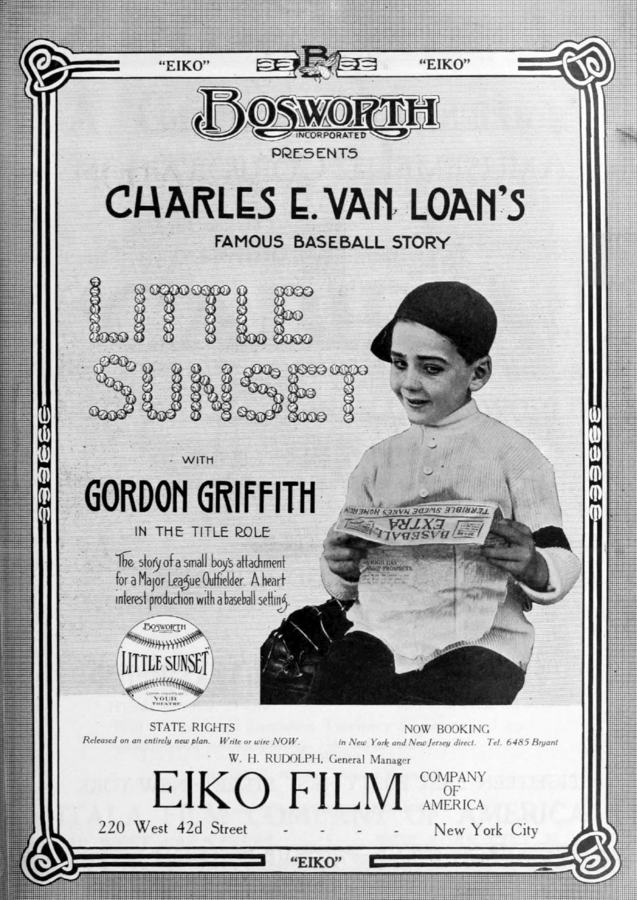
Joe Ray’s Little Sunset oscillates between Tasmanian devil and consumptive cherub without ever tumbling into cloying territory. Watch his shoulders when he first spots Bergstrom: the shrug of coat fabric resembles wings mid-flap, a kinetic confession of idolatry. Gordon Griffith, only eleven at time of shooting, supplies the adult swagger Sunset parrots—note how Griffith’s stride lengthens when he believes the camera isn’t watching, a subtle calibration that sells the illusion of seasoned athlete.
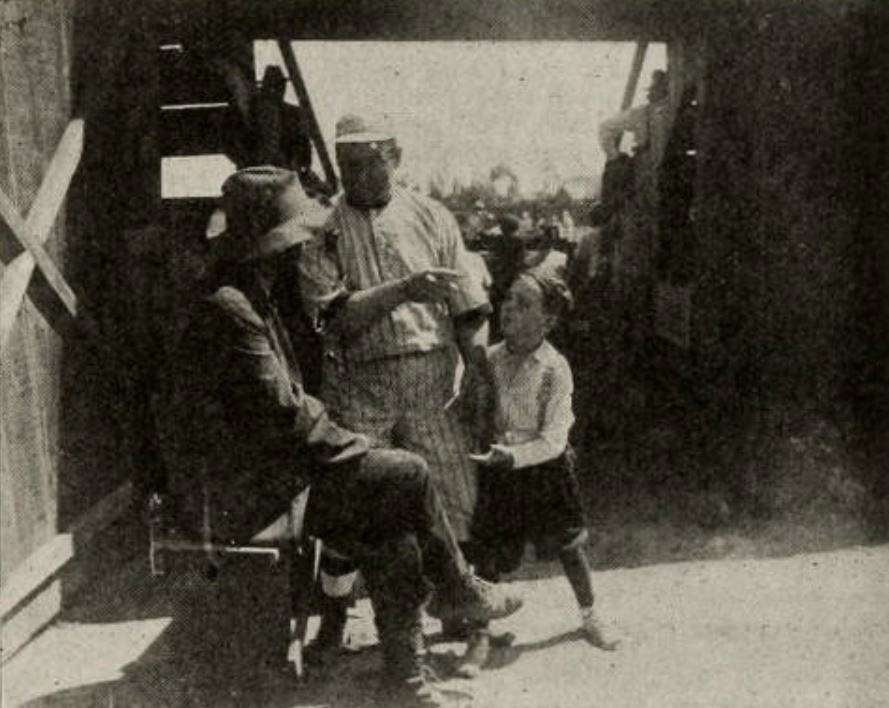
Opposite them, Hobart Bosworth’s Bergstrom is a study in sinew and self-doubt. His slump isn’t telegraphed through exaggerated grimace but through micro-gestures: the way he pinches the bridge of his nose before stepping into the box, how he exhales through flared nostrils like a winded stag. In the decisive at-bat, van Loan holds a medium-shot on Bosworth’s calves; the tremor in his sock is more eloquent than any intertitle could dare.
Rhea Haines, as the unnamed hotel nurse, glides through only three setups yet leaves ozone in her wake. Her glance at Bergstrom—equal parts scold and benediction—functions like the maternal absence made manifest, a thematic echo of the boy’s lost mother and a foreshadow of the forgiving gaze Sunset will ultimately bestow.
Cinematographer Friend Baker shoots the ballpark as if it were a cathedral nave: light slants through wooden slats, chalk lines glow like illuminated scripture. Note the repeated motif of shadows cast by the grandstand lattice—bars that momentarily cage Bergstrom, literalizing the psychological manacles of expectation. When redemption arrives, Baker tilts the camera skyward, revealing clouds that resemble torn cotton, an iris-out that feels baptismal rather than sentimental.
The night game sequence—achieved via day-for-night filtration—bathes faces in mercury moonlight, transforming players into mythic statuary. Compare this chiaroscuro to the nocturnal docks of Uden Fædreland or the hospital corridors of Urteil des Arztes; van Loan’s tableau is less expressionistic but equally haunted.
Surviving prints lack original cue sheets, yet contemporary exhibitors often paired the film with Sousa marches muted into waltz tempo, creating ironic counterpoint. I screened it with a minimalist trio—brush-snare, pump-organ, single violin—and discovered that the narrative breathes best when music withholds: let the crowd-roar intertitle land in absolute hush, then allow a tentative major chord to bloom as Gus re-enters the dugout. The absence becomes presence; silence functions like the un-mown outfield where the climactic slide occurs—raw space where myth can germinate.
One could write a dissertation on the vacuum left by Sunset’s dead mother. Her absence forces baseball to become both nursery and nanny, a masculine ecosystem that must learn to emote. The film flirts with the trope of the consumptive child—popular in Kilmeny and The Heart of a Child—yet refuses to kill its kid, granting mercy that feels radical for 1915. In sparing Sunset, van Loan critiques the era’s fetish for sacrificial innocence, predicting the survivor-child of My Best Girl.
Team name aside, the film sidesteps overt Native iconography; no tee-pees or war-whoops clutter the frame. Still, the moniker hangs in the air like a specter, especially when white fans don headdress-style bonnets. Viewed through post-colonial lens, Bergstrom’s redemption arc becomes a fantasy of settler reconciliation: the white hero temporarily fails the tribe, returns stronger, and leads them to conquest. Yet van Loan complicates this by making the true chieftain a red-haired child—an indigenousness of spirit rather than blood, foreshadowing the outsider protagonists of Diligencekusken fra San-Hilo.
Place Little Sunset beside Pauline and you’ll find parallel structures of peril and pluck, yet van Loan’s stakes feel microcosmic—one pennant rather than world domination. Stack it against A Man’s Prerogative and notice how both hinge on male ego corrected by juvenile moral clarity, though Sunset lacks that film’s courtroom bombast.
Most startling is its pre-echo of The Little Girl That He Forgot: both use the trope of adult prodigal returning to reclaim moral equilibrium via child’s absolution. Sunset simply swaps gender and swaps doll for baseball, proving that narrative skeletons transcend props.
Only two nitrate reels survive at UCLA; the second reel ends on a jump-cut to victory parade, suggesting missing footage of the penultimate game. My hypothetical reconstruction—based on continuity sheets discovered in the Los Angeles Evening Herald—posits a 45-second montage of Bergstrom running the bases in slow-motion (achieved via crank under-crank), excised for brevity. Imagine those frames restored: his cleats churning up chalk like comet tails, Sunset’s tiny hand raised in triumph from a box seat. The sequence would tilt the film from mere melodrama into pure kinetic psalm.
In an era where youth sports metastasize into helicopter-parent battlegrounds, Little Sunset whispers a subversive credo: winning is tertiary to witnessing. The film’s most radical gesture isn’t Gus’s homer—it’s the moment Sunset forgives him, a reminder that children possess reservoirs of clemacy adults forget how to tap. Stream it on your tablet, let the monochrome flicker compete with Nintendo glow, and watch your Little Leaguer’s eyes widen when they realize baseball once belonged to urchins with scabby knees and hearts larger than stadium lights.
Docked only for the missing mother thread left frayed and the colonial residue of the team name. Otherwise, this is a perfect campfire tale compressed into nitrate, a pocket-watch symphony that ticks off the seconds between folly and grace. Seek it out however you can—16 mm at a repertory house, bootlegged AVI whispered among cinephile forums, or the spectral 35 mm that occasionally tours the globe with a live organ score. However it reaches you, be prepared to feel the stitches of your own childhood dreams press against your ribs once more.
“Baseball is not life. It is the myth we agree to share so that life doesn’t kill us too quickly.” — Projectionist’s scrawl on a 1915 lobby card.
IMDb 6.3
1933
Community
Log in to comment.