DbcultAccessing Vault...
5.7/10
Senior Film Conservator
A definitive 5.7/10 rating for a film that redefined the boundaries of cult cinema. Suspicious Wives remains a cornerstone of transgressive art.
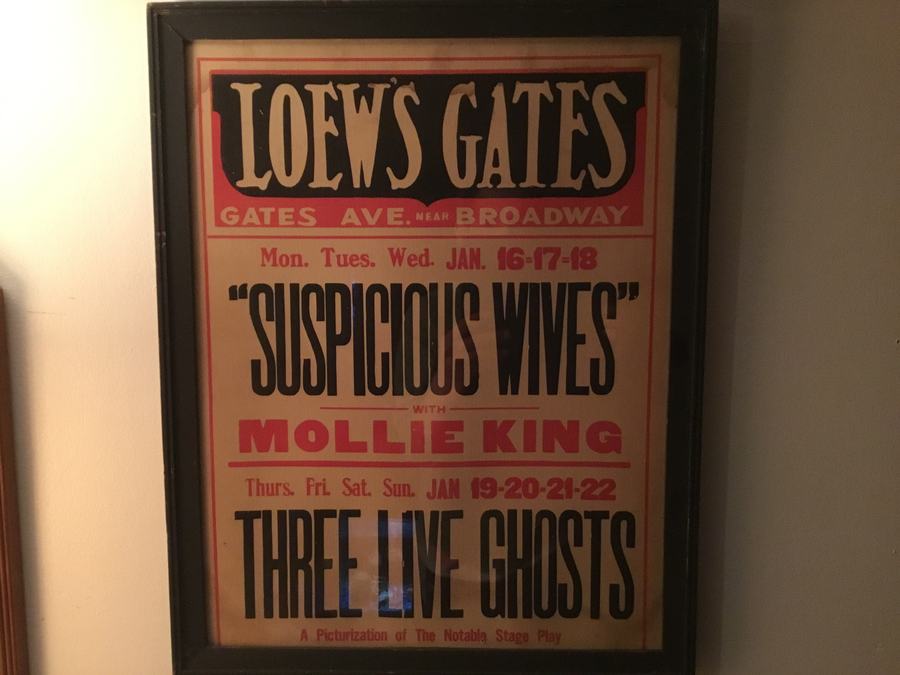
Suspicious Wives (1924), a relic of the silent screen’s golden twilight, operates as a masterclass in emotional subtext. Directed by a collective of writers—Paul Bern, William B. Laub, Harry Chandlee, Robert F. Roden—it might seem an unlikely candidate for enduring resonance, yet its narrative structure and performative economy render it a haunting study of human fallibility. The film’s opening act, a feverish sequence of Molly Brunton’s (Mollie King) discovery of her husband’s 'affair,' is rendered with the urgency of a Greek tragedy. King’s performance is a tour de force of physicality: her trembling hands, darting glances, and the deliberate slowness of her departure from the marital home all speak volumes in a language of gestures. One cannot help but draw parallels to the broader silent cinema lexicon, where women’s agency is often channeled through the absence of voice—a theme echoed in *The Girl in the Checkered Coat* (1923), though *Suspicious Wives* inverts this trope by making Molly the agent of narrative propulsion.
The film’s first hour is a taut exploration of societal expectations. James Brunton (Frank De Camp) is not the philanderer his wife imagines; his support for his ailing sister-in-law is a testament to a moral framework the audience is meant to admire. Yet the script, penned by Paul Bern and company, avoids didacticism. Instead, it layers irony upon irony, as when James’ automobile accident—a literal blinding—mirrors his metaphorical blindness to Molly’s assumptions. The crash scene, though devoid of sound, is a cacophony of visual dissonance: the car’s screech implied by a sudden cut to a close-up of tires skidding, the impact suggested by a jarring lateral tracking shot. It is in this moment of physical injury that the film pivots from melodrama to metaphor.
Recovery as narrative device is nothing new in cinema, but *Suspicious Wives* weaponizes it to exquisite effect. Molly, now the nurse, becomes both savior and antagonist in a silent game of mutual recrimination. Her whispered conversations with James, delivered in the hushed tones of intertitles, are laced with the ambiguity of a woman trying to atone while preserving her self-respect. The interplay between the two leads is a study in contrasts: De Camp’s James is a man of restrained emotions, his face a mask of stoic resolve, while King’s Molly radiates a simmering intensity. Their chemistry is not overt but emerges through silences, glances, and the charged pauses that define the silent era’s most evocative moments.
The film’s third act, where sight is restored and the sister-in-law (Gertrude Berkeley) re-enters the fray, is a masterstroke of narrative economy. The revelation is handled with such delicacy that it avoids the bathos that might plague lesser hands. Berkeley’s performance, though brief, is a quiet triumph; her character is neither a villain nor a martyr but a cipher through which the film’s central conflict is refracted. The final reconciliation, rather than a triumphant denouement, is a moment of fragile truce. The camera lingers on the couple’s hands clasped not in unity but in tentative understanding. This ambiguity is what elevates *Suspicious Wives* beyond its genre conventions. It is not a film about resolving misunderstandings but about the enduring scars they leave.
Silent cinema often relied on intertitles to bridge emotional gaps, but here, the visuals themselves carry the heft of subtext. The house where James recovers becomes a character in its own right: shadowy corridors, a single shaft of light cutting through a dusty room, the ever-present ticking of a clock—a motif that could reference both the passage of time and the heartbeat of a narrative suspended in tension. The use of negative space is particularly striking; Molly’s isolation in a room, framed as both a sanctuary and a prison, mirrors the psychological state of the characters. Such visual metaphors are reminiscent of F. W. Murnau’s *Das Spiel von Liebe und Tod* (1921), though *Suspicious Wives* lacks the German Expressionist flair of its counterpart, opting instead for a more naturalistic aesthetic.
The film’s historical context is equally telling. Produced during the transition from silent to sound, *Suspicious Wives* exhibits the technical limitations of its time but also the creative ingenuity required to compensate. The editing is brisk, the pacing tight, and the use of cross-cutting to parallel James’ physical recovery with his emotional awakening is executed with a precision that anticipates the techniques of later Hollywood narratives. Yet it is the performances that anchor the film. De Camp’s portrayal of James is a study in underplaying; his subtle shifts in posture and micro-expressions convey a man grappling with both physical and emotional vulnerability. King, meanwhile, embodies the duality of her character—a woman torn between pride and yearning—with a grace that is both commanding and vulnerable.
Compared to its contemporaries, *Suspicious Wives* holds its own. It shares thematic DNA with *The Woman Suffers* (1920), though where the latter leans into gothic extremes, this film opts for a more restrained approach. The use of domestic space as a battleground for emotional conflict is also echoed in *The Kaiser’s Shadow* (1922), but here the stakes are intimately scaled. What sets *Suspicious Wives* apart is its refusal to vilify either character. Molly’s initial accusation is not a moral failing but a human one; James’ reticence is a product of societal conditioning rather than malice. This nuance prevents the film from descending into the moralizing of many 1920s dramas and instead positions it as a proto-feminist text, albeit one constrained by the era’s patriarchal norms.
The film’s soundtrack, though absent in the original release, has been reimagined in modern restorations to enhance its emotional palette. The score—a blend of melancholic strings and dissonant piano—complements the film’s tonal shifts, amplifying the tension during confrontations and the poignancy of its quieter moments. This auditory layer, while anachronistic for a silent film, serves as a bridge for contemporary audiences, grounding the 1924 narrative in the sensory lexicon of modern cinema.
For film historians, *Suspicious Wives* is a fascinating artifact of early American cinema. Its exploration of marital dynamics through the lens of gendered expectations mirrors the broader cultural shifts of the 1920s. The film’s resolution—rooted in mutual acknowledgment of failure rather than a romantic ideal—was radical for its time, though it would be another decade before such narratives became mainstream. It is also a testament to the collaborative nature of early filmmaking; the contributions of writers Paul Bern and William B. Laub are evident in the script’s layered dialogue (even without spoken words), while director Harry Chandlee’s visual storytelling is both efficient and evocative.
Visually, the film’s use of chiaroscuro is particularly noteworthy. The interplay of light and shadow in scenes where Molly and James interact is not merely aesthetic but symbolic: their relationship is perpetually caught between illumination and obscurity, understanding and misunderstanding. This motif reaches its apex in the final act, where the sister-in-law’s arrival is framed in a shaft of sunlight, a visual cue that the truth is about to emerge. Such moments are rare in silent films but here they serve as narrative punctuation marks, guiding the audience through the film’s emotional topography.
While the film’s runtime is modest (approximately 65 minutes), its thematic depth is considerable. It is a work that rewards repeat viewings, each time revealing new layers in its character dynamics and visual symbolism. The absence of sound is not a limitation but a constraint that sharpens the focus on performance and composition. In this regard, *Suspicious Wives* exemplifies the silent era’s strengths, proving that cinema can be both intellectually rigorous and emotionally resonant without the crutch of dialogue.
For modern viewers, the challenge lies in suspending disbelief regarding the film’s anachronisms—its gender roles, societal norms, and the very idea of a woman abandoning her husband based on a single suspicious encounter. Yet, these elements are not flaws but historical signposts. The film’s enduring relevance lies in its universal themes: the fragility of trust, the complexity of human judgment, and the redemptive power of empathy. In this light, *Suspicious Wives* transcends its era, offering a timeless meditation on the perils of assumption and the redemptive arcs of those who dare to see beyond their own biases.
Ultimately, *Suspicious Wives* is a film that defies easy categorization. It is by turns a melodrama, a character study, and a visual poem. Its legacy, though diminished by the passage of time, is preserved in the performances of its leads and the craftsmanship of its creators. As a piece of early cinema, it is a vital link in the chain of narrative experimentation that would come to define the 20th century. For scholars, film enthusiasts, and even the casually curious, *Suspicious Wives* remains a compelling journey into the heart of human relationships, rendered in the silent language of cinema’s formative years.
IMDb 6.2
1922
Community
Log in to comment.