DbcultAccessing Vault...
Cult Review
Senior Film Conservator
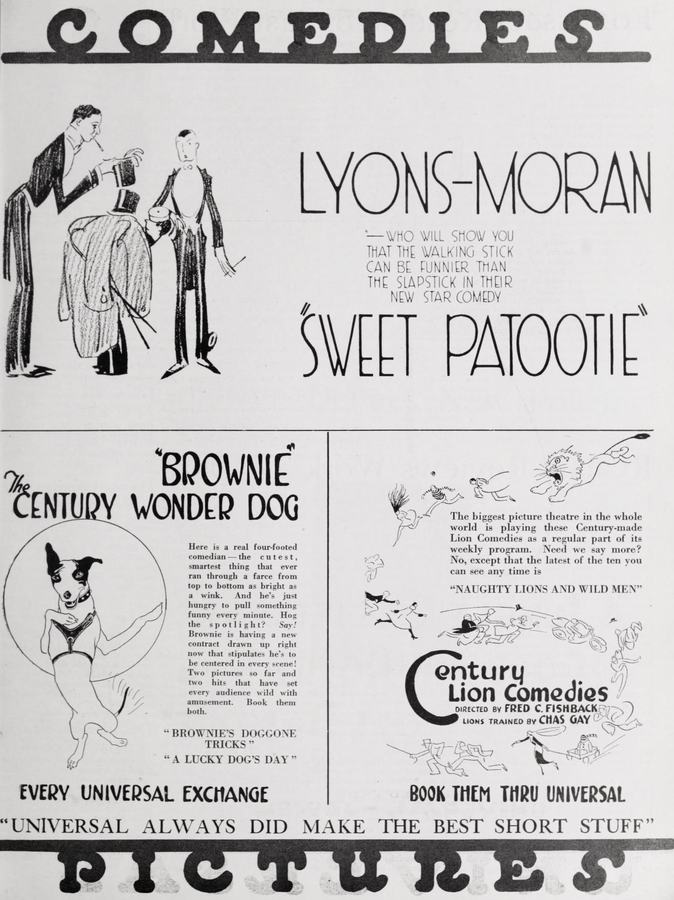
Charlotte Merriam’s eyes—two headlights on a moonshine runner’s coupe—flicker first in the opening close-up, and you instantly sense the picture knows it’s playing with nitrate fate. One stray ember from a carelessly swung cigarette and the whole flick could’ve combusted into festival legend, leaving only lobby cards for archivists to sniff like truffle hounds. Instead, the reels survived, scuffed but breathing, and what wafts off them is the reckless perfume of 1929: a last gasp of silent slapstick syntax before the talkie hurricane rewrote grammar overnight.
Eddie Lyons and Lee Moran, those forgotten jesters who once rivaled Lloyd and Keaton in box-office foot-candles, write themselves a maze of butler disguises, forged stock certificates, and stolen flapper kisses. Their chemistry is less buddy-comedy symmetry than two jagged jigsaw pieces hammered together by moonlight and bootleg hooch. Lyons—reedy, pop-eyed—delivers the slow burn; Moran—pear-shaped, spring-loaded—detonates the payoff. Together they surf the mansion’s mahogany bannisters, ricocheting past Charlotte Merriam’s pert socialite-turned-chanteuse and Mildred Moore’s cigar-snatching maid, a duo whose synchronized side-eye could slice a gin rickey glass at ten paces.
Director J. Grubb Alexander, usually a traffic cop for Sennett two-reel chaos, lets the set itself vomit gags: trapdoors yawning under tuxedoed backsides, dumbwaiters rigged to rocket upward like Tesla coils, a ballroom chandelier that gradually sheds crystal teardrops until it resembles a bleached-out octopus. The camera glides, tilts, double-exposes—tactics that feel closer to French Impressionist pranksters (Fior di male’s drunken iris shots come to mind) than to Hollywood factory floor plans. When the Charleston contest morphs into a kaleidoscope of flapping tux tails and beaded fringe, you half expect the film to combust into hand-colored abstraction, à la In the Clutches of the Paris Apaches.
The picture’s brazen gags—lingerie raids, speakeasy passwords whispered through garter belts, a preacher caught sampling the communion wine flask—would be neutered within two years under the Hays scythe. Contrast that with Sacred Silence, where even a sidelong glance drew moralist curtain rings, and you appreciate how Sweet Patootie skinny-dips in the last puddle of cinematic freedom before the censor’s cement dries.
Yet beneath the bathtub-bomb fizz lies a surprisingly trenchant class farce. The bootleggers are upward-striving ethnics; the socialites, bankrupt aristocrats peddling counterfeit bonds. Money itself is the film’s true MacGuffin—flimsy paper fluttering through trombone bells, as worthless as the promises whispered on dance floors. When Lyons finally confesses love to Merriam on a rooftop, the city’s neon hoardings flicker like a broker’s doomed ticker tape. Romance wins, sure, but only because the lovers agree to burn the bonds and parachute into anonymity aboard a purloined police balloon. It’s as if Capone and Scott Fitzgerald co-wrote a bedtime story.
Charlotte Merriam, remembered mostly for post-code walk-ons, reveals here a pearly, Betty-Boop-meets-Louise-Brooks charisma. Her mock-tragic rendition of “My Sweet Patootie” (the film’s naughty original tune) is delivered atop a grand piano, legs kicking in perfect fourth-wall sync, eyes half-closed in bathtub-gin rapture. Moore, as the maid, weaponizes side-eye so lethal it could retroactively sterilize the Stork Club. The duo’s whispered conspiracy scene—halfway between Shakespeare’s handmaidens and Marx Brothers riffing—deserves syllabus space in any course on feminist subtext in early comedy.
Meanwhile Lyons and Moran juggle the clockwork timing of their silent shorts while adapting to the newborn microphone. Their ad-libbed asides—“Nice funeral parlor you got here, pal”—pop like penny firecrackers. Listen for the background jazz quartet, whose muted trumpet supplies rim-shot retorts; it’s the same improvisatory spirit that animates Where D’Ye Get That Stuff?, though here the music is diegetic, wafting from a hidden Victrola inside a potted palm.
Cinematographer Gus Peterson, moonlighting from Westerns, coats the mansion in chiaroscuro worthy of Haceldama ou Le prix du sang. Staircases plunge into ink-black voids; ballroom mirrors fracture characters into Cubist shards. When the police raid erupts, the frame strobes between total blackout and sodium-flare explosions, prefiguring the expressionist seizures of Panopta I. Even the intertitles—hand-lettered with jitterbugging serifs—seem caffeinated.
Merriam’s character engineers the third-act balloon escape, not the male leads. She calculates wind resistance with a slide rule plucked from her garter, winking at the camera as if to say, “Yes, I can be both bombshell and engineer—deal with it, boys.” In 1929, such agency was rarer than an honest speakeasy tab. Compare The Perfect ’36, where suffragist rhetoric is safely embalmed in historical pageant, and you realize Sweet Patootie sneaks its feminism in under the cover of slapstick, like rye whiskey in a communion chalice.
For decades the only extant copy languished in a São Paulo basement, its Portuguese intertitles mangled beyond recognition. Enter the Vitaphone Project, who synched a cracked disc of the original orchestral track—complete with slide-whistle rimshots—to a 4K scan of the picture negative. The restored palette reveals amber glows in ballroom sconces, sea-foam blues in Moore’s maid uniform, and the sickly chartreuse of counterfeit bonds. The audio crackles like a 78-rpm shellac, but that surface noise only amplifies the illusion that you’re eavesdropping on the Jazz Age itself.
Genre completarians will detect DNA shared with The New Breakfast Food’s domestic anarchy and Shot in the Dumbwaiter’s claustrophobic screwball. Yet Sweet Patootie’s balloon finale catapults it into fable territory, closer to the cosmic comeuppance of The Scales of Justice than to mere bedroom farce.
Sweet Patootie is a carbonated time capsule: pop the cork and you inhale the last unregulated breath before the stock-market crash and the Hays Office slammed the nation’s bedroom door. Its gags detonate like bootleg cherry bombs, its social satire stings harder because it’s disguised in sequins, and its lovers escape not into wealth but into thin air—a defiant shrug at the whole American racket. Seek it at any repertory house brave enough to project 35 mm; let the projector clatter like a Model T backfiring, and savor a vanished era when cinema itself was drunk on possibility and staggering toward the dawn of sound.
Final tally: 9/10—missing a perfect score only because the final balloon shot ends too abruptly, as if the filmmakers themselves feared the gag might burst into flames if held one frame longer.
IMDb —
1936
Community
Log in to comment.