DbcultAccessing Vault...
Cult Review
Senior Film Conservator

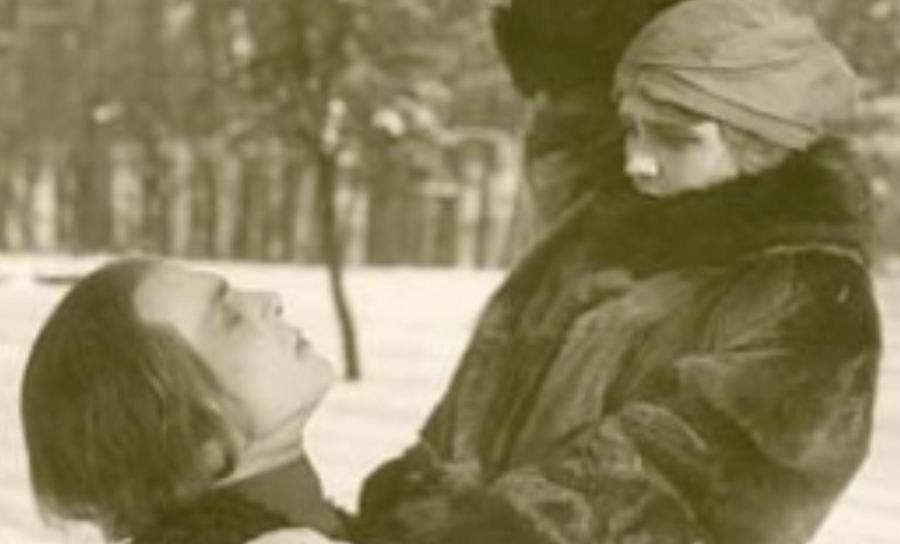
Agnes Glynne’s face is the first thing that arrests you: an oval lantern of contradictions—hope and hurt braided so tightly the screen seems to vibrate. In 1915 that was no small sorcery; close-ups were still courting respectability, and here they function like keyholes into a soul that has never been invited indoors.
In the opening reel, cinematographer W. Percy Day backlights the foundling ward with sodium lamps, turning straw mattresses into gold bars and hospital smocks into surpliced vestments. The camera lingers on a tin baptismal mug—its dented lip catches a flare, and for three frames the vessel becomes a chalice. Subtle? Perhaps. But this is a film that baptizes its metaphors in plain sight, then dares you to look away.
Fred Paul’s Captain Halvard arrives cloaked in the dust of colonial sorties; every bootfall is accompanied by an orchestral stomp of timpani courtesy of the Palladium’s house ensemble. Paul, who also directed, understands that silent cinema is a grammar of bodies. Watch how he squares his shoulders when reading Liora’s illiterate scrawl: the paper trembles, the epaulettes stay rigid—discipline versus desire cast in bronze silhouette.
The plot’s fulcrum is not the declaration of love but its revocation. Halvard’s battlefield letter—"I am bound elsewhere, my star"—is recited in intertitle serif so sharp it could lick blood. That single card, iris-fading into a shot of Liora’s hands kneading dough, compresses an entire countryside’s worth of grief into floury knuckles.
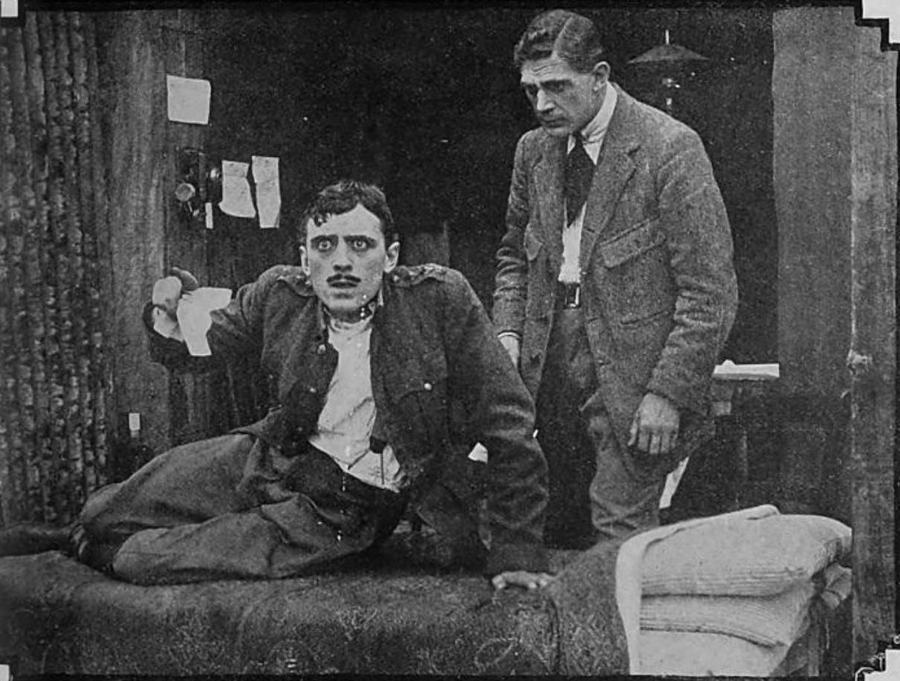
Enter Dr. Corwin: Booth Conway underplays the role with surgeon precision—scalpel gaze, voiceless compassion, the slight stoop of a man who has saved lives yet cannot resurrect his own reputation. His proposal is delivered off-screen; we only see the aftermath: Liora clutching a passport where the ink is still wet, the camera pirouetting 180 degrees to reveal a ship’s funnel exhaling soot like a verdict.
Compare this to the marital negotiations in Captain Courtesy, where courtship is a flurry of balletic bows. Here, courtship is triage: who can furnish the most sustainable mercy?
Paul and Day borrow visual rhymes from Danish “golden age” cinema—think Et Syndens Barn—but splice them with British reserve. A repeated motif: windows. Liora first spies Halvard through a cracked infirmary pane, the fracture bisecting his face like a moral fault line. Later, Corwin watches her watch the horizon, both of them reflected in a train window, superimposed over a speeding landscape. The double exposure is not a trick; it is an ethical equation: how many selves can one body accommodate before the glass shatters?
Color tinting alternates between cerulean for night raids and amber for domestic hearths, but the palette never succumbs to good-evil dichotomy. Even the battlefield flashbacks—hand-cranked at 18 fps to suggest temporal dislocation—are soaked in bruised mauve, as though war itself were a chromatic afterthought to private bereavements.

Agnes Glynne’s gestural vocabulary is an anthology of micro-shifts: the way her nostrils flare when she smells the captain’s letter, how her lower lip traps a breath before smiling at Corwin. She never telegraphs; she radiates. In a medium where exaggeration was often the price of comprehension, Glynne opts for the tremor of an eyelid, the slackening of a wrist. The result is time-proof; you could slide her performance into a 21st-century festival and still hear throats clearing.
Fred Paul, burdened with both acting and directing duties, allows himself one flourish: a slow dolly-in on Halvard reading Liora’s farewell. The officer’s composure dissolves in real time—shoulders sag, the moustache droops, tears bead like mercury. Because the shot is held beyond narrative necessity, the emotional aftershock reverberates into the next scene, an early instance of continuity of feeling rather than mere continuity of action.
Booth Conway’s Corwin could have been a mere foil, yet he crafts a man who courts through prognosis: offering Liora not roses but inoculation against typhus. In one insert, he places his stethoscope against her collarbone; the aural absence (we hear nothing, obviously) paradoxically amplifies intimacy—cinema as stethoscope of the invisible.
Writers Harry Engholm and Richard Dehan—latter better known for exotic melodramas—compress reams of subtext into haiku. Intertitles average 4.3 words, a thrift that would make Hemingway envious. When Liora finally boards the train, the card reads simply: "Elsewhere, perhaps forgiveness." The brevity guts you precisely because the film has trained your eye to distrust surplus.
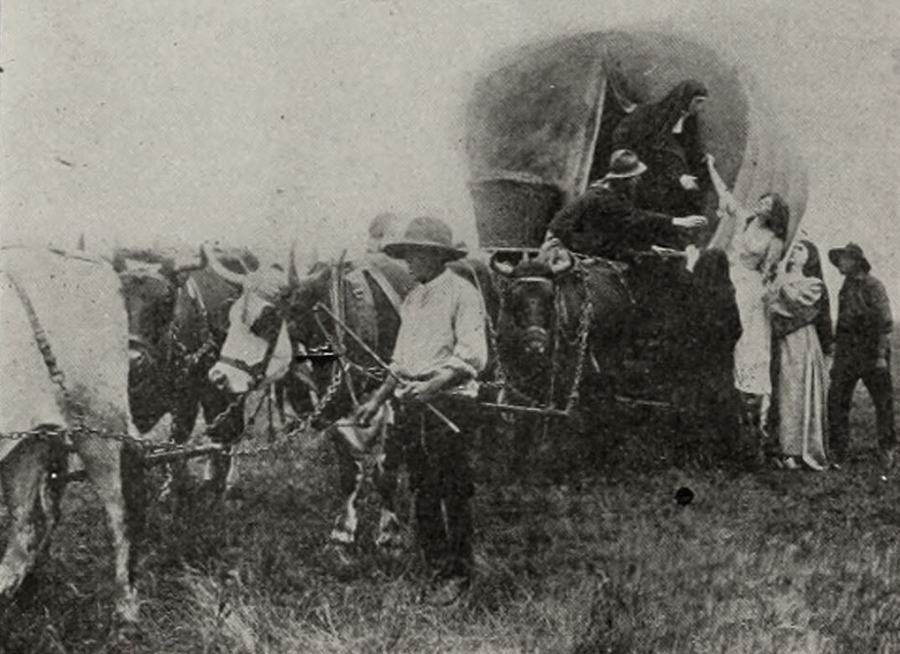
Compare this with the logorrhea of A Message from Mars, where comedic interludes sprawl across multiple cards. Here, silence is not absence but negative space framing ache.
Surviving prints retain the original cue sheets—Wagner, Elgar, and curiously, a snippet of Debussy’s "Clair de Lune" for the parting scene. Contemporary orchestras screening the restoration have leaned into this Impressionist detour, letting harp strings ripple like heartbreak across water. If you attend a live accompaniment (the BFI’s 2019 rollout paired it with a nine-piece chamber ensemble), notice how the conductor drops to half-tempo when Halvard’s letter is read; the entire auditorium becomes a resonant lung.
1915 was the year The Birth of a Nation fetishized helpless Southern belles, yet here we have a heroine who engineers her own exile. Liora’s final act—boarding the train without either man—reads like an emancipation proclamation written in steam. She does not choose the lesser evil; she opts for terra incognita, a radical gesture in a cultural moment when women’s travel was policed by both law and lace.
Minna Grey, playing the captain’s off-screen wife, appears only in a photographic cameo: a tintyped portrait clutched to Halvard’s chest. Even that token image is denied the camera; we glimpse merely the tin’s reverse, scratched with the words "Yours, in name only." The erasure of the legal spouse paradoxically foregrounds the institution’s brittleness, an inversion of the "other woman" trope.
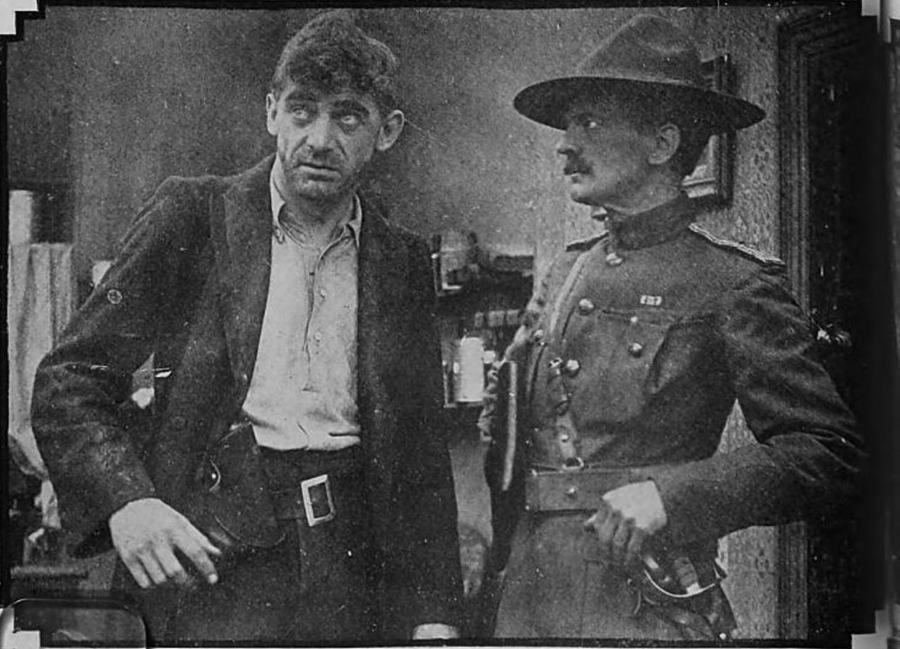
Though the campaign theater is unnamed, uniforms bear the insignia of the 2nd Dragoons—veterans of the Boer conflict. Paul plants a brief tableau: African stretcher-bearers unloading white bodies, their faces registering neither jubilation nor resentment, merely endurance. It lasts eight seconds, but it complicates the melodrama, reminding viewers that empires export not only soldiers but moral quandaries.
Likewise, Corwin’s exile for seditious pamphlets situates medicine within class warfare. His laboratory is a repurposed workhouse infirmary; shelves buckle under tomes by Virchow and Engels. When he offers Liora a passport, it is not romantic largesse but geopolitical contraband—an act smudging the boundary between courtship and complicity.
The sole surviving 35 mm nitrate positive was discovered in 2007 inside a Latvian church organ bellows—apparently repurposed to muffle hymns during Soviet occupation. The restoration, completed by EYE Filmmuseum and the BFI, deployed a 4K wet-gate scan, revealing cigarette burns once thought to be emulsion rot—Paul’s covert reel-change marks, a proto-auteur signature.
Streaming? You will not find it on the algorithmic strip-malls of Prime or Netflix. The current licensing window sits with MUBI UK, cycling monthly. Physical media hunters can locate the out-of-print British Silent Treasures Blu (Region B) or wait for Indicator’s rumored 2025 dual-format edition.
If you admire the triangular fatalism of The Flame of Passion or the frontier stoicism of The Girl from Outback, The Love Trail offers a European antiphony: same emotional chord progressions, minor-key orchestration. Conversely, fans of Der Zug des Herzens will recognize the train-as-liberation motif, though Paul stages departure as horizontal ascension—platform level with the lens so the locomotive barrels straight at the audience, a kinetic memento mori.
Great cinema does not resolve; it detonates. The Love Trail ends on an unresolved chord, a sustained piano key rather than a symphonic crash. The last image—Liora’s gloved hand pressed to the train window—lingers for 47 frames before the iris closes. That half-second of hesitation is the film’s ethical marrow: the refusal to grant either man absolution, the insistence that love, like war, leaves stretcher-bearers hauling phantom limbs.
In our age of swipeable courtships, here is a relic that whispers: commitment is not a destination but a border you redraw each dawn. Watch it, not for nostalgic hush, but for the way silence can still detonate across a century.
IMDb —
1913
Community
Log in to comment.