DbcultAccessing Vault...
6/10
Senior Film Conservator
A definitive 6/10 rating for a film that redefined the boundaries of cult cinema. Tears and Smiles remains a cornerstone of transgressive art.
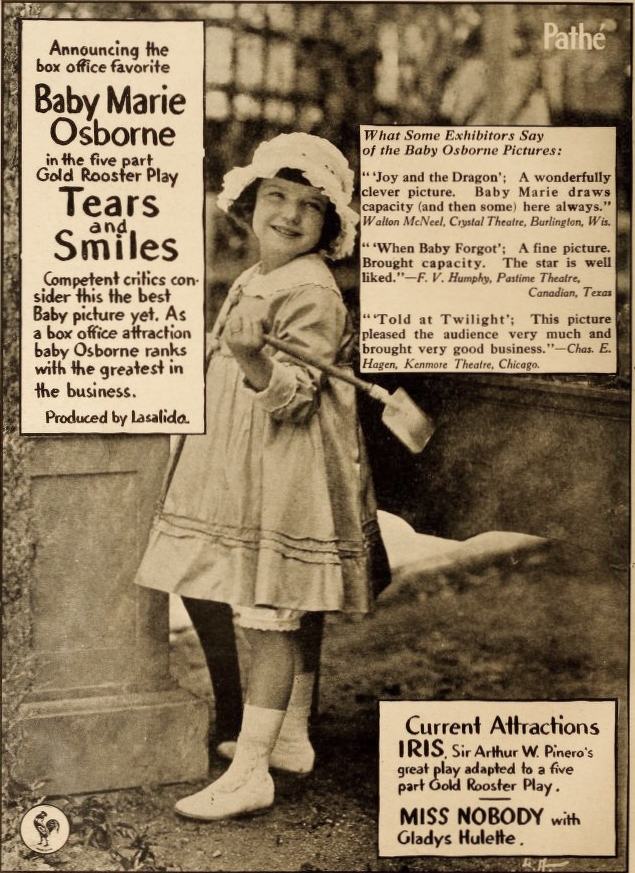
When the lights of the nickelodeon dim and the projector’s carbon arc spits ultraviolet confetti across the screen, Tears and Smiles arrives like a moth-eaten valentine slipped from a locket nobody dared open for a century. Its 58 minutes feel excavated from a collapsed coal mine: every frame glints with the damp of buried grief, yet the title insists on an emotion as bright as lemon icing. That tension—between atrocity and the obligation to smile—fuels this 1922 silent melodrama now resurrected on 2K restoration courtesy of an eccentric European archive and a Kickstarter fueled by cine-masochists.
Forget pumpkin coaches; here the carriage is a paddy wagon. The prince is a widower whose wealth smells of foundry smoke, and the orphan’s fairy godmother is a maid paid in servant’s wages and the currency of conscience. Betty Burbridge’s scenario—polished by the theosophist poet Marc Edmund Jones—takes the Grimm route: childhood is not innocence but a fragile currency exchanged by drunken patriarchs and philanthropists who collect misfortune the way others collect pressed butterflies.
Director William Worthington stages domestic battery in chiaroscuro worthy of Destruction (1923), yet refuses to leer. The father’s silhouette—looming like a swollen gargoyle—devours half the frame, but the camera lingers on Marie’s pomegranate-smeared cheeks, her pupils dilated into twin abysses. The effect is not voyeurism but indictment: we are forced to inventory every shard of a childhood vaporized before our eyes.
Enter the terrier—a four-legged deus ex machina trotting in from the boulevard of narrative contrivances. Yet the dog’s wet-nosed authenticity grounds the film when it threatens to drift into Victorian wallpaper. Marie’s instantaneous fusion with the animal rhymes with the tramp’s bond to the mutt in Business Is Business (1920), but here the leash yanks her upward, not sideways into picaresque mischief. The Greer mansion, all Corinthian columns and liveried footmen, becomes a velvet prison where marble echoes mock her every footstep.
Meanwhile, her mother—played by Marion Warner with the stooped grace of a woman who has folded herself into too many apology notes—engineers the governess ruse. The film flirts with Pygmalion tropes yet pivots into Jane Eyre noir: candlelit lessons, bedtime stories that taste of collusion, and a slow-burn courtship conducted in glances sharp enough to slice pheasant under glass. Warner’s micro-movements—fingers trembling above a silver teacup—sketch an atlas of maternal deferral.
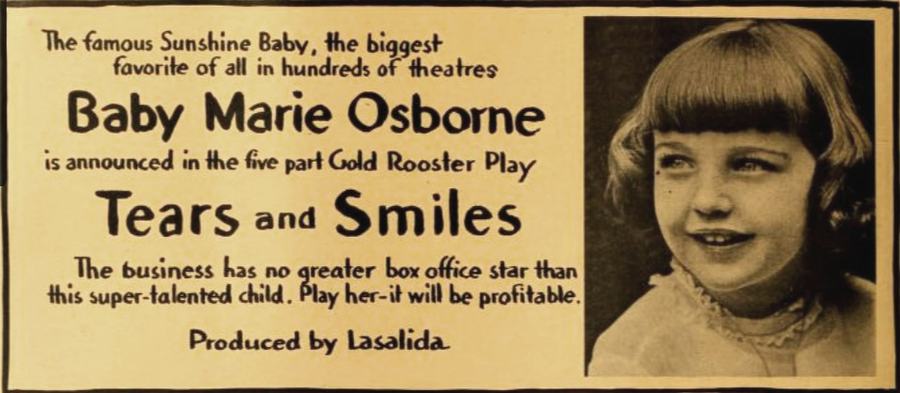
Marie Osborne, billed as “Baby Marie,” was the Shirley Temple of the Teens, yet here she jettisons cutesy semaphore. Watch her pupils when the adoption papers are signed: the iris contracts as though the retina itself is rereading the clause that severs her from blood. It is a moment of silent-film acting so surgical it could dissect your own childhood.
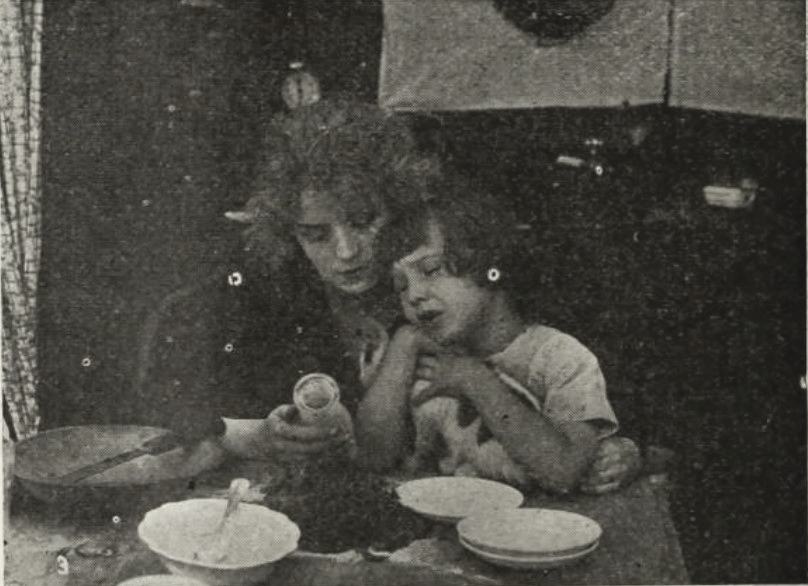
Melvin Mayo’s Mr. Greer carries the chalky complexion of a man who has signed more ledgers than love letters. His transformation from collector-of-children to surrogate father is charted through shoulders that gradually unhook from their bespoke guilt. In the scene where he kneels to tie Marie’s shoelace—an act his own wife never demanded—Mayo lets a single tear snail down the cheekbone, a translucent comma punctuating a lifetime of emotional illiteracy.
Philo McCullough’s brutish father, by contrast, is all blunt trajectory: a human cannonball fired from the gin mill into the brick wall of fate. His off-screen death during a jailbreak—reported via a newspaper hurled onto the mansion doorstep—feels both abrupt and cosmically tidy, the universe shrugging off a broken gear.
Cinematographer Pliny Goodfriend (his real name, not a Dickensian invention) shoots interiors like a man who suspects furniture of conspiracy. Deep-focus parlors stretch into infinity; the farther the object, the more it seems to conspire against childhood. Note the recurring motif of mirrors: Marie’s reflection repeatedly fractured, a prophecy that identity here is communal property. When she finally sees herself unbroken—held in the calm lake of the Greer garden fountain—the image vibrates with uncanny serenity, as though the celluloid itself exhales.
Intertitles, lettered in a font that resembles skeletal Art Nouveau, oscillate between twee moralism and bruised poetry. One card reads: “Childhood is a coin tossed from palm to palm—some hands are soft, some only thirst for the metallic taste.” It is impossible to imagine such a line surviving in contemporary studio notes, yet its savage honesty is what keeps the film from curdling into mere sentimental goo.
At its marrow, Tears and Smiles is a treatise on exchange value: beatings for obedience, adoption for legacy, governess labor for maternal proximity. The Greer mansion, stuffed with tapestries looted from fallen empires, becomes Wall Street in microcosm—every affection IPO’d, every kiss hedged. When Mr. Greer proposes to the governess, he does so in the nursery, flanked by rocking horses and a ledger of unpaid milk bills. Marriage is less union than acquisition: a merger to offset the deficit of love.
Yet the film refuses to demonize wealth wholesale. Mrs. Greer’s suicide—performed in a peach silk peignoir against a backdrop of unplayed sonatas—exposes the vacuum inside privilege. Katherine MacLaren plays her like a porcelain doll conscious of its own hollowness; her farewell note apologizes for “the inconvenience of an unfinished season,” a line that could headline every Gilded Age epitaph.
The 2019 restoration commissioned a score by the Icelandic collective Hekla & the Orphans, blending glass harmonica, typewriter percussion, and field recordings from playground laughter. The result hovers between lullaby and coronach. When Marie first crosses the mansion threshold, the music drops to a single heartbeat-like thud processed through gramophone static, a sonic reminder that childhood terrors are portable real estate.
Traditionalists can still locate a 1970s piano score on the flip side of the Blu-ray—its relentless arpeggios more appropriate for The Hazards of Helen cliffhangers. Choose your poison; both illuminate how mercilessly adaptable silent cinema can be, shape-shifting to fit each era’s neuroses.
Place this film beside The Poor Little Rich Girl (1917) and you’ll see inverted parentheses: both probe childhood commodification, yet where Pickford’s waif ascends via imagination, Osborne’s Marie survives through contractual osmosis. Swap the ledger with Ready Money (1914) and you’ll find the same moral vertigo—fortune as both salvation and solvent.
Stack it against East Is East (1916) and observe how inter-class adoption narratives shifted post-WWI: pre-war films romanticize bloodlines, post-war titles like Tears and Smiles entertain the radical notion that family might be engineered rather than ordained.
Too often, silent melodrama is entombed in the sarcophagus of camp. Tears and Smiles resists that fate because it acknowledges the brute economy beneath its lace. In an era when every streaming service peddles trauma as aesthetic, here is a film that indicts the transaction while still believing in the currency of kindness. It is both artifact and prophecy.
Buy the disc, project it on a bed-sheet, let the terrier’s pawprints traverse your living-room wall. Invite friends who still think silents are “fast-motion slapstick.” Watch them fall silent when Marie’s mother, now Mrs. Greer, closes the nursery door, the camera holding on the brass doorknob until it becomes a sun. That is the moment you’ll understand: some ghosts do not haunt; they adopt you.
Restorations come and go, but every so often a resurrected print drifts onto the screen like a message in a bottle corked with human breath. Tears and Smiles is such a bottle. Uncork it, taste the salt, the gin, the copper of old coins. Then try—just try—to forget the way Marie’s eyes reflect the mansion chandeliers like two small moons negotiating the terms of orbit. You will fail. And that failure is the most honest tribute a century-old film can demand.

IMDb 4.8
1936
Community
Log in to comment.