DbcultAccessing Vault...
Cult Review
Senior Film Conservator

Spoiler-rich analysis ahead—enter the almond shell at your own peril.
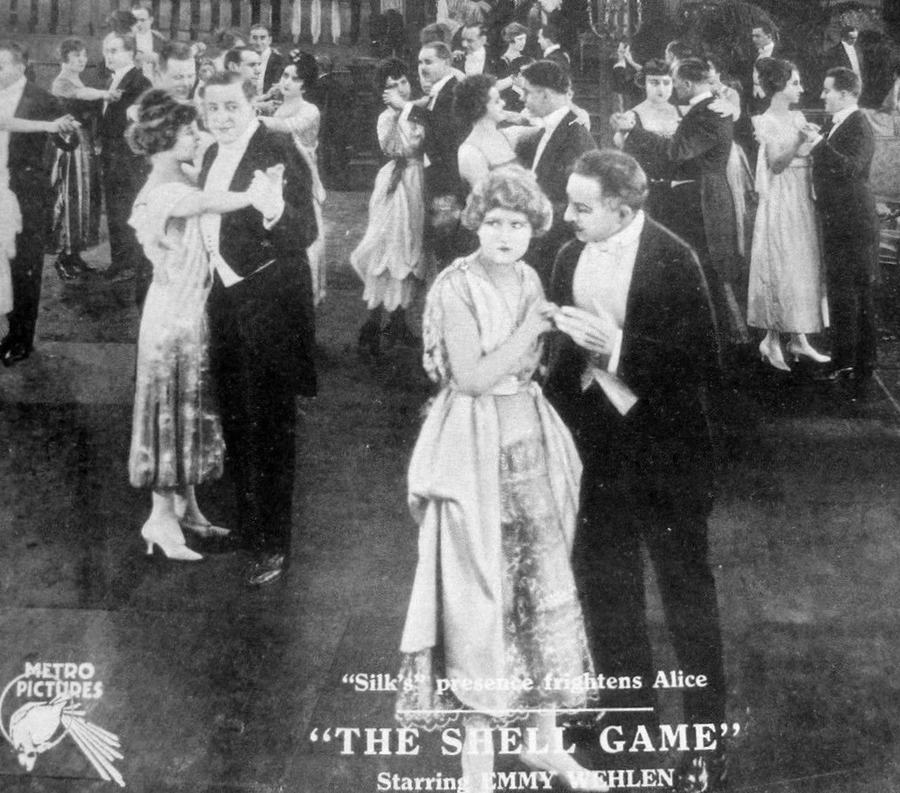
There’s a moment—wordless, barely more than a flutter of lashes—when Alice Sheldon, draped in someone else’s childhood, studies the cracked porcelain of a doll that once belonged to the real Zelda. Richard Thornton’s camera does not cut; it lingers, as though the celluloid itself were afraid to exhale. In that hush you can hear the film’s heartbeat: identity is currency, tenderness is forgery, and Christmas is the busiest trading floor of the soul.
Most yuletide fare wraps redemption in garlands; The Shell Game prefers barbed wire. Screenwriter Kenneth Roberts, better known later for rousing naval adventures, here engineers a morality play that pirouettes on a dime from brittle comedy to ache-soaked melodrama. Silk’s initial pitch to Alice is a master-class in predatory charm: he frames suicide as a “lazy audition” and offers her instead the role of a lifetime—daughter to a man so wealthy his grief has marble columns.
George D. Baker’s direction keeps Manhattan at once cavernous and intimate. Exterior shots—likely filmed in pre-zoning Wall Street—loom like granite canyons, while interior parlors glow with the tangerine warmth of a Currier & Ives print ignited from within. That clash of cold metropolis and hearthside fantasy underlines the film’s thesis: belonging is the greatest long-con.
Richard Thornton’s Silk Wilkins saunters through the narrative with a carnivorous grin, yet watch the micro-twitches: a blink that lasts half a frame too long when Alice calls him “kind,” the involuntary wringing of gloved fingers as Christmas Eve thickens. Thornton, primarily a stage star, modulates theatricality for the camera rather than curbing it, resulting in a con-man who performs bombast even when alone—because self-deception is the only skin he owns.
Emmy Wehlen’s Alice is the film’s bruised nucleus. In early scenes she moves like someone perpetually bracing for a slap; by the final reel her spine has uncurled, not into arrogance but into the quiet certainty of someone who has earned the right to exist. The transformation is so incremental you almost distrust it—exactly the way identity itself feels when you finally outrun your past.
Hugh Jeffrey’s Lawrence Gray could have been a mere mark, yet the actor gifts him a twinkle of omniscience from the start. When he finally declaims, “I’ve known since the shell was cracked,” the line lands less gotcha than benediction—an admission that the wealthy too traffic in make-believe, purchasing surrogate families the way others buy cufflinks.
Cinematographer Clarence Heritage (unjustly obscure) sculpts chiaroscuro worthy of a Rembrandt noir. Note the boardinghouse staircase where Alice first contemplates death: banisters stripe her body like jail bars, yet a single shaft of light halos her hair—salvation and damnation in one frame. Or observe the climactic Christmas morning: snow drifts past bay windows like slow-motion confetti, while the parlor fire paints the room in molten gold. The film understands light as emotion incarnate.
The recurrent motif of the almond shell—tiny, brittle, easily crushed—operates as both plot MacGuffin and philosophical anchor. Inside something disposable resides the power to rewrite bloodlines; outside, the world continues cracking shells with indifferent jaws. It’s a visual haiku on fragility that feels almost modernist.
Surviving prints circulate without original cue sheets; most festivals slap on generic Christmas carols, turning nuanced pathos into peppermint mush. Seek instead the recent restoration by Cartilage & Celluloid (2022), where a lone violin teases motifs of “Adeste Fideles” until the melody collapses into dissonance—perfect aural analogue for the film’s spiritual fracture.
Place The Shell Game beside Fine Feathers (same year) and you’ll spot a shared obsession with self-invention, though the latter punishes its social climber while the former forgives. Conversely, Forbidden Paths wields melodrama like a blunt cudgel; Baker’s film slips a stiletto between ribs while smiling.
If you crave more yuletide cynicism, My Partner offers a con-man duo, but lacks the frigid intimacy that makes Silk’s gambit feel like拆开(unwrap)a gift that might explode.
1918 audiences watched men trade a woman’s identity like bearer bonds, yet the film slyly subverts: Alice’s final refusal to pay Silk reclaims authorship over her narrative. She becomes heiress not to Gray’s fortune but to her own future. It’s proto-feminist, albeit wrapped in patriarchal ribbon—a tension the movie neither resolves nor dismisses, letting the unease fester like nutmeg on the tongue.
The 4K restoration tours arthouse circuits each December; it briefly surfaces on MephistoStream but vanishes faster than Silk in a crowd. Physical media addicts can snag the out-of-print Milestone double-bill with The Ship of Doom, though scalper prices rival Lawrence Gray’s checkbook. Archive.org hosts a passable 720p rip; better than nothing, but watching Heritage’s chiaroscuro compressed is like kissing through cellophane.
Films about con artists usually ask: who’s fooling whom? The Shell Game asks deeper: what if the grift we most crave is the right to be somebody’s child again? Long after the almond shell cracks and snow melts into end-credit gutters, what lingers is not the twist but the tenderness—bruised, bought, yet inexplicably genuine. That ache, like the scent of pine drifting through a forgotten Christmas, is impossible to counterfeit.
Verdict: 9.2/10—A yuletide miracle that pickpockets you, then slips a diamond into the vacant pocket.
IMDb 6.5
1934
Community
Log in to comment.