DbcultAccessing Vault...
Cult Review
Senior Film Conservator
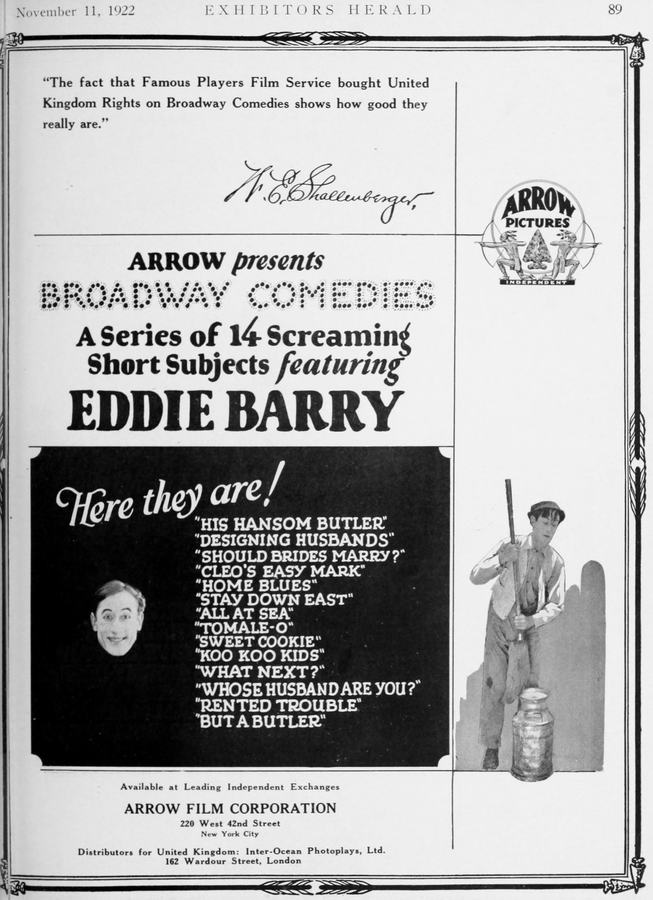
To witness What Next? (1922) in the modern era is to engage with a ghost of cinematic kineticism. This is not merely a relic of the silent age; it is a vibrant, breathing specimen of the Christie Comedy tradition, a period when the grammar of visual humor was being written in real-time on the backlots of Hollywood. The film, featuring the luminous Vera Reynolds and the indefatigable Eddie Barry, serves as a masterclass in the escalation of stakes—a precursor to the 'screwball' genre that would dominate the following decade. Unlike the more rugged, landscape-driven narratives found in Headin' West, this featurette focuses its gaze on the domestic interior, turning the parlor and the kitchen into arenas of gladiatorial slapstick.
The 1920s were a time of profound transition, and the cinema of 1922 reflected a world shaking off the dust of the Great War and the Victorian social order. While Giuliano l'apostata was exploring the grand historical epics of European tradition, American shorts like 'What Next?' were refining a specifically American brand of frantic energy. Vera Reynolds, with her wide-eyed expressive range, encapsulates the 'New Woman'—a figure of agency, even if that agency is mostly directed toward navigating a series of escalating blunders. Her performance here is more nuanced than the archetypes found in The Country Flapper, offering a glimpse into a star who understood the power of the close-up as much as the pratfall.
The structural integrity of 'What Next?' relies on a concept I like to call 'cumulative catastrophe.' The film doesn't start with a bang; it starts with a sigh, a minor inconvenience that, through a series of logical—if absurd—decisions, spirals into a total breakdown of social order. This is a far cry from the more structured, almost operatic drama of The Boss. Here, the logic is purely physical. Eddie Barry’s presence is essential; he is the everyman caught in the crossfire of Reynolds' chaotic orbit. His timing is impeccable, utilizing the frame's edges to suggest a world larger than what we see, a technique that would later be perfected by the likes of Keaton or Lloyd.
Consider the lighting and cinematography, which, despite the limitations of the era, exhibit a surprising depth. The use of natural light filtered through high studio windows creates a chiaroscuro effect that adds a layer of unexpected beauty to the comedy. It lacks the deliberate gothic shadows of The Face in the Fog, yet it possesses a clarity that makes the physical comedy legible even a century later. The editing is brisk, favoring a rhythmic pace that matches the title's inherent question. Every 'What Next?' moment is answered with a visual punchline that feels both surprising and inevitable.
Reynolds was a performer of immense versatility. In 'What Next?', she displays a comedic timing that is often overlooked in histories of the era. Her movements are fluid, almost dancer-like, which contrasts sharply with the rigid social expectations of the time. While films like The Five Faults of Flo attempted to moralize female behavior, 'What Next?' allows its protagonist to be flawed, funny, and fiercely independent in her clumsiness. It is a proto-feminist text hidden beneath layers of greasepaint and pancake makeup.
The chemistry between Reynolds and Barry is the film's secret engine. They operate with a shorthand that suggests a deep familiarity with the Vaudevillian stage. This isn't the sophisticated interplay found in Ave Caesar!, but rather a visceral, bodily communication. They move in and out of the frame like particles in a high-speed collider. When they collide, the result is comedic gold. The film’s brevity is its strength; it doesn't overstay its welcome, unlike some of the more bloated features of the early twenties like Qristine.
The technical aspects of 'What Next?' deserve a closer look. The hand-cranked cameras of 1922 gave films a certain 'heartbeat'—a slight fluctuation in frame rate that added to the frantic energy of the comedy. This 'shimmer' is absent in modern digital restorations but is vital to understanding the original viewing experience. The film utilizes intertitles sparingly, allowing the physical performance to carry the narrative weight. This is pure cinema, unburdened by the 'talkies' need for exposition. It shares a certain DNA with Monkey Business (the 1920 version), where the animalistic energy of the performers dictates the camera's movement.
In the broader landscape of 1922, 'What Next?' stands as a testament to the efficiency of short-form storytelling. While Runaway Romany tried to capture the exoticism of the wanderer, 'What Next?' found the exotic in the everyday. It found the humor in the mundane, turning a simple dinner or a walk down the street into a high-stakes adventure. This ability to transmute the ordinary into the extraordinary is the hallmark of great silent comedy. Even when compared to the more plot-heavy The Road to Love, this film’s simplicity allows its humor to remain timeless.
The film’s urban setting provides a sharp contrast to the pastoral themes explored in Ain't Nature Wonderful?. In the latter, the humor is derived from the man-versus-nature trope; in 'What Next?', the humor is derived from man-versus-machine and man-versus-modernity. The telephone, the automobile, and the burgeoning technologies of the 1920s are all potential antagonists. This reflects a society grappling with rapid technological change, a theme that remains relevant today. The anxiety of 'what comes next' in a world moving too fast is perfectly encapsulated in the film’s title.
Furthermore, the film’s approach to romance is refreshingly unsentimental. Unlike the saccharine overtures of A Lightweight Lover, the relationship in 'What Next?' is forged in the fires of mutual catastrophe. They are partners in crime, or rather, partners in chaos. There is a sense of equality in their shared disasters that feels modern, even by today’s standards. They are not chasing a romantic ideal; they are chasing a moment of peace in a world that refuses to sit still.
The Al Christie studio was often seen as the 'other' comedy powerhouse, standing in the shadow of Mack Sennett. However, 'What Next?' proves that Christie’s output had a distinct flavor—perhaps a bit more grounded in character than Sennett’s pure surrealism, yet more daring in its domestic subversion than the Hal Roach shorts of the time. It occupies a middle ground of 'refined slapstick.' It lacks the predatory nature of the antagonist in Outwitting the Timber Wolf, focusing instead on the self-inflicted wounds of the protagonist’s own ambition.
The preservation of such films is critical. When we look at the fragmented history of silent cinema, many works like Der unsichtbare Dieb exist only in memory or partial prints. 'What Next?' is a lucky survivor, a window into a specific Tuesday in 1922 when the world was young, the cameras were loud, and Vera Reynolds was the queen of the screen. The film doesn't ask for your pity as a 'historical artifact'; it demands your laughter as a piece of living art.
The final act of the film is a crescendo of motion. It utilizes the entire set, moving from the foreground to the background with a sophistication that suggests the director was well aware of the camera's power to create space. The resolution is not a tidy ending where everything is fixed, but rather a momentary pause before the next inevitable disaster. It is an honest ending. It acknowledges that in life, there is always a 'what next?'
In the grand tapestry of 1920s cinema, this film is a bright, orange thread—vibrant, warm, and impossible to ignore. It lacks the cynicism of later eras, replacing it with a genuine curiosity about the world’s potential for absurdity. Whether you are a scholar of the silent era or a casual viewer looking for a laugh, 'What Next?' offers a profound reminder that human folly is the most enduring comedy of all. It is a film that celebrates the messiness of being alive, the beauty of a well-timed fall, and the resilience of the human spirit in the face of an increasingly complicated world.
The brilliance of Reynolds and Barry lies in their ability to make the impossible seem inevitable. As the frame closes and the iris fades to black, we are left not with a conclusion, but with a lingering question that has defined the human experience for centuries: What next? Indeed, in the world of 1922, the possibilities were as endless as the celluloid itself.
IMDb 6.3
1934
Community
Log in to comment.