DbcultAccessing Vault...
6/10
Senior Film Conservator
A definitive 6/10 rating for a film that redefined the boundaries of cult cinema. The Golden Lotus remains a cornerstone of transgressive art.
Step back into an era when cinema spoke through grand gestures and potent gazes, where narratives unfolded with an almost operatic intensity, and morality played out in stark, unforgettable chiaroscuro. Such is the landscape of The Golden Lotus, a film that, despite its vintage, resonates with a chillingly contemporary relevance. Directed by the collaborative vision of Louis Mercanton and René Hervil, this cinematic offering delves into the perilous dance between infatuation and calculated malice, presenting a narrative that, even a century later, retains its sharp, cautionary edge. It’s a compelling exploration of human frailty, the seductive power of illusion, and the devastating consequences when one’s heart is captivated by a mirage. Forget the superficial sheen of modern spectacle; this is storytelling distilled to its potent essence, relying on the sheer expressive power of its performers and the meticulous crafting of its dramatic arc.
At the heart of The Golden Lotus lies a deceptively simple premise that blossoms into a complex psychological drama. We are introduced to a man, portrayed with a poignant blend of earnestness and burgeoning naiveté by Paul Guidé, who becomes utterly consumed by a woman he perceives as the embodiment of purity and unwavering honesty. This initial misapprehension forms the tragic bedrock of the entire narrative. Guidé’s character, whose name might be lost to the mists of time but whose plight remains universally understood, falls prey to an illusion meticulously constructed by the film's true antagonist. His devotion, once a source of strength, transforms into a profound vulnerability, a gaping chasm into which his very existence is destined to fall. The film masterfully builds this sense of impending doom, a creeping dread that settles over the viewer as Guidé’s character becomes more and more entangled in the siren’s web, oblivious to the insidious machinations at play.
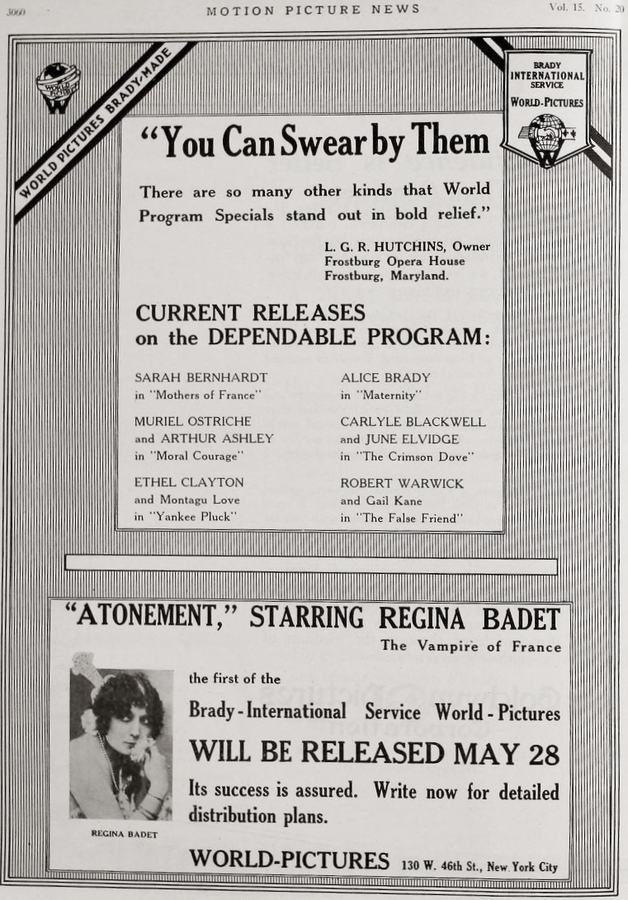
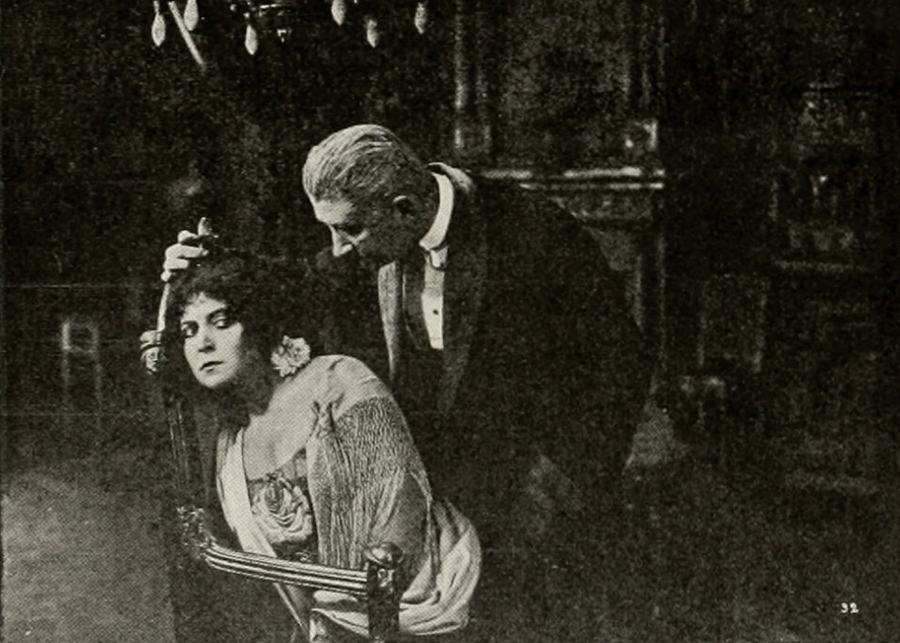
But who is this enigmatic woman, this femme fatale who commands such destructive power? Régina Badet inhabits this role with a captivating blend of outward charm and underlying menace, a performance that is nothing short of magnetic. She is not merely a woman; she is a force of nature, a calculated predator cloaked in an aura of delicate beauty. Her purity, which so enthralls Guidé, is nothing more than a carefully crafted facade, a shimmering veil designed to obscure her true, venal intentions. She is a siren not of the sea, but of the opulent, gaslit gambling dens, luring men with promises of affection and companionship, only to lead them inexorably to the tables where their fortunes are systematically stripped away. The film excels in portraying this subtle yet devastating deception, showcasing how easily a man’s perception can be skewed by desire, how readily he will surrender to a comforting lie rather than confront an uncomfortable truth. This narrative thread, of a benevolent exterior masking a malevolent interior, finds echoes in later films like The Impostor, though The Golden Lotus arguably presents a more intimate, psychological dissection of the victim's journey.
Louis Mercanton and René Hervil, the directorial duo, demonstrate a profound understanding of visual storytelling, a necessity in the nascent days of cinema. Their direction is characterized by a deliberate pacing that allows the psychological tension to slowly coil, rather than rush headlong into melodrama. They understand the power of the close-up, capturing the subtle shifts in Guidé’s expressions from hopeful adoration to dawning despair, and the tantalizing, often unreadable, visages of Badet. The mise-en-scène, though perhaps constrained by the technological limitations of the era, is used effectively to establish atmosphere – the glittering, yet ultimately sterile, world of the gambling halls standing in stark contrast to the quiet, almost domestic, scenes of Guidé’s initial infatuation. The contrast underscores the two distinct realities the protagonist inhabits: the idealized fantasy and the grim, exploitative truth. This careful construction of visual metaphors is a hallmark of their craft, allowing the audience to infer deeper meanings without the need for extensive intertitles, a testament to their skill in silent narrative. The film's ability to convey such complex emotional landscapes purely through imagery is a masterclass, perhaps rivaling the visual poignant found in something like The Eye of God in its reliance on non-verbal communication.
The screenplay, credited to Mercanton and Hervil themselves, is a lean, incisive piece of writing that prioritizes dramatic impact over verbose exposition. It’s a testament to their understanding of character archetypes and the universal themes of love, betrayal, and ruin. The narrative progression is logical, almost mathematically precise, as each step of Guidé’s infatuation leads inevitably to his financial and emotional undoing. There’s a classical tragedy at play here, where the hero's fatal flaw – his blind idealization – is exploited with ruthless efficiency. The writers don't shy away from the harsh realities of their subject matter, portraying the gambling dens not as glamorous havens of chance, but as predatory environments designed to strip individuals of their dignity and wealth. This unflinching portrayal of vice and its consequences sets The Golden Lotus apart, making it a powerful moral fable rather than mere entertainment. It shares a thematic kinship with films like It Is Never Too Late to Mend, which also explored the devastating impact of personal failings and societal pitfalls, though with a different focus on redemption.
The success of any silent film hinges almost entirely on the expressive capabilities of its cast, and The Golden Lotus is fortunate to feature a ensemble that truly understands the nuanced art of pantomime and emotional conveyance. Paul Guidé, as the smitten protagonist, delivers a performance brimming with an almost heartbreaking vulnerability. His eyes, initially alight with hope and adoration, slowly dim with confusion, then anguish, as the realization of his predicament dawns. He doesn't merely act the part; he embodies the very essence of a man undone by misplaced trust. His gestures, from the hopeful reach of his hand to the slump of his shoulders, communicate volumes without a single spoken word, drawing the audience deep into his spiraling despair. This kind of powerful, empathetic portrayal is crucial for the film's impact, ensuring that the audience feels the weight of his losses as acutely as he does.
Régina Badet, on the other hand, is a revelation as the titular 'golden lotus' – beautiful, captivating, yet ultimately poisonous. Her performance is a masterclass in subtle villainy. She avoids overt theatrics, instead opting for a more insidious portrayal of her character's manipulative nature. There’s a cold calculation behind her seemingly warm smiles, a predatory gleam in her eyes that hints at the darkness within. Badet’s ability to maintain this duality throughout the film is what makes her character so utterly compelling and terrifying. She is not a caricature of evil, but a chillingly plausible depiction of someone who uses their charm and perceived innocence as a weapon. Her presence dominates the screen, a magnetic force that draws not only Guidé's character but also the audience into her dangerous orbit. This portrayal of a complex, morally ambiguous woman echoes the strong, often challenging female characters seen in films like The Morals of Hilda or A Woman Wills, though Badet's character leans distinctly towards the malevolent.
The supporting cast, including Jacques Volnys, Guy Favières, and Jean-Marie de l'Isle, contribute significantly to the film’s rich tapestry, each adding layers to the world of the gambling halls and the periphery of Guidé’s life. Volnys, in particular, often provides a counterpoint to Guidé’s blind optimism, perhaps as a voice of reason or a harbinger of the inevitable. Their interactions, though brief, solidify the sense of a society where such predatory behaviors could thrive, where the unwary are easily ensnared. The collective strength of these performances elevates The Golden Lotus beyond a simple cautionary tale, transforming it into a vivid, human drama.
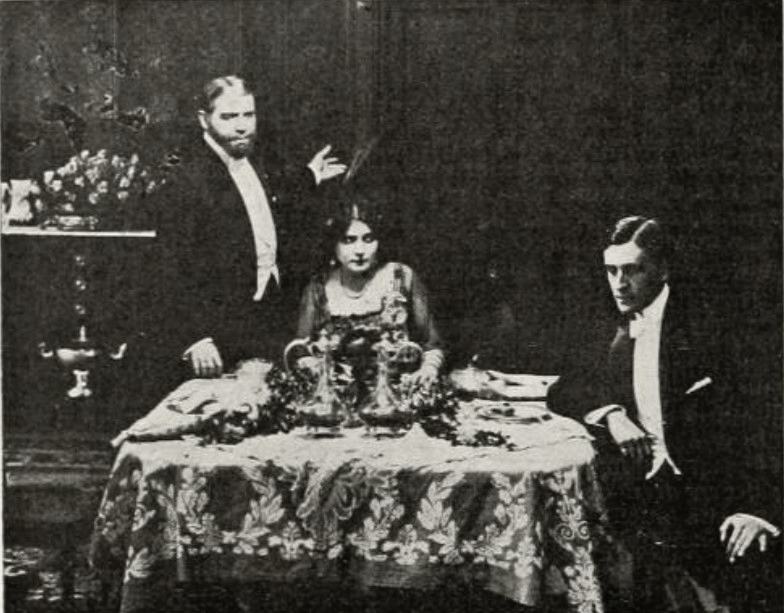
The thematic depth of The Golden Lotus is arguably its most enduring quality. It explores the destructive nature of obsession, the perilous chasm between appearance and reality, and the insidious power of vice. Guidé’s character isn’t just losing money; he is losing his identity, his self-respect, and ultimately, his very soul to a woman who views him as nothing more than a resource to be exploited. This narrative serves as a stark reminder of how easily one can be blinded by desire, how the heart can construct elaborate fantasies that ignore glaring truths. The film’s exploration of financial ruin, a theme that remains tragically relevant, is particularly poignant. It illustrates how the downward spiral of gambling can consume an individual, stripping away their assets, their social standing, and their future. In this regard, it touches upon similar societal anxieties about financial instability and moral decay seen in films like Proletardrengen, albeit from a different class perspective.
Moreover, the film implicitly critiques certain societal norms of its time, particularly the vulnerability of men to the allure of a captivating woman, and the agency (or lack thereof) afforded to women. While Badet’s character is undeniably villainous, her agency in orchestrating Guidé’s downfall can also be seen through a lens of desperate survival or a twisted form of empowerment within a patriarchal society. She uses the tools at her disposal – her beauty, her charm, her cunning – to navigate a world that might offer limited other avenues for influence or wealth. This complexity prevents her from being a one-dimensional antagonist, adding a layer of tragic understanding to her actions, even as we condemn them. This nuanced portrayal of female agency, even if dark, provides a fascinating counterpoint to more straightforward narratives of morality, much like the challenging portrayals in Her Reckoning.
In the grand tapestry of early cinema, The Golden Lotus might not always feature in the most prominent discussions, yet its impact on those who discover it is undeniable. It stands as a testament to the power of well-crafted narrative and compelling performances, even without the technological advancements we now take for granted. The film’s exploration of universal human themes – love, deception, addiction, and the fragility of fortune – ensures its continued relevance. It reminds us that the fundamental struggles of the human condition remain constant, regardless of the era or the cinematic language employed. Its influence, subtle as it may be, can be traced in countless subsequent films that delve into the dark allure of the femme fatale and the tragic downfall of the unsuspecting hero. Think of the intricate deceptions in The Scarlet Road, or the weighty moral choices in The Eternal Question; The Golden Lotus lays some of the foundational groundwork for such narratives.
Ultimately, The Golden Lotus is more than just a historical curiosity; it is a vibrant, potent piece of cinema that speaks to the enduring power of human drama. It urges us to look beyond the surface, to question what we perceive as pure, and to recognize the potential for darkness beneath the most radiant exteriors. It’s a film that lingers in the mind, prompting reflection on the nature of trust, the costs of delusion, and the timeless struggle against the insidious forces that seek to undermine our lives. For those willing to engage with its silent, yet profoundly eloquent, storytelling, The Golden Lotus offers a rich, rewarding, and deeply unsettling experience. It is a golden bloom, indeed, but one whose beauty masks a deadly poison, forever reminding us of the fragility of our perceptions and the ever-present danger of a heart led astray. Its stark message, delivered through the compelling performances and meticulous direction, solidifies its place as a significant work that continues to resonate with audiences who appreciate cinema's capacity to illuminate the darker corners of the human psyche. It stands proudly alongside other character-driven historical pieces like Bismarck or Charles IV, not for their grand historical scope, but for their intricate portrayal of individual human struggles against formidable odds, whether political or personal. Even in its quiet moments, the film speaks volumes about the human condition, a testament to the enduring power of cinematic art.
As the final frames fade, one is left contemplating the tragic trajectory of Paul Guidé’s character, a man who, despite his initial good fortune, found himself ensnared by a beauty that promised everything but delivered only desolation. Régina Badet’s performance ensures her character is etched into memory as one of early cinema’s most compelling antagonists, a woman whose motivations, while perhaps rooted in a desperate desire for control or wealth, ultimately lead to the ruin of others. The collaborative genius of Louis Mercanton and René Hervil in crafting such a potent and timeless narrative cannot be overstated. Their work on The Golden Lotus serves as a powerful reminder that the most profound stories often emerge from the simplest of setups, elevated by exceptional performances and a clear, unwavering directorial vision. It’s a film that doesn't just entertain; it provokes, it warns, and it ultimately leaves an indelible mark on the viewer, much like the powerful social commentaries found in films such as Leben heisst kämpfen or Dr. Rameau, which also explored the struggles and moral dilemmas inherent in human existence. The film’s ability to articulate such complex themes without spoken dialogue is its ultimate triumph, a silent symphony of seduction and sorrow.

IMDb 6.9
1926
Community
Log in to comment.