DbcultAccessing Vault...
5.7/10
Senior Film Conservator
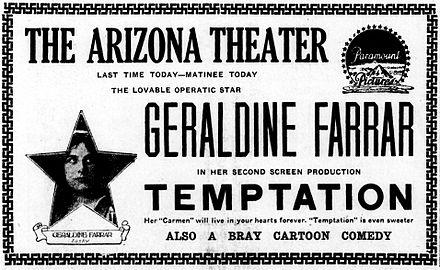
A definitive 5.7/10 rating for a film that redefined the boundaries of cult cinema. Temptation remains a cornerstone of transgressive art.
A feverish nocturne spun from chiaroscuro candlelight and tremulous strings, Temptation is less a story than a perfume—musk, benzoin, and gunpowder—wafting from the screen after a century of neglect.
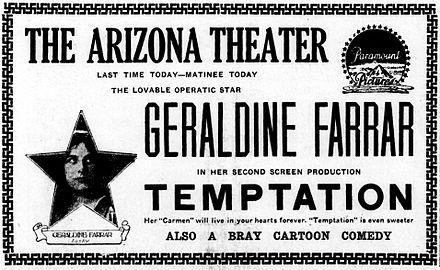
Geraldine Farrar, the Metropolitan Opera’s flame-draped diva, transposes her clarion vibrato into the visual octave without a tremor. She enters in a vermilion cape, eyes scanning the cobblestones as though every shadow owes her rent. The camera, still shackled to stationary tableaux in 1915, drinks her lengthwise; DeMille sneaks in proto-close-ups—a gloved hand crushing a telegram, a tear salting the corner of a smile—micro-revolutions that forecast the coming grammar of intimacy.
Opposite her, Sessue Hayakawa arrives as Mueller, the impresario whose silken lapels mask the predatory snap of a bear trap. Hayakawa’s charisma is glacial: lips pressed like sealed subpoenas, gaze sliding over Renee as if pricing porcelain. Contemporary critics gasped at the racialized casting; modern eyes see a shrewd inversion—power clothed in Asian elegance circling a white woman whose desperation outstrips his appetite. The erotic geometry still feels volatile, doubly so when we learn the off-screen gossip: Farrar reportedly insisted Hayakawa perform her spanking scene “for real,” take after take, until the set crackled with something too carnal for 1915 propriety.
Julian—played by opera-house tenor-turned-actor Pedro de Cordoba—is sketched in consumptive pallor: wrists like parchment, coughs like torn paper. His music, we are told, is “a cathedral built on quicksand,” and the line, intertitled in florid cursive, lands with meta-weight; DeMille and screenwriter William C. de Mille know high art seldom pays rent. Julian’s sickness is narrative nitroglycerin: it detonates Renee’s moral scaffolding yet never topples into pathos thanks to the film’s brisk 47-minute pulse.
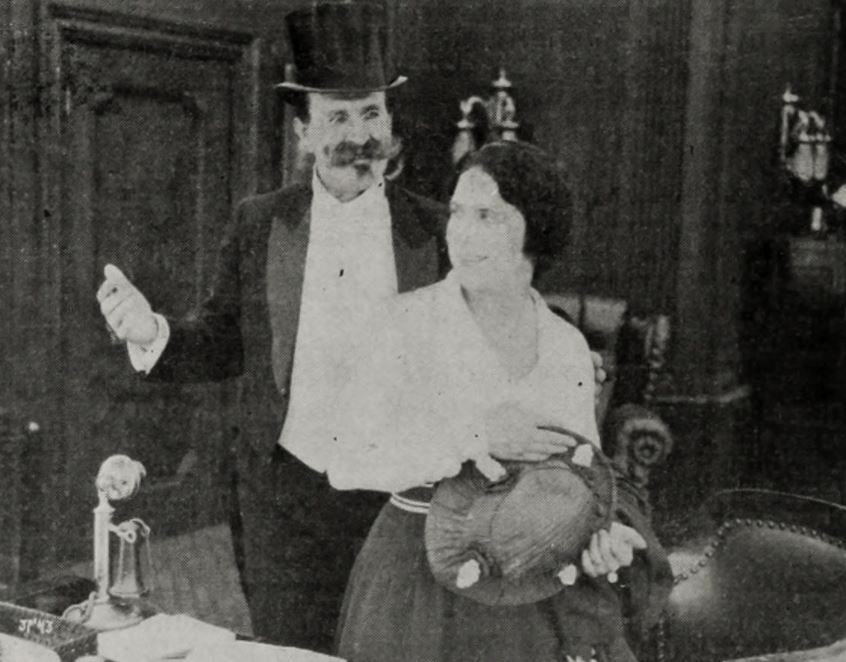
Scene by scene, Temptation stages a dialectic of surfaces. Renee’s boudoir is Versailles miniature: lace cataracts, chandeliers dripping like stalactites of ice. Mueller’s office is a mausoleum of contracts, its walls paneled in walnut grave-dark. DeMille toggles between these spaces via match-cut dissolves—doorways become moral sluice gates—so that when Renee steps across the threshold we feel the clang of an invisible portcullis. The visual shorthand is proto-Hitchcockian: environment as conscience.
Yet the film’s true coup arrives with Anita King, the “jealous lover” of synopses, a platinum comet who materializes at minute thirty-three. King’s entrance—a cigarette ember spiraling in the dark like a comet’s nucleus—reconfigures the moral algebra. She is not mere villain but unpaid creditor of affection, her dagger not an act of passion but of accountancy. The murder happens off-camera; DeMille cuts to a curtain’s violent billow, an iris-in on Mueller’s hand still clutching a fountain pen. It’s a sleight that turns censorship into choreography, letting viewers supply the arterial spray inside their eyelids.
Compare this to DeMille’s later Du Barry where guillotines fall with lurid gusto; here restraint is the razor. Blood is implied by the sudden hush of orchestral strings on the tintyped score—contemporary exhibitors were encouraged to pause the live accompaniment, letting silence pool like guilt.
Restoration-wise, the 2014 Cinémathèque 4K scan salvages amber tones thought lost; shadows regain their tar-like menace, while Farrar’s crimson cape now blooms against nitrate dusk like a poppy in a battlefield. The original pastel intertitles—rose, dove, bruise—have been recreated via chromolithographic references discovered in DeMille’s personal scrapbook, auctioned 2009.
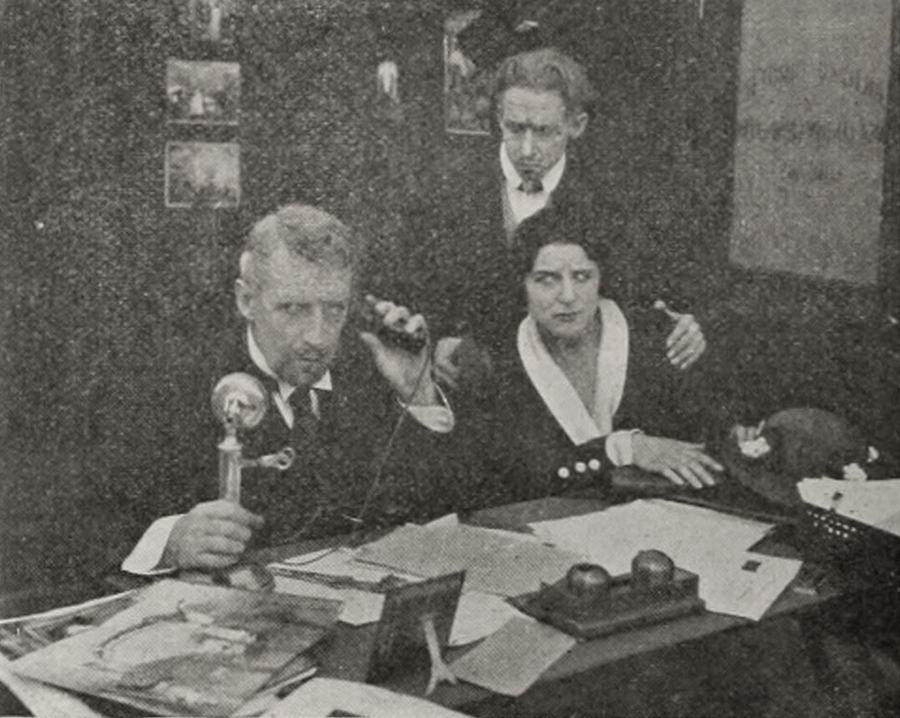
Performance calibrations fascinate: Farrar’s silent acting is operatic without semaphore mugging. Her final close-up—eyes hollowed, lips parted as if to inhale the whole world’s sorrow—prefigures Garbo’s penultimate freeze in Fedora. Hayakawa, meanwhile, wields stillness as weapon; when he removes a glove finger by finger the gesture feels more obscene than a kiss. The supporting gallery—Raymond Hatton as a consumptive friend, Tex Driscoll a barfly fiddler—supply texture, their faces etched with grease-paint gargoyle grotesquerie.
Narrative ethics? The film dodges the Madonna/whore binary via narrative deux ex machina: the murderer is female, thus Renee’s virginity is technically preserved, yet the price she pays is knowledge—she has consented to the transaction; salvation arrives extraneously. Critics of 1915 recoiled at the implication that commerce and chastity could be so brazenly bartered; the Motion Picture Board demanded a foreword declaring “Crime does not pay.” DeMille obeyed, then undercut it with a final shot of Renee clasping Julian on a moonlit balcony, the city’s electric hoardings blazing behind them like a new pagan altar.
Gender politics aside, the movie thrums with meta-cinema pleasures. Intertitles quote Baudelaire in French without translation—an audacious wink at the elite opera crowd Farrar commanded. One insert shows Julian’s sheet music titled “Nocturne in Black and Gold”, an overt nod to Whistler, collapsing high art into celluloid commodity. Even the film’s working title during production was “The Price of a Song”, a pun the marketing department eventually deemed too cynical.
Historiographic footnote: the surviving print is missing reel three—approximately six minutes. Archivists bridged the gap with production stills and a continuity script discovered in the Lasky archives. Purists howl; casual viewers barely hiccup, proving how efficiently DeMille’s visual grammar embeds narrative DNA in the surrounding tissue.
Musically, contemporary exhibitors were supplied with a cue sheet calling for Grieg and Tchaikovsky fragments culminating in “Dies Irae” during the stabbing. Modern silent-film festivals often commission new scores; the 2018 Pordenone premiere featured a klezmer-quartet rendition that turned the melodrama into shtetl-gothic, proving the story’s tensile adaptability.
Box-office? Temptation grossed $138,000 domestically—respectable for 1915—yet paled beside DeMille’s own The Marble Heart. Critics praised Farrar but yawned at the “sordid” plot. The film vanished for decades, mislabeled as “Temptation of a Prima Donna” in Paramount’s vaults until a 1989 nitrate auction unearthed the canisters.
Pair it with Vampire for a double bill of predatory desire, or contrast with Ingeborg Holm’s maternal martyrdom to survey the era’s spectrum of female suffering. Better yet, place it beside Body and Soul to trace how silent cinema negotiated sin and salvation through the female body.
Final verdict? Temptation is a lacquered time-capsule of primal cinema—where opera divas duelled with dollar signs, where a single iris-in could pronounce damnation or grace. It is not flawless; its racialized villainy and last-act rescue reek of period cowardice. Yet its visual bravado, its perfumed nihilism, its willingness to let the city itself exhale moral contagion mark it as a proto-noir aria worth every flicker of rediscovery.
Stream the restored 4K version via Cinémathèque Française or on Blu-ray from Kino Silent Classics. For deeper dives consult Cecil B. DeMille’s Hollywood by Robert S. Birchard and Idol of Modernity anthology essays on Farrar.
IMDb —
1917
Community
Log in to comment.