DbcultAccessing Vault...
Cult Review
Senior Film Conservator
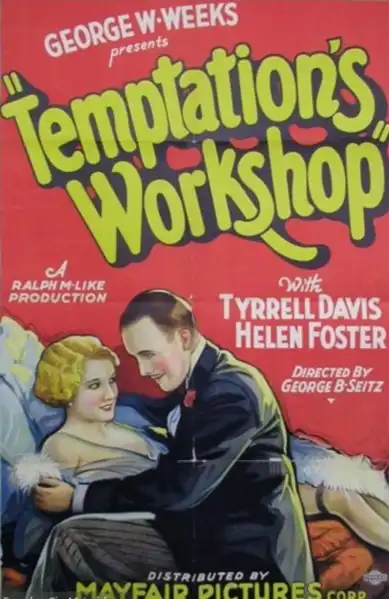
Is Temptation's Workshop worth your precious viewing time today? Well, that depends. If you're someone who loves digging into the dusty corners of early cinema, seeing how melodramas played out before sound really took over, then yes, absolutely. For everyone else, especially those who need quick cuts and modern pacing, you'll probably find it a bit of a slog. It’s a curious little artifact, not a masterpiece, but it holds a certain charm if you’re in the right mood. 🎞️
The film, from what I gather, centers on a very rich family hitting rock bottom. Their fortunes just poof, vanish. Suddenly, they're faced with… well, regular people problems. But then, a foreign count, who somehow already married into this soon-to-be-broke family, steps in to save the day. It’s a classic setup for the era: grand gestures, social standing, and a touch of the exotic.
You know, watching this, I kept thinking about the sheer drama of losing wealth back then. It wasn't just losing money; it was losing your entire identity. The opening scenes really try to hammer this home, with the family matriarch, played by Stella Adams, clutching her pearls a lot. You can almost feel the director saying, "Look! Look how sad she is!" It's a bit heavy-handed, but you get the point.
There's this one shot of John Ince, playing the patriarch, just staring blankly out a window. It lingers for a solid ten seconds, maybe fifteen. He doesn't say anything, of course, because it's a silent film. But his face… it’s a whole story right there. A man completely undone. Then a servant walks by, and he barely registers it. That detail felt very real.
The "foreign count" character, played by Tyrell Davis, is where things get interesting. He's got this subtle smirk that just never quite goes away. Even when he's being helpful, there’s this tiny hint of something else. Is he genuinely good? Is he playing a long game? The film doesn't really spell it out, and that's actually one of its strengths. It lets you wonder a bit. His accent, or rather, the idea of his accent, is conveyed through his slightly formal mannerisms and that ever-present smirk. It’s effective, if a little broad. 🤔
I found myself particularly drawn to Helen Foster's character, one of the daughters. She has this way of looking at the Count, a mix of gratitude and suspicion, that felt more nuanced than some of the other performances. There's a scene where she's at a piano, not playing, just running her fingers over the keys. It’s a quiet moment, a little out of place, but it suggests a longing for their old life, or maybe just a moment of peace amidst all the financial chaos. It’s the kind of small detail you might miss if you're not paying attention.
The pacing, for sure, is leisurely. Modern audiences might find themselves checking their watches. But that’s part of the deal with films from this era, isn't it? They unfold differently. There’s a scene where the family sits down for what must be a very uncomfortable dinner, and the camera just stays on them. No dialogue, just expressions. You can almost hear the crickets. It goes on about 20 seconds too long, and the silence starts to feel awkward rather than emotional. But it really sells the idea that they're all just stewing in their new, diminished circumstances.
Let's talk about the title, Temptation's Workshop. It’s a bit dramatic, no? I kept waiting for some grand temptation to really drive the plot. Maybe the Count was going to tempt someone into betraying another, or maybe the family would be tempted by something illicit to regain their fortune. But it never quite lands that way. The "temptation" seems to be more about the easy way out, or maybe just the temptation of letting someone else solve your problems. It’s less about a literal workshop and more about the internal struggles. A bit of a misnomer, perhaps, but it sounds dramatic.
Dorothy Granger has a few scenes as another family member, and she brings a certain spark, a feistiness that cuts through some of the gloom. She's less about the quiet suffering and more about "let's just do something." Her character feels like a glimpse of a more modern sensibility trying to break through the old-fashioned melodrama. You can almost see her rolling her eyes at the older generation's dramatics. 🙄
One thing that kept popping into my head: the costumes. They’re just magnificent. Even when the family is supposedly broke, everyone still looks impeccably dressed. You get the sense that looking good was a non-negotiable, even if you were eating beans for dinner. It’s a subtle nod to the class consciousness of the time, I think. Or maybe just a budget thing, who knows?
Overall, Temptation's Workshop is a window. It's not going to blow your mind with plot twists or deep psychological insights. But it's a perfectly watchable old film, especially if you appreciate the specific charms of silent-era storytelling. It offers a glimpse into a bygone era of moviemaking where emotions were often writ large on faces, and a single lingering shot could convey a whole narrative.
It's an interesting piece for film historians, or anyone who just wants to see how a simple premise was handled in a much different cinematic landscape. Just don't go in expecting a thrill ride. It’s more of a gentle, reflective ride.
IMDb —
1926
Community
Log in to comment.