DbcultAccessing Vault...
Cult Review
Senior Film Conservator
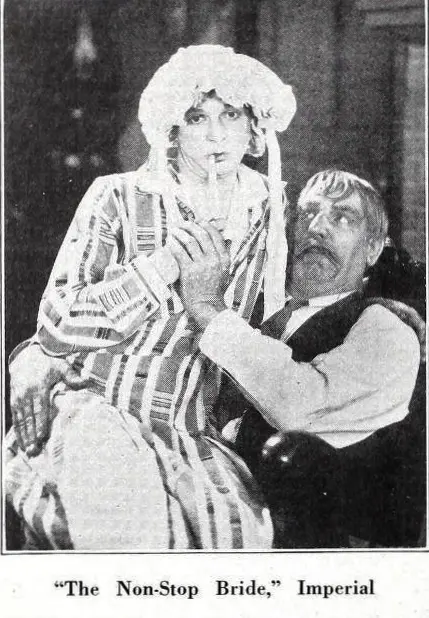
Is 'The Non-Stop Bride' worth watching today? Short answer: yes, but with significant caveats that demand a specific palate. This silent-era gender-bending farce is unequivocally for those with a deep appreciation for the foundational mechanics of slapstick and a tolerance for narrative simplicity, yet it will undoubtedly alienate viewers seeking nuanced character development or sophisticated comedic timing.
It's a curious artifact, a silent film that leans heavily into physical comedy and the then-novelty of cross-dressing for laughs. While its historical significance as an example of early cinematic humor is undeniable, its entertainment value for a modern audience is highly subjective.
This film works because of its sheer, unbridled audacity and Gene Cameron's committed physical performance.
This film fails because its rudimentary pacing occasionally drags, and the humor, while groundbreaking for its time, often lacks the universal resonance of its more celebrated contemporaries.
You should watch it if you are a film historian, a dedicated silent film enthusiast, or someone curious about the origins of gender-bending comedy in cinema.
The narrative engine of 'The Non-Stop Bride' is driven by a series of increasingly absurd circumstances, all stemming from a moment of transportation desperation. Gene, played by Gene Cameron, finds himself stranded by a broken-down automobile, a predicament that forces him to 'borrow' a horse. This seemingly innocuous act, however, is the match that lights the fuse of a comedic powder keg.
What follows is a relentless pursuit by a quartet of roughnecks, men whose motivations are less about justice and more about the sheer, unthinking impulse of the chase. Gene's escape is a frantic, improvisational affair, culminating in the adoption of a most unexpected disguise: a girl's dress. This isn't a subtle transformation; it's a full commitment to a new persona, complete with exaggerated mannerisms designed to sell the illusion.
The film then introduces a spirited young woman, played by Madalynne Field, who, through a stroke of coincidence, offers Gene aid. This alliance, however, only serves to deepen the comedic entanglement. The ultimate twist of fate sees Gene, still in his feminine guise, inadvertently seeking refuge in the very home of the roughnecks who were pursuing him. It’s a classic setup for mistaken identity, pushed to its logical, hilarious extreme.
Within this domestic trap, the roughnecks, oblivious to Gene's true identity, become utterly smitten with their 'new' guest. Their clumsy attempts at courtship, filled with awkward gestures and wide-eyed infatuation, form the core of the film's satirical humor. Simultaneously, the assisting girl, unaware of Gene's current predicament or disguise, finds herself developing feelings for Gene's true, masculine self. This creates a dual layer of romantic misunderstanding, a comedic contrivance that, while simple, provides the framework for constant situational gags and escalating chaos.
The undeniable anchor of 'The Non-Stop Bride' is Gene Cameron's performance. As the titular 'bride' (of sorts), Cameron shoulders the comedic burden with a physicality that is both frantic and surprisingly graceful. His initial scenes as the pursued man are a whirlwind of desperate sprints and exaggerated expressions, reminiscent of early Keystone Kops antics, though with a more focused, individual terror.
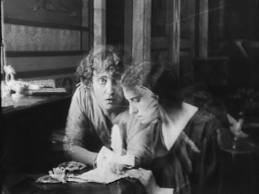
The true test of his acting, however, comes with his transformation into a woman. Cameron doesn't just put on a dress; he embodies a caricature of femininity as understood by the era. His movements become more delicate, his posture shifts, and his facial expressions soften into a bashful coyness that is genuinely amusing. In one memorable sequence, as a roughneck attempts a clumsy advance, Cameron's 'feminine' reaction — a subtle flinch, a coy glance, a nervous flutter of the hands — sells the gag entirely, making the roughneck's infatuation believable within the film's farcical logic.
This commitment to the dual persona is what elevates the film from a mere gimmick. Cameron's ability to maintain both the underlying masculine urgency and the outward feminine charade creates a constant tension that fuels the comedy. It's a performance that, while broad and theatrical, is perfectly suited to the demands of silent slapstick.
Madalynne Field, as the girl who aids Gene and later falls for him, provides a necessary grounding presence amidst the chaos. Her performance is less overtly comedic than Cameron's, offering a touch of sincerity that balances the film's more outlandish elements. Her expressions convey genuine concern and later, budding affection, anchoring the romantic subplot in a way that prevents it from becoming entirely lost in the gender-bending antics. While the supporting cast of roughnecks (including Bob Kortman and Arthur Housman) delivers serviceable caricatures of bumbling antagonists, it is Cameron's central, transformative role that truly defines the film.
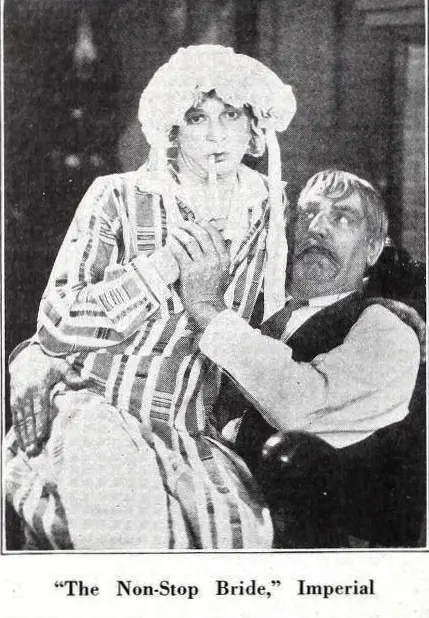
Andrew Bennison, co-writing with Murray Roth, directs 'The Non-Stop Bride' with a clear understanding of its farcical intent. The pacing is deliberately uneven, a common characteristic of early silent comedies, designed to maximize comedic impact rather than maintain a consistent narrative flow. The early chase sequences are frenetic, employing rapid cuts and quick camera movements to convey urgency and panic.
However, once Gene is ensconced in the roughnecks' home, the pacing shifts dramatically. Scenes stretch out, allowing for the slow burn of mistaken identity and the awkward dance of courtship to unfold. This contrast, between the breakneck speed of escape and the more drawn-out, almost theatrical staging of the domestic scenes, highlights Bennison's strategic use of rhythm. For instance, the scene where Gene, as a 'girl,' is forced to endure the roughnecks' clumsy serenades is allowed to play out, with each man getting a moment to express his misguided affection. This deliberate slowness in these moments amplifies the absurdity, giving the audience time to appreciate the predicament.
Bennison's direction of the actors is also notable. He encourages the broad, physical performances essential for silent comedy, ensuring that even without dialogue, the emotions and intentions are clear. The use of sight gags, such as Gene subtly trying to adjust his ill-fitting dress while maintaining a demure facade, is testament to Bennison's eye for visual humor. While not as technically inventive as a Chaplin or Keaton film, Bennison effectively orchestrates the comedic chaos, ensuring the central premise remains engaging.
The cinematography of 'The Non-Stop Bride' is utilitarian yet effective, typical of its era. The film relies heavily on clear, well-lit medium shots and wide shots to capture the physical comedy and the expansive environments of the chase. There's a pragmatic simplicity to the visual style, prioritizing clarity of action over artistic flourish. However, even within these constraints, moments of visual interest emerge.
For example, the use of iris shots to punctuate comedic reveals or to focus attention on a particular character's reaction is employed with precision. When Gene first dons the dress, an iris shot might momentarily frame his bewildered expression, enhancing the comedic impact. The outdoor sequences, though lacking elaborate set pieces, effectively convey the sense of open space and the desperation of the pursuit, with the natural light serving to highlight the frantic energy of the chase.
The tone is purely farcical, driven by visual gags and physical comedy. There's no attempt at dramatic tension or emotional depth beyond the immediate comedic situation. The film embraces its silliness wholeheartedly, and the cinematography supports this by keeping everything clear and accessible. It's a testament to the power of silent cinema that such simple visual storytelling can still evoke laughter, even a century later. The film doesn't aim for the nuanced visual poetry of, say, The Dragon Painter, but rather the immediate, visceral punch of slapstick.
For silent film enthusiasts, absolutely. For casual viewers, proceed with caution. Its historical value is undeniable, but its entertainment value is subjective.
This film offers a window into early cinematic humor, showcasing how gender-bending comedy was explored in its nascent stages. It's a valuable piece for understanding the evolution of comedic tropes.
However, its pacing and humor can feel dated to those accustomed to modern comedic rhythms. The gags are broad, and the narrative is thin, designed purely to facilitate chaotic situations.
If you appreciate the foundational elements of physical comedy and have a genuine interest in film history, 'The Non-Stop Bride' is a worthwhile, albeit niche, watch. It's a good example of its kind, demonstrating the energy and simplicity that defined much of the era's output.
One of the most fascinating, and perhaps debatable, aspects of 'The Non-Stop Bride' is its use of cross-dressing as a primary comedic device. While it’s easy to dismiss this as a simplistic, almost crude gag by today's standards, I would argue that within the context of early cinema, it was surprisingly bold. It challenged conventional gender presentation, even if only for laughs, and forced audiences to confront the performative nature of identity. This isn't just about a man in a dress; it's about how easily perceptions can be manipulated by appearance, a theme that still resonates in more sophisticated comedies today.
However, it’s equally true that some of the humor derived from Gene's 'feminine' antics feels undeniably dated. The broad stereotypes of womanhood, from the coy blushes to the delicate gestures, can come across as reductive. Yet, an unconventional observation one might make is that the film, perhaps unintentionally, critiques the very rigid gender roles it ostensibly employs for humor. By showing how easily the roughnecks are fooled, it inadvertently highlights the superficiality of their own expectations of femininity.
My strong, perhaps controversial, opinion is that the film's true comedic genius lies not in the individual gags, but in the sheer audacity of its central premise. The idea that a group of men could be so utterly blind to the obvious, so completely swayed by a flimsy disguise, speaks to a timeless human folly. It’s a primal, almost childlike humor, and while it lacks the sophisticated wit of later comedies, it taps into something universally absurd about human perception and desire.
'The Non-Stop Bride' is a fascinating, if imperfect, relic from the silent era. It works. But it’s flawed. Its strength lies in its unashamed embrace of pure farce and the committed, physical performance of Gene Cameron. While it may not stand alongside the undisputed classics of the period, it offers a valuable glimpse into the mechanics of early comedic storytelling and the enduring appeal of mistaken identity. It's a film that demands a certain generosity from its audience, a willingness to appreciate its historical context and its foundational place in the lineage of gender-bending humor. For those who meet it on its own terms, it offers a quirky, if not always uproarious, ride into cinema's past. A solid recommendation for the niche audience it serves, but a challenging watch for the uninitiated.
IMDb 6.6
1935
Community
Log in to comment.