DbcultAccessing Vault...
Cult Review
Senior Film Conservator
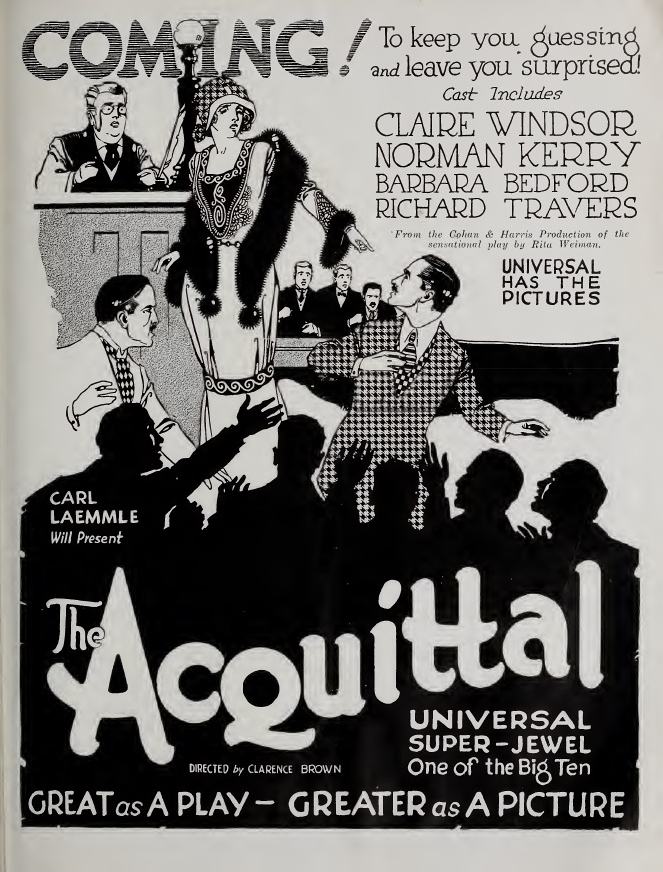
The Acquittal arrives on the screen like a fog‑laden carriage, its wheels grinding against the cobblestones of a bygone era while the audience is thrust into a world where wealth and betrayal intersect with unsettling intimacy. From the opening tableau—a lavish bedroom bathed in chiaroscuro, the silvery gleam of a pistol lying beside a contorted corpse—the film establishes a visual motif that recurs throughout: the juxtaposition of opulence and rot.
Harry Mestayer, embodying the murdered patriarch, exudes a gravitas that feels both regal and foreboding, his presence lingering like a phantom even after his abrupt exit from the narrative. The duality of his character—magnate and murderer in the eyes of the audience—sets the stage for a story that refuses to settle into binary moralities.
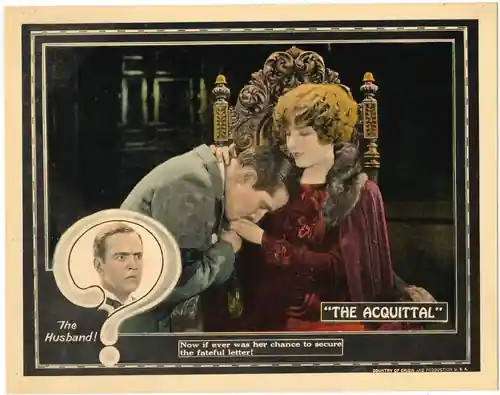
Mildred Manning, cast as the determined daughter‑in‑law, delivers a performance that oscillates between steely resolve and vulnerable yearning. Her eyes, constantly scanning the dimly lit corridors of the estate, convey an intelligence that outpaces the detectives’ half‑hearted inquiries. In a particularly resonant scene, she confronts a reticent butler (Emmett King) with a measured tone that drips with accusation, yet never lapses into melodrama. The line, "You know more than you let on, and I intend to hear every secret you hide," reverberates with the weight of a woman who has been denied institutional justice.
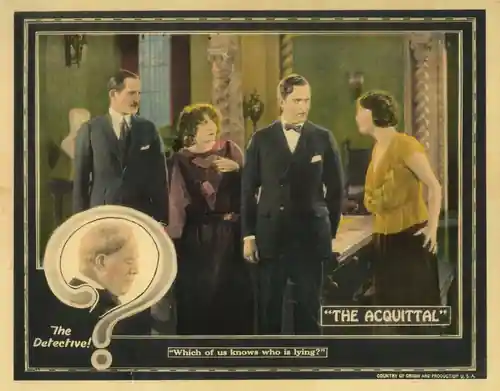
Hayden Stevenson, portraying the accused adopted son, offers a nuanced portrayal that skirts the edge of sympathy. His restrained body language—hands clasped tightly, shoulders perpetually hunched—suggests an internal battle between familial loyalty and self‑preservation. The courtroom sequences, shot with a kinetic camera that circles the bench, amplify his isolation, making the viewer feel the oppressive silence that follows each testimony.
At its core, The Acquittal is an exploration of how legal absolution does not always equate to moral redemption. The film interrogates the efficacy of the justice system through the lens of a family whose internal hierarchies mirror societal power structures. The decision to focus on the uncharged brother’s wife as the de facto sleuth is a deliberate subversion of genre expectations, granting agency to a character traditionally relegated to the periphery of murder mysteries.
The script, co‑written by Jules Furthman, Raymond L. Schrock, and Rita Weiman, weaves a tapestry of red herrings that feels organic rather than contrived. The recurring motif of a torn cufflink—initially dismissed as a trivial clue—later becomes the linchpin that connects a clandestine affair between the victim and a rival businessman (Charles Wellesley). This revelation not only expands the suspect pool but also underscores the film’s preoccupation with the fragility of appearances.
Visually, director Anton Vaverka employs a muted palette punctuated by strategic splashes of color that echo the film’s emotional beats. The dark orange (#C2410C) surfaces in moments of revelation, such as the flickering fireplace that illuminates the hidden ledger revealing embezzlement. The yellow hue (#EAB308) appears in the sunrise that bathes the conservatory during the climactic confrontation, symbolizing a dawning truth. Meanwhile, sea blue (#0E7490) threads through the melancholy scenes set in the estate’s garden pond, reflecting the characters’ submerged anxieties.
The cinematography, reminiscent of the atmospheric tension found in The Betrayer, utilizes long takes that linger on the characters’ faces, allowing micro‑expressions to convey subtext. A notable example is the lingering shot of Claire Windsor’s character, the victim’s estranged sister, as she watches the rain cascade over the manor’s stone façade—a visual metaphor for the cleansing yet relentless nature of truth.
When juxtaposed with contemporaneous works such as The Tides of Fate and Love's Redemption, The Acquittal distinguishes itself through its refusal to rely on overt action set‑pieces. Instead, it leans on intellectual intrigue, inviting the viewer to become a participant in the investigative process. This approach aligns the film with the cerebral pacing of One Hour Before Dawn, yet it diverges by embedding a feminist perspective that is rare for its period.
The auditory landscape, scored by a modest orchestra, employs a recurring motif of low, resonant strings that swell during moments of concealed tension. The subtle inclusion of a ticking clock in the background of the trial sequences serves as an auditory reminder of time’s inexorable march toward revelation. In the climactic garden scene, the sudden silence—broken only by the rustle of leaves—creates a palpable void that heightens the impact of the final confession.
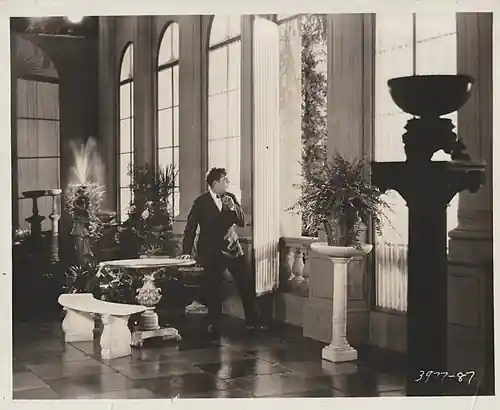
Structurally, the film adheres to a three‑act format, yet each act is infused with sub‑plots that enrich the central mystery. The first act establishes the crime and the immediate suspects, the second act delves into investigative forays led by the widow, and the third act culminates in the revelation within the conservatory’s glass dome. The pacing, while deliberate, never lapses into monotony; each scene is calibrated to either advance the plot or deepen character complexity.
One particularly effective narrative device is the use of letters—handwritten missives exchanged between the victim and an unnamed confidant. These letters, presented as voice‑over readings against a backdrop of rain‑splattered windows, provide expository depth without resorting to exposition‑heavy dialogue.

Ben Deeley, as the shrewd attorney defending the accused, injects a sardonic wit that offsets the film’s darker tones. His courtroom repartee, peppered with legal jargon, showcases a mastery of rhetoric that both dazzles and distracts the jury—a reflection of the film’s broader commentary on the performative nature of justice.
Richard Travers, portraying a rival industrialist, embodies the archetype of the charismatic antagonist. His polished demeanor masks a ruthless ambition, and his eventual confession—delivered in a hushed whisper amidst the conservatory’s shattered glass—provides a cathartic release that feels earned rather than contrived.
The production design, overseen by Frederick Vroom, meticulously recreates a turn‑of‑the‑century mansion, complete with period‑accurate furnishings, ornate wallpaper, and an impressive library that serves as a key investigative location. The attention to detail extends to the costumes, where the sartorial choices—dark velvets for the male leads, delicate lace for the female protagonists—function as visual signifiers of status and intent.
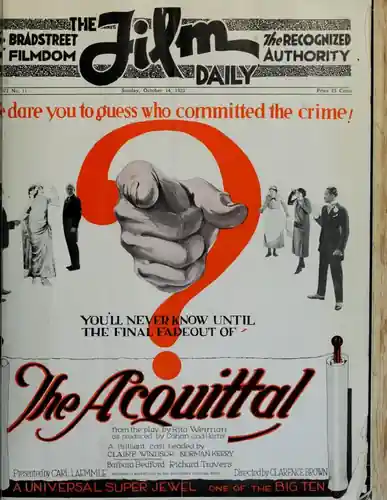
While the film occasionally indulges in melodramatic flourishes—a hallmark of its era—it does so with an awareness that these elements can be harnessed to amplify emotional stakes. The scene where the widow discovers a hidden compartment behind a bookshelf, illuminated by a single candle, is a masterclass in suspenseful staging.
Editor Norman Kerry employs cross‑cutting techniques that juxtapose the widow’s nocturnal investigations with the police’s lackadaisical patrols, underscoring the thematic dichotomy between institutional inertia and personal initiative. The temporal flow remains coherent, despite occasional flashbacks that are seamlessly integrated via soft focus transitions.
Upon its release, The Acquittal garnered a spectrum of responses, ranging from praise for its intricate plotting to criticism of its measured pacing. Modern retrospectives, however, have re‑evaluated the film as a seminal work that prefigures contemporary crime dramas centered on female protagonists. Its influence can be traced in later productions such as The Coward and Lion of Venice, which echo its thematic preoccupations.
The film’s enduring appeal lies in its ability to balance a compelling whodunit with a nuanced examination of societal structures. It invites repeated viewings, each time revealing a new layer of subtext—be it the subtle commentary on class disparity, the critique of legal formalism, or the portrayal of grief as a catalyst for agency.
In sum, The Acquittal stands as a meticulously crafted piece of cinematic art that rewards attentive audiences with a rich tapestry of intrigue, performance, and visual poetry. Its deliberate pacing, combined with a strong central performance by Mildred Manning and a supporting cast that delivers depth across the board, ensures that the film remains a touchstone for enthusiasts of the genre. The strategic use of color—dark orange for revelation, yellow for awakening, sea blue for melancholy—adds an additional layer of symbolic resonance, while the film’s thematic concerns about justice, gender, and power retain a striking relevance in contemporary discourse.
For viewers seeking a murder mystery that transcends formulaic conventions and offers a thoughtful, character‑driven narrative, The Acquittal delivers an experience that is both intellectually stimulating and emotionally resonant.
IMDb 6.5
1930
Community
Log in to comment.