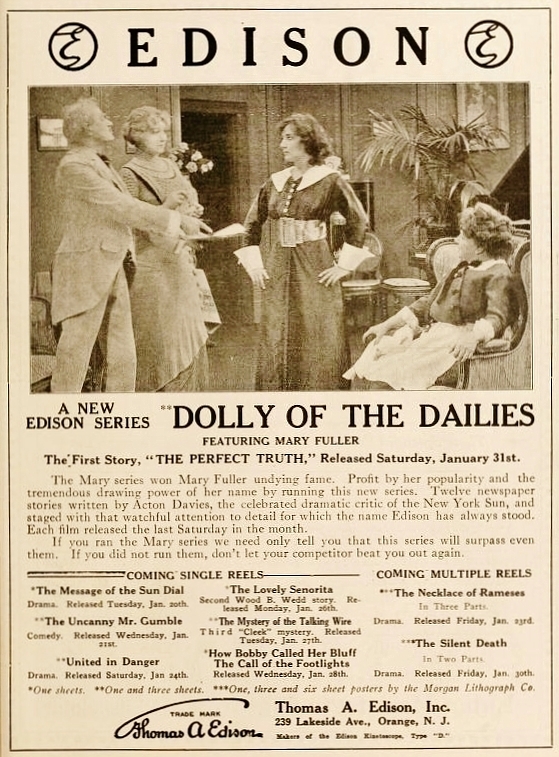
Picture a nickelodeon in 1914, its projector clattering like a drunk typewriter, and out of the beam leaps a slip of a girl—ankles flashing, eyes sparking—who refuses to apologize for seeing too clearly. That flicker is The Active Life of Dolly of the Dailies, a twelve-chunk serial that feels, even at a century’s distance, like yesterday’s Twitter thread hurled into a brick wall of patriarchal piety.
The Alchemy of Ink and Outrage
Dolly’s origin myth is deliciously seditious: valedictorian eloquence repurposed as literary nitroglycerin. She writes a story—ostensibly fiction—so surgically truthful that every church-pew busybody sees her own warts leering back. The town’s reprisal is swift: boycotts against her father’s bank, whispers sharper than hat-pins, a demand that she kneel in public contrition. Instead, she pockets the fee, buys a train ticket, and requisitions the city as her next paragraph.
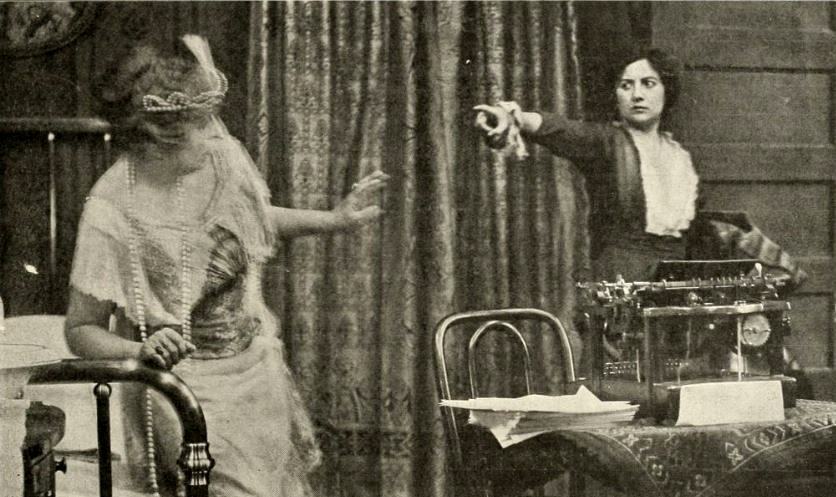
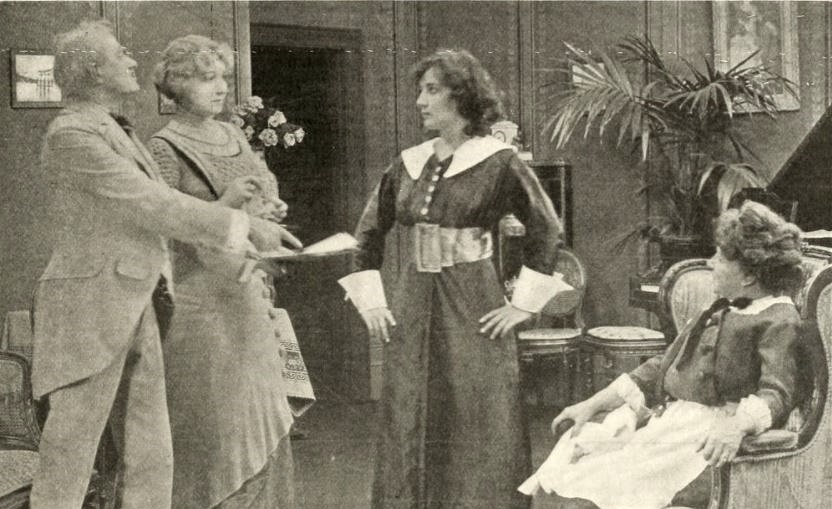
That opening episode, titled “The Perfect Truth,” is the primal scene of American girl-reporter fantasies. It anticipates everything from What 80 Million Women Want to Rosalind Russell’s His Girl Friday, yet it predates them by a generation, shot when suffragists still wore white linen and carried brickbats under their skirts.
Manhattan as Maelstrom
Once Dolly lands in New York, the serial becomes a kaleidoscope of gig-economy precarity: ghost-writing for a society matron who signs “Mother Eve” but can’t spell empathy; parading as a mannequin while scribbling notes on shirt-cuffs; dodging an octopus-limbed couturier whose idea of severance pay is a stolen kiss. The episodes tumble forward like yellowed front-pages snatched by the wind—each headline a dare.
The visual grammar is pure 1914: low-angle shots of skyscrapers lancing clouds, irised close-ups that turn Dolly’s pupils into twin exclamation points, and lantern-slide tints—cyan for night, amber for ballroom—hand-applied by armies of women paid by the frame. Seen today, the color is less quaint than uncanny; the sea-blue (#0E7490) wash over Chinatown opium smoke feels closer to Blade Runner than to Griffith.
The Female Gaze, Circa 1914
What shocks—pleasantly—is the serial’s refusal to eroticize its heroine’s distress. When Dolly is locked in a cellar with a half-crushed reporter or handcuffed to a burning stairwell, the camera does not slink over her form; it studies her face for calculations. She is always thinking, and we are invited to think with her. Compare this to the European erotic-thrillers of the same year—Das rosa Pantöffelchen or Le nabab—where the heroine’s peril is an excuse for chiffon torn in precise triangles.
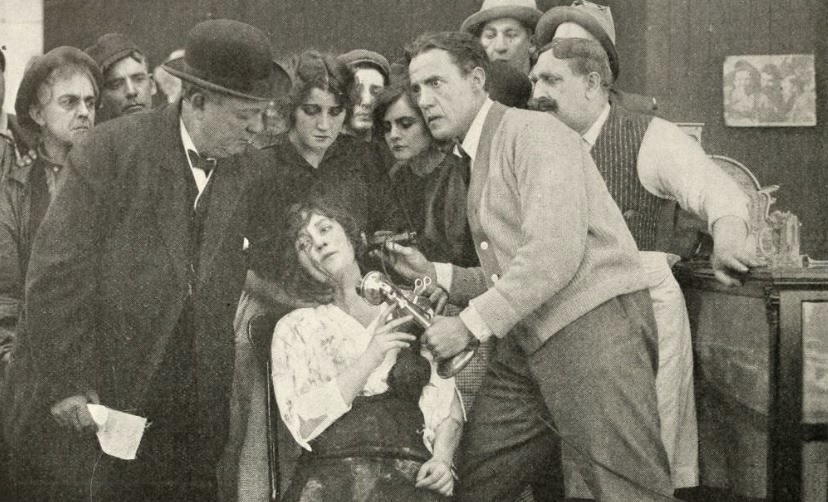
Even the romance is negotiated on her ledger sheet. When two suitors propose—one the hometown boy who betrayed her by loving someone else, the other the managing editor who bankrolled her book—she chooses the man who never asked her to shrink. The final intertitle reads: “One career behind her—and another, far finer, ahead.” It is marriage as merger, not surrender.
The Pleasure of the Period Detail
Serials are time-capsules, and Dolly is stuffed with arcane delights: the etiquette of carbon paper (a key plot hinge), the hiss of the pneumatic tube that shoots copy upstairs, the five-dollar gold piece slipped into a journalist’s palm for “carfare.” Note the Chinese fan that triggers a Tong riot—an artifact treated not as yellow-peril kitsch but as semiotic ammunition. Or the Woolworth Building elevator man who refuses to ascend above the 47th floor after dusk because “the steel sways like a Methodist hymn.” These touches ground the melodrama in asphalt and ink.
Acting in the Key of Exclamation
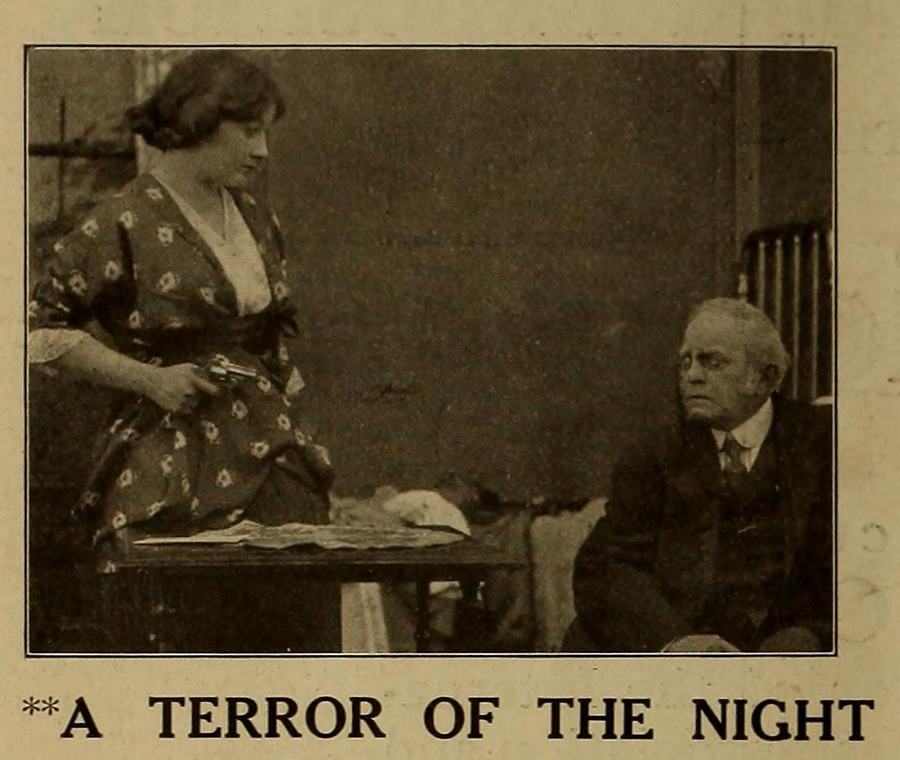
Gladys Hulette plays Dolly with the elastic vivacity of a girl who has read too much Dickens and too little Freud. Her gestures—hands on hips, chin tilted at 45 degrees—are stereotyped yet oddly modern; you sense she is performing performance, the way Instagram influencers mug for the ring-light. Carlton King as editor Crosby supplies a sardonic languor: his eyes half-lidded even while handing Dolly the next impossible deadline. Together they generate the crackle of equals, a rarity in 1910s cinema where men usually loom like department-store mannequins of authority.
Pace, Cliffhangers, and the Art of the Tease
Each episode ends on a visual gasp: Dolly clinging to a parapet above Washington Square; Dolly locked in a storeroom while nitroglycerin drips toward a candle; Dolly handcuffing a jewel thief while society matrons gasp into their opera-glasses. The rhythm is addictive—18 minutes of setup, 90 seconds of vertigo—yet the serial trusts the viewer to remember plot threads across weeks, even months. Contemporary binge-culture has blunted our patience for deferral; watching Dolly in real time would have been a lesson in narrative foreplay.
Feminism Before It Spelled Itself
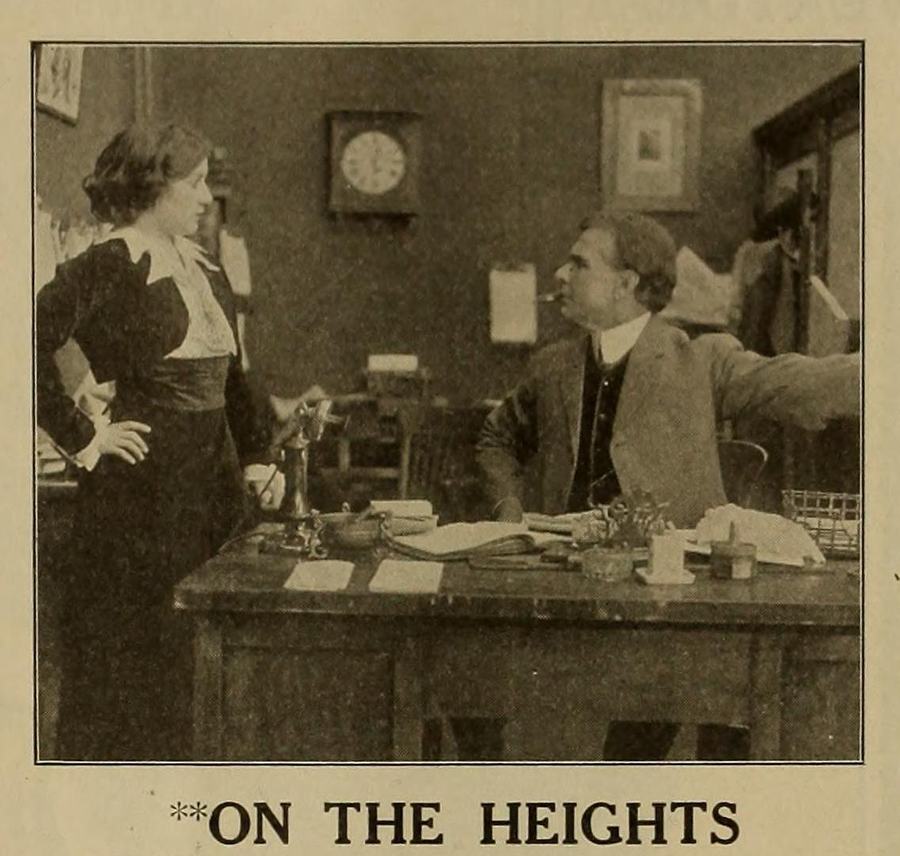
Scholars sometimes hunt for proto-feminism in early cinema like botanists searching for four-leaf clovers. Dolly is not proto; it is blatant. The serial insists that a woman’s intellect is not a dowry but a utility belt. When Dolly blackmails a corrupt realtor with his own carbon copy, she is not “sassy”; she is conducting asymmetrical warfare. When she refuses to publish a suicide story that would profit from a friend’s despair, she is asserting an ethics of journalism that modern tabloids still treat as optional.
Yet the text is not utopian. Dolly’s victories are purchased with exhaustion, sprained wrists, and the constant threat of sexual assault—realities the film refuses to glamorize. Her final triumph is tempered: she must leave the city room she loves to become proprietress of her own literary brand. The serial admits that the newsroom, like the town square, is not ready for a married woman who will not abdicate her byline.
Restoration and Rarity
For decades the only known print reposed in the Russian state archive at Krasnogorsk, a 35mm nitrate positive battered like a prizefighter’s jaw. A 2019 4K scan—crowdfunded by silent-film devotees and tinted according to the original continuity notes—now circulates via DCP. The new version restores the yellow (#EAB308) flare of street-lamps and the dark orange (#C2410C) glow of boiler-room scenes, allowing modern viewers to see what nickelodeon crowds once absorbed through haze of coal-dust and cheap perfume.
Why It Still Crackles
We live in an era when “girl-boss” is both marketing jingle and eye-roll, when female journalists still field tweets demanding they smile more. Dolly of the Dailies reminds us that the fantasy of the indefatigable newswoman is not escapism; it is compensation. Every time Dolly slams down a receiver and bolts for the door, she is enacting the wish that curiosity, not caution, should rule the world.
Watch it, then, not as antique curio but as live wire. Let its tints spark against your retinas; let its intertitles needle your complacency. And when the final frame fades—Dolly stepping into marriage yet staring straight at you—ask which stories you have swallowed whole, and which you still need the guts to print.
Verdict: 9/10—an adrenaline shot of celluloid suffrage, as pertinent now as the day it dared the world to read its own reflection.