DbcultAccessing Vault...
5/10
Senior Film Conservator
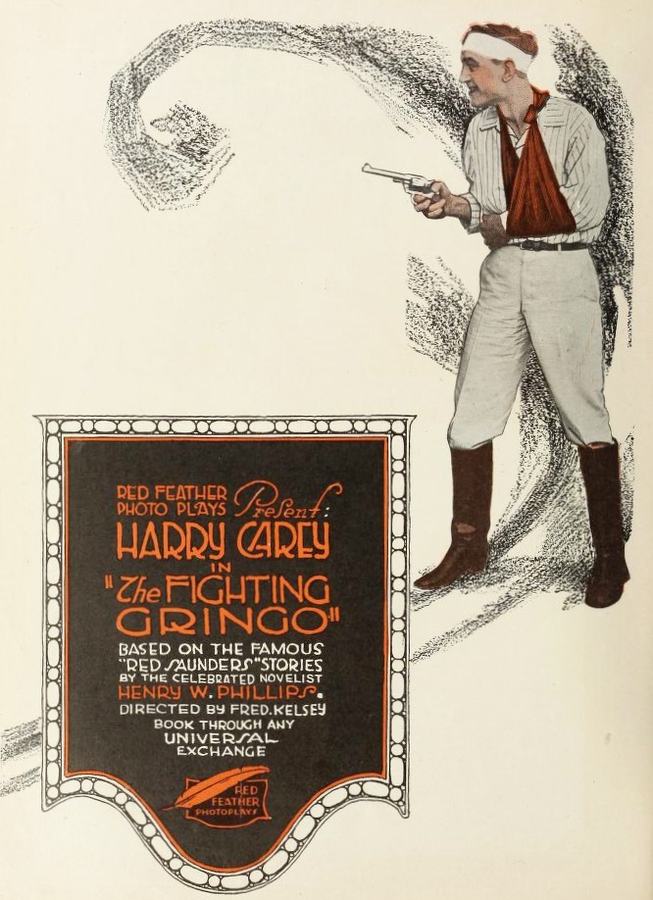
A definitive 5/10 rating for a film that redefined the boundaries of cult cinema. The Fighting Gringo remains a cornerstone of transgressive art.
The cinematic landscape of the early 20th century was often a crucible for tales of burgeoning nationhood and individual fortitude, and "The Fighting Gringo" (1917) stands as a compelling, albeit largely overlooked, testament to this era's narrative ambition. Directed with a keen eye for both expansive vistas and intimate human drama, this silent epic plunges its audience into a vivid, politically charged Panama, far removed from the dusty plains typically associated with its venerable star, Harry Carey. At its core, the film is a fascinating exploration of heroism not just through brute force, but through intricate moral navigation and a profound sense of self-sacrifice, all wrapped in the guise of a thrilling adventure.
Our journey commences with an unlikely trio en route to the bustling Isthmus. There’s Red Saunders, portrayed with characteristic stoicism and understated charisma by Harry Carey. Carey, a silent film icon, masterfully conveys an inner strength and observational intelligence that sets Red apart from the more boisterous heroes of the era. Accompanying him are Mary Smith, an earnest missionary, brought to life by Claire Du Brey, and Arthur Saxon, her volatile, lovelorn sweetheart, played by George Webb. The dynamic between Mary and Arthur is fraught with the melodrama typical of the period: she demands he prove himself a 'man,' while he, consumed by passion, struggles to meet her idealized standards. This romantic tension is further complicated by the insidious presence of Mr. Belknap, Mary’s missionary contact, whose sanctimonious exterior, embodied chillingly by Rex De Rosselli, masks a truly Machiavellian spirit. Arthur’s instinctive loathing for Belknap, initially dismissed as jealousy, foreshadows the deeper corruption at play.
Upon their arrival in Panama, Red’s path quickly diverges. His reputation for reliability and grit precedes him, leading to his employment by Jim, a no-nonsense rancher portrayed by William Steele. Red’s initial trials, including being unceremoniously thrown from a horse and landing in the lap of the portly yet politically astute Orinez (Tote Du Crow), quickly establish his resilience. It is his swift intervention, saving Orinez from a bandit ambush, that solidifies a crucial friendship—a bond built on mutual respect and a shared sense of justice. This early sequence is pivotal, demonstrating Red’s capacity for decisive action and his uncanny ability to forge alliances in a foreign land. Like a precursor to cinematic espionage, Red's unassuming demeanor hides a formidable spirit, making him an ideal protagonist for navigating the treacherous currents of Panamanian politics.
Meanwhile, Arthur's descent into despair is meticulously charted. Mary, swayed by Belknap's manipulative whispers, cruelly demands Red never speak to Arthur, effectively isolating her former sweetheart. Red, ever the quiet observer, finds Arthur in a truly deplorable state, drowning his sorrows in a local store owned by Perez (T.D. Crittenden). Arthur’s confession unravels a heartbreaking tale: a childhood romance with Mary, tragically derailed by Belknap’s influence and a cunningly orchestrated misunderstanding. Arthur recounts how Belknap twisted an innocent act of kindness—aiding a fainting woman—into a scandalous betrayal, effectively ruining his reputation and alienating Mary. This narrative thread, penned by Henry Wallace Phillips and Maude George, showcases a sophisticated understanding of human vulnerability and the destructive power of gossip and deceit, echoing themes explored in dramas like The Moth and the Flame, where innocent attraction can lead to tragic consequences.
The true villainy of Belknap is subsequently unmasked with dramatic flair. Orinez, rushing into Perez’s home, reveals the missionary’s treacherous pact with Zampeto (Vester Pegg), the leader of the burgeoning revolution. Belknap, far from being a man of God, is a cynical opportunist, promising to deliver his converts to the revolutionary cause in exchange for the endowment of his mission. This revelation transforms the personal drama into a broader political thriller, highlighting the corrupting influence of power and the cynical exploitation of faith. The film, in this regard, touches upon the complexities of nation-building and the ethical compromises often made in times of upheaval, much like the somber reflections found in Uden Fædreland (Without a Fatherland), which often grappled with political displacement and betrayal.
The narrative quickly escalates into a gripping sequence of action and suspense. Red, overhearing the approaching revolutionists, springs into action. With the aid of three loyal men, he masterfully barricades Perez’s store, transforming it into a makeshift fortress. The ensuing battle is a testament to Red’s resourcefulness and courage: armed with nothing more than cans of tomatoes, he hurls them at the encroaching mob, a surprisingly effective, if unorthodox, defense. This chaotic skirmish, though ultimately resulting in Red being severely wounded, showcases his unwavering commitment to justice and his ability to inspire loyalty. The arrival of soldiers, a timely intervention, rescues the beleaguered defenders, but not before Red has cemented his status as a true hero, a fighting gringo in every sense of the word. This scene, a precursor to many 'last stand' moments in cinema, offers a visceral thrill, comparable to the raw conflict depicted in The Fight, albeit with a more improvisational arsenal.
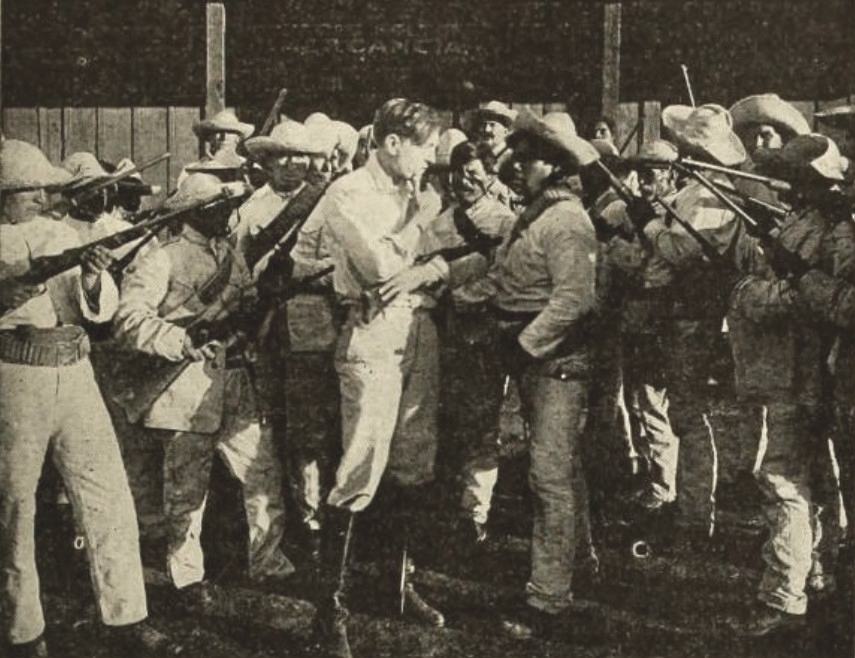
In the aftermath of the skirmish, a plan is hatched by Orinez, Perez, and Jim to trap the remaining revolutionists. However, Red, despite his debilitating arm injury, has a more intricate strategy in mind – one that extends beyond mere political victory to personal redemption. He joins Arthur and the other men, but then, in a shocking turn of events, deliberately fires at Arthur, wounding him in the arm. His explanation is a masterpiece of selfless deception: he claims he must tell Mary that Arthur is wounded, and he simply 'couldn't tell a lie' to her. This audacious act is not one of malice, but of profound, calculated compassion. Red understands that only a crisis, coupled with his unimpeachable honesty, can force Mary to confront the truth about Arthur and Belknap. It’s a bold gamble, risking his own reputation and Arthur’s trust, all for the sake of reuniting the estranged lovers. This complex maneuver speaks volumes about Red’s character, elevating him beyond a simple action hero to a master strategist of the heart, a silent film equivalent of a Sleuth, uncovering emotional truths.
With the revolutionists finally apprehended, Red, accompanied by Orinez and Perez, makes his way to the mission. The confrontation with Belknap is swift and decisive. The treacherous missionary, sensing his undoing, lunges at Red with a knife, only to be met with Red’s steely resolve and a revolver thrust squarely in his face. Red, ever the pragmatist, grants Belknap an hour to make his escape, preferring justice to vengeance. This act of mercy, or perhaps strategic expediency, ensures Belknap's permanent removal without further bloodshed. Just then, Mary rushes into the room. Red, sticking to his carefully constructed narrative, informs her of Arthur's injury, prompting her immediate demand to be taken to him. Belknap attempts to follow, but Perez and Orinez sternly remind him of his rapidly dwindling hour, sealing his fate of exile. The theme of consequence and reckoning is potent here, reminiscent of the dramatic payoff in The Payment, where actions inevitably lead to their due.
The climax of the film is a deeply moving testament to Red’s selfless dedication. Though Mary initially refuses to listen, Red insists upon telling her the entire, unvarnished story of Belknap's deceit and Arthur's innocence. They hurry to Arthur’s hut, and in a moment of poignant reconciliation, Mary throws her arms around Arthur’s neck, while he, despite his wounded arm, embraces her. Red, having meticulously orchestrated this reunion, turns away, a silent architect of happiness, and walks alone towards the town. His mission complete, his heroism defined not by accolades but by the quiet satisfaction of mending fractured lives, Red embodies a unique brand of cinematic protagonist. His solitary departure underscores the quiet dignity of his character, a man whose actions speak louder than any words, and whose reward is the happiness of others. This echoes the romantic tribulations and ultimate reconciliation found in films like When Paris Loves, albeit with a more rugged, less glamorous backdrop.
"The Fighting Gringo" is more than just an adventure film; it is a nuanced character study wrapped in a thrilling package. Harry Carey delivers a performance that is both understated and profoundly impactful, showcasing why he was such a beloved figure in early cinema. The film's ability to weave together themes of political intrigue, romantic misunderstanding, and genuine heroism against the exotic backdrop of Panama is truly commendable. The contributions of writers Henry Wallace Phillips and Maude George are evident in the intricate plot and well-developed character arcs, distinguishing it from simpler narratives of its time. The film’s setting, with its vibrant cultural tapestry and underlying political unrest, draws parallels with other films that explored foreign lands and social upheaval, such as The Arab or The Jungle, which similarly used exotic locales to heighten dramatic tension.
The supporting cast, including Tote Du Crow as the astute Orinez and T.D. Crittenden as the steadfast Perez, provides a robust framework for Carey's central performance. Their portrayals add depth and authenticity to the Panamanian setting, preventing it from becoming a mere backdrop. The film’s ability to maintain a brisk pace while developing its complex plot points is a testament to the directorial skill, ensuring that audiences remained captivated by the unfolding drama. While silent films often relied on overt gestures, "The Fighting Gringo" manages to convey profound emotional complexity through its narrative structure and the nuanced performances of its lead actors.
In an era where cinema was still finding its voice, "The Fighting Gringo" offered a compelling blend of adventure, romance, and moral clarity. It’s a testament to the enduring power of storytelling, showcasing how even without spoken dialogue, a film can convey intricate plots, deep emotional conflicts, and memorable characters. It reminds us that true heroism often lies not in grand, self-serving gestures, but in the quiet, calculated acts of self-sacrifice that restore order and happiness to the lives of others. For fans of early cinema and those fascinated by the evolution of the action-adventure genre, this film remains a captivating artifact, a vibrant snapshot of a bygone era that continues to resonate with timeless themes of love, betrayal, and the unwavering spirit of a true hero. Its intricate plot, focusing on damaged reputations and the quest for truth, aligns thematically with the concept of restoring His Father's Honor, albeit in a more personal, romantic context. The film's overall enduring appeal lies in its ability to transport viewers to a distant time and place, immersing them in a narrative rich with human drama and thrilling escapades, a classic example of silent-era ingenuity.
IMDb —
1926
Community
Log in to comment.