Summary
From the pastoral tranquility of a French smithy, where Bernard Jansoulet, a man of unyielding rectitude, anchors his family, the narrative unfurls a poignant odyssey of fraternal devotion and societal disillusionment. His feckless brother, Louis, succumbs to the siren call of Parisian vice, plummeting into a legal quagmire that threatens to shatter their venerable mother's fragile peace. Bernard, the steadfast pillar, orchestrates a clandestine escape for Louis's reputation, embarking upon a self-imposed exile to the crucible of South African diamond fields. There, fate, in a dazzling turn, bestows upon him an unimaginable fortune, transforming the humble artisan into 'the Nabob'—a titan of industry and influence. His triumphant return to the gilded cages of Parisian high society, however, heralds not peace but a fresh maelstrom of political machinations and romantic deceit, orchestrated by the venal editor, Moessac, and the beguiling sculptress, Felicia. The glittering facade of his new life crumbles under the weight of a public accusation, a cruel echo of Louis's past transgression. In a climactic tableau within the Chamber of Deputies, confronted with the agonizing choice between self-preservation and protecting his mother from the truth, Bernard immolates his own honor, tearing the damning evidence that would exonerate him but condemn his brother. Stripped of his acquired grandeur, yet imbued with an irreducible moral clarity, he retreats to the rustic embrace of his ancestral farm, where, in a final act of profound humanism, he welcomes a broken, penitent Louis back into the fold, reaffirming the enduring sanctity of familial bonds over the ephemeral glitter of wealth and status.
Synopsis
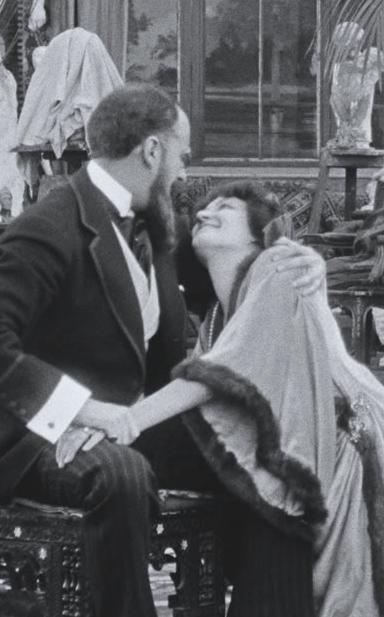
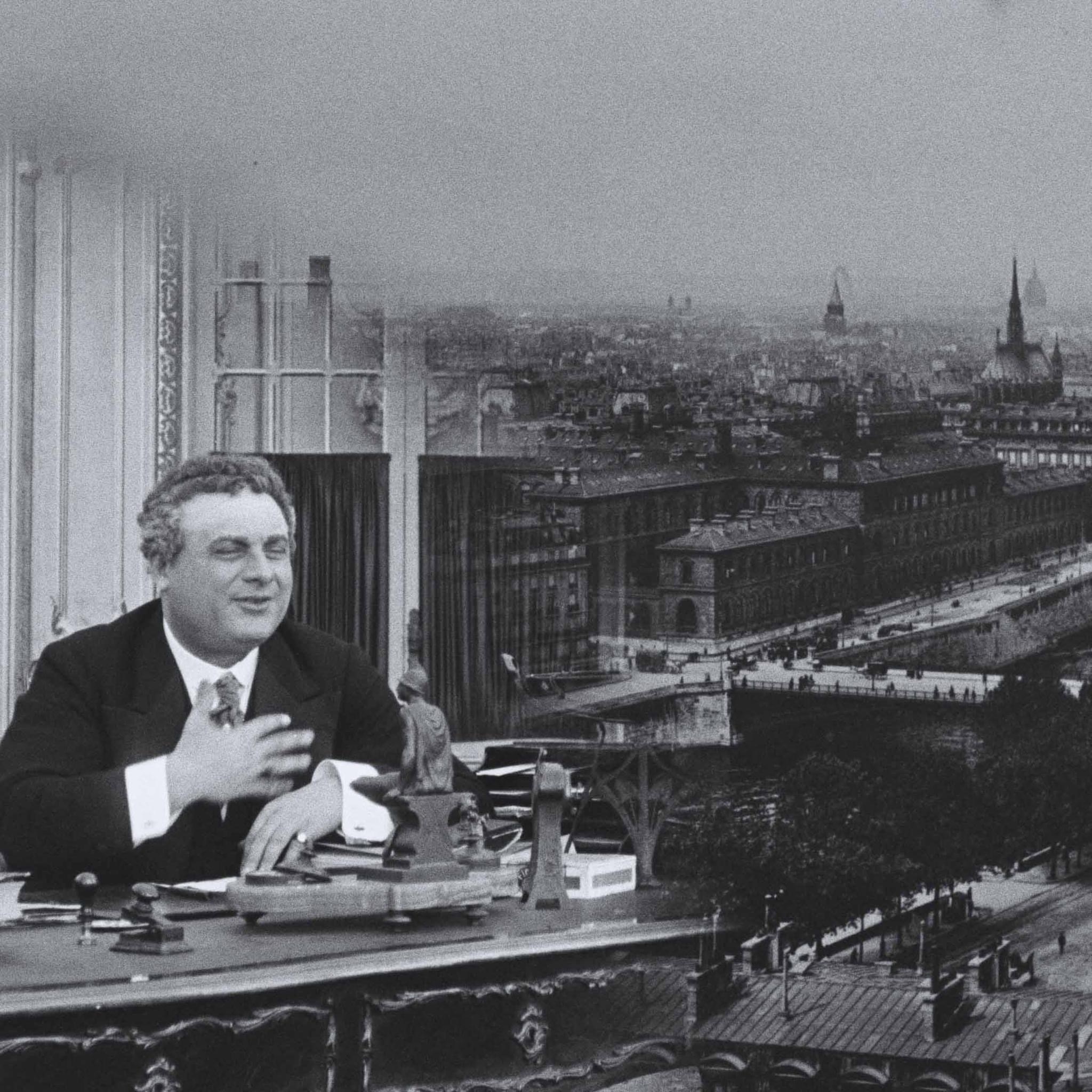
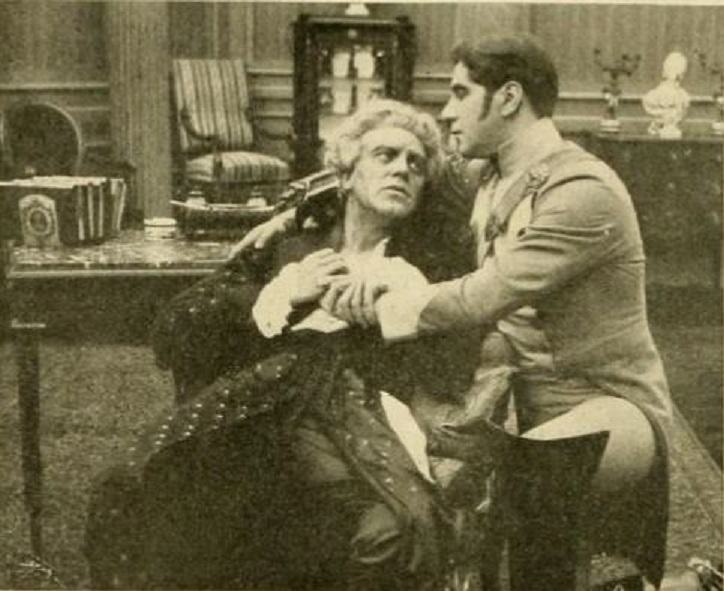
Bernard Jansoulet, a fine specimen of the sons of Vulcan, kept the little farmstead of the Jansoulets by means of the profits from his smithy. His aged mother, a dear old lady, and a good-for-nothing brother, Louis, were the other members of the household. One day as Bernard passed along the little village, he saw poor, wayward Louis being exhorted to join a bibulous crowd at the inn. Bernard, himself of a temperate disposition, at once interposed, and soon led his brother towards home. There a good meal, served in true French farmhouse style, soon mollified the erring Louis, and during a chat there came the postman on his usual round. The missive, in an unusual writing, proved to be a letter saying that a friend had secured a situation in Paris for Louis. The answer was sent, and a few days later preparations were made for Louis' departure this, however, Bernard, in his usual quiet manner, negotiated a loan of 200 francs from a neighbor, and as Louis was on the point of going pressed upon him the little fortune to help him along his way. Full of seeming gratitude and with the kisses of his sorrowing mother still fresh upon his lips, Louis departed, with a promise to redeem the past in a new life. Life in Paris proved a vastly different thing to what Louis had expected ; but having succeeded to some extent by dint of resolution, he soon found time to look around and visit the many show places of the "gay capital." One evening, at a ball in the Montmartre district, he succumbed to the advances of a lady of somewhat doubtful morals, and eventually became the object of a quarrel between the woman and another, who had also been in his company. Filled with rage and pique at the slight which followed, the adventuress trumped up a charge of theft against Louis. The Public Prosecutor made short work of Louis' defense, and a letter, addressed to Bernard, bore the following words : - " My dear Bernard,- I have been fool enough to get mixed up with a woman, who, in a fit of jealousy, has accused me of stealing her jewels, and, as I cannot prove my innocence, I have been condemned to five years' imprisonment. Don't tell mother; it would kill her. - Louis Jansoulet." Bernard from that day went about his work in a dazed way. After the thought of Louis' error he could not settle, and, finally, leaving his mother sufficient for her needs for some time, he set out for a life in South Africa. On the way, at Marseilles, he met one Bompain, who, also in need of a friend, arranged to take him to a ship he knew of. An introduction to the captain secured berths for both as firemen. In the hot and grimy depths of the stokehold, they toiled for the next five weeks, and were pleased indeed to end the period of servitude, and set foot on new soil. After some weeks of search they drifted to the diamond mines, and entered once more upon a period of toil, compared to which the previous task was child's play. Bernard, ever of a strong and lusty way, could dig all day and hew the hard quartz without a murmur, but little Bompain, although a willing worker, soon found the work a severe trial. He was practically at the end of his powers of endurance, when Bernard made a staggering discovery. Within half-an-hour the news had spread all over the mine. The Frenchman, Jansoulet, had made the discovery of the age. Such a diamond had never before been gazed upon, and Jansoulet had suddenly become one of the world's richest men. Some months later Bernard sat in his palatial house in Paris, Bompain at his elbow as major-domo, and dreamed of his desires to conquer the entire city. His mother still preferred the old country life, and he was free to scheme and to gain his ambitions. Knowing his ways, one Moessac, the editor of The Messenger, soon fixed upon him as the one man to turn the tide of lii-fortune from his publishing house. A ball was arranged, on Moessac's suggestion, at Bernard's house, and here Felicia Ruys was introduced to him. Bernard, now named the Nabob, bestowed gifts with great prodigality, and Felicia was soon destined to come in for a share of his attentions. A scheme, evolved by Moessac and fostered by Bernard's growing love for the beautiful sculptress, was set on foot to secure for Bernard the office of Deputy for Corsica. The price of the honor was to be £4,000, to be paid to Moessac. Needless to say, the election proved an easy win for Jansoulet. He was soon able to dispatch a letter informing his mother of his success. He was not destined to live long, however, in his fool's paradise, for during a visit to Felicia's studio he overheard a conversation which showed that she was really in league with Moessac. In consequence of Bernard's denunciation. the rascally editor decided upon vengeance, and published a paragraph to the effect that " a grave political scandal is afoot. The member for Corsica, we are informed, has served a term of imprisonment for theft." Bernard arrived one day at the Chamber to find his alleged crime the one topic of conversation. He, having seen The Messenger, came prepared with the evidence of Louis' letter, and awaited the Chamber's action. The motion came on, and soon the House was intent upon the discussion of their comrade's transgression. At last Bernard was called upon to mount the dais and defend himself. As he commenced, his mother, who had come to congratulate her son, entered the visitors' gallery. She heard, in a dramatic scene, her son's denial of the base charge and his splendid speech. He was about to produce the letter which would fasten the guilt upon Louis, when he saw his mother's face. An instant's thought, and the letter was torn to fragments. Puzzled by his silence from this point, the majority pronounced him guilty. In the entrance-hall mother and son met, and as they left the Deputies began to realize that some reason obtained for the strange result of Bernard's actions. Moessac was shunned by all who knew him, and, disgusted with Paris and its superficial life, Bernard returned to the farm. Here, one evening, came Louis, footsore and starving. With true fraternal charity, he was taken in and succored, and once more the trio led their former plain and unassuming life as of old.
Review Excerpt
"
The cinematic narrative of Le Nabab, a compelling adaptation of Alphonse Daudet’s seminal novel, plunges viewers into a world where the pastoral virtues of rural France clash dramatically with the intoxicating allure and inherent corruption of metropolitan ambition. At its heart lies Bernard Jansoulet, a character etched with the stoic dignity of a true son of the soil, whose hands, accustomed to the honest toil of the smithy, forge not only iron but also an unwavering moral compass. His in..."