DbcultAccessing Vault...
5.3/10
Senior Film Conservator
A definitive 5.3/10 rating for a film that redefined the boundaries of cult cinema. The Adventures of an Octoberite remains a cornerstone of transgressive art.
Stepping into the cinematic landscape of early Soviet Russia is an experience unlike any other, and Grigoriy Kozintsev and Leonid Trauberg’s 'The Adventures of an Octoberite' offers a fascinating, if ideologically charged, glimpse into a nascent nation’s self-definition through art. This isn't just a film; it's a meticulously crafted artifact of its time, a celluloid testament to the fervent belief in a collective future, presented through the lens of individual heroism subsumed by a grander, state-sanctioned narrative. Released during a period of intense social and political transformation, the film doesn't merely tell a story; it endeavors to mold perception, to inspire, and to instruct, utilizing every available cinematic tool to imbue its audience with the spirit of the October Revolution.
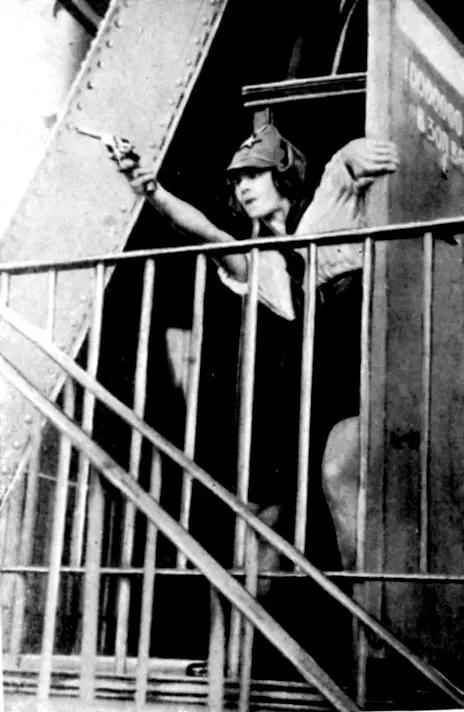
At its core, 'The Adventures of an Octoberite' chronicles the arduous journey of Anya, a young pioneer, tasked with a mission of paramount importance: to deliver a vital message concerning agricultural innovation to a distant factory. This isn't a simple errand; it's a heroic undertaking, framed against the harsh backdrop of a Russian winter. The message itself, a blueprint for bolstering the ambitious Five-Year Plan, elevates Anya's personal endeavor to a matter of national significance. Her character, brought to life with earnest conviction by Zinaida Tarakhovskaya, is less a complex individual and more an archetype of the diligent, selfless Soviet youth. We see her not as a solitary figure, but as an embodiment of the collective will, her every step echoing the larger struggle and aspirations of a nation striving for a utopian ideal.
The challenges Anya faces are not merely physical; they are ideological trials. An encounter with a skeptical kulak, portrayed with subtle menace by Sergey Martinson, serves as a stark reminder of the internal resistance to the new order. This interaction, rather than deterring Anya, galvanizes her resolve, highlighting the unwavering commitment expected of a true Octoberite. Conversely, her subsequent interactions with a group of street urchins, initially mischievous and perhaps even cynical, illustrate the transformative power of the pioneer spirit. The film suggests that even the most disenfranchised elements of society can be won over by the purity of socialist ideals, a recurring motif in propaganda cinema of the era. The performance of Antonio Tserep as one of these urchins adds a layer of streetwise charm, creating a compelling dynamic with Anya’s earnestness.
Perhaps the most potent element of 'The Adventures of an Octoberite' is its masterful deployment of symbolism. The small red banner, a gift from Anya's comrades, is more than just a prop; it is the beating heart of the film. It embodies the collective, the revolutionary spirit, and the hopes pinned on the young generation. The sequence where Anya momentarily loses the banner to a frozen river, a moment of palpable despair, is cinematically arresting. The camera lingers on her anguished face, then on the swirling ice, creating a profound sense of loss that transcends the mere object. Its subsequent, heroic recovery, almost an act of sheer will, is framed as a triumph not just for Anya, but for the resilience of the socialist cause itself. This scene, in particular, showcases Kozintsev and Trauberg's keen understanding of visual storytelling, a skill that rivals contemporary American silent epics like The Courtship of Myles Standish in its emotional scope, albeit with entirely different ideological underpinnings.
"The Adventures of an Octoberite" transcends simple entertainment, serving as a powerful ideological primer, a visual sermon on the virtues of collective endeavor and unwavering revolutionary spirit.
The film's cinematography, while perhaps not as overtly experimental as some of its avant-garde contemporaries, is remarkably effective. The stark, often desolate winter landscapes serve as a powerful metaphor for the challenges facing the nascent Soviet state, while the close-ups on Anya's determined face emphasize the human element of the struggle. The directors skillfully use contrast – the cold, unforgiving outdoors versus the warmth of collective spaces, the individual's isolation versus the strength of solidarity – to reinforce the film's central messages. In this regard, it offers a distinct counterpoint to the more individualistic narratives prevalent in Hollywood at the time, such as The Auction Block or The Loves of Letty, which focused on personal romance and ambition rather than societal transformation.
The cast, though perhaps not household names in the West, deliver performances that are perfectly attuned to the film's ideological aims. Zinaida Tarakhovskaya as Anya is a revelation, embodying youthful innocence and unyielding resolve without resorting to saccharine sentimentality. Her expressions, particularly during moments of hardship and triumph, convey a depth of emotion that transcends the silent film medium. Sergey Martinson, as the dissenting kulak, provides a necessary foil, his portrayal subtly hinting at the lingering class struggle without overtly demonizing the individual, instead focusing on the ideological conflict. Yevgeni Kumeiko and Antonio Tserep, among others, round out the ensemble, each contributing to the rich tapestry of characters that Anya encounters, representing different facets of Soviet society and its challenges.
Kozintsev and Trauberg’s direction is precise and purposeful. They understand the power of montage, not just as a narrative device, but as a tool for ideological persuasion. The pacing, while deliberate, builds effectively towards Anya's eventual arrival at the factory. This climax, where her message and her very presence ignite a new wave of productivity, is handled with a rousing sense of collective fervor. It’s a powerful demonstration of how individual action, when aligned with the greater good, can spark monumental change. The directors manage to evoke a genuine sense of optimism and shared purpose, a feeling that differentiates it sharply from the more cynical or purely entertaining fare of the same period, like Scratch My Back or Cupid Camouflaged, which primarily aimed for escapism.
To truly appreciate 'The Adventures of an Octoberite,' one must understand its historical context. It emerged from a period where cinema was viewed not merely as entertainment but as a potent instrument for social engineering and political education. The film is a direct product of the ideological mandates of its time, aiming to instill the values of diligence, self-sacrifice, and unwavering loyalty to the socialist cause in its young audience. It's a foundational text in the development of socialist realism, a style that would dominate Soviet art for decades, emphasizing optimistic, heroic depictions of the working class and the triumph of communism.
The lasting impact of 'The Adventures of an Octoberite' lies not just in its historical significance, but also in its undeniable cinematic craft. Despite its propagandistic intent, it remains a compelling piece of storytelling, utilizing the visual language of silent cinema to great effect. It is a reminder that even films born from specific political agendas can possess artistic merit and provide profound insights into the human condition, albeit filtered through a particular ideological lens. Viewing it today allows for a deeper understanding of Soviet cinematic history and the ambitious project of building a new society, one frame at a time. Its bold vision and unwavering commitment to its message set it apart from many of its contemporaries, including more conventional dramas like The Girl and the Judge or thrillers like The Speed Maniac, solidifying its place as a unique and important cinematic document.
While it's easy to dismiss 'The Adventures of an Octoberite' purely as a piece of propaganda, doing so would be to overlook its artistic merits and its invaluable contribution to the evolving language of cinema. Kozintsev and Trauberg, along with their dedicated cast and crew, crafted a film that, despite its clear ideological agenda, resonates with a universal theme: the power of conviction and the strength derived from collective purpose. It stands as a powerful example of how film can be harnessed to articulate national aspirations, to educate, and to inspire, even if those aspirations were ultimately complex and often brutal in their realization. It’s a film that demands to be viewed not just as a historical curiosity, but as a vibrant, if politically charged, piece of cinematic art that continues to spark discussion about the intersection of art and ideology. Unlike lighter fare such as Fasching or Turning the Tables, this film engages with serious societal questions, reflecting the profound shifts occurring in its cultural context. It’s a testament to the ambition of early Soviet filmmakers to use their medium as a tool for societal transformation, a goal that few films before or since have pursued with such single-minded intensity. Even when compared to other dramatic works like The Law Decides or the more fantastical elements in Die Gespensterstunde, 'The Adventures of an Octoberite' carves out its own distinct niche, marrying narrative urgency with a profound sense of national purpose. It is a film that, despite its age and specific political origins, continues to offer rich material for analysis, reminding us of cinema's enduring power to shape and reflect human experience.

IMDb 6.2
1932
Community
Log in to comment.